
Jiaozuo 5-Day Tour: Longmen Grottoes & Laojun Mountain
Jiaozuo 5-day tour covering Longmen Grottoes and Laojun Mountain and White Horse Temple. Sightseeing tickets and shuttle bus included.
Highlights
Day 1: Longmen Grottoes
Gather in the morning and depart for Longmen Grottoes, follow the guide to visit core attractions, and allow enough time for photos and rest; Enjoy local specialties at noon, check into the hotel in the evening, and recharge for the next day's itinerary.
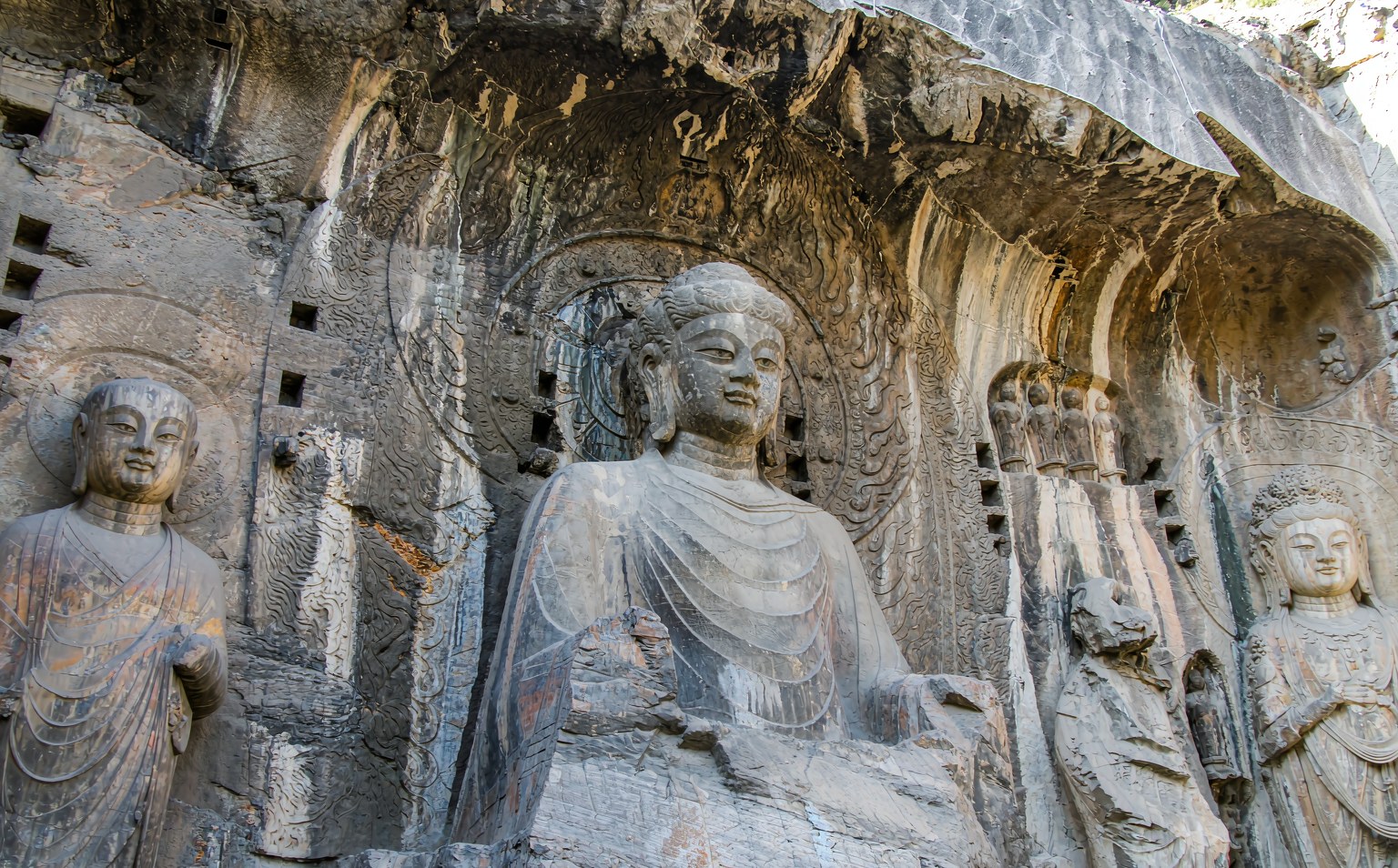
Attraction introduction: Today's itinerary includes Longmen Grottoes attractions, carved into the cliffs on both banks of the Yi River south of Luoyang city. Since Emperor Xiaowen of Northern Wei moved the capital to Luoyang, construction has continued through the Eastern Wei, Western Wei, Northern Qi, Sui, and Tang dynasties. Currently, there are over 2,300 cave niches, over 100,000 statues, and more than 2,800 inscriptions and inscriptions. The most impressive is the Vairocana Buddha at Fengxian Temple, standing over 17 meters tall, with a plump face and kind-looking eyes. Legend has it that it was carved after the likeness of Empress Wu Zetian and represents the pinnacle of Tang dynasty stone carving art. Along with Dunhuang Mogao Caves and Datong Yungang, it is known as one of China's three great grottoes and a UNESCO World Cultural Heritage site. When touring, head south along the Yi River trail from the Xishan Grottoes, where Binyang Three Caves, Ten Thousand Buddha Caves, and Lotus Cave each have highlights. Cross the bridge to the Dongshan Buddha Worship Platform for a panoramic view. My understanding is that in the morning, first visit the main cave of Xishan and admire the Big Buddha while there are fewer people; in the afternoon, go to the Dongshan Viewing Platform for the best lighting and angle; If you need to walk backward along both banks of the Yi River, a pair of comfortable shoes can save you a lot of effort.
Friendly reminder: Grottoes are mostly built against cliffs. When sightseeing, keep a distance from the cliff walls, hold the railings properly, and take care of the elderly and children. Visitors generally report that most find the Vairocana Buddha the most breathtaking, and the sunset on the Western Hills offers the best lighting; If you need to walk back along both banks of the Yi River, it is recommended to wear comfortable shoes and allow half a day. Based on actual conditions, leave some time for physical activity: focus on the main activities in the morning and slow down in the afternoon to avoid overexertion on the first day and fatigue in the following days.
Day 2: Laojun Mountain
Gather in the morning and depart for Laojun Mountain, follow the guide to visit key attractions, and allow enough time for photos and rest; Enjoy local specialties at noon, check into the hotel in the evening, and recharge for the next day's itinerary.
Attraction introduction: Today's itinerary includes Laojun Mountain attractions, located in Luanchuan County, Luoyang, the main peak of Funiu Mountain and a famous Taoist mountain, said to be the place where Laozi, the founder of Taoism, retired for cultivation. The Golden Summit Taoist temple complex stands atop a peak over 2,000 meters above sea level, with golden tiles and red walls and surging clouds, earning it the reputation of "traveling far to witness the world's grandeur." The Ten-Mile Painted Screen is the highlight of the entire trip: a high-altitude plank road suspended on a sheer cliff changes views with every step, offering views of peaks, forests, sea of clouds, and sunrise. You can take a two-level cable car up the mountain; on sunny days, you can watch the sea of clouds and sunrise from the summit, while in winter, it is a highly popular snow-viewing spot in the Central Plains. My understanding is: be sure to take the cable car up the mountain early to seize the golden summit and the beautiful scenery of the Ten-Mile Painting Screen; At the summit, the wind is strong and the temperature low; a windbreaker and thermos bottle are standard, and the glass observation deck is a must-have.
Friendly reminder: The climbing section has many steps and steep slopes, so be sure to wear non-slip sports shoes. Those with mobility difficulties are advised to take the cable car up and down. Visitors generally report that the sea of clouds and sunrise at the Golden Summit are recognized as the main highlights, and many people stay at the summit waiting for dawn. Reminder: The temperature difference at the summit and long cable car queues are key, so be sure to arrive early during peak season. Based on actual conditions, respect local customs, dress appropriately when entering religious sites, avoid casual advice, and a simple greeting can earn goodwill.
Day 3: White Horse Temple
Gather in the morning and depart for White Horse Temple, follow the guide to visit core attractions, and allow plenty of time for photos and rest; Enjoy local specialties at noon, check in at the hotel in the evening, and recharge for the next day's itinerary.
Attraction introduction: One highlight of the itinerary is White Horse Temple, located east of Luoyang city. It was first built during the Yongping era of the Eastern Han Dynasty to commemorate the White Horse Carrying Scriptures and the early introduction of Buddhism to the Central Plains. It is honored as "China's First Ancient Temple" and the first government-run temple built after Buddhism was introduced to China. Inside the temple, the Qiyun Pagoda Courtyard, the Great Buddha Hall, and the Heavenly King Hall are arranged along the central axis, with red walls and green cypress trees where incense offerings have continued for over two thousand years. It is worth mentioning that the temple also features exotic-style Buddhist halls donated by countries such as Myanmar, Thailand, and India, showcasing the unique landscape of Buddhist culture flowing eastward and backward. My understanding is that when entering the temple, first see the main hall along the central axis, then circle around to the Qiyun Pagoda Courtyard, and finally visit the foreign Buddhist halls on both sides to experience cultural fusion; Come early in the morning when there are fewer people; the sunlight shining on the red walls and ancient cypress trees creates the most poetic atmosphere, and you can also avoid the peak of tour groups.
Friendly reminder: Temples have many stone steps and thresholds; do not step on thresholds. Arrange in order during worship without pushing. Visitors generally report that exotic-style Buddhist halls (Thai/Burmese/Seal Temple) have a high photo success rate, and visitors generally feel they are more spacious than expected; Reminder: The international temple area is quite far to walk and leave some footlight. Considering actual conditions, the biggest fear of joining a tour group is skimming the scene; listening to explanations is the essence. The cultural stories behind each attraction are often more memorable than photos. If you don't understand something, ask the guide on the spot.
Related Tours
Zhengzhou 5-Day Tour: Longmen Grottoes & White Horse Temple
Zhengzhou 5-day tour covering Longmen Grottoes and White Horse Temple and Laojun Mountain. Sightseeing tickets and shuttle bus included.
Luoyang 3-Day Tour: Luoyi Ancient City & Shaolin Temple
Luoyang 3-day tour covering Luoyi Ancient City and Shaolin Temple. Sightseeing tickets and shuttle bus included.
Luoyang 3-Day Tour: Longmen Grottoes & White Horse Temple
Luoyang 3-day tour covering Longmen Grottoes and White Horse Temple and Wangcheng Park. Sightseeing tickets and shuttle bus included.
Xinxiang 4-Day Tour: White Horse Temple & Longmen Grottoes
Xinxiang 4-day tour covering White Horse Temple and Longmen Grottoes and Laojun Mountain. Sightseeing tickets and shuttle bus included.