
Anyang 5-Day Tour: Wanxianshan & Guoliang Village
Anyang 5-day tour covering Wanxianshan and Guoliang Village and Taihang Grand Canyon. Sightseeing tickets and shuttle bus included.
Highlights
Day 1: Wanxian Mountain
Depart from the hotel early in the morning and head straight to Wanxian Mountain. First, listen to the tour guide explain the background and the highlights, then explore freely at a leisurely pace and take additional photos according to your interests. After lunch, take a short rest, and return to the hotel in the evening to conserve energy for the next day.
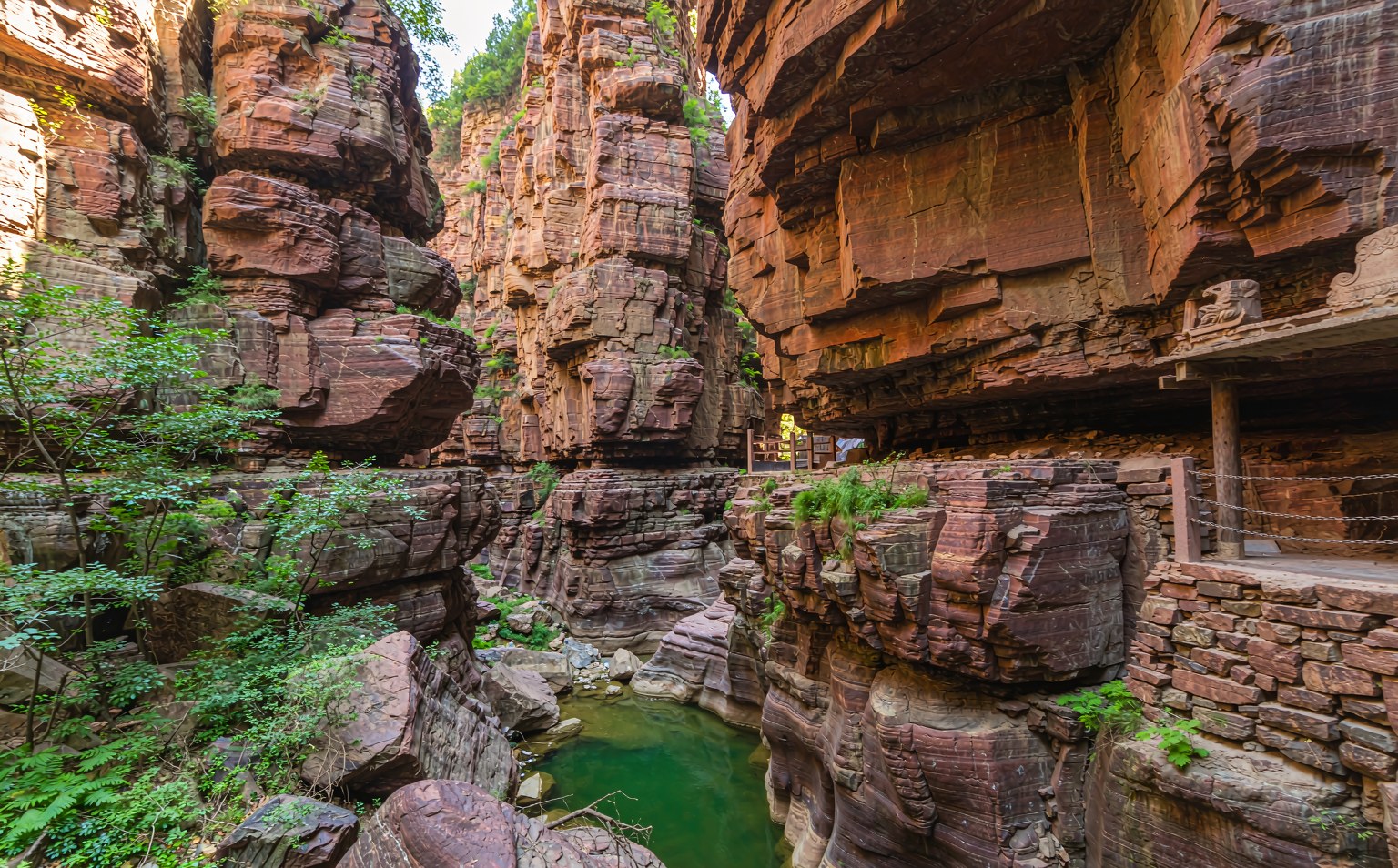
Scenic Spot Introduction: One of the main attractions on the itinerary is Wanxian Mountain. The Wanxian Mountain scenic area is located deep in the Taihang Mountains in Huixian. It includes the Guoliang Hanging Road and Nanping Danfen Gorge. The red cliffs and clear waterfalls form an intertwined landscape, making it one of the most representative mountain and water galleries in the Taihang Mountains. The area is famous for being the filming location of several movies and TV shows. Attractions such as Guoliang Village, Tianchi, and the watchtowers form an impressive Taihang hiking route. The temperature in summer is pleasant, and it is a place where you can get close to the Taihang mountains and waters without going far from Zhengzhou and Luoyang. In my understanding, the hike involves a lot of walking and many steps, so be sure to wear non-slip shoes; be cautious of passing vehicles on the hanging road section, and the red cliffs are best photographed in the morning and evening light.
Tips: The mountain paths have many steps and steep slopes, so be sure to wear non-slip sports shoes. Those with mobility issues are recommended to use the cable car. Visitors generally report that the hanging road (Guoliang Tunnel) is the most impressive and photo-worthy, but the mountain roads can often cause motion sickness; it is advised to bring motion sickness medicine and walk slowly while enjoying the viewpoints. Based on actual conditions, the best times for photos are early in the morning or late in the afternoon—the light is gentle and there are fewer people in the morning, and the golden glow at dusk is superb. Noon lighting is harsh and crowded, so it’s better used for resting.
Day 2: Guoliang Village
Today's Taihang trip focuses on the Cliff-Hanging Road and the film and television village, with views of the canyon villages; afternoon for additional shooting, evening for rest.
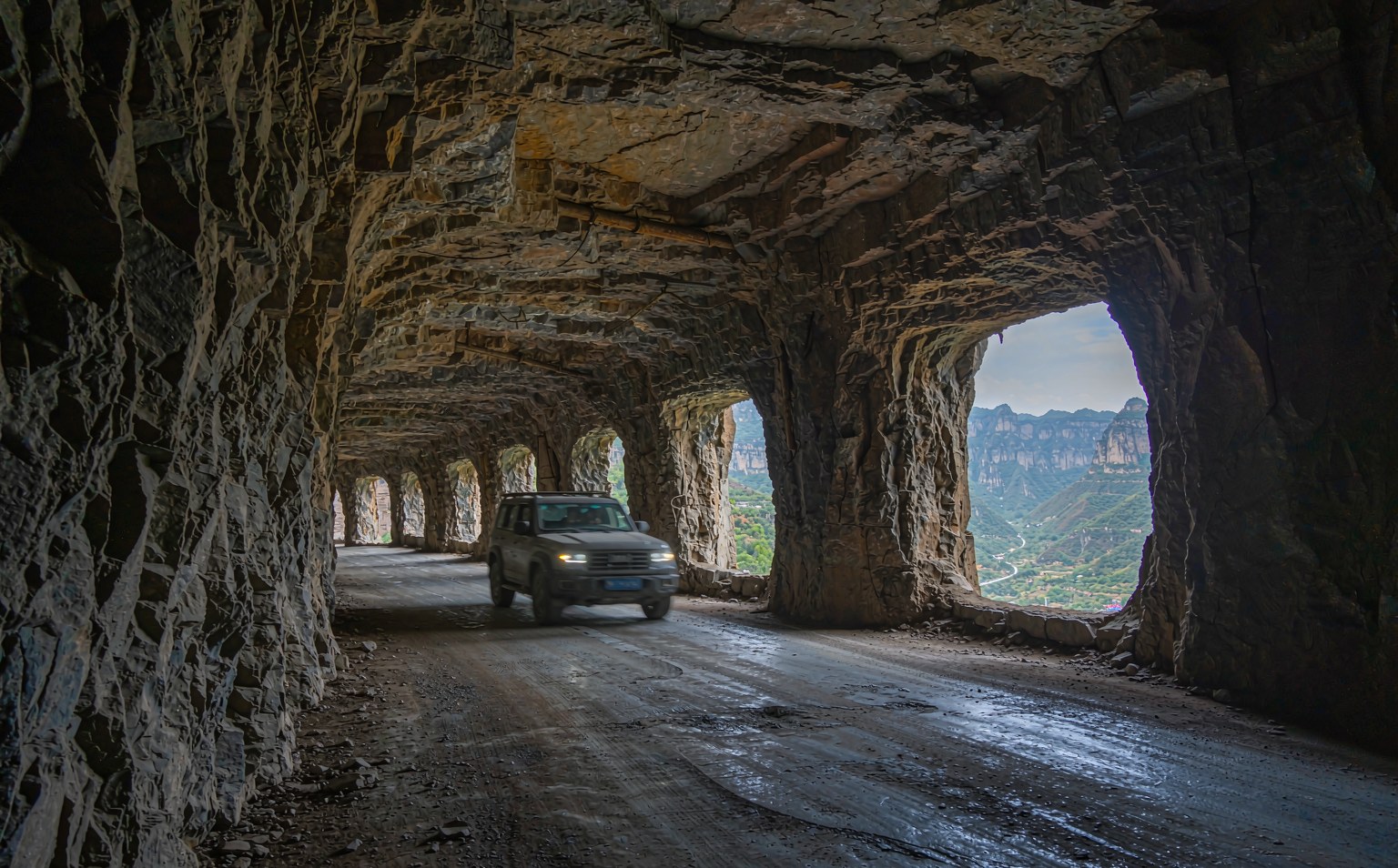
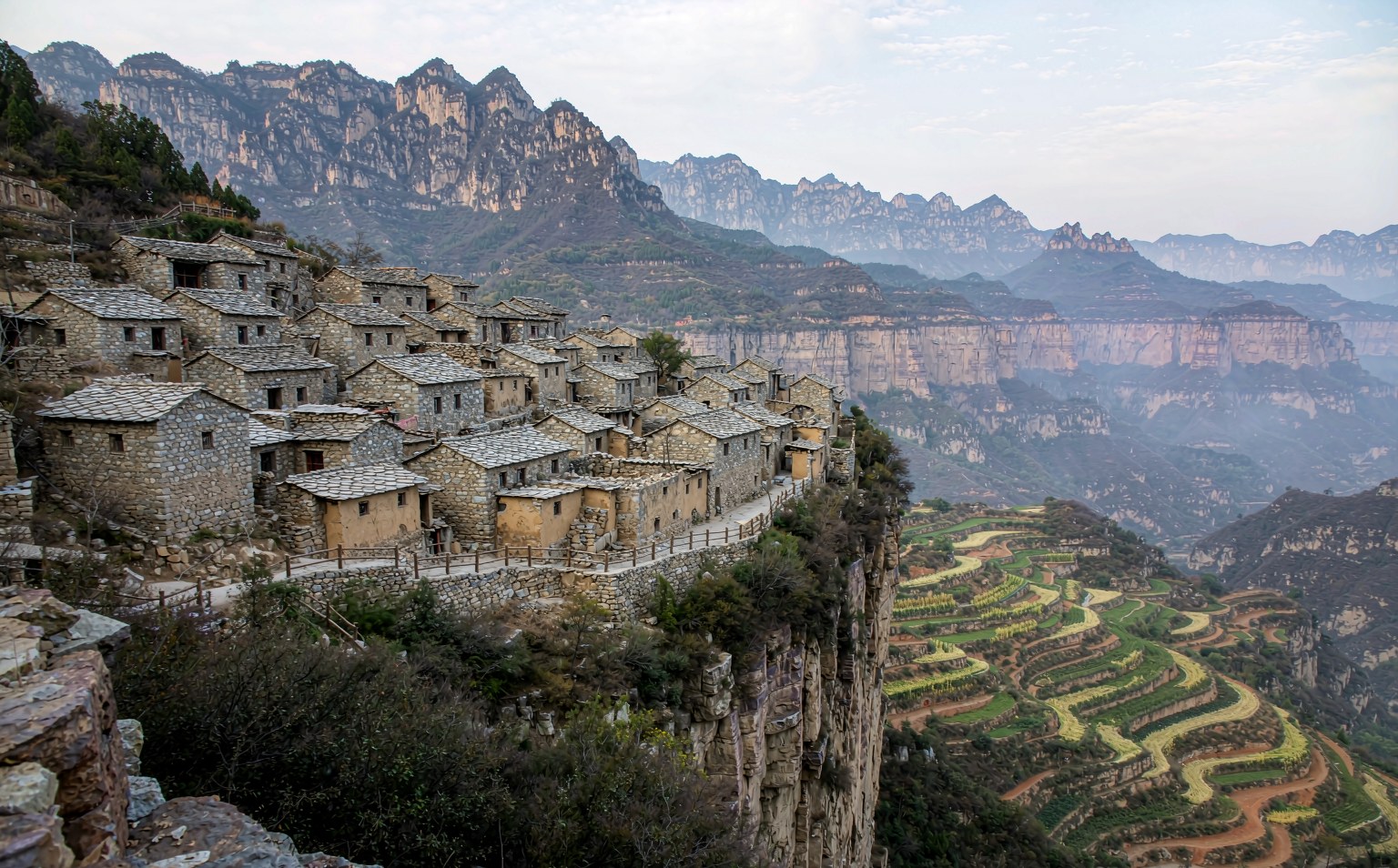
Attraction Introduction: A highlight arranged in the itinerary is Guoliang Village, Guoliang Village is hidden on the sheer cliffs deep in the Taihang Mountains and is famous for the 'Cliff-Hanging Road'. In the 1970s, villagers, in order to open a path to the outside world and without any large machinery, spent more than five years chiseling a tunnel about 1,300 meters long into the cliff face, which is considered a 'modern-day Foolish Old Man' miracle. Today, this cliff-hanging road is the hardest-core check-in spot in the Taihang Mountains, where walking along it allows you to overlook the abyss and canyon villages. Guoliang Village is also known as the 'Chinese Film and Television Village' for being the filming location of many movies and TV dramas. My understanding is to allow enough time when walking the cliff-hanging road, watching and taking photos, paying attention to your footing and oncoming vehicles; the best light is in the early morning or evening, while at noon it is rather flat. Wear non-slip shoes and don’t get too close to the cliff.
Tips: The streets and alleys of the ancient town are crisscrossed and easy to get lost in, so remember the meeting time and clear landmarks. Tourists generally report that the stone village on the cliff connects to the cliff-hanging road and the filming locations have a built-in sense of story; be reminded that accommodations and food in the village are simple, so lower expectations to enjoy more. Considering the actual situation, the biggest risk on long journeys is dehydration, so carry a water bottle and drink in small amounts frequently; on the first night in the plateau or mountains, don’t wash your hair or take a bath for too long, giving your body some time to adjust.
Day 3: Taihang Grand Canyon
Assemble in the morning and depart for Taihang Grand Canyon. Follow the tour guide along the main route, visiting all the key spots, allowing plenty of time for photos and rest. At noon, enjoy local specialty dishes, and in the afternoon continue exploring. In the evening, check into the hotel to rest and recharge for the next day's itinerary.
Attraction Introduction: One of the highlights of the trip is Taihang Grand Canyon. Taihang Grand Canyon spans the junction of Shanxi, Hebei, and Henan provinces, with Red Flag Canal cutting through the mountains. Peach Blossom Valley, Wangxiang Rock, and Taihang Sky Road connect the majestic and the beautiful, showcasing the scenery of the Taihang Mountains. Peach Blossom Valley is famous for its waterfalls and streams, Wangxiang Rock is known for its cliffside walkways, and Taihang Sky Road allows visitors to take a sightseeing bus to see the full view of the canyon. In spring, the mountains are full of blooming flowers; in autumn, the forests are colorful, with highlights in each season. My understanding is that the scenic area is large and the attractions are scattered, so it is necessary to plan your route well and prioritize the core attractions; hold onto the railing in steep sections of the walkway, and those afraid of heights should proceed according to their ability.
Warm Tips: The signal may be poor in the canyon, so arrange a meeting point with your guide in advance and do not act alone. Tourists generally report that Peach Blossom Valley is serene with its water features, and Taihang Sky Road is steep and dramatic, with scenic views at every step; be reminded to take the sightseeing bus, as the weather can greatly affect the experience. Based on the actual situation, be time-conscious, arrive five to ten minutes early for gatherings, and it is better to have people wait for the bus than the bus wait for people—don't make everyone wait for you.
Day 4: Red Flag Canal
Set off early in the morning to Red Flag Canal. First, visit the memorial hall to learn about the history of the canal construction, then hike along the canal to the Youth Cave to experience the indomitable spirit of Linzhou; in the afternoon, enjoy free activities, and return in the evening.
Attraction Introduction: A highlight of the itinerary is Red Flag Canal. Red Flag Canal is an 'artificial heavenly river' carved into the cliffs of the Taihang Mountains by the people of Linzhou in the 1960s. It stretches over 1,500 kilometers, leveling 1,250 mountain peaks, building more than 150 aqueducts, and tunneling over 200 passages, taking nearly ten years to complete. It stands as a monument to the unyielding spirit of the Chinese nation. The Youth Cave is the most dangerous section of the route, chiseled by 300 young squad members on cliffside rocks; the Fen Shui Garden and Red Flag Canal Memorial Hall fully depict the hardships of the canal construction. This location combines red-themed education with the majestic Taihang landscape and is now an awe-inspiring cultural attraction. My understanding is that visiting the memorial hall first to grasp the background of the canal, then walking through the Youth Cave, is essential to truly understand the significance of the canal; hike along the canal according to your ability, wear anti-slip shoes, and watch your step.
Tips: Stairways and steep sections on the mountain require wearing anti-slip sports shoes. Those with difficulty walking are advised to take the cable car. Visitors generally feel that the 'artificial heavenly river' has a strong symbolic value, especially resonating with middle-aged tourists; it is worth paying attention to the explanation in the exhibition hall to understand that historical period. In practice, when taking photos, do not just focus on getting a good shot—watch your step and be aware of the surrounding environment. Always stand securely at observation decks and along the edges of walkways.
Day 5: Return
Transfer to the departure terminal per your booked train or flight; keep travel documents and tickets in your carry-on.
Related Tours
Luoyang to Wanxianshan, Guoliang Village and Baligou 6 Days
Six days from Luoyang. The Baligou ticket at 120 yuan covers Baligou, Jiulianshan and Tianjieshan for three days. Then the trip moves to Wanxianshan, where the Guoliang cliff road runs 1,250 metres with 35 windows, begun in 1972 and opened in 1977.
Luoyang to Yuntai Mountain, Hongshi Gorge and Chenjiagou 5 Days
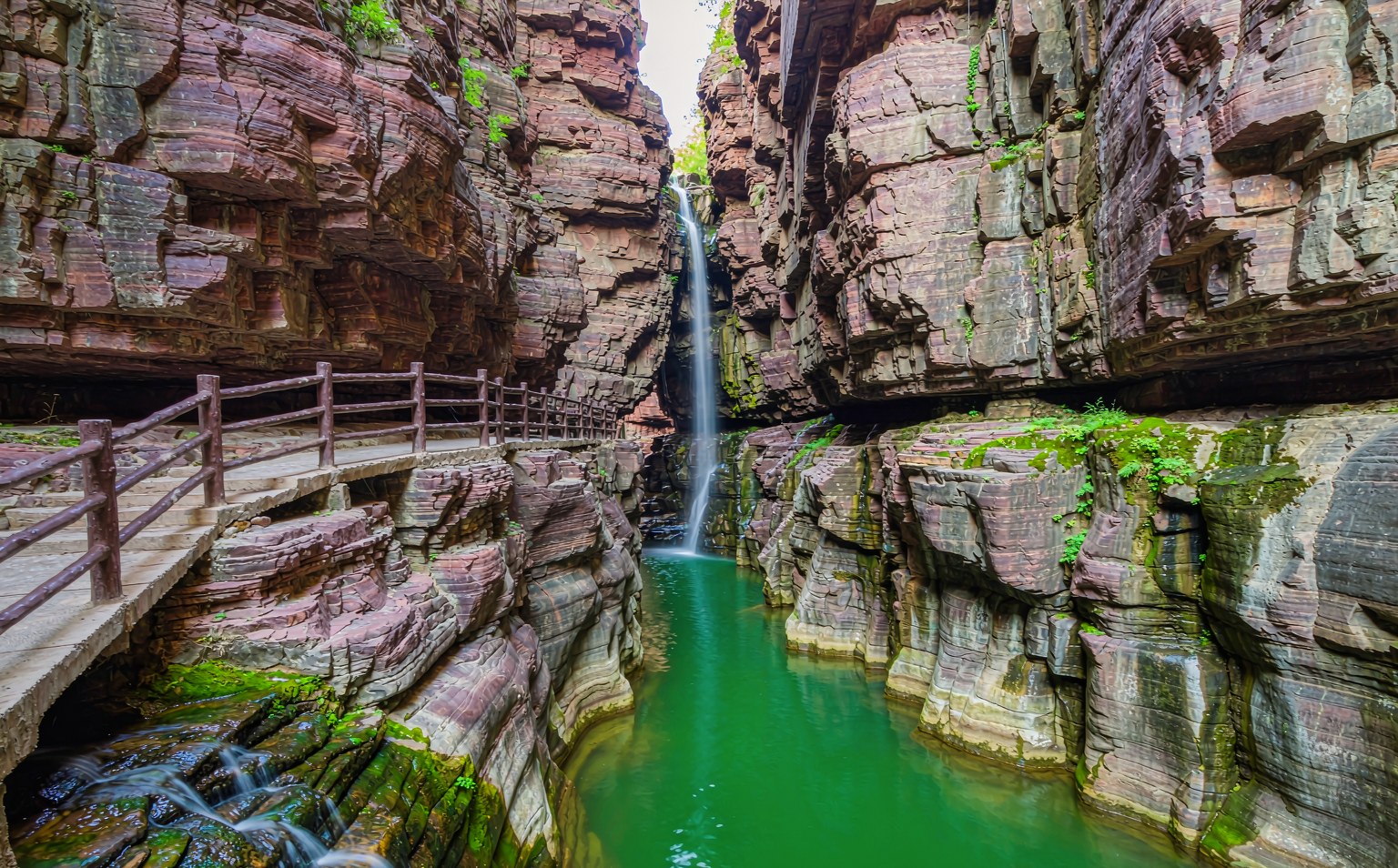
Five days from Luoyang. The Yuntai ticket at 120 yuan plus a 60 yuan shuttle pass stays valid for three days, enough for Hongshi Gorge, Tanpu Gorge and Zhuyu Peak. The fourth day turns south to Chenjiagou, the village where tai chi began.
Luoyang Departure: Wanxian Mountain, Guoliang Village and Baligou, 3 Days 2 Nights
Three days from Luoyang. Guoliang sits on top of the cliff, and the only road in is a 1,250-metre tunnel carved through the rock with thirty-five openings to the outside. Sleep in the village, then move south to Baligou, where the water drops straight off the cliff edge.
Luoyang Departure: Yuntai Mountain, Hongshi Gorge and Zhuyu Peak, 4 Days 3 Nights
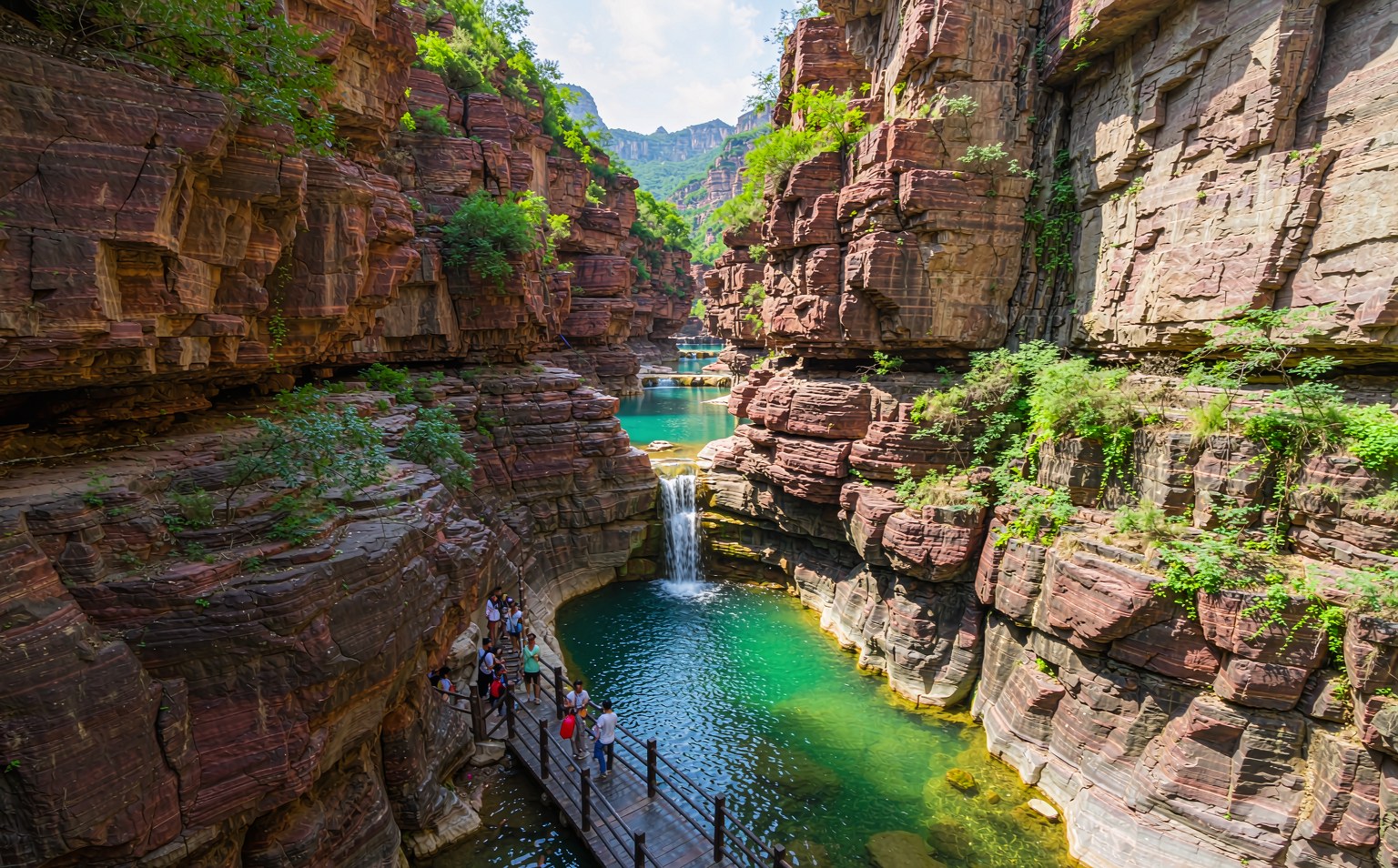
Four days from Luoyang. Hongshi Gorge runs one way, a slot of red rock that lets you walk forward only. The ticket and shuttle pass last three days, so nothing is rushed: one day for the gorge, one for the waterfalls, and the last morning up the spiral tunnels to Zhuyu Peak at 1,308 metres.