
Luoyang 4-Day Tour: Yuntai Mountain & Guoliang Village
Luoyang 4-day tour covering Yuntai Mountain and Guoliang Village and Yin Xu. Sightseeing tickets and shuttle bus included.
Highlights
Day 1: Yuntai Mountain
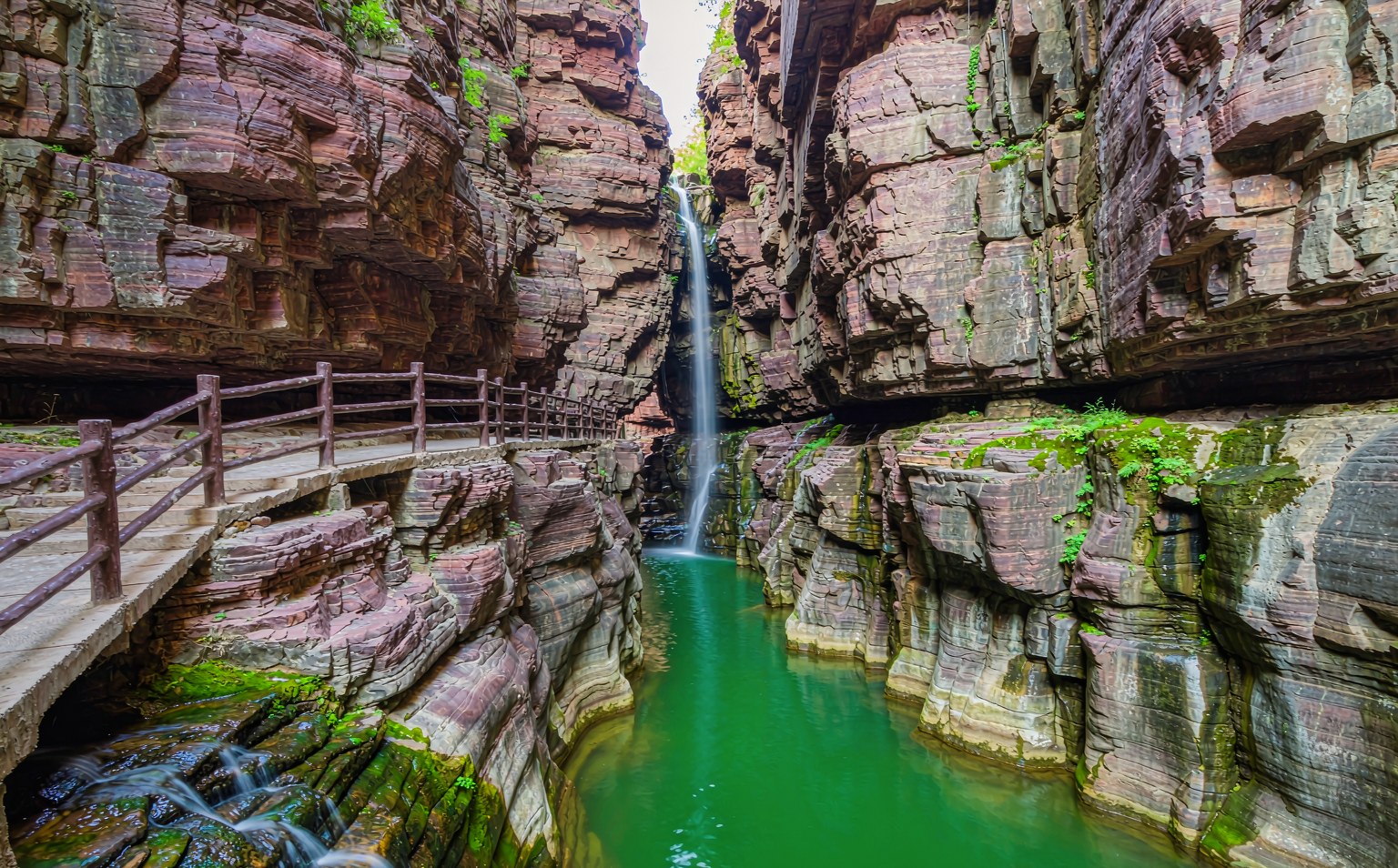
Today's hydrophilic journey connects Hongshi Gorge, Tanpu Gorge, and Quanpu Gorge along the trail, with a gentle pace suitable for the whole family; in the afternoon there is free time for additional photography, and in the evening time to rest.
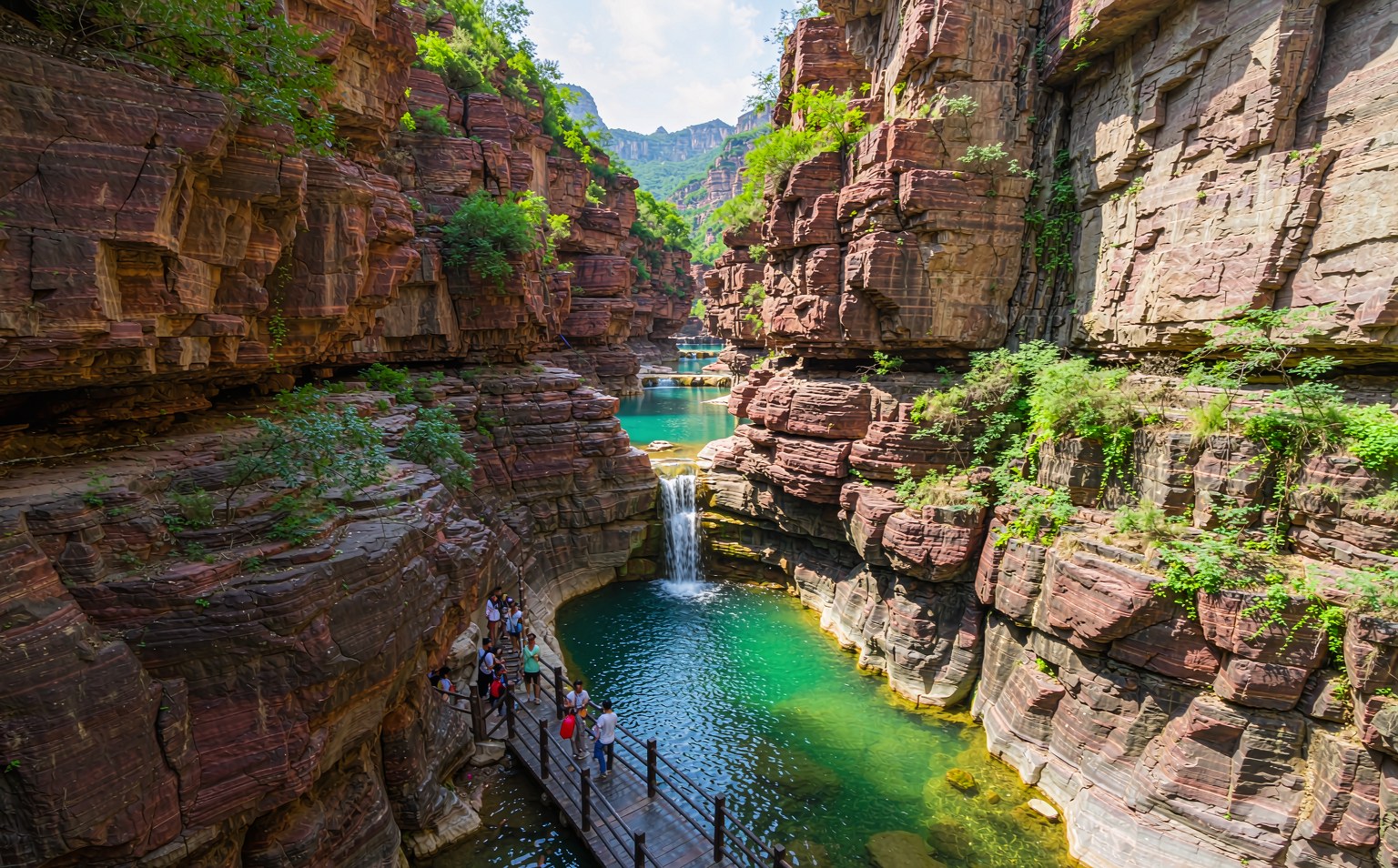
Attractions Introduction: There are Yuntai Mountain attractions in today's itinerary. Yuntai Mountain is located in Jiaozuo Xiuwu and is one of the first World Geoparks. It is famous for the red cliffs and clear waters of Hongshi Gorge, the waterfalls and flowing springs of Tanpu Gorge, the 'tallest waterfall in Asia' Yuntai Heaven Waterfall in Quanpu Gorge, and the sea of clouds and sunrise at Zhuyu Peak. It is the most representative scenic spot of mountains and rivers on the southern slope of the Taihang Mountains. Hongshi Gorge is the essence of the essence, a red quartz sandstone canyon about two kilometers long, with winding emerald waters at the valley bottom and bright red cliff walls; Zhuyu Peak is famous because of the Tang Dynasty poet Wang Wei's verse 'Everywhere inserted zhuyu, yet one person is missing.' Taking the cable car to the top allows you to overlook the Taihang peaks. Shuttle buses in the scenic area connect various points, and the trails are gentle, suitable for family trips. My understanding is that one day is not enough to see everything, so first focus on the two cores: Hongshi Gorge and Monkey Valley. Be prepared for long queues for the shuttle bus; in summer it is cool for water activities, and in autumn the forests are colorful, each season has its beauty.
Tips: There is a large temperature difference between morning and evening in the mountain area, and strong winds at the top. A windproof jacket and warm layers are necessary. Visitors generally feedback that Hongshi Gorge is considered the most photogenic spot, and the sea of clouds at Zhuyu Peak is also worth seeing; note that queues for the shuttle buses are long. If you can't see everything in a day, prioritize Hongshi Gorge and Monkey Valley. Depending on the actual situation, be time-conscious, arrive five to ten minutes early for the meeting, and it is better for the people to wait for the bus than for the bus to wait for people, so as not to make everyone wait for you.
Day 2: Guoliang Village
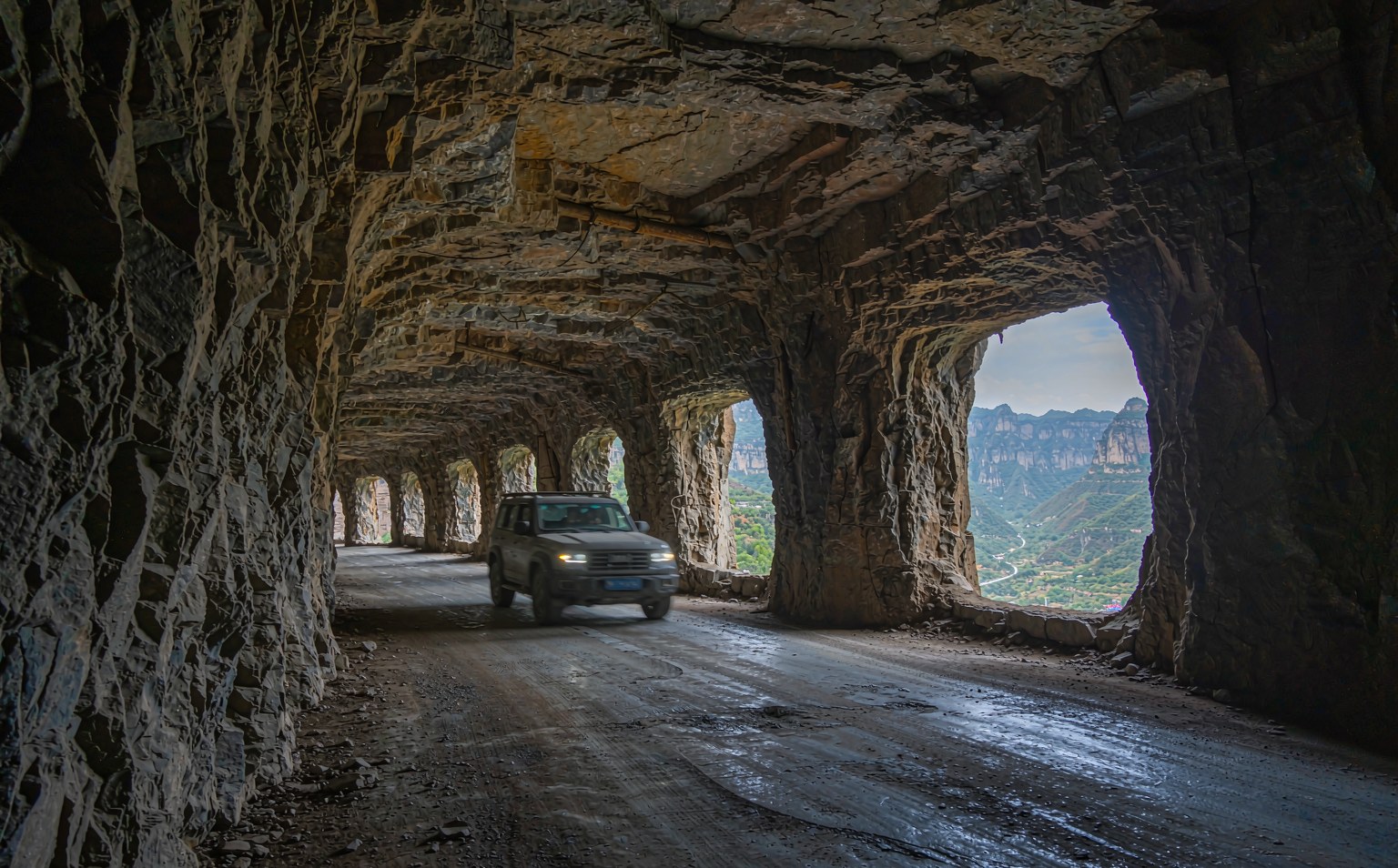
In the morning, head to Guoliang Village and hike across the cliff-hanging road, overlooking the abyss; have a farmhouse meal in the village at noon; in the afternoon, visit the film and television village and the Heavenly Ladder; descend the mountain in the evening and check in.
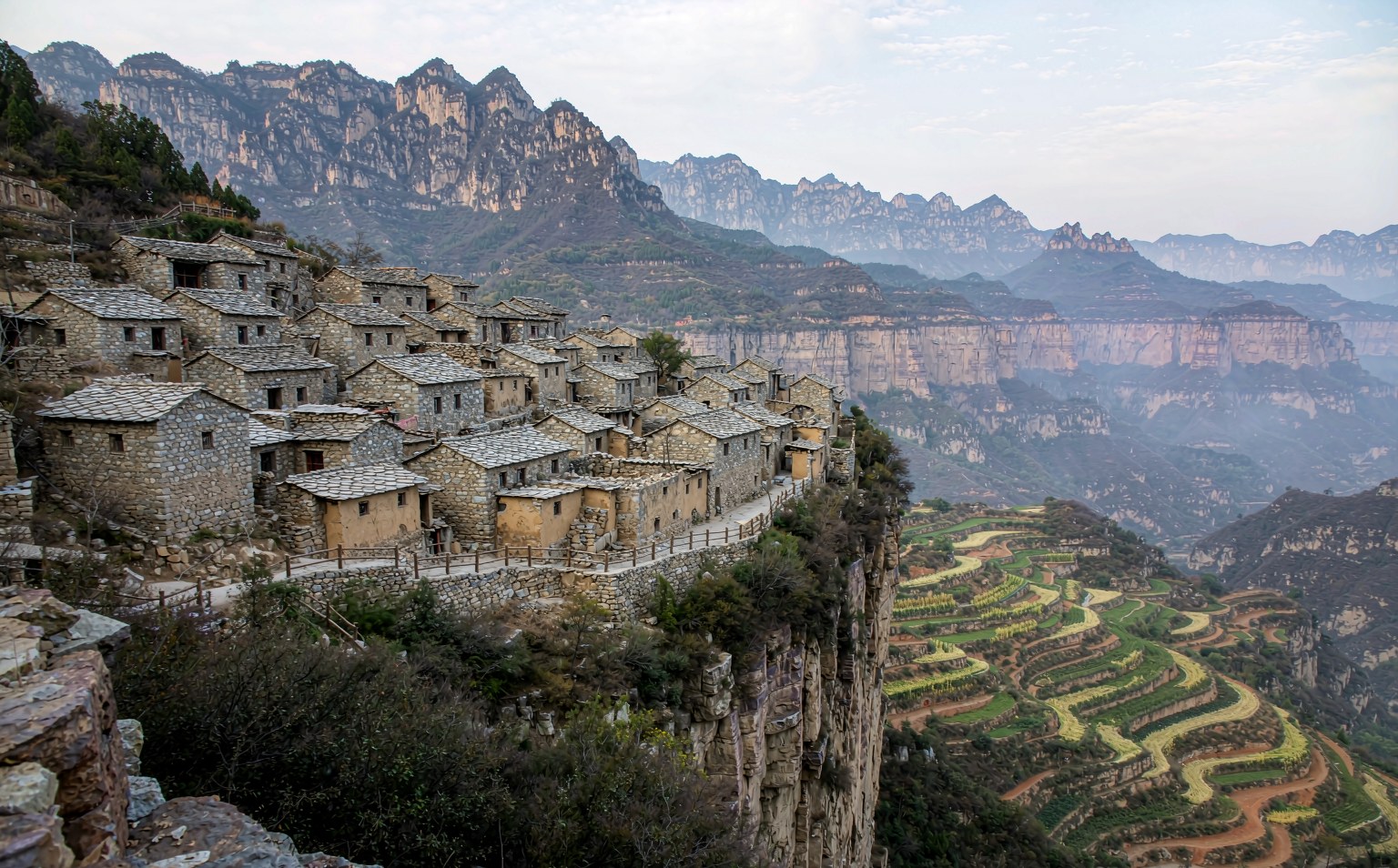
Attraction introduction: A highlight of the itinerary is Guoliang Village. Guoliang Village is hidden on a sheer cliff deep in the Taihang Mountains and is famous for the 'cliff-hanging road'—in the 1970s, villagers worked for more than five years without any large machinery to carve a tunnel about 1,300 meters long into the cliff, regarded as a modern-day 'Yu Gong' miracle. This cliff-hanging road is now the most hardcore check-in spot in the Taihang Mountains, where you can overlook the abyss and the canyon village along the way. Guoliang Village is also called the 'Chinese Film and Television Village' because many films and TV dramas have been shot here. My understanding is to allocate enough time when walking the cliff-hanging road, watch and take photos carefully, and pay attention to your feet and passing vehicles; morning or evening light is best, noon is rather flat; wear non-slip shoes and don’t get too close to the cliff edge.
Friendly tips: The ancient town is full of local specialties—taste before buying and compare prices; consume rationally. Visitors generally feedback that the cliffside stone village is connected to the cliff-hanging road, and the film shooting locations have a built-in sense of story; be reminded that village accommodations and meals are simple, so adjust expectations to enjoy more. Based on the actual situation, when taking photos, don’t only focus on getting good shots; pay attention to your feet and surroundings, and make sure to stand securely at viewing platforms and boardwalk edges.
Day 3: Yin Ruins
Early in the morning, enter Yin Ruins, first visit the palace area and the chariot and horse pits, then visit the royal tomb area, and follow the guide to understand the beginning of recorded history; in the afternoon, visit the new museum, and return in the evening.
Attraction Introduction: Today's itinerary includes Yin Ruins attractions. Yin Ruins is the late Shang Dynasty capital site, located at Anyang. It is the birthplace of oracle bone script, as well as the excavation site of the Later Lady Wu Ding Ding (originally called Simuwu Ding), and was listed as a World Cultural Heritage site in 2006. This was once the capital after King Pan Geng moved the Shang Dynasty's capital to Yin, lasting more than 270 years. Ruins such as the palace and ancestral temple areas, royal tomb area, and chariot and horse pits are clearly visible. Oracle bone inscriptions were first discovered here, pushing the evidence-based history of China back to the Shang Dynasty. The new Yin Ruins museum systematically displays bronze ware, jade, oracle bones, and other cultural relics, making it the most intuitive lesson for understanding Shang civilization. My understanding is: first look at the palace and ancestral temple ruins and the chariot and horse pits to build the spatial concept, then go to the museum to carefully examine the artifacts. Linking these two lines together provides a complete picture; oracle bone inscriptions and heavy bronze artifacts are the essence, and going through them with a guide is much better than just skimming.
Tips: The mountain trail has many steps and steep slopes, so be sure to wear non-slip sports shoes. Those with mobility issues are advised to take the cable car up and down. Visitors generally report that the oracle bone inscriptions and Simuwu Ding make history 'come alive'. Visitors say the new museum is more worthwhile than the open-air ruins; it is recommended to combine viewing with explanations to understand. Depending on the actual situation, for good photos, go early or late—the morning has fewer people and soft light, and the evening golden glow is best; noon sunlight is harsh and crowded, so it is better to rest then.
Day 4: Departure
Transfer to the station/airport per your departure, ending a pleasant journey.
Friendly tips: Pack the night before and keep ID, power bank and souvenirs together; allow extra time for the station/airport; bring your ID and stay with your guide, noting the meeting time and place. Traveler feedback — Return-day travelers remind: pack ID and souvenirs the night before; allow extra time. Practical note — Return-day tip: pack ID, power bank and souvenirs the night before; allow extra time—mountain roads are unpredictable.
Related Tours
Luoyang to Wanxianshan, Guoliang Village and Baligou 6 Days
Six days from Luoyang. The Baligou ticket at 120 yuan covers Baligou, Jiulianshan and Tianjieshan for three days. Then the trip moves to Wanxianshan, where the Guoliang cliff road runs 1,250 metres with 35 windows, begun in 1972 and opened in 1977.
Luoyang to Yuntai Mountain, Hongshi Gorge and Chenjiagou 5 Days
Five days from Luoyang. The Yuntai ticket at 120 yuan plus a 60 yuan shuttle pass stays valid for three days, enough for Hongshi Gorge, Tanpu Gorge and Zhuyu Peak. The fourth day turns south to Chenjiagou, the village where tai chi began.
Luoyang Departure: Wanxian Mountain, Guoliang Village and Baligou, 3 Days 2 Nights
Three days from Luoyang. Guoliang sits on top of the cliff, and the only road in is a 1,250-metre tunnel carved through the rock with thirty-five openings to the outside. Sleep in the village, then move south to Baligou, where the water drops straight off the cliff edge.
Luoyang Departure: Yuntai Mountain, Hongshi Gorge and Zhuyu Peak, 4 Days 3 Nights
Four days from Luoyang. Hongshi Gorge runs one way, a slot of red rock that lets you walk forward only. The ticket and shuttle pass last three days, so nothing is rushed: one day for the gorge, one for the waterfalls, and the last morning up the spiral tunnels to Zhuyu Peak at 1,308 metres.