
Jiaozuo 4-Day Tour: Wanxianshan & Red Flag Canal
Jiaozuo 4-day tour covering Wanxianshan and Red Flag Canal and Yin Xu. Sightseeing tickets and shuttle bus included.
Highlights
Day 1: Wanxian Mountain
Early in the morning, head straight from the hotel to Wanxian Mountain, first listen to the guide explain the background and highlights, then enjoy a leisurely tour and take additional camera photos based on your interests; After lunch, take a short rest, then return to the hotel in the evening to recharge for the next day.
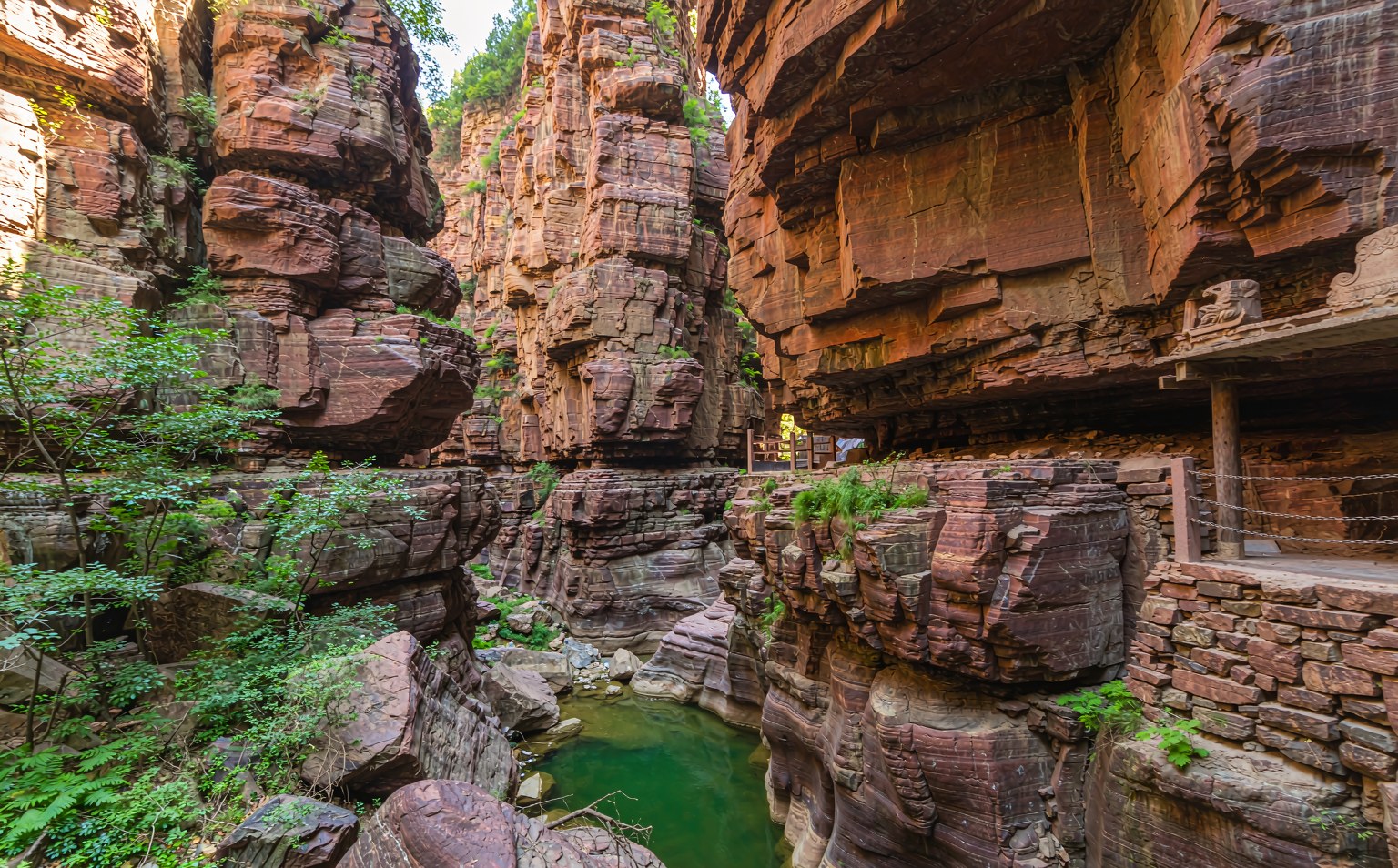
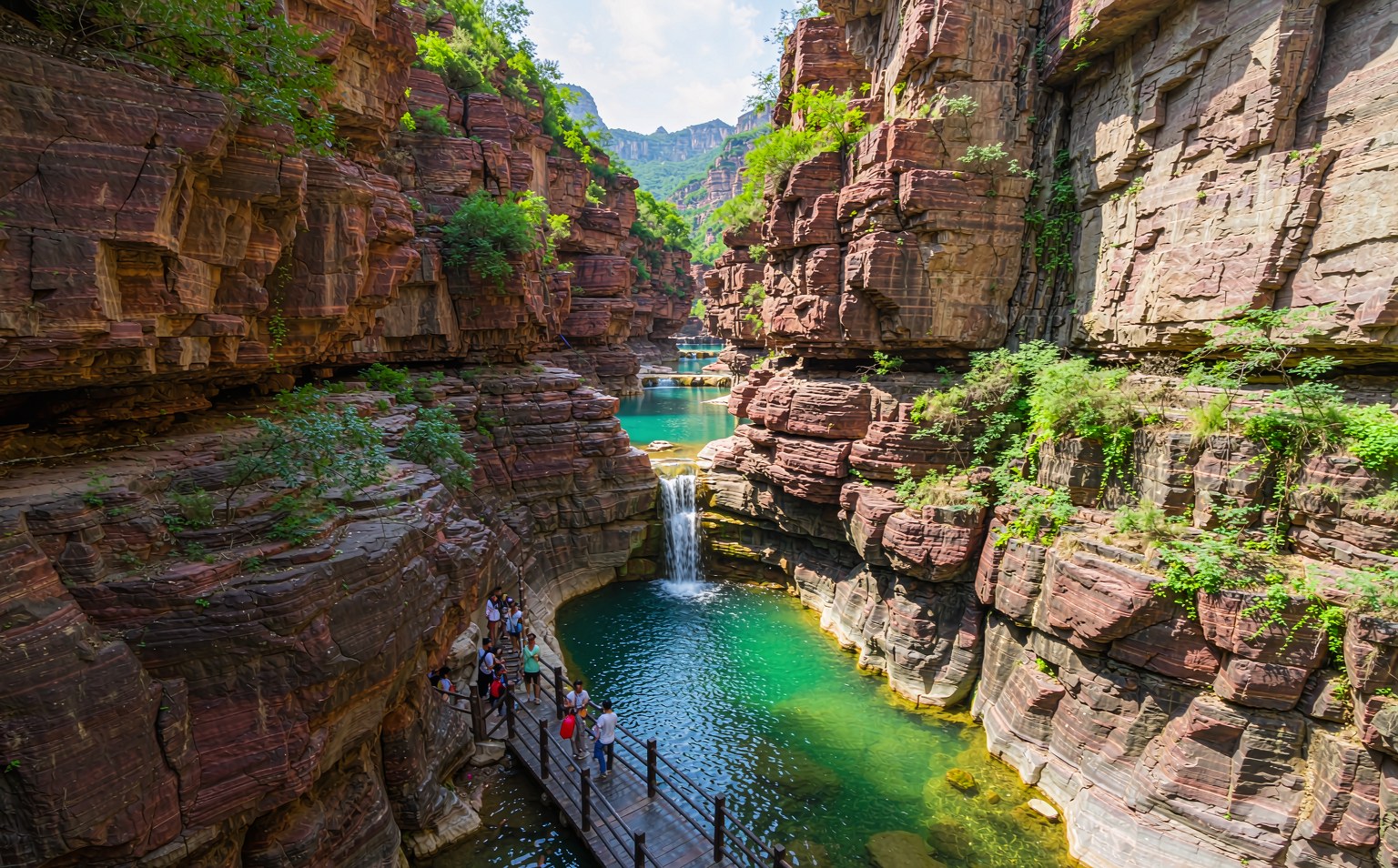
Attraction introduction: One of the highlights included in the itinerary is Wanxian Mountain. Wanxian Mountain is located deep within the Taihang Mountains in Huixian, with the Guoliang Cliff Highway and Nanpingdan Valley. The red cliffs intertwine with waterfalls and clear pools, making it one of the most iconic landscape galleries of the Taihang Mountains. This area is famous for filming many TV dramas. Attractions like Guoliang Village, Tianchi, and Fortresses form a stunning Taihang hiking route. The summer temperatures are pleasant, making it a place not far from Zhengzhou and Luoyang that you can get close to the Taihang landscape. My understanding is that the hike is heavy and there are many steps, so be sure to wear non-slip shoes; Watch out for passing vehicles along the cliff-hanging road; early morning and evening light makes the red cliffs the best for photos.
Friendly reminder: The mountain roads are slippery, so be sure to shift your center of gravity and slow down when going downhill. Knee pads are recommended. Visitors generally say the cliff-hanging road (Guoliang Cave) is the most impressive and photogenic, and the mountain roads often cause motion sickness. Prepare motion sickness medicine and walk slowly on the viewing platform. Depending on the situation, bring some change and small packs of snacks. These are useful when signal is poor or when the park needs emergency supplies. Don't wait until you're hungry to find them.
Day 2: Red Flag Canal
Today's Red Flag Canal Red Tour: Follow the guided tour of Qingnian Cave and Fenshuiyuan to understand the feats of the 1960s; You can also visit the surrounding area in the afternoon and rest in the evening.
Attraction introduction: One of the highlights included in the itinerary is Red Flag Canal. Red Flag Canal is the 'artificial Heavenly River' carved by the people of Linzhou on the sheer cliffs of the Taihang Mountains in the 1960s. It is over 1,500 kilometers long, leveling 1,250 peaks, erecting more than 150 aqueducts, and drilling more than 200 tunnels. It took nearly ten years to complete, serving as a monument to the Chinese nation's spirit of self-improvement. Youth Cave is the most dangerous section of the entire route, carved out by 300 young commandos on a sheer cliff; Fenshuiyuan and Red Flag Canal Memorial Hall fully narrate the arduous canal construction. This is a combination of red education and the magnificent scenery of Taihang, and today it is also a breathtaking cultural landmark. My understanding is that you should first visit the memorial hall to understand the canal construction background, then walk through Youth Cave to truly appreciate the canal's significance; Walk along the canal within your means, wear non-slip shoes, and watch your step.
Friendly reminder: The climbing section has many steps and steep slopes, so be sure to wear non-slip sports shoes. Those with mobility difficulties are advised to take the cable car up and down. Visitors generally report that the "Artificial Heavenly River" is a strong spiritual landmark, making it resonate more with middle-aged visitors. Remind visitors that the exhibition hall's explanations are worth listening to and helping you understand that history. Considering actual conditions, mountain weather can change quickly; a windproof jacket is more practical than anything; Always choose shoes that are non-slip and comfortable; take fewer photos to avoid twisting your ankle.
Day 3: Yin Ruins
Tour Yin Ruins in the morning, visit palaces, ancestral temple ruins, and royal tomb areas, see oracle bone inscriptions and heavy bronze artifacts; Have a nearby meal at noon, visit the new Yin Ruins Museum in the afternoon to systematically learn about commercial civilization.
Attraction introduction: Today's itinerary includes Yin Ruins attractions. Yin Ruins is the ruins of the late Shang capital located at Anyang, the hometown of oracle bone inscriptions, and the excavation site of the Houmuwu Ding (originally called Simuwu Ding). It was listed as a World Cultural Heritage site in 2006. This was once the capital of the Shang Dynasty after Pan Geng moved to Yin, lasting over 270 years. Palace and ancestral temple ruins, royal tombs, and chariot pits are clearly visible. Oracle bone script was first discovered here, tracing China's trusted history back to the Shang dynasty; The new building of the Yin Ruins Museum systematically displays bronzes, jade, oracle bones, and other artifacts, serving as the most direct classroom for understanding Shang civilization. My understanding is that first visit palaces, ancestral temple sites, and chariot pits to establish spatial concepts, then visit museums to appreciate artifacts in detail; only when these two lines connect is it complete; Oracle bone script and bronze artifacts are the essence; walking through the explanation is far better than just skimming through.
Friendly reminder: In mountainous areas, there is a large temperature difference between morning and evening, and the wind is strong at the summit. A windproof jacket and warm inner layer are very necessary. Visitors generally report that oracle bone script and Simuwu cauldron bring history to life, and visitors say the new museum is more valuable than the open-air site; Reminders are best understood by combining explanations. Based on actual circumstances, don't shop impulsively; when you see "limited-time offers," calm down for three minutes; If you really want to bring souvenirs, make sure to buy reputable stores and keep your receipts for peace of mind.
Day 4: Return
Transfer to the departure terminal per your booked train or flight; keep travel documents and tickets in your carry-on.
Related Tours
Luoyang to Wanxianshan, Guoliang Village and Baligou 6 Days
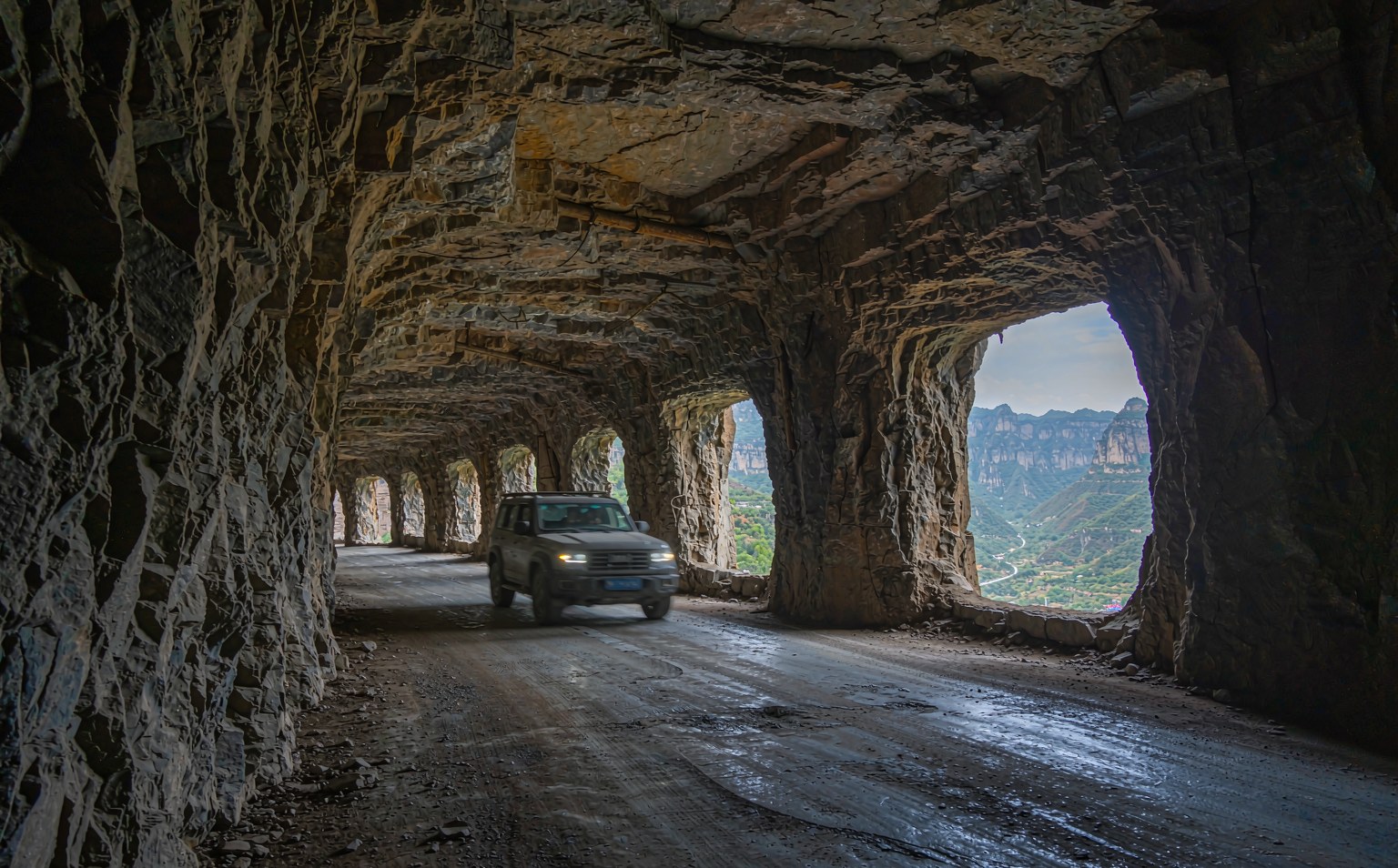
Six days from Luoyang. The Baligou ticket at 120 yuan covers Baligou, Jiulianshan and Tianjieshan for three days. Then the trip moves to Wanxianshan, where the Guoliang cliff road runs 1,250 metres with 35 windows, begun in 1972 and opened in 1977.
Luoyang to Yuntai Mountain, Hongshi Gorge and Chenjiagou 5 Days
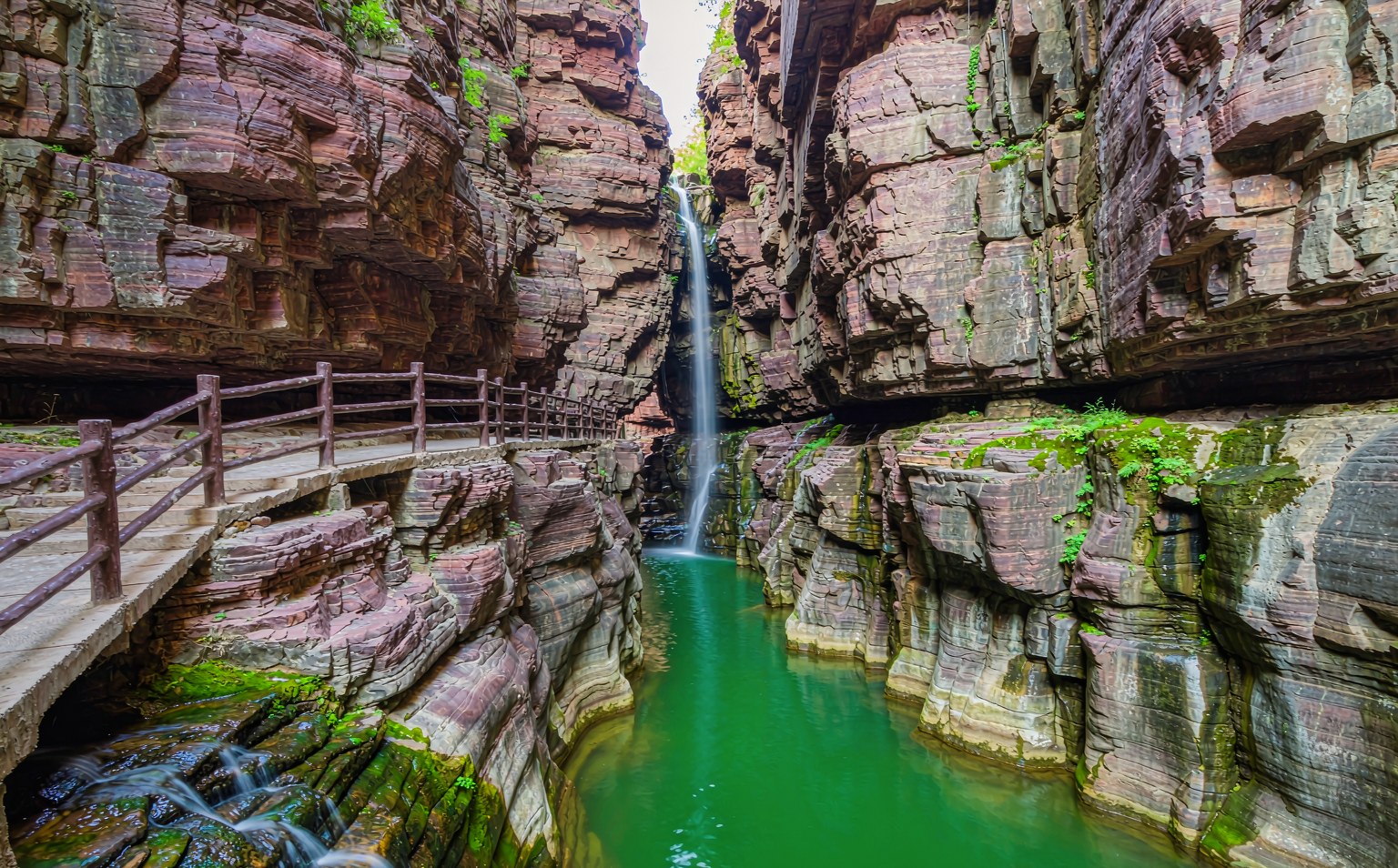
Five days from Luoyang. The Yuntai ticket at 120 yuan plus a 60 yuan shuttle pass stays valid for three days, enough for Hongshi Gorge, Tanpu Gorge and Zhuyu Peak. The fourth day turns south to Chenjiagou, the village where tai chi began.
Luoyang Departure: Wanxian Mountain, Guoliang Village and Baligou, 3 Days 2 Nights
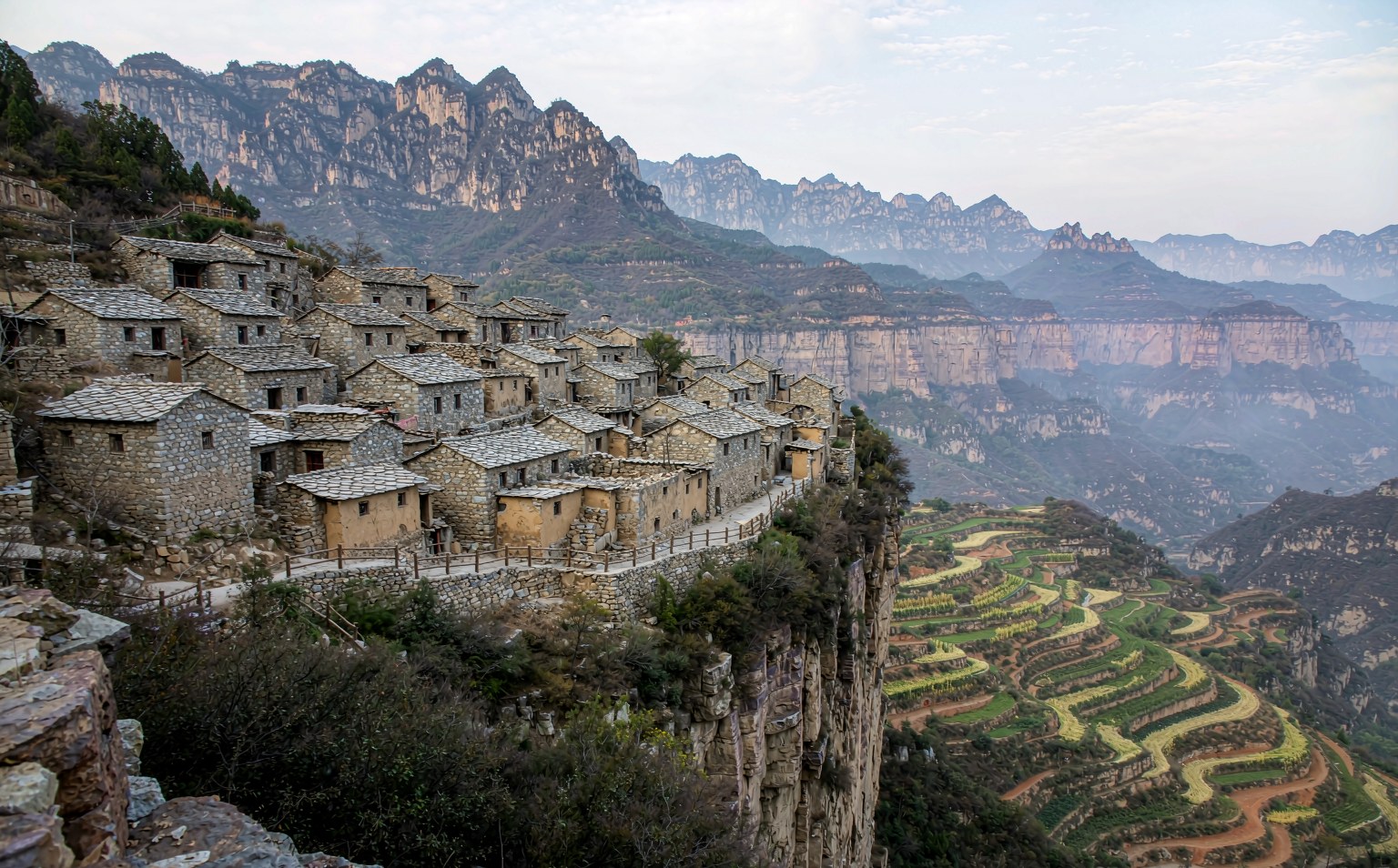
Three days from Luoyang. Guoliang sits on top of the cliff, and the only road in is a 1,250-metre tunnel carved through the rock with thirty-five openings to the outside. Sleep in the village, then move south to Baligou, where the water drops straight off the cliff edge.
Luoyang Departure: Yuntai Mountain, Hongshi Gorge and Zhuyu Peak, 4 Days 3 Nights
Four days from Luoyang. Hongshi Gorge runs one way, a slot of red rock that lets you walk forward only. The ticket and shuttle pass last three days, so nothing is rushed: one day for the gorge, one for the waterfalls, and the last morning up the spiral tunnels to Zhuyu Peak at 1,308 metres.