

Hebi 3-Day Northern Henan Tour: Yunmeng Mountain, Qi River Wetland, Junxian Ancient Town
Three unhurried days: the ancient academy and summit meadow at Yunmeng Mountain, a walk through the reeds at the Qi River wetland, an old town that glows after dark, and a Northern Wei Buddha under a cliff at Dasheng. Three places, none rushed, two of them free.
Highlights
Day 1: Yunmeng Mountain
We leave the city early and reach the Yunmeng Mountain gate around half past eight. The road from Qixian to the scenic area runs fifteen kilometres through the southern foothills of the Taihang range, walled on one side and dropping away on the other.
Water Curtain Cave (Guigu Cave) — Sun Bin, Pang Juan, Su Qin and Zhang Yi are all said to have come out of here. The entrance is low, so you duck in, and the wind outside cuts off at once — only your own footsteps echo back. It is cool inside, and the stone under your fingertips is damp. The cave runs about eighty metres deep; your eyes need a moment to adjust when you come out.
Guigu Shrine and the Cliff of Heaven-Born Words — red-walled old buildings below a cliff dense with carved inscriptions. The characters vary in size and in how deeply they are cut, and if you look closely you can tell which were added later.
Yanbing Ridge — the ridge where Sun Bin and Pang Juan are said to have fought. The whole spine is open, and from it you can see the peaks around. Nothing blocks the wind here, and it pushes hard enough that standing steady takes an effort.
Yunmeng Meadow — a high mountain grassland like this is unusual this far north in Henan. When the wind gets up, the grass lays over in waves, all in one direction. In the afternoon the light comes in from the side and the tips of the blades turn gold.
South Gate — the old buildings sit on the edge of a cliff with the valley right underneath. Once you are up there it goes quiet, and the wind drops away.
The sections up on the mountain are spread far apart and walking between them eats time; the shuttle saves a good deal. Food and gifts on the mountain are overpriced — a farmhouse restaurant near the gate runs about thirty yuan a head and feeds you well, and buying speciality items back in the county town is cheaper.
Back to the city in the evening for steamed Qi River crucian carp. The river runs clear, so the flesh is firm and white inside.
Day 2: Qi River Wetland and Junxian Old Town
We go to the Qi River National Wetland Park in the morning. No ticket.
Reed boardwalk — wooden sections run out into the reeds in pieces. Stand in the middle and look either way and the reeds are taller than you; when the wind comes through, the whole field makes that flat rushing sound. On a sunny day it is a good place to sit for a while — there is nothing to see here, it is just a walk by the water.
Classic-of-Poems Culture Corridor — more than a hundred poems in the Classic of Poetry are written about the Qi River — Wei Feng · Qi Ao, Bi Feng · Quan Shui, Yong Feng · Sang Zhong — and all of them describe this reach of water. The corridor runs along the bank with the lines carved on stone markers beside it. Stand still and read one, and the water and the words finally meet.
Bird-watching tower — climb it and you can see egrets standing perfectly still in the water. Lotus is at its best in midsummer, the ponds going pink. If you want a boat, the launch leaves the dock, goes a short way upstream and comes back — fifty minutes, thirty yuan. Skip it and the path is level, two or three hours for the loop.
We move on to Junxian in the afternoon. Get to the old town before you look at anything, and find somewhere to eat zimob first.
Zimob — baked on heated river stones, the batter a mix of millet and soybean flour, thin enough to take meat and egg. The stones are hottest the moment they come off the fire and the cook works fast. Best straight out of the oven, with a scorched fragrance when you bite through. There are plenty of these little stalls in the town; eating as you walk is easier than hunting for a particular one.
Wenzhi Pavilion — the centre of the old town, where four old streets meet. The building is not tall, and from the top the whole town is under you — grey brick and tile by day, and after dark it is better when both sides light up.
Yunxi Bridge — a Ming-dynasty stone arch over the Wei River. Come at dusk, when the sun is very low and the red lanterns cast their reflections onto the water first.
Old city wall — the bricks are original Ming and Qing, worn hollow in the middle and high at both ends.
We walk the town again at night. It is not large — two main streets take you through it — but it is worth a second round once the lights are on. People still live here, so keep it quiet when you wander; and the flagstones are uneven, so wear something flat-soled.
Day 3: Dasheng Mountain
Dasheng Mountain is inside Junxian town, about ten minutes on foot from the old city, and the morning is the right time for it.
Tianning Temple and Lüzu Shrine — halfway up the slope. This stretch has not many steps. The temple is small and not busy.
Cliff Carvings — the whole cliff face is packed with inscriptions of every size, some of them no longer legible. They run from Northern Wei through the Ming — you will not read them all, so do not force it; take in the general picture.
Dasheng Buddha — left here by the Northern Wei, carved into the cliff face, a little over twenty-two metres high. Locals call it "eight-zhang Buddha and seven-zhang tower" — the Buddha eight zhang, the tower seven. This figure predates many better-known grottoes. Stand underneath and crane your neck; the scale is something photographs do not carry. The rock under your hand has been rounded by wind and rain, all the edges gone. It has stood here for sixteen centuries and everything within reach has been worn smooth.
Bagua Tower — this is a reasonable place to turn back. Looking down from here you take in the whole old town and the Wei River at once — brick, tile, water, all legible at a glance. If you are not especially fit, this is far enough; the path beyond is no kinder.
Back to the old town for lunch. For helie mian, look for the hand-pressed kind — machine-pressed noodles lack that bite; the broth is lamb bone, and chilli oil suits it better. Eight Bowl is the local banquet dish, four meat and four vegetable, with braised tofu and crisp pork the centre of it; two people need only a small portion.
We head back in the afternoon. Slijun station is very close to the old town, fifteen minutes by taxi. Zhengzhou East is about half an hour from Hebi East by high-speed rail, with not many departures, so check the timing when you book.
Related Tours
Sanmenxia 4-Day Western Henan Canyon Tour: Hangu Pass, Swan Lake, Yellow River Three Gorges and Laojieling
A frontier pass, a bird lake, a reservoir boat ride and high-altitude meadows — four different landscapes, all within reach of Sanmenxia.
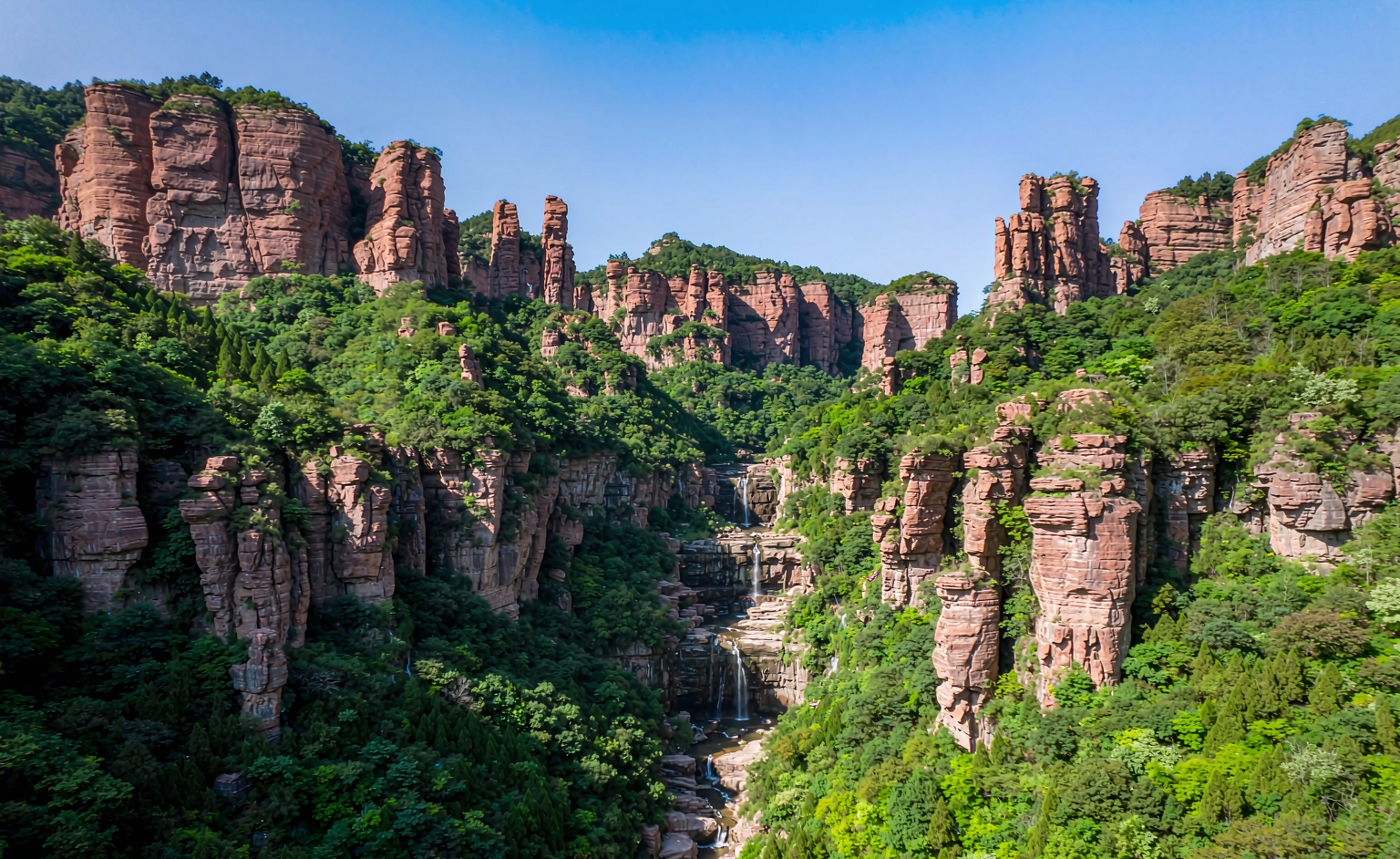
Jiaozuo 4-Day Northern Henan Nature Tour: Yuntai Mountain, Qingtian River and Shennong Mountain
Red Stone Gorge and the waterfall valley at Yuntai, a boat trip into Qingtian, and the quiet Shennong Mountain. Three mountains in three days, moderate fitness required.
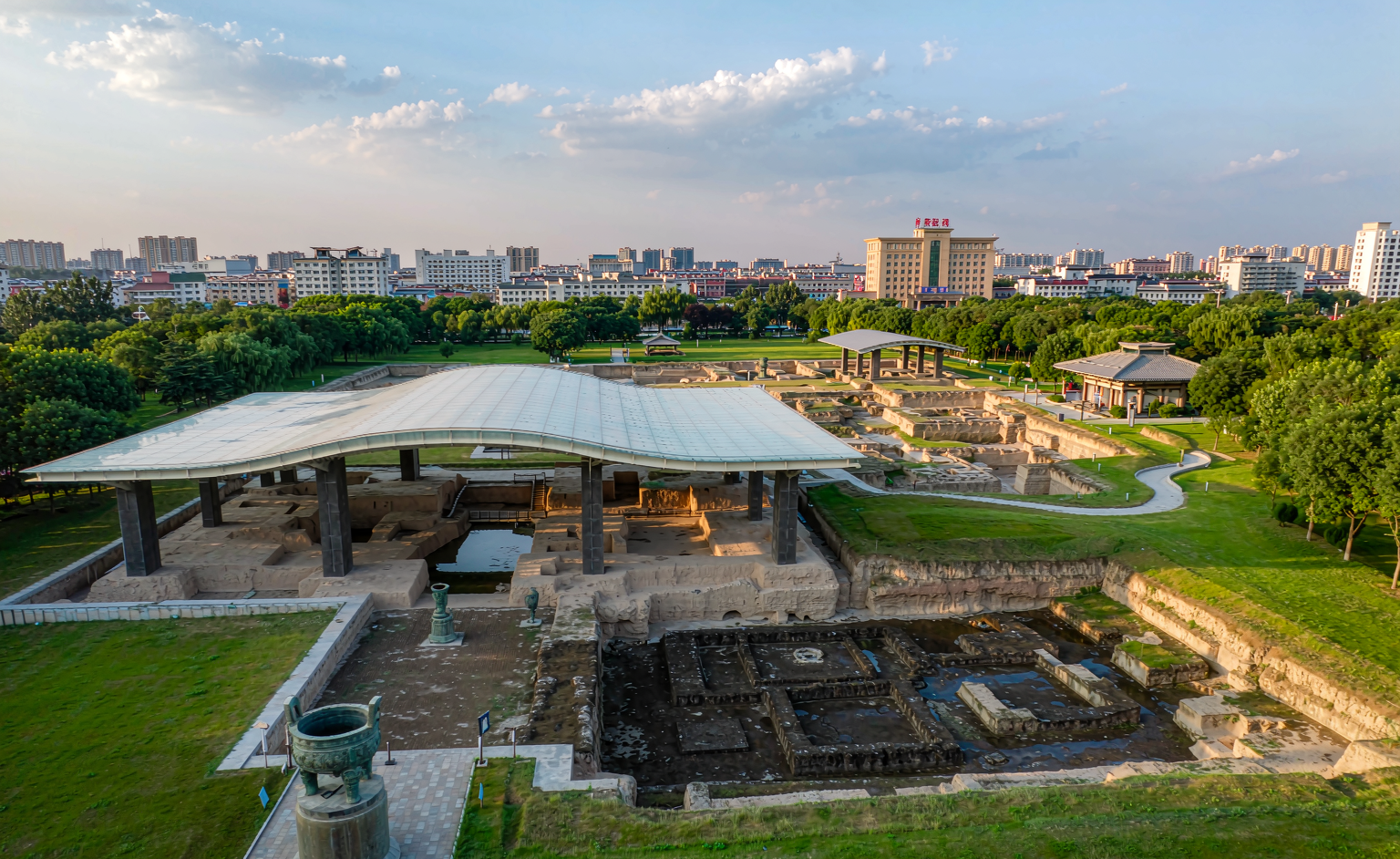
Anyang 3-Day Shang Dynasty Tour: Yin Ruins, Red Flag Canal, Character Museum and Yue Fei Temple
Yin Ruins was the late Shang capital; the Red Flag Canal is a twentieth-century project. The two sit over a hundred kilometres apart and take a day each. With the Character Museum and Yue Fei Temple, this is three days of Shang and Song-Jin history.

Xinxiang 4-Day Southern Taihang Tour: Guoliang Village, Baoquan and Bigan Temple
One night in Guoliang Village, one at Baoquan — both in the mountains. Bigan Temple and the Bigan cultural site sit on the way back. The tunnel road is the centrepiece of this classic Southern Taihang route.