
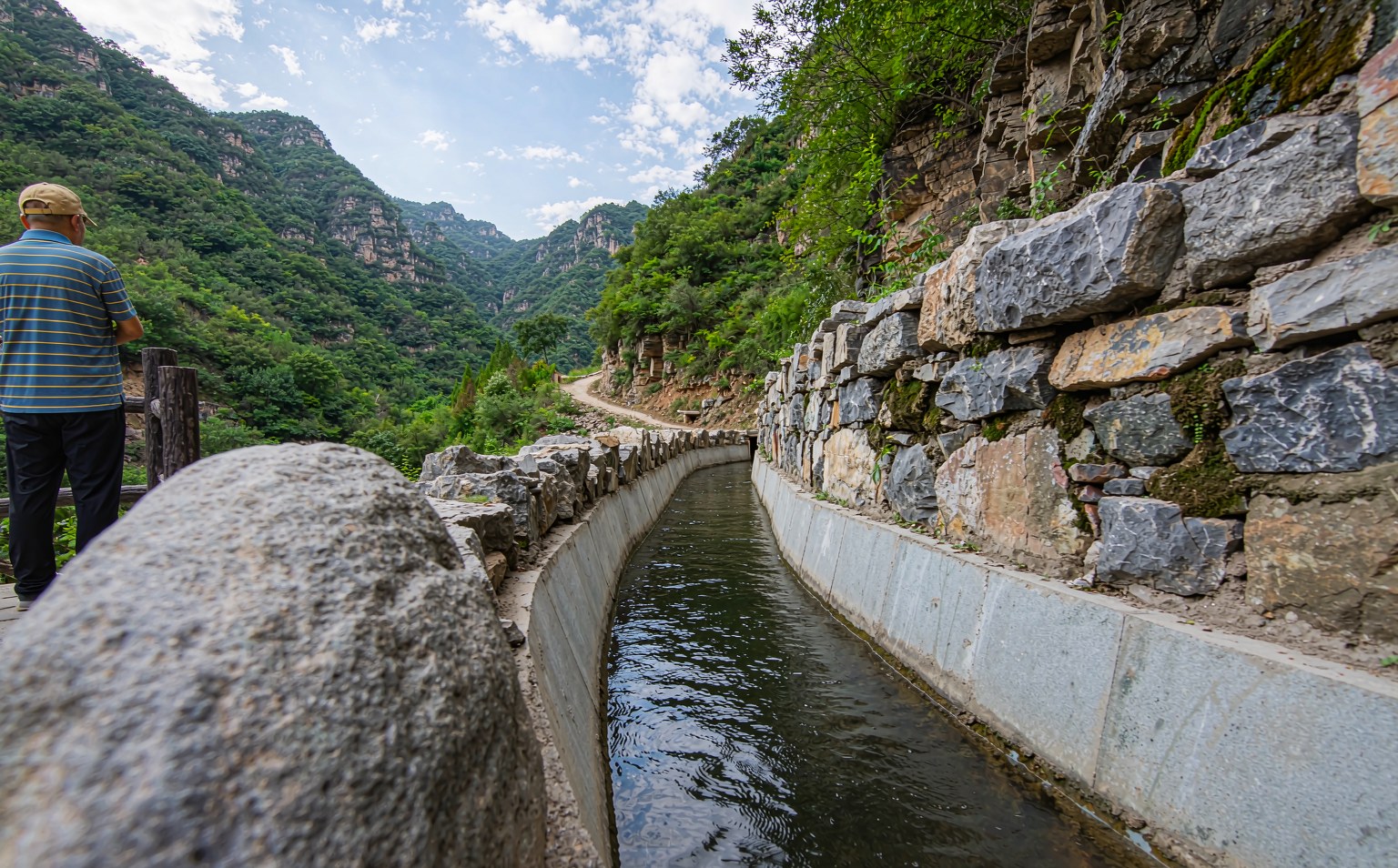
Luoyang to Red Flag Canal and Taihang Grand Canyon, 6 days
Six days from Luoyang. The Red Flag Canal gives you the channel walls and the Youth Cave, with the original hammers and ledgers in the museum. Then four days in Taihang Grand Canyon: water in Peach Blossom Valley, ladders at Wangxiang Rock, the sky road on the rim.
Highlights
Day 1: Luoyang to Linzhou, museum and Fenshui Garden
Leave at seven, take the Erguang then the Nanlin expressway, and reach Linzhou in a little over three hours. After lunch, the Red Flag Canal museum, where photographs, hammers and account books from the construction years are laid out by date, along with a full-size reconstruction of a channel section. Then Fenshui Garden, where the main canal splits into three branches and the sluice gates are still working. Back to the city to sleep, with a walk to the canal in the evening if you like.
Attraction introduction: Work on the Red Flag Canal began in 1960 and finished in 1969, when the people of Linzhou cut a channel through the Taihang slopes to bring the Zhang River into their fields. The main canal runs 70.6 km. The museum stands beside the original line, and Fenshui Garden marks the point where it divides.
Tips: The museum is mostly documents and objects and takes over an hour if you actually read, so do not hurry it. Guests generally find the first day of a long drive makes them drowsy indoors. In practice, walk the galleries first to wake up, then look at the reconstructed channel.
Day 2: Youth Cave, where the canal runs through the mountain
An hour from the city to the Youth Cave. The tunnel is cut into the cliff and the canal runs straight through it, dug by a youth shock brigade in the hardest stretch of the whole project. Walk a section of the channel wall: water below your feet, rock overhead, a deep gully on the outside. The inscription at the mouth is still there. Lunch on site, then a short boat ride into the tunnel or the glass slide down; if neither appeals, sit by the canal.
Attraction introduction: The Youth Cave is the most difficult stretch of the main canal and takes its name from the young crews who cut it. The bore is small in section, the water passes through the middle, and visitors walk the channel wall with water on one side and cliff on the other.
Tips: The outer edge of the wall drops a long way, so stop walking before you take a picture. Guests generally find the morning light falls on the inscription while the afternoon turns it flat white. In practice, anyone uneasy with heights should keep to the inner side.
Day 3: Peach Blossom Valley, then Shibanyan
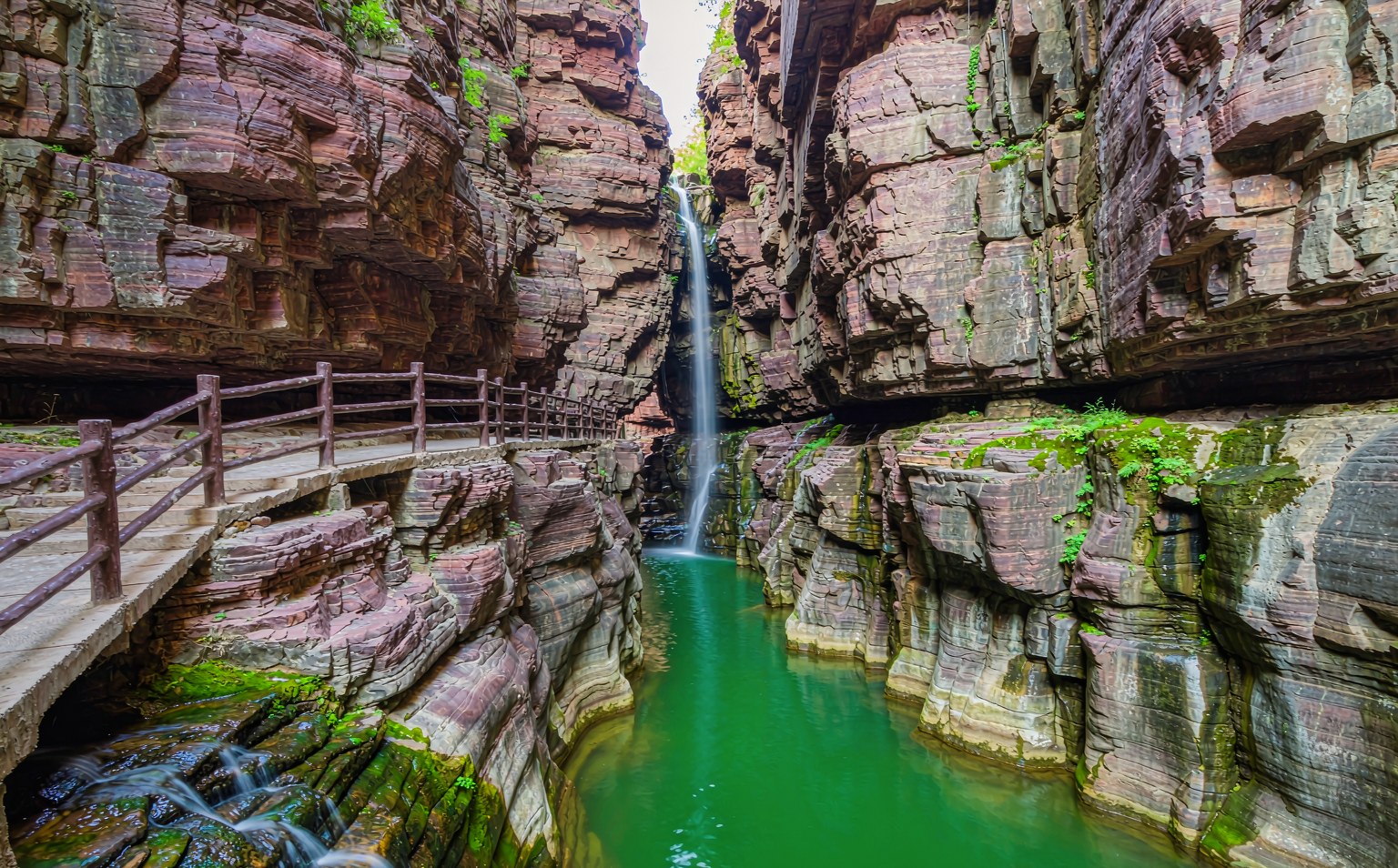
Into the canyon in the morning, Peach Blossom Valley first. The path follows the water past pools and falls, stones polished bright, boardwalk built against one wall. Walk to the head of the valley and come back: easy going down, a bit of work coming up. Lunch at Shibanyan, and no sights in the afternoon. Wander the town instead, which is a sketching base, with easels set up along the road most days.
Attraction introduction: Taihang Grand Canyon runs through the Shibanyan area and is the deepest section of the southern Taihang. Peach Blossom Valley is its water line, a stream that never dries, sheer walls on both banks and the drop concentrated in a series of steps. Shibanyan town is named for the stone slabs of the mountain, and most houses are built from them.
Tips: The valley floor is cool, so add a layer in autumn and enjoy it in summer. Guests generally find Peach Blossom Valley quiet in the morning and busy once groups arrive after ten. In practice, keep this day half sight and half rest, so that six days do not pile up at the front.
Day 4: Wangxiang Rock and the ladders on the cliff
Twenty minutes from town to Wangxiang Rock. The entrance is a gentle slope, then the boardwalk starts to climb against the cliff, rock on one side and air on the other, with an iron stair spiralling up the face in the middle. The platform at the top opens the whole gorge. If the legs are unsure, turn back at the platform; there is no shame in it. Afternoon back in town with the legs up.
Attraction introduction: Wangxiang Rock is the cliff line of the canyon, named for Fu Yue, the minister of the Shang, who is said to have lived in seclusion here. The mouth is narrow and the walls close into a ring inside, with boardwalk and iron stair twisting upward, a classic piece of Taihang red cliff country.
Tips: The boardwalk is narrow, so give way to people coming down rather than walking abreast. Guests generally find the iron stair the real test and many turn around there. In practice, put Wangxiang Rock in the morning when the legs are fresh and rest afterwards.
Day 5: The sky road along the rim
The sky road in the morning. It runs along the cliff top and private cars are not allowed, so you change to a park shuttle at the transfer point. The bus keeps to the edge, the whole gorge outside the window and ridge after ridge beyond. A few platforms stop the bus, ten minutes out and back on. Two hours or so, and no walking to speak of. Afternoon back at Shibanyan, sitting by the river outside the village.
Attraction introduction: The Taihang sky road is a scenic route built along the canyon rim, linking several viewpoints. It is narrow and full of bends, which is why everyone transfers to the park shuttle. From the top you see the gully that holds Peach Blossom Valley and Wangxiang Rock, and the stacked red beds of the Taihang are easy to read.
Tips: Save the sky road for a clear day, because fog on the rim hides everything. Guests generally find the shuttles infrequent, so note the departure time before walking off. In practice, put the road on the clearest day and swap it with Peach Blossom Valley if rain arrives.
Day 6: Back to Luoyang
No rush. Millet porridge in town, then a couple of kilos of dried persimmon. Leave at nine, take the Nanlin to the Erguang expressway, and reach Luoyang in three and a half hours, with a stop at a service area on the way. Home in the afternoon, and give the legs two quiet days afterwards.
Attraction introduction: Linzhou lies on the eastern slopes of the Taihang, most of it upland. Shibanyan produces stone slabs, used for houses, walls and roofs, which gave the town its name and turned it into a sketching base, busiest when the students arrive in autumn.
Tips: Six days of walking leave the legs tired, so add nothing on the way home. Guests generally find the tunnels on the Nanlin expressway make passengers sleepy. In practice, eat at a service area rather than holding out for Luoyang.
Related Tours
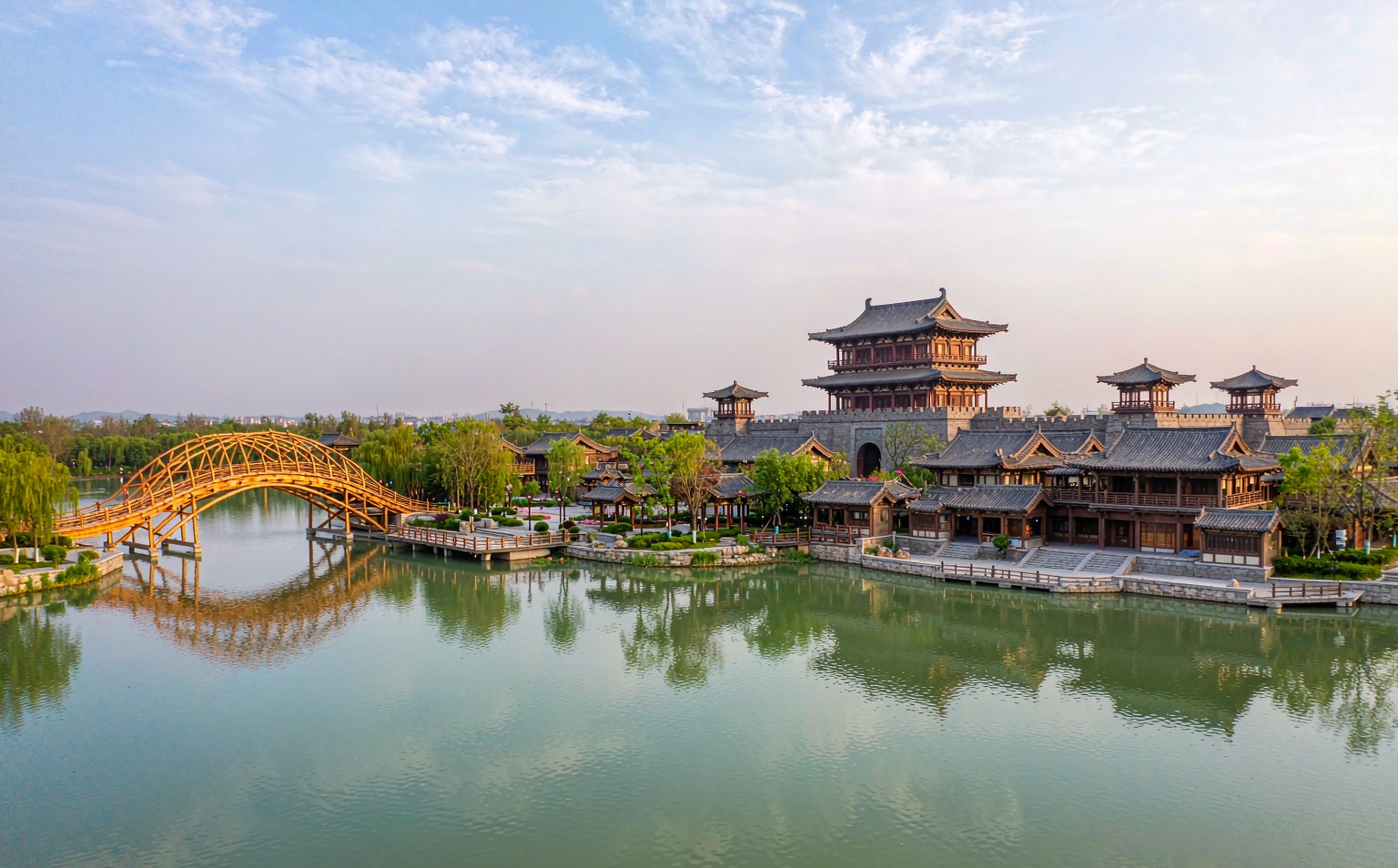
Luoyang to Kaifeng: Qingming Riverside, Iron Pagoda, Xiangguo Temple
Three days from Luoyang, timed for the last fortnight of the chrysanthemum festival, when pots stand on every corner and Longting holds the main display. A full day in Qingming Riverside, half a day each for the Iron Pagoda and Xiangguo Temple.
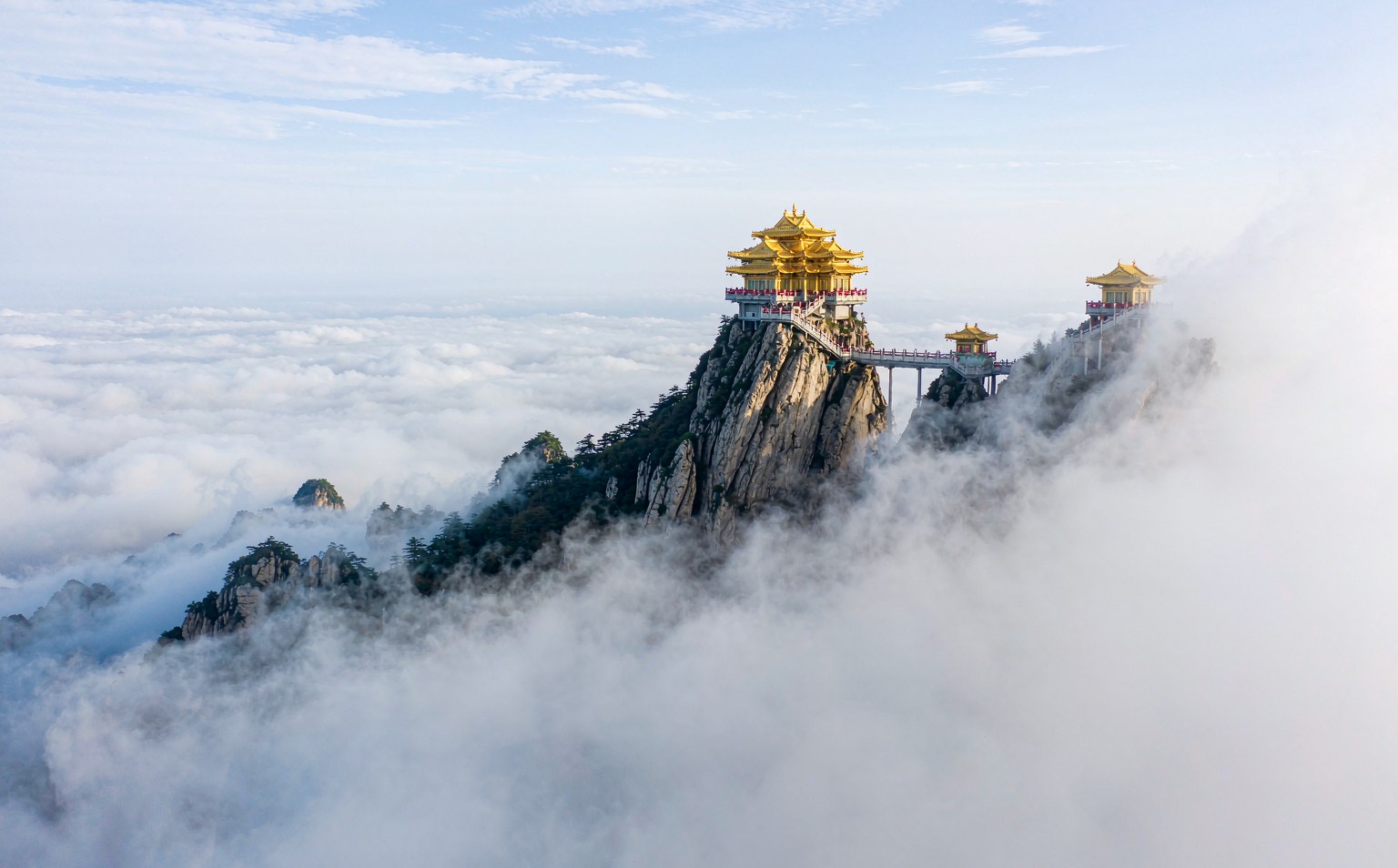
Luoyang to Laojun Mountain summit and Yangzi Valley, 3 days
Three days from Luoyang. Two cable cars carry you to the golden summit, where autumn cloud seas arrive without warning and the lights come on around six. Then down into Yangzi Valley, one stream, gentle gradient, no sore legs.
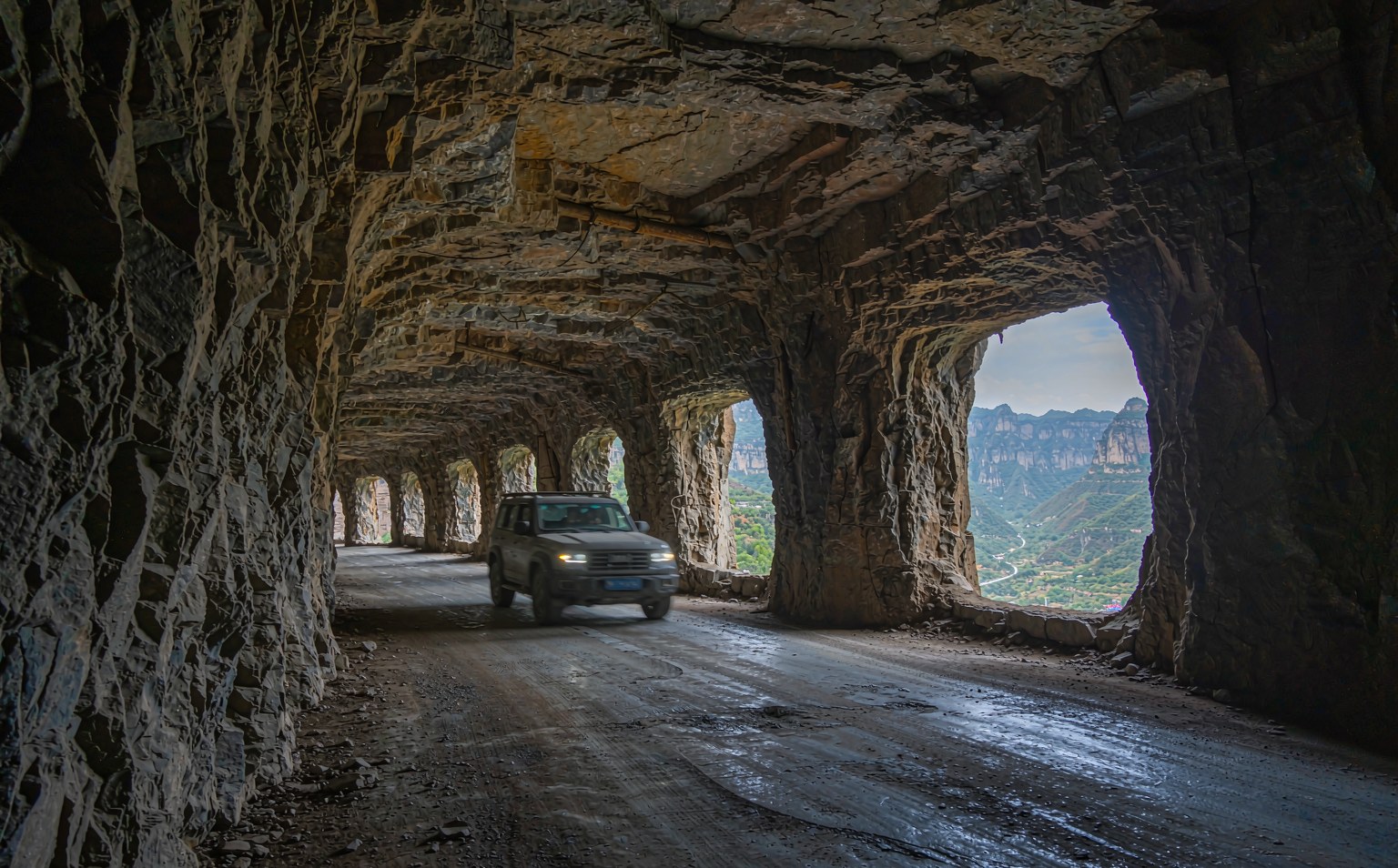
Luoyang to Wanxian Mountain, Guoliang and Baoquan, 4 days
Four days from Luoyang. First up to Guoliang village and the road cut through the cliff, with thirty-five windows letting light through in bars. Then Baoquan: cable car to the cliff top, cave lift down to the gorge, walking downhill the whole way.
Luoyang to Yuntai Mountain, Fenglin Gorge and Chenjiagou, 5 days
Five days from Luoyang. In November the crowds thin out, the water in Red Stone Gorge keeps its dark green, and the single-file walk of about 1.5 km never doubles back. Two days later you take a boat across Emerald Lake and watch a village practise taiji.