
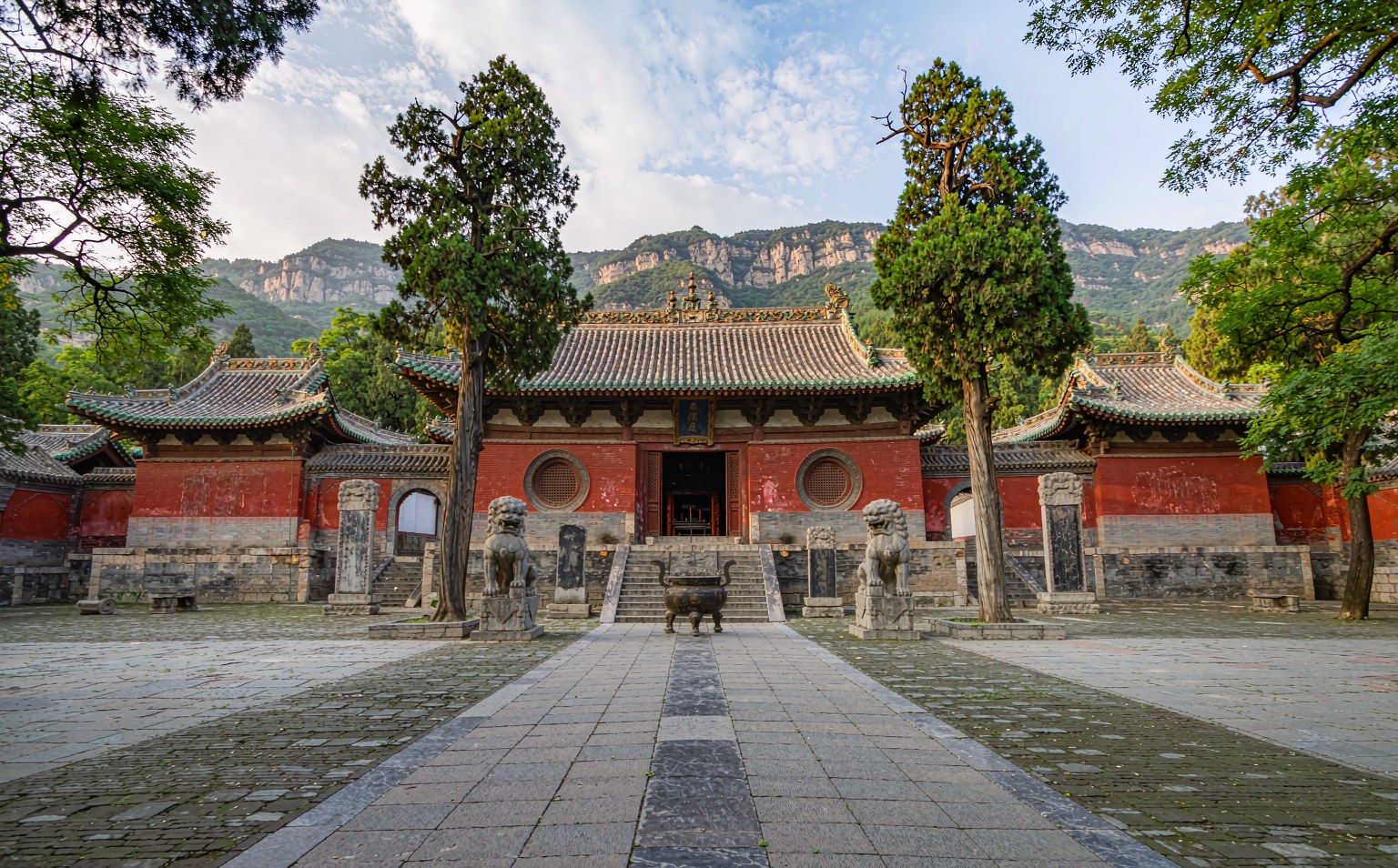
Songshan in Five Days: Shaolin Temple, Songyang Academy, Zhongyue Temple and the Observatory, 5 Days 4 Nights
Five days across both slopes of Songshan. Shaolin for the foot pits worn by standing monks, Sanhuangzhai for a plank road on the cliff and the upright Book Cliff, then the red walls of Zhongyue Temple and the Yuan observatory at Gaocheng.
Highlights
Day 1: Into Dengfeng, an afternoon at Songyang Academy
We leave Luoyang at eight on the Zhengzhou-Shaolin expressway and reach Dengfeng in ninety minutes, dropping bags before lunch. The afternoon belongs to Songyang Academy at the foot of Taishi Mountain, entered along a long paved approach lined with cypresses said to have been titled by Emperor Wu of Han, trunks that take several people to circle. The lecture hall still holds desks, and this is where the Cheng brothers taught. Further in stands the great Tang stele, tall enough that the top only appears when the head goes all the way back. We come out at dusk and sit on the slope outside, watching the ridge of Taishi fade.
Attraction introduction: Songyang Academy was founded in 484 as Songyang Temple and became a Confucian academy in the Song, where Cheng Hao and Cheng Yi lectured, counted with Yuelu, Yintian and Bailudong as the four great academies. Its Han cypresses and the Tang stele in praise of Laozi are protected national relics, and the whole group entered the World Heritage list in 2010 as part of the Centre of Heaven and Earth.
Tips: The academy charges 30 yuan and is not covered by the Shaolin or Zhongyue tickets, so do not assume one purchase opens everything. Guests generally find the courtyards empty after four, when the sun rakes in and the cypress shadows stretch across the stones. In practice, the academy sits inside the Taishi Mountain scenic area, and climbing Jiji Peak needs a separate ticket, so save the legs for Sanhuangzhai instead.
Day 2: Shaolin, the show first and the temple after
The second day belongs to Shaolin. We enter at half past eight, take the shuttle to the martial arts hall and catch the nine thirty show: staff forms, boxing, hard qigong, and a final bout of sparring that lands loudest. Then the main compound, gate by gate from the mountain gate to the Mahavira Hall, ending at the Thousand Buddha Hall where forty eight hollows in the floor were worn by monks holding stances, the foot positions still readable behind the rail. Five hundred metres west stands the pagoda forest, more than two hundred brick and stone towers packed on the slope, Tang square, Song octagonal, Ming round, stacked like pages. Back in town by evening, the temple refectory serves vegetarian food at thirty or forty yuan a head.
Attraction introduction: Shaolin was founded in 495 by Emperor Xiaowen for the Indian monk Batuo, and Bodhidharma sat facing a wall here for nine years, making it the ancestral home of Chan Buddhism, listed with the Centre of Heaven and Earth in 2010. The compound runs seven courtyards deep, the Thousand Buddha Hall keeps a Ming mural of five hundred arhats, and the floor pits are the physical record of Ming and Qing practice.
Tips: The 80 yuan ticket covers the compound, the pagoda forest, the martial arts show, Sanhuangzhai, Chuzu Temple and Damo Cave, with no second gate. Guests generally find the show times fixed and an hour lost if one is missed, so the martial arts hall comes first. In practice the gate closes at half past four from October to February, and the pagoda forest loses its light early, so keep the afternoon light.
Day 3: Sanhuangzhai and the plank road
On the third morning we ride the cable car up to Sanhuangzhai. Twelve minutes brings us to the shoulder of the mountain, where the plank road begins, pinned to the cliff of Shaoshi with hundreds of metres of air below and nothing but rock beyond the rail. A stretch further is the Book Cliff, its strata standing on end like a stack of volumes pushed into the mountain, the page edges weathered uneven. Then the sky bridge, which sways underfoot while people shuffle across holding the cables. Two or three hours round trip, and no reason to hurry.
Attraction introduction: Sanhuangzhai sits on the flank of Shaoshi Mountain in the core of the Songshan global geopark, known for red cliffs, the cliff walk, the Book Cliff and the sky bridge. The strata of the Book Cliff are ancient quartz sandstone lifted almost vertical by the Songyang movement, a section rare enough that geologists use it as a teaching case.
Tips: The cable car is 70 one way and 100 return, optional, and walking up instead takes over three hours. The last ascent is at four in the afternoon, so be at the station before two or face the stairs down. Guests generally find several flights narrow and steep, and those uneasy with height should keep to the inner side. In practice there is nothing to buy on the mountain, so carry water from the visitor centre and wear shoes with grip.
Day 4: Red walls at Zhongyue, a shadow at the observatory
The morning goes to Zhongyue Temple, laid out along its axis from the Chinese Gate through the Tianzhong Pavilion, the Chongsheng Gate, the Huasan Gate and the Junji Gate to the Junji Hall, red walls folding one after another while the cypresses in the yards are older than the halls and the stone lions at the steps are polished by hands. After lunch we drive south out of the city to Gaocheng and the observatory, a brick platform built under Guo Shoujing, with a tall body on one side and a long stone scale on the other, where the noon shadow tells which solar term has arrived.
Attraction introduction: Zhongyue Temple was founded in the Qin and is the largest surviving Taoist complex among the five sacred peaks, its axis running from the Chinese Gate to the Junji Hall with more than three hundred ancient cypresses. The Gaocheng observatory was built in the Yuan under Guo Shoujing and Wang Xun and is the oldest surviving observatory in China, added to the World Heritage list in 2010.
Tips: Zhongyue costs 30 yuan while the observatory is free, and they sit on different roads, the temple east of the city and Gaocheng a twenty minute drive south. Guests generally find the temple nearly empty before nine, when only locals come to burn incense and the wind moves audibly through the cypresses. In practice the observatory yard has little shade and the November wind is sharp, so bring a hat and a jacket for standing about.
Day 5: Up Wuru Peak to Damo Cave
The last day keeps its distance from timetables. We return to Shaolin but skip the temple, taking the path northwest of the compound up Wuru Peak to Damo Cave. Forty minutes of stone steps and the shirt is wet by the entrance. The cave is shallow, holding seven or eight people, and this is where Bodhidharma faced the wall for nine years. The stone figure at the mouth was carved later, but the cave is the cave. Down again for a vegetarian lunch in the temple, then the road back to Luoyang without detours.
Attraction introduction: Damo Cave sits high on Wuru Peak of Shaoshi Mountain, held by tradition to be the place where Bodhidharma sat in meditation for nine years, with a later stone portrait at the entrance. Chuzu Temple, about two kilometres northwest of the compound, was built in 1125 and is one of the most complete Song wooden structures in Henan, its carved stone columns the work of Song craftsmen.
Tips: Both the cave and Chuzu Temple are covered by the 80 yuan Shaolin ticket, but they need their own time and close at five. Guests generally find the steps dense and the shade scarce on this path, an hour and a half round trip, ordinary trainers being enough. In practice lunch at the temple refectory fits neatly after the descent, so do not book an early train home.
Related Tours
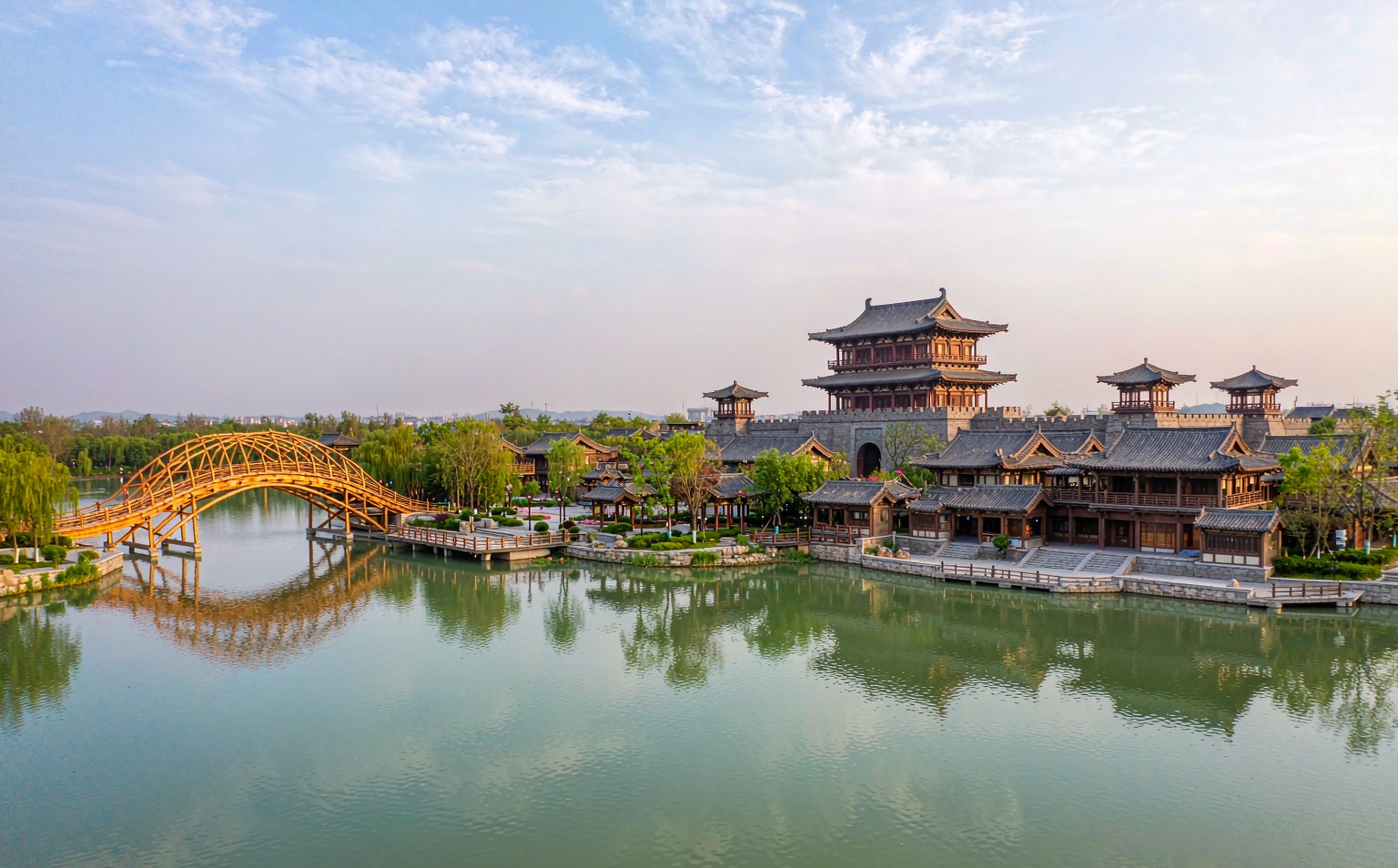
Kaifeng in Four Days: Qingming Riverside Garden, Dragon Pavilion and Kaifeng Prefecture, 4 Days 3 Nights
Four days of Kaifeng in autumn. The chrysanthemum festival fills the imperial approach at Dragon Pavilion until 17 November, Qingming Riverside Garden runs its shows from morning to the night performance on the water, and justice is still being served in the prefecture hall.
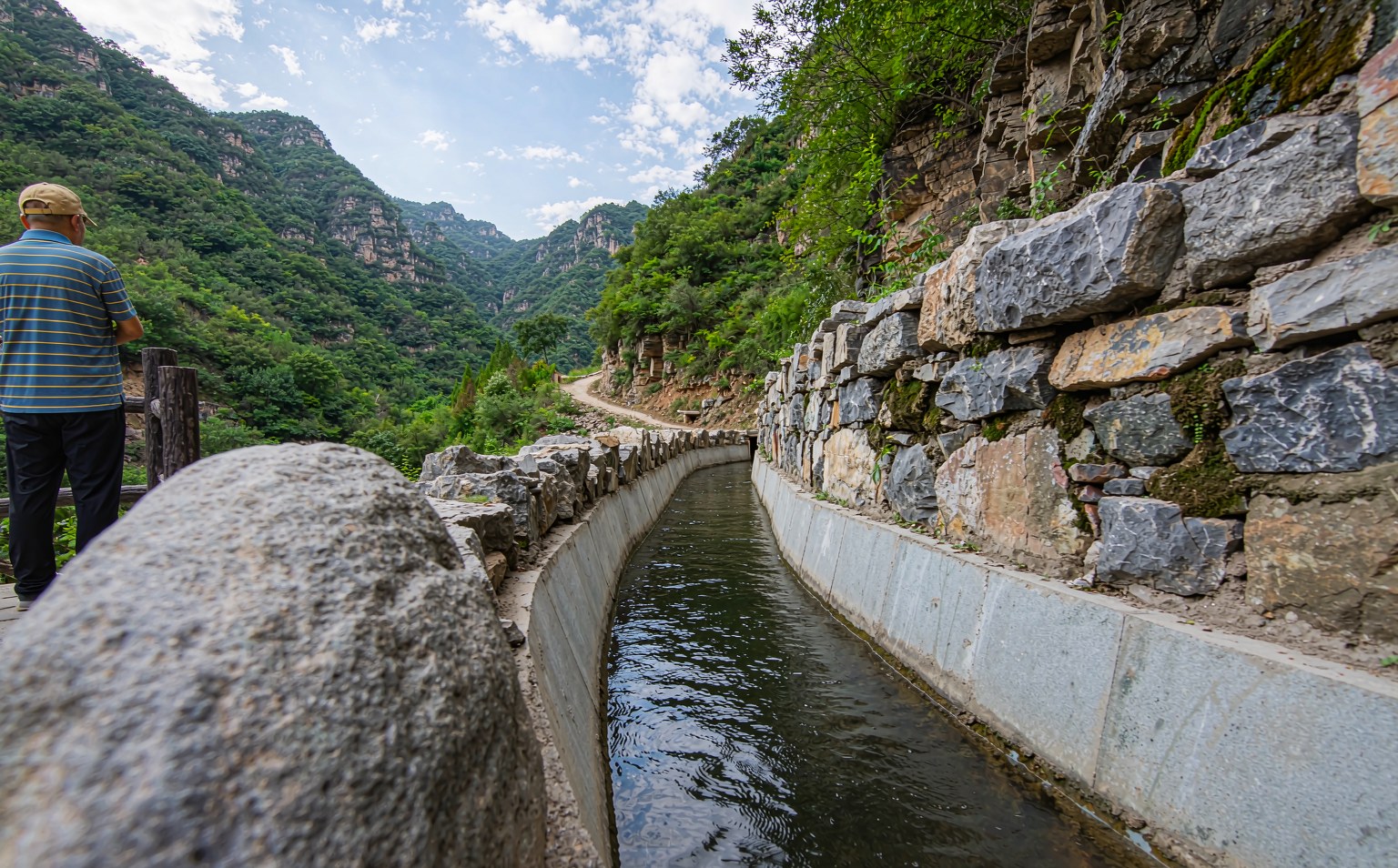
Taihang in Six Days: Red Flag Canal, Grand Canyon and Wanxian Mountain, 6 Days 5 Nights
Six days north along the eastern foot of the Taihang range. The Red Flag Canal cut into the cliff by hand, water dropping through Taohua Valley, the vertical steps of Wangxiangyan, and two days at Guoliang counting the thirty five windows of the cliff road.
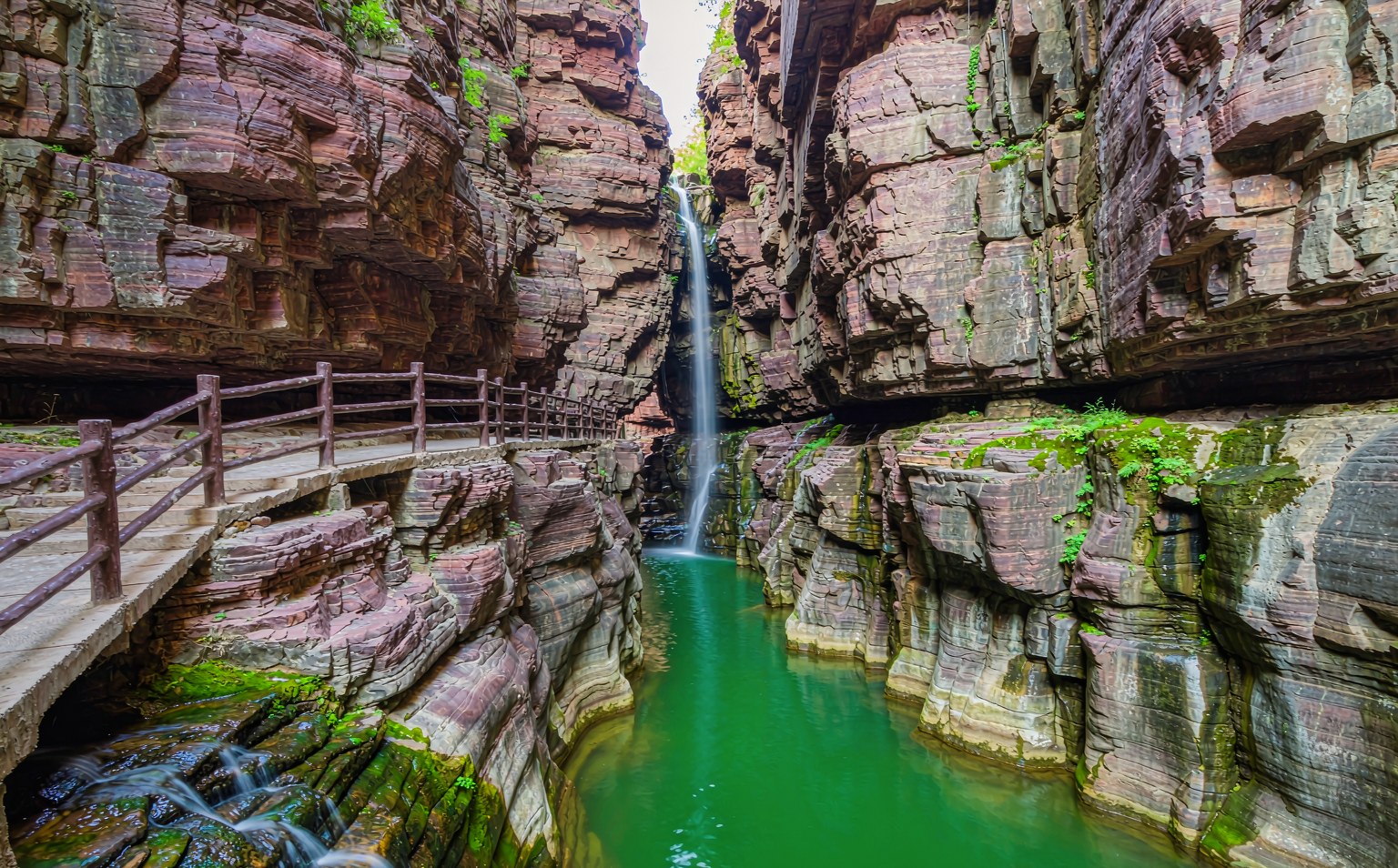
Yuntai Mountain in Four Days: Red Stone Gorge, Tanpu Gorge and Zhuyu Peak, 4 Days 3 Nights
Four days inside the gorges of Yuntai Mountain. Red Stone Gorge walked one way between dark red walls and green water, two flat kilometres of springs in Tanpu, then the cable car up Zhuyu Peak at 1,308 metres.
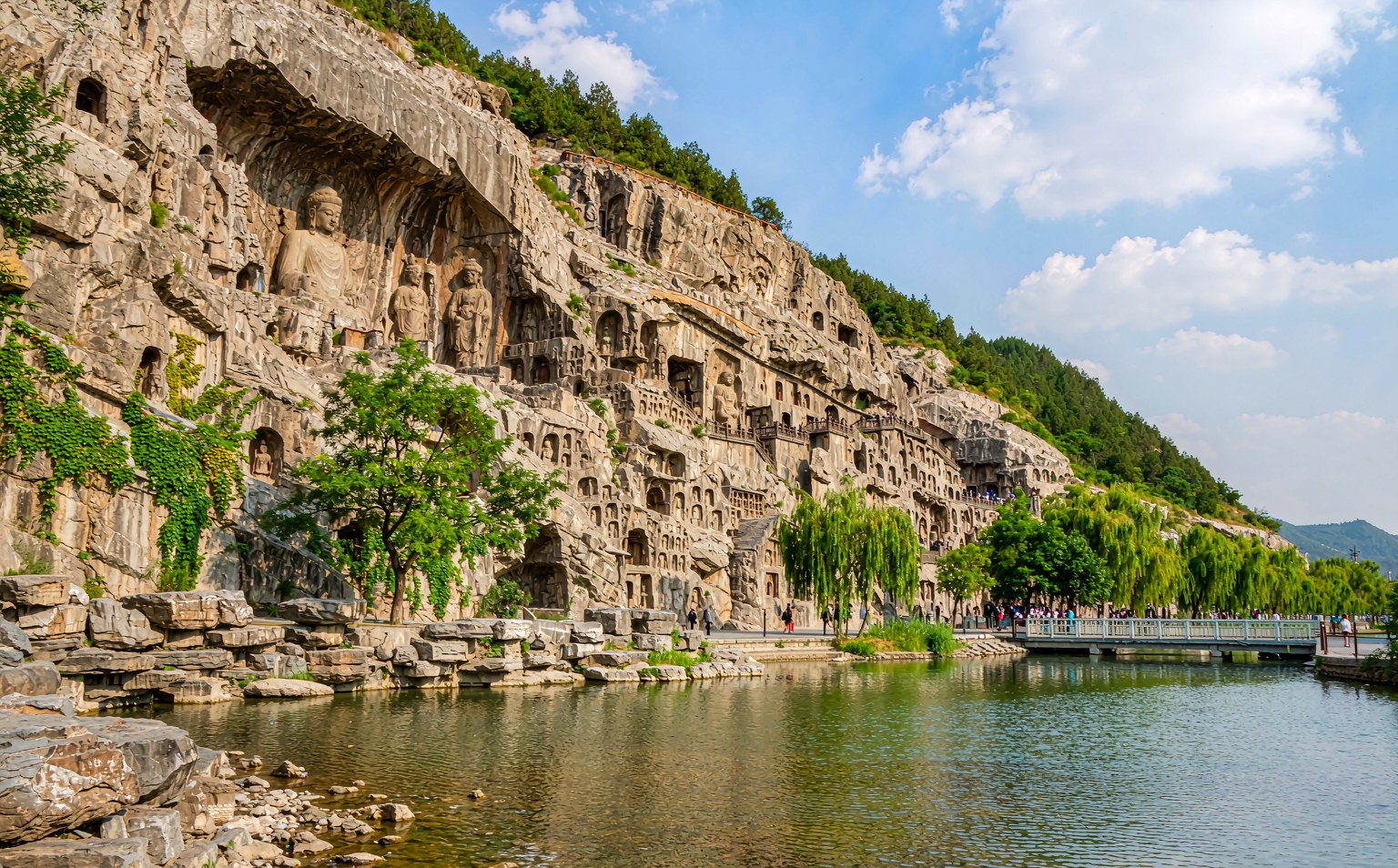
Luoyang in Three Days: Longmen Grottoes, Luoyi Ancient City and Sui-Tang Palace City, 3 Days 2 Nights
Three days inside Luoyang. Longmen Grottoes first thing under winter hours, the Vairocana Buddha at seventeen metres, then the whole cliff seen from the far bank. Evenings belong to the lanterns of Luoyi and the water of Jiuzhou Pond.