
Luoyang 6-Day Tour: Laojun Mountain & White Horse Temple
Luoyang 6-day tour covering Laojun Mountain and White Horse Temple and Guoliang Village. Sightseeing tickets and shuttle bus included.
Highlights
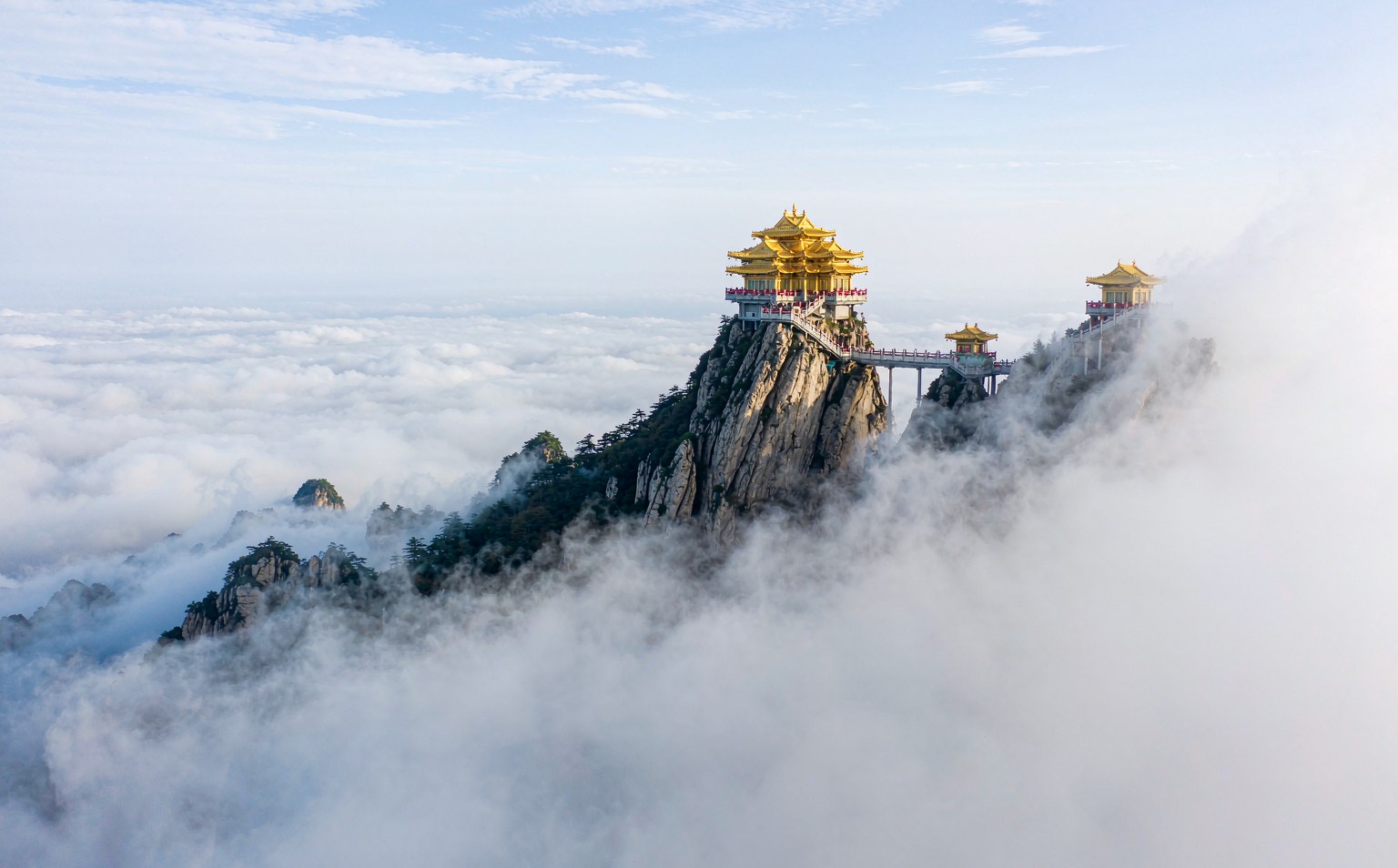
Day 1: Laojun Mountain
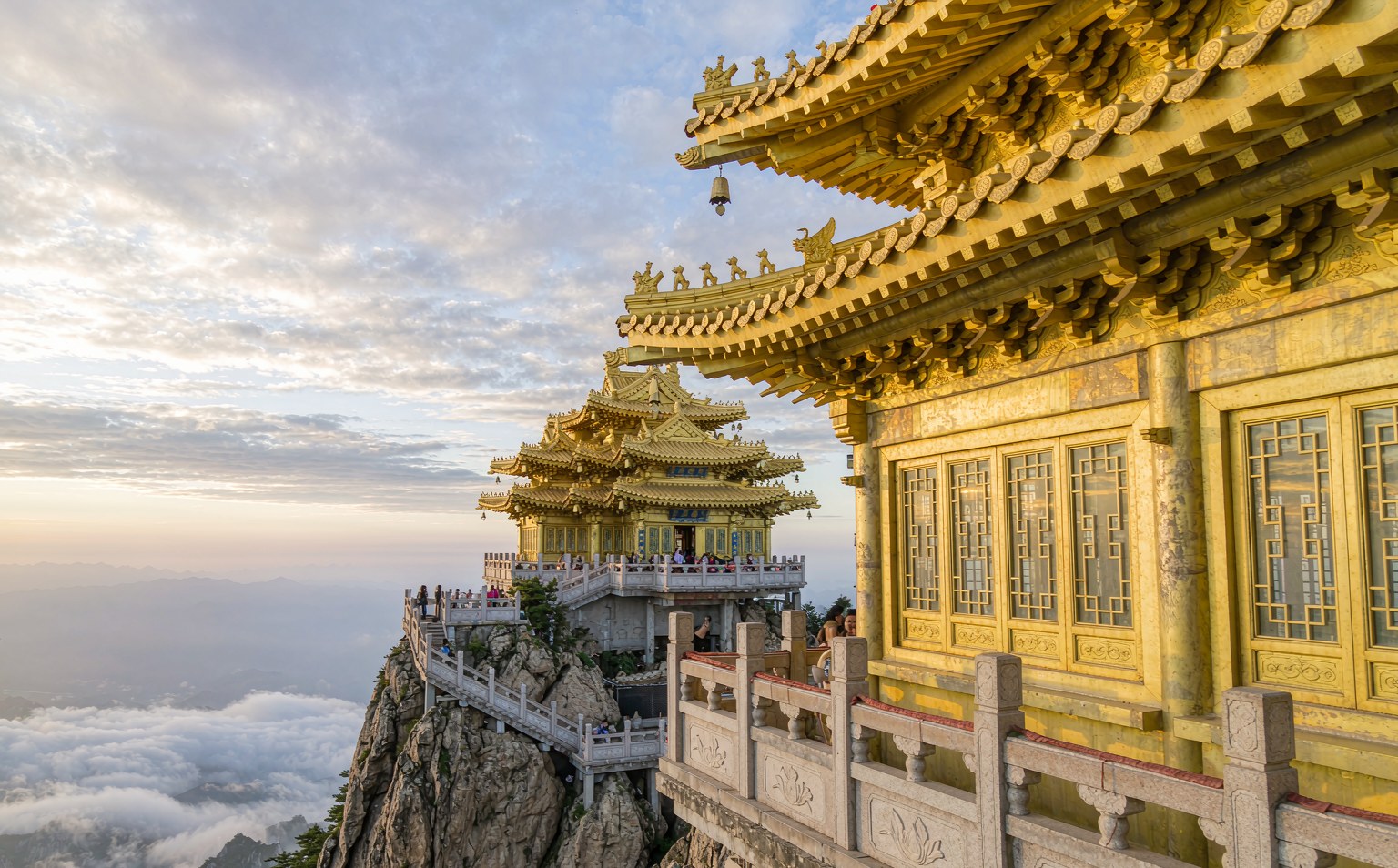
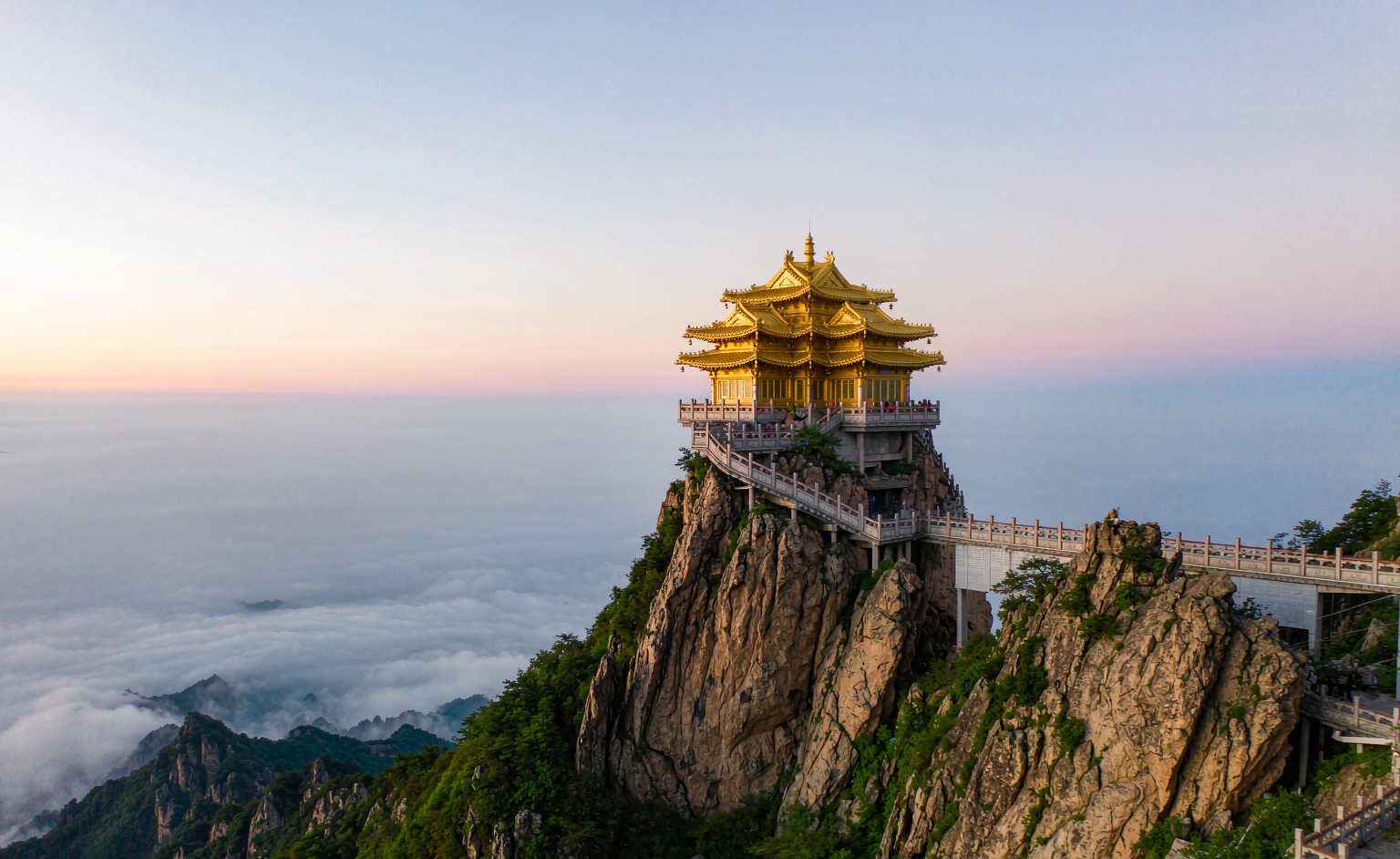
Early in the morning, take the two-stage cable car to reach the Golden Summit, checking in at the temple complex and enjoying the sea of clouds and sunrise; in the afternoon, slowly descend along the Ten-Mile Painted Screen, changing your view step by step, and return in the evening.
Attraction Introduction: One of the highlights arranged in this itinerary is the Golden Summit, located in Luanchuan County. It is the main peak of the Funiu Mountains and a famous Taoist mountain, traditionally considered the retreat and cultivation site of Laozi, the founder of Taoism. The Golden Summit temple complex stands atop a peak over two thousand meters above sea level, with golden-tiled temples and red walls, amidst rolling clouds, earning the reputation of 'a journey to witness a human world of astonishing beauty.' The Ten-Mile Painted Screen is the essence of the route—a high-altitude walkway suspended on a cliff that offers changing views, incorporating forested peaks, sea of clouds, and sunrises. Visitors can take the two-stage cable car to ascend the mountain; on sunny days, reaching the summit allows one to witness the sea of clouds and sunrise, while in winter, it is a popular spot in the Central Plains for snow viewing. My understanding is that it is essential to take the cable car early in the morning to secure the best lighting at the Golden Summit and Ten-Mile Painted Screen; the summit is windy and cold, so wearing a windproof jacket and carrying a thermos is standard, and those who are timid about the glass observation deck should not force themselves.
Kind Reminder: The mountain area has a large temperature difference between morning and evening, and the summit is windy, so having a windproof outer layer and warm inner clothing is necessary. Visitors generally report that the Golden Summit's sea of clouds and sunrise are considered the main highlights, with many people staying on the summit to wait for dawn; please note the large temperature difference and long cable car queues at the summit, so during peak season, it is necessary to start early. Considering the actual situation, joining a tour group is risky if it’s just a quick walk; listening to the guide's explanations is the essence—often the cultural stories behind each attraction are more memorable than photos, and if you don’t understand something, ask the guide on the spot.
Day 2: White Horse Temple
Today's pilgrimage journey involved visiting the Buddha, following the guide from Qiyun Pagoda to the Sutra Repository while listening to explanations, understanding two thousand years of incense history at China's first ancient temple; in the afternoon we strolled around the temple, and in the evening we rested.
Attraction introduction: A key highlight arranged in the itinerary is White Horse Temple. White Horse Temple is located in the eastern part of Luoyang city, originally built during the Yongping years of the Eastern Han Dynasty to commemorate the White Horse carrying the scriptures and the initial spread of Buddhism to the Central Plains. It is revered as 'China's first ancient temple' and is the first official temple built after Buddhism entered China. Inside the temple, the Qiyun Pagoda Courtyard, the Great Buddha Hall, and the Hall of Heavenly Kings are laid out along the central axis, with red walls and green cypresses, maintaining more than two thousand years of continuous incense offerings. It is worth mentioning that the temple also has exotically styled halls donated by countries like Myanmar, Thailand, and India, presenting a unique landscape of the eastward spread and return flow of Buddhist culture. My understanding is that one should first see the main halls along the central axis upon entering, then go around to the Qiyun Pagoda Courtyard, and finally visit the exotic halls on the sides to experience cultural integration; come early in the morning when there are fewer people, as the morning light on the red walls and ancient cypresses is most picturesque, and it also helps avoid the peak of tourist groups.
Tips: There are many incense stalls around the temple, so buy incense as needed and consume reasonably. Visitors generally report that the exotic style halls (Thai/Myanmar/Indian courtyards) are photogenic, and people find them more spacious than expected. Note that the international temple area requires a fair amount of walking, so save some energy. Depending on your needs, for authentic food, head deeper into the alleys, as queues at the main scenic gate are long and the taste is average. For local specialties, ask for prices first and compare, as local supermarkets are often more authentic.
Day 3: Guoliang Village
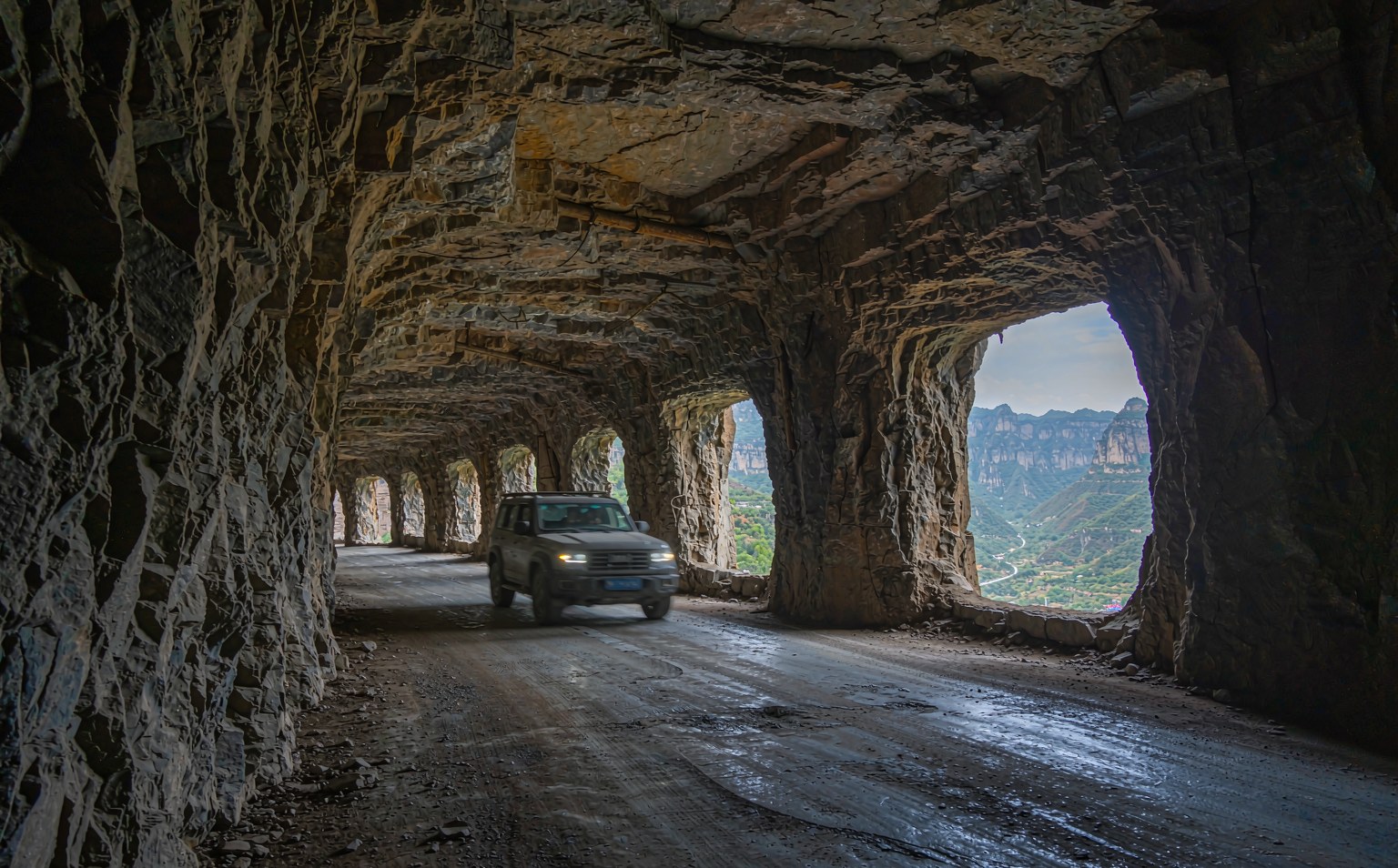
In the morning, go to Guoliang Village and hike along the cliff-hanging road, overlooking the thousand-foot deep chasm; have a farmhouse meal in the village at noon, visit the film and television village and the Heavenly Ladder in the afternoon, and descend the mountain to check in in the evening.
Attraction introduction: One of the highlights arranged in the itinerary is Guoliang Village. Guoliang Village is hidden on the sheer cliffs deep in the Taihang Mountains, famous for the 'cliff-hanging road.' In the 1970s, villagers, with no large machinery, spent more than five years chiseling a tunnel about 1,300 meters long into the cliff, a miracle of 'contemporary Yu Gong.' Today, this cliff-hanging road is the most hardcore check-in spot in the Taihang Mountains, where walking along it allows for views of the dizzying chasm and canyon villages. Guoliang Village is also called the 'Chinese Film and TV Village' due to being the location for many TV dramas. My understanding is that when walking the cliff-hanging road, allow enough time to look around and take photos, watch your step and be aware of oncoming vehicles; the best light is in the morning or evening, while noon is rather flat; wear non-slip shoes and don’t get too close to the cliff.
Tips: The ancient town’s bluestone roads are narrow and slippery, so be sure to wear non-slip flat shoes and be careful in the morning and evening. Tourists generally report that the stone cliff village is connected to the cliff-hanging road, and the film locations bring a sense of story; note that accommodation and food in the village are simple, so set expectations low to enjoy more. Allocate your energy according to the actual situation: tackle the highlight in the morning when your spirits are high, slow down in the afternoon, don’t exhaust yourself on the first day so you have energy for the following days.
Day 4: Wanxian Mountain
Set off early from the hotel straight to Wanxian Mountain, first listen to the tour guide explain the background and key sights, then enjoy a leisurely free walk and take extra photos of spots of interest; after lunch, take a short rest, return to the hotel by evening to accumulate energy for the next day.
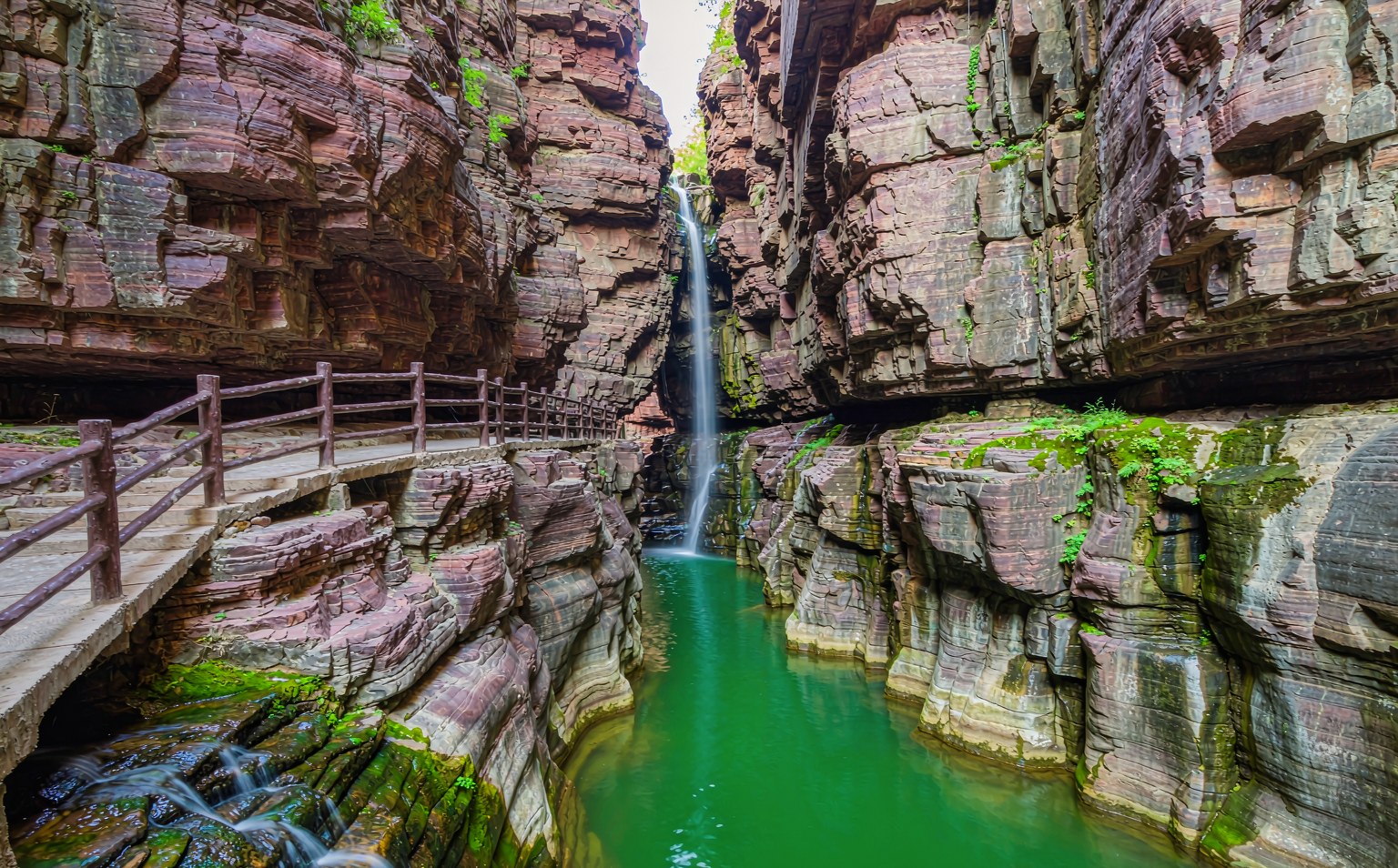
Attraction Introduction: One highlight arranged in the itinerary is Wanxian Mountain. The Wanxian Mountain scenic area is located deep in the Taihang Mountains in Huixian, encompassing the Guoliang Cliff Road and Nanping Danfen Gorge. The intertwining of red cliffs and clear waterfall pools makes it one of the most representative landscape galleries of the Taihang Mountains. This place is famous for being a filming location for multiple movies and TV series. Attractions such as Guoliang Village, Tianchi, and the watchtower form a breathtaking Taihang hiking route. The summer temperatures are pleasant, and it is a place close to Zhengzhou and Luoyang where you can experience the Taihang landscapes firsthand. My understanding is that the hiking involves a lot of walking and many stairs, so wearing non-slip shoes is essential; pay attention to incoming and outgoing vehicles on the cliff road section, and the morning and evening light is best for photographing the red cliffs.
Tips: There is a large temperature difference in the mountains between morning and evening, and it is windy at the mountaintop, so a windproof jacket and warm inner layers are necessary. Visitors generally report that the cliff road (Guoliang Tunnel) is the most spectacular for photography, but mountain roads often cause motion sickness; it is advisable to bring motion sickness medicine and walk slowly while viewing the scenery. Respect local customs according to the actual situation, dress appropriately in religious places, and avoid pointing carelessly; a simple greeting can bring goodwill.
Related Tours
Luoyang to Wanxianshan, Guoliang Village and Baligou 6 Days
Six days from Luoyang. The Baligou ticket at 120 yuan covers Baligou, Jiulianshan and Tianjieshan for three days. Then the trip moves to Wanxianshan, where the Guoliang cliff road runs 1,250 metres with 35 windows, begun in 1972 and opened in 1977.
Luoyang to Yuntai Mountain, Hongshi Gorge and Chenjiagou 5 Days
Five days from Luoyang. The Yuntai ticket at 120 yuan plus a 60 yuan shuttle pass stays valid for three days, enough for Hongshi Gorge, Tanpu Gorge and Zhuyu Peak. The fourth day turns south to Chenjiagou, the village where tai chi began.
Luoyang to Laojunshan, Chongdugou, Jiguan Cave and Yangzigou 6 Days
Six days from Luoyang. The Laojunshan ticket stays valid for two days, so the golden summit comes first and a second climb chases the morning cloud sea. Jiguan Cave runs 1,800 metres at a constant 18 degrees, and Chongdugou still has green bamboo in November.
Luoyang Departure: Laojun Mountain, Jiguan Cave and Longtan Canyon, 5 Days 4 Nights
Five days from Luoyang. The Laojun Mountain ticket holds for two days, so the mountain is climbed twice: the painted rock forest first, then the summit to wait for the lamps. The second half runs west to Xinan, through a cave that stays at 18 degrees and a red gorge cut by water.