
Zhengzhou 4-Day Tour: Taihang Grand Canyon & Red Flag Canal
Zhengzhou 4-day tour covering Taihang Grand Canyon and Red Flag Canal and Yin Xu. Sightseeing tickets and shuttle bus included.
Highlights
Day 1: Taihang Grand Canyon
Depart from the hotel early in the morning and head straight to Taihang Grand Canyon. First, listen to the guide explain the background and highlights, then enjoy a leisurely tour and take additional camera positions according to your interests. After lunch, take a short rest, then return to the hotel in the evening to recharge for the next day.
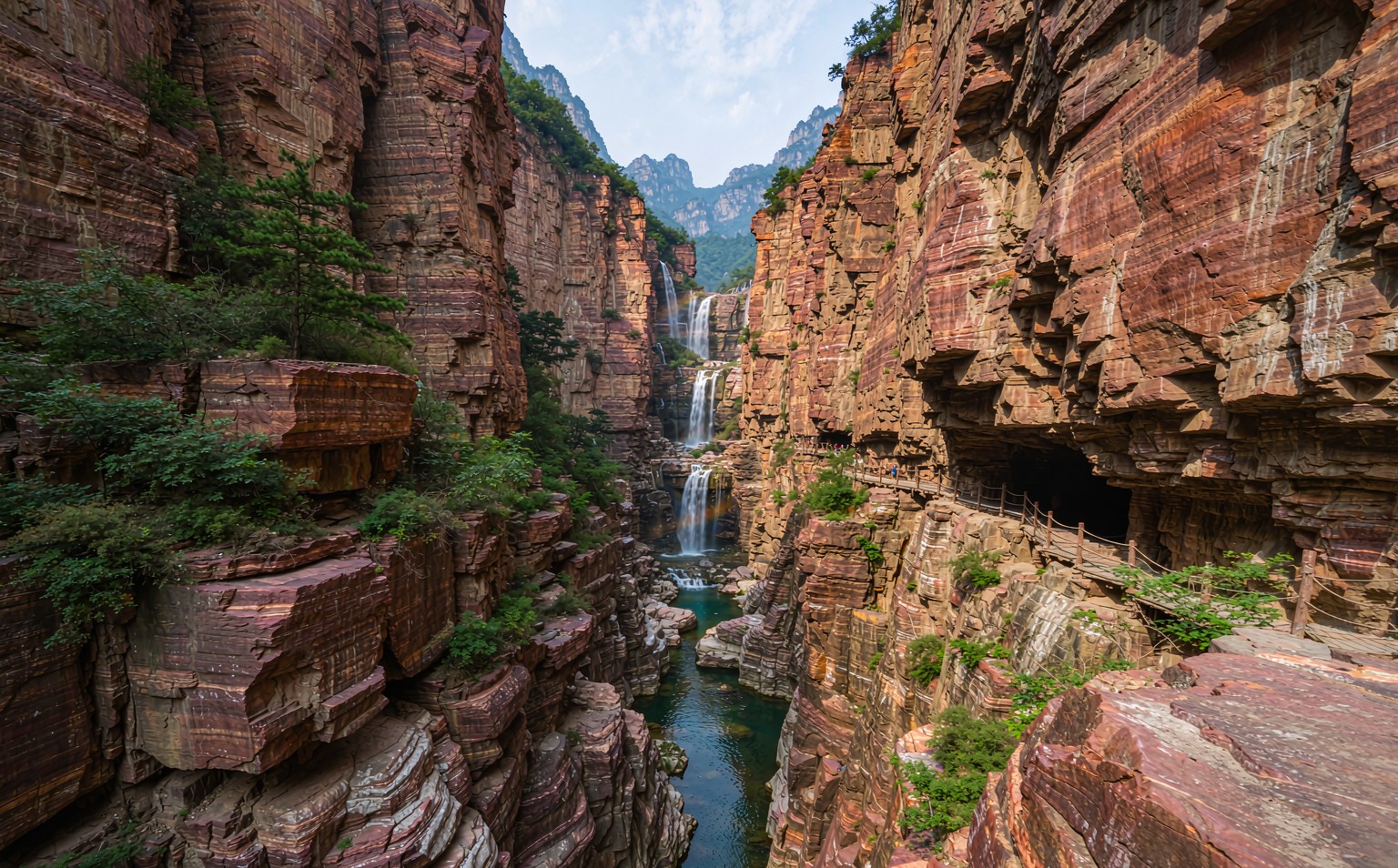
Attraction introduction: A highlight of the itinerary is Taihang Grand Canyon,Taihang Grand Canyon stretches across the border of Jin-Ji-Henan, and Red Flag Canal passes through the mountains. Peach Blossom Valley, Wangxiang Rock, and the Taihang Sky Road connect majestic and beautiful scenery, representing a concentrated showcase of Taihang's scenery. Peach Blossom Valley is famous for its waterfalls and flowing springs, Wangxiang Rock is famous for its sheer cliff walkways, and the Taihang Sky Road offers scenic views and panoramic canyon views. In spring, the mountains are in full bloom; in autumn, the forests are colorful—each season has its own highlights. My understanding is that the scenic area is large and the attractions are scattered, so it's essential to plan the routes well and prioritize core attractions; Hold up the railings on the steep boardwalks, and those who fear heights should walk within their means.
Friendly reminder: The waterside sections of the canyon are slippery, so be sure to wear non-slip stream shoes or sneakers, and keep your phone and other valuables waterproof. Visitors generally report that the water scenery in Peach Blossom Valley is tranquil and the Taihang Sky Road is steep, with visitors saying every step reveals a new view; Reminder: Passengers must ride the bus during the scenic spot, as weather greatly affects the experience. Based on actual conditions, make sure to allocate your energy and allow extra energy. Focus on the main activities in the morning and slow down in the afternoon to avoid overexerting yourself on the first day and feeling bored in the following days.
Day 2: Red Flag Canal
Today's Red Flag Canal Red Tour: Follow the guided tour of Qingnian Cave and Fenshuiyuan to understand the heroic deeds of the 1960s; In the afternoon, you can also visit the surrounding area, and rest in the evening.
Attraction introduction: One of the highlights included in the itinerary is Red Flag Canal. Red Flag Canal is the 'artificial Heavenly River' carved by the people of Linzhou on the sheer cliffs of the Taihang Mountains in the 1960s. It is over 1,500 kilometers long, leveling 1,250 peaks, erecting more than 150 aqueducts, and drilling more than 200 tunnels. It took nearly ten years to complete, serving as a monument to the Chinese nation's spirit of self-improvement. Youth Cave is the most dangerous section of the entire route, carved out by 300 young commandos on a sheer cliff; Fenshuiyuan and Red Flag Canal Memorial Hall fully narrate the arduous canal construction. This is a combination of red education and the magnificent scenery of Taihang, and today it is also a breathtaking cultural landmark. My understanding is that you should first visit the memorial hall to understand the canal construction background, then walk through Youth Cave to truly appreciate the canal's significance; Walk along the canal within your means, wear non-slip shoes, and watch your step.
Friendly reminder: In mountainous areas, there is a large temperature difference between morning and evening, and strong winds at the summit. A windproof jacket and warm inner layer are very necessary. Visitors generally report that the "Artificial Heavenly River" has strong spiritual landmark attributes, making it resonant with middle-aged visitors; Remind visitors that the exhibition hall's explanations are worth listening to and can understand that period of history. Considering actual conditions, respecting local customs, dressing appropriately when entering religious sites without casual advice, a single greeting can earn goodwill.
Day 3: Yin Ruins
Morning tourYin Ruins, visiting palace and ancestral temple ruins and royal tomb areas, viewing oracle bone inscriptions and heavy bronze artifacts; Lunch nearby, afternoon visit to the new Yin Ruins Museum to systematically understand Shang civilization.
Attraction introduction: Today's itinerary includes Yin Ruins attractions. Yin Ruins is the ruins of the late Shang capital located at Anyang, the hometown of oracle bone inscriptions, and the excavation site of the Houmuwu Ding (originally called Simuwu Ding). It was listed as a World Cultural Heritage site in 2006. This was once the capital of the Shang Dynasty after Pan Geng moved to Yin, lasting over 270 years. Palace and ancestral temple ruins, royal tombs, and chariot pits are clearly visible. Oracle bone script was first discovered here, tracing China's trusted history back to the Shang dynasty; The new building of the Yin Ruins Museum systematically displays bronzes, jade, oracle bones, and other artifacts, serving as the most direct classroom for understanding Shang civilization. My understanding is that first visit palaces, ancestral temple sites, and chariot pits to establish spatial concepts, then visit museums to appreciate artifacts in detail; only when these two lines connect is it complete; Oracle bone script and bronze artifacts are the essence; walking through the explanation is far better than just skimming through.
Friendly reminder: There are many slippery mountain paths, so especially when going downhill, pay special attention to shifting your center of gravity and slowing down. A pair of knee pads is recommended. Visitors generally report that oracle bone script and Simuwu Ding bring history to life, and visitors say the new museum is more valuable than the open-air site; Reminder: Only by combining explanations can you truly understand. Considering actual conditions, the biggest fear of group tours is skimming the scenery; listening to explanations is the essence. The cultural stories behind each attraction are often more unforgettable than photos. If you don't understand something, ask the guide on the spot.
Day 4: Return
Transfer to the departure terminal per your booked train or flight; keep travel documents and tickets in your carry-on.
Related Tours
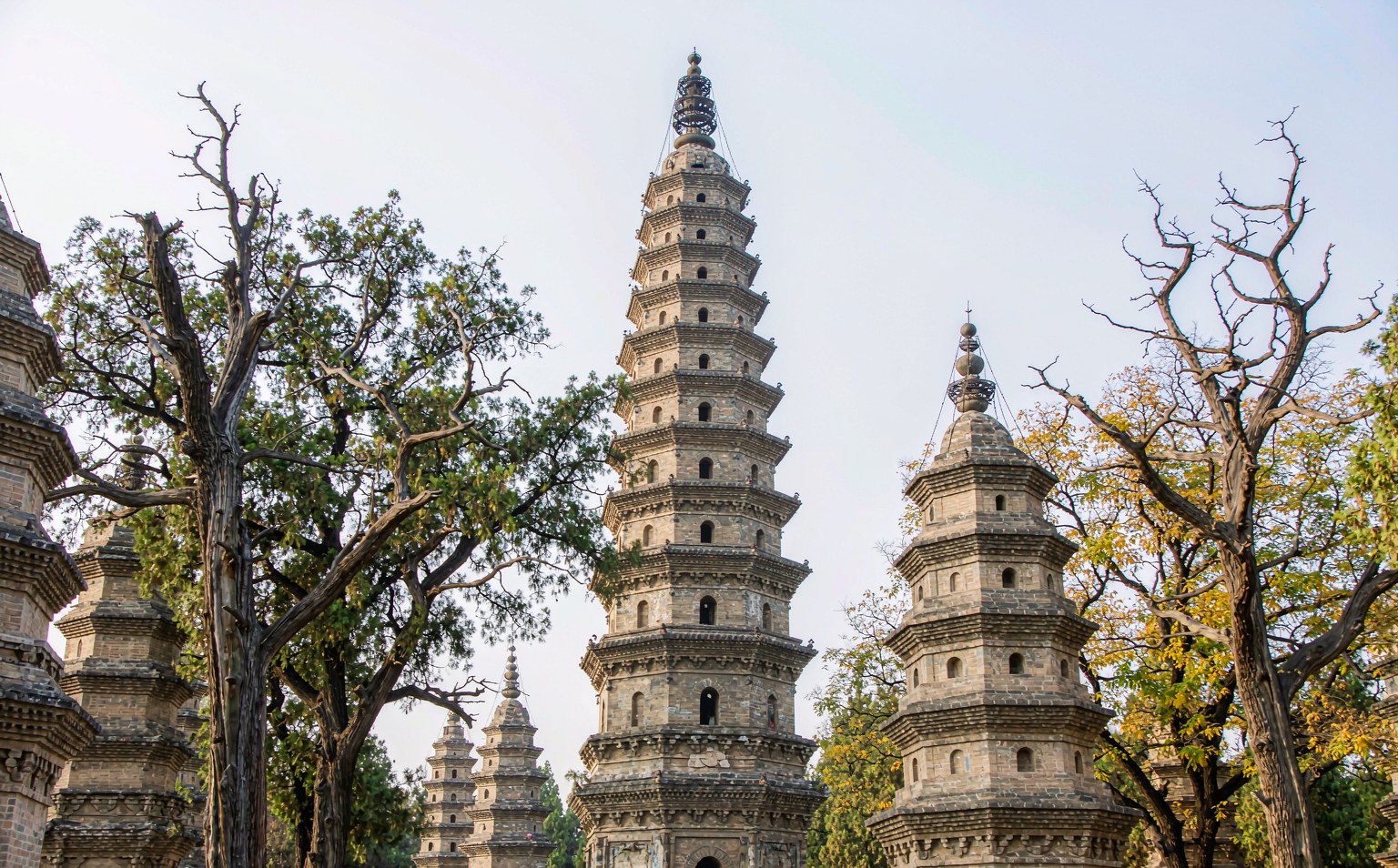
Luoyang to Shaolin Temple, Sanhuangzhai and Songyang Academy 5 Days
Five days from Luoyang. Songshan has two massifs, Taishi and Shaoshi: the Shaolin Temple and Sanhuangzhai sit on one, the Songyang Academy and Zhongyue Temple on the other. The 80 yuan Shaolin ticket already covers Sanhuangzhai.

Luoyang Departure: Shaolin Temple, Songyang Academy, Zhongyue Temple and Gaocheng Observatory, 4 Days 3 Nights
Four days from Luoyang. One 80-yuan Shaolin ticket covers the temple compound, the pagoda forest and Sanhuangzhai with its cliff walkway. The rest goes to the foot of Taishi Mountain: Han-dynasty cypresses, Song iron figures, and an observatory in Gaocheng town.
Luoyang Departure: Shaolin Temple and Sanhuangzhai Cliff Walk, 3 Days 2 Nights
Three days from Luoyang. One for the halls and the pagoda forest, one for the plank walk pinned to the cliff at Sanhuangzhai where the rock stands in shelves like books, one for the quiet hermitage above.
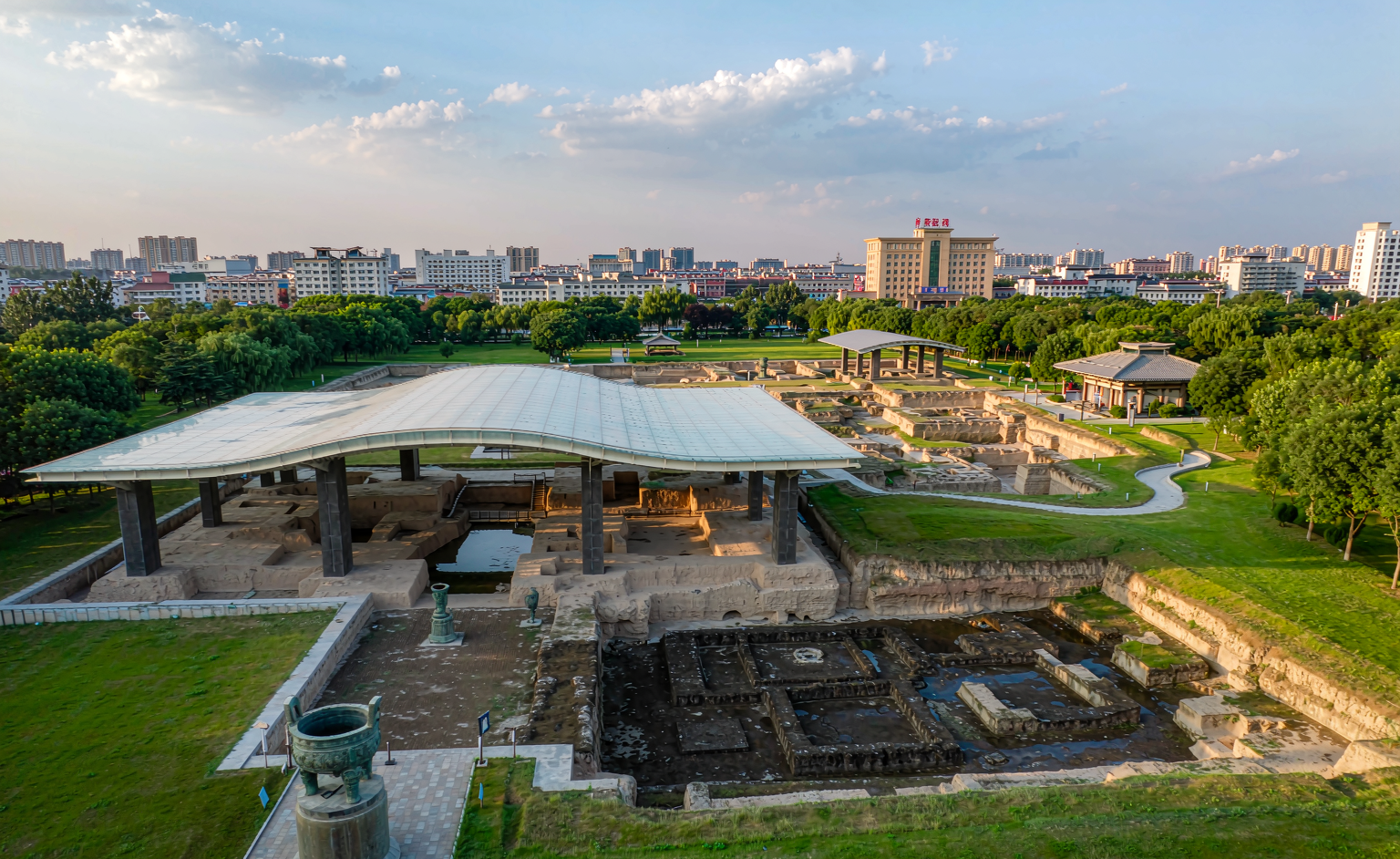
Luoyang Departure: Yin Ruins, Chinese Character Museum and Youli City, 3 Days 2 Nights
Three days from Luoyang into the Shang world: oracle bones scratched with questions, a museum that follows those marks into modern characters, and the earth platform where King Wen worked out the hexagrams.