
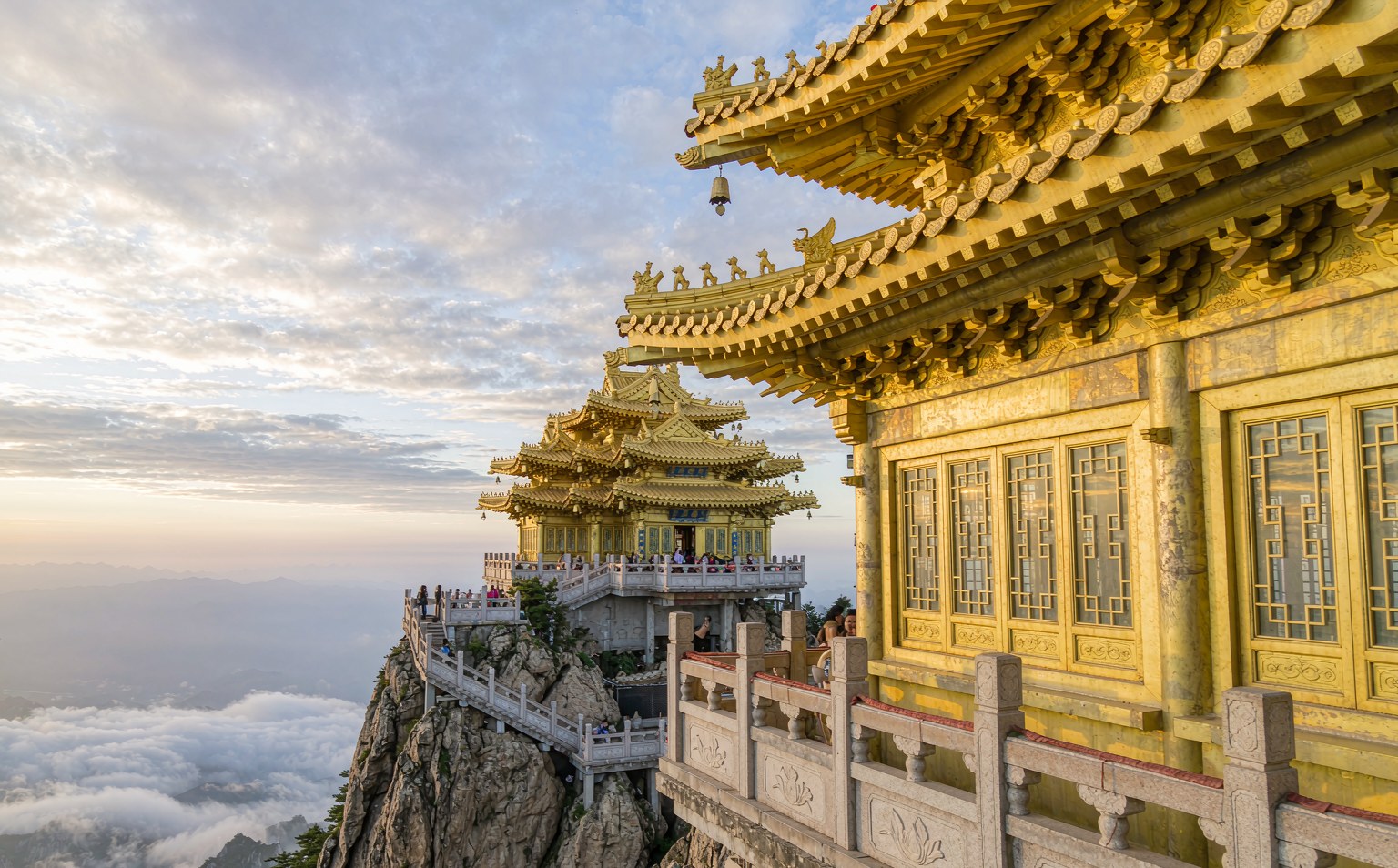
Luoyang Departure: Emei Summit, Leshan Buddha and Qingyin Pavilion, 5 Days 4 Nights
Five days from Luoyang. A night in Chengdu first, then the Leshan Buddha, then Emei Mountain. The summit sits above the cloud and the cable car takes minutes. The lower slopes are a different matter: the brick vault of Wannian Temple and the twin bridges at Qingyin.
Highlights
Day 1: Luoyang to Chengdu, one bowl of tea first
A morning train southwest from Luoyang Longmen, through the tunnel after tunnel of the Qinling, and Chengdu East by afternoon. Drop the bags and go to Heming Teahouse in People Park, where the bamboo chairs sit low and a lidded bowl lasts an hour, with the chime of ear cleaning somewhere under the trees. Toward evening turn into Kuanzhai Alley, where vines climb the grey brick.
Attraction introduction: Heming is one of the oldest teahouses kept in Chengdu, with bamboo chairs, low tables and lidded bowls, and nobody hurries you out. Kuanzhai Alley is three lanes of Qing dynasty housing with grey tile roofs, built as barracks for the Manchu garrison and later lived in as ordinary courtyards, now mostly shops behind the old gates.
Tips: The metro from Chengdu East beats a taxi into town, since the evening ring road jams badly. Guests generally find the first day is better spent slowing down than chasing sights. In practice, this evening covers only the teahouse and the lanes, which saves legs for the mountain.
Day 2: The Leshan Buddha, then up to the mountain
South out of Chengdu in the morning, a little over an hour to Leshan. Enter and climb Lingyun Hill, then follow the plank stair down beside the head of the Buddha; the lower you go the more the seated figure tells its scale, a foot taller than a person and a nail the size of a round table. The stair is narrow and released in batches when it is busy. Lunch in town on poached beef in clear broth with a chilli dip. The afternoon brings you to the foot of Emei and a bed near Baoguo Temple.
Attraction introduction: The Leshan Buddha was begun in the first year of the Kaiyuan reign of the Tang and took more than ninety years to finish. It is the seated figure of Lingyun Temple, over seventy metres tall, with the confluence of three rivers at its feet. Lingyun Temple and Dongpo Tower stand above, and inscriptions from several dynasties remain on the cliff outside the gate. Baoguo is the first temple at the entrance of Emei Mountain, built in the Wanli reign of the Ming.
Tips: The walking ticket is 80 yuan and the boat 70, and one of the two is enough; the stair shows detail, the boat shows the whole figure. Guests generally find the queue on the stair peaks after ten and can run an hour. In practice, we aim for the first entry of the day and give the saved hour to the mountain.
Day 3: Up to the Golden Summit, above the cloud
A shuttle from Baoguo in the morning winds up for more than two hours to Leidongping, then a stretch of stone steps to Jieyin Hall and the cable car. Minutes later the doors open onto wind, with cloud turning over below. The great bronze of Samantabhadra with ten faces stands there, its surface catching the light, and at the cliff edge beyond, the cloud sea has no floor in sight. A bowl of plain noodles at the top, then back down to Leidongping and a bed at the foot.
Attraction introduction: The Golden Summit is the highest point of Emei Mountain, above three thousand metres, marked by the ten-faced bronze of Samantabhadra. Huazang Temple stands to one side, with its bronze and gold halls side by side. The cliff on the western edge is where the cloud sea most often gathers. The stone stair from Leidongping to Jieyin Hall runs about a kilometre and a half and is the last walking before the top.
Tips: The summit runs more than ten degrees colder than the valley and the wind is steady, so a down jacket or heavy coat is essential, and coats can be rented up there. Daily numbers are capped, so the ticket must be booked ahead. Guests generally find the cloud thins fastest at midday and holds better morning and evening. In practice, we take the first cable car up and keep the best hour at the cliff edge.
Day 4: Two temples on the lower slopes, water all the way
The morning goes to Wannian Temple, where the brick hall is square with a vaulted roof and not one timber in it, and the bronze of Samantabhadra on his elephant presses the whole interior into dimness. In the afternoon walk Qingyin Pavilion, where two stone bridges cross at Shuangfei and two streams meet, one muddy and one clear, breaking apart on the OX-Heart rock. Above it a narrow gorge closes to a slot with the walkway pinned to the wall. The monkeys in the reserve will reach for plastic bags, so keep packs zipped. Back to Chengdu in the evening.
Attraction introduction: Wannian Temple stands halfway up, first built in the Eastern Jin, with the present brick hall raised in the Ming entirely from brick vaults. It holds the bronze of Samantabhadra riding a six-tusked elephant. Qingyin Pavilion sits where the Black and White waters meet, and the sound under its twin bridges has never stopped, which gives the place its name. The slot gorge beyond admits two people abreast at the floor.
Tips: The Wannian cable car is 65 yuan up and 45 down, and walking takes about forty minutes uphill. Guests generally find the monkeys grab food and bags from the hand, so never open a pack in front of them. In practice, this section is walked, and the cable car is kept for the one or two who tire fastest.
Day 5: A Chengdu morning, back to Luoyang
No early start. A bowl of wontons in chilli oil at a small shop in Yulin, then a turn through a neighbourhood market where Pixian bean paste is sold by the bucket. Check out at noon, and the afternoon train reaches Luoyang by evening.
Attraction introduction: Yulin is an old residential quarter of Chengdu, its small bars and cheap kitchens tucked under apartment blocks with big trees along the street. The city markets sit inside the housing estates and are busiest early, selling bean paste, pickles and cured pork alongside freshly braised dishes. Chengdu East is the main high speed station, and most northbound trains leave from there.
Tips: Bean paste and pickles can travel on the train, and sealed sauces pass security, but buy little since the case fills quickly. Guests generally find the station queues lengthen after two in the afternoon. In practice, the return train is booked after three, which leaves the morning for a proper breakfast.
Related Tours
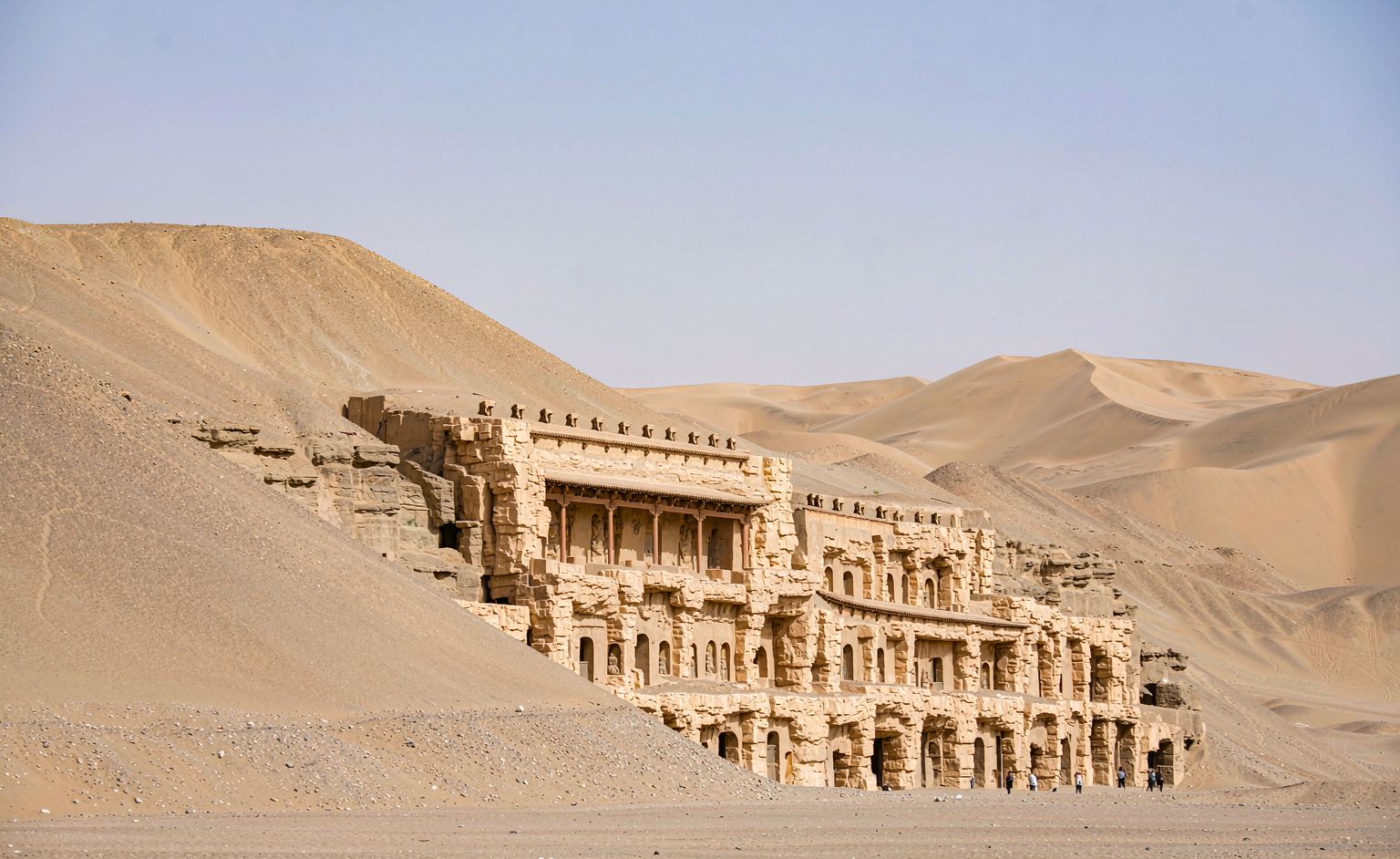
Luoyang Departure: Jiayuguan, Mogao Caves and Crescent Spring, 7 Days 6 Nights
Seven days from Luoyang. On the Hexi Corridor the riding matters more than the rushing: a while under the gate tower at Jiayuguan, the flying figures inside the Mogao caves, and one sunset waited out on the Singing Sand Dunes. November is low season, so the caves are quiet.
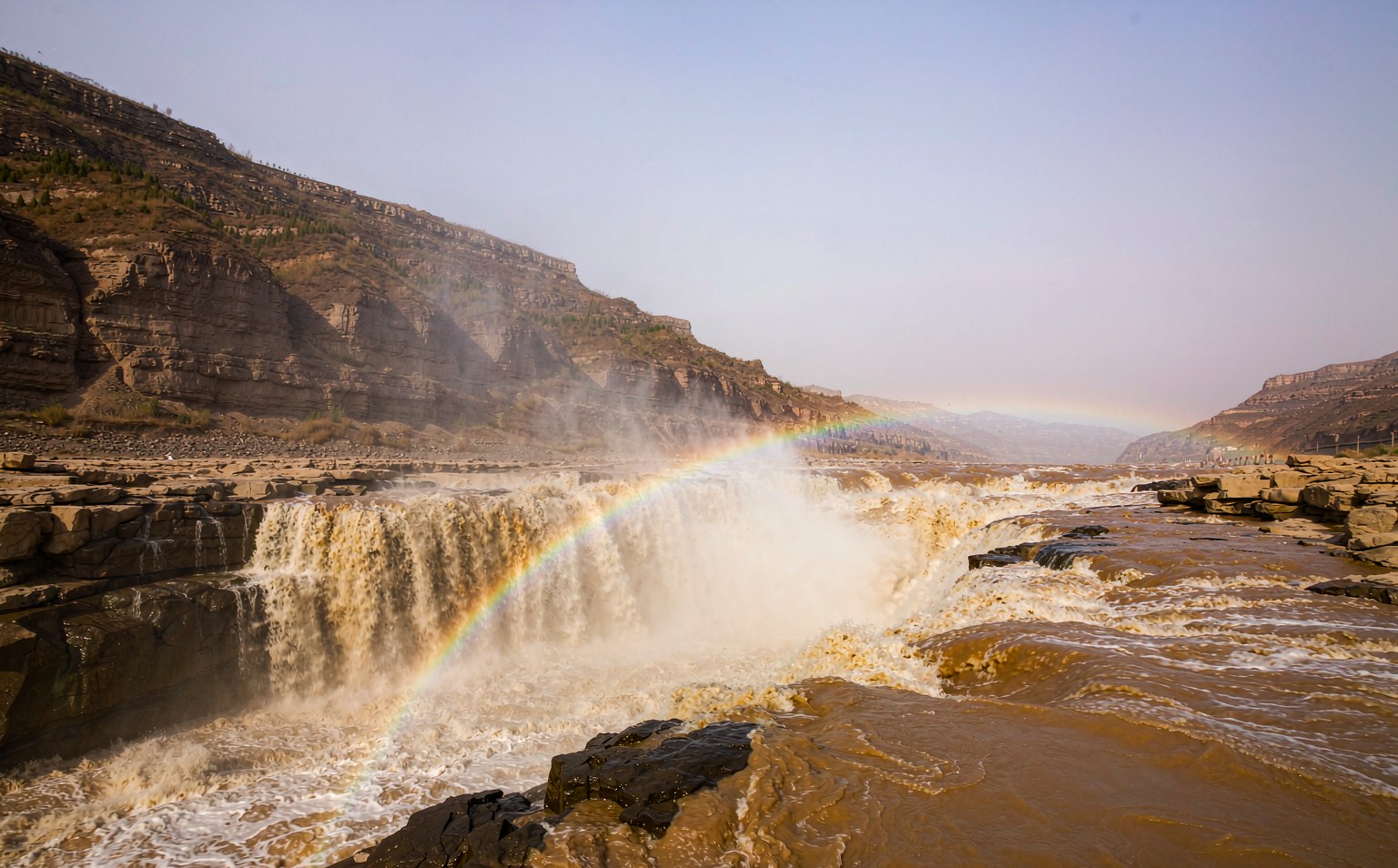
Luoyang Departure: Hukou Waterfall, Yanan and the Yellow Emperor Tomb, 6 Days 5 Nights
Six days from Luoyang. West first, where the Yellow River squeezes into a narrow gap at Hukou and the roar carries for miles, then north to Yanan with its cave dwellings and the pagoda hill, and south at the end to Huangling for a cypress said to be planted by the Yellow Emperor himself.
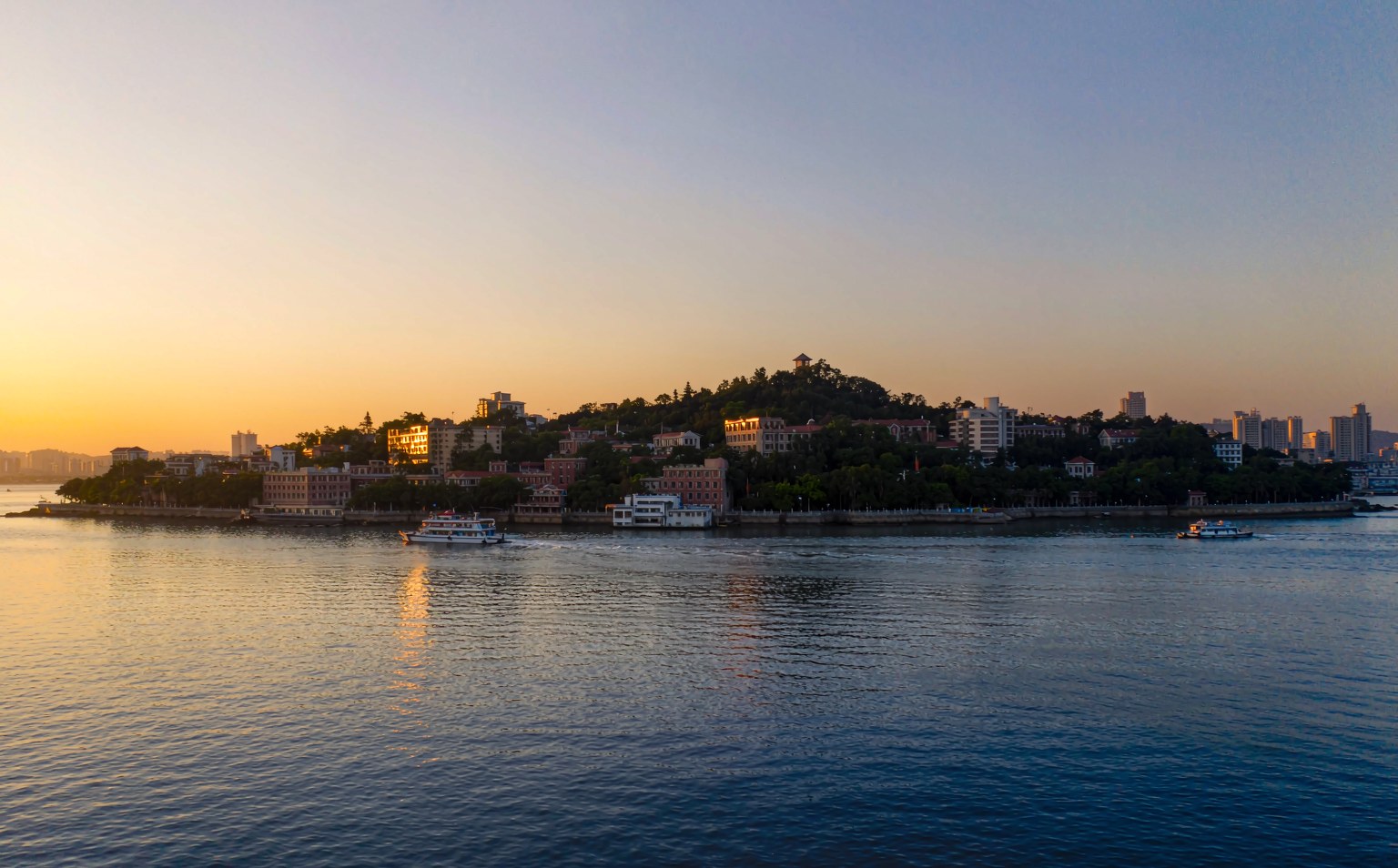
Luoyang Departure: Gulangyu, Sunlight Rock and Shuzhuang Garden, 5 Days 4 Nights
Five days from Luoyang. November is the good window: the sea wind is dry and the bougainvillea still out. The ferry is 35 yuan return and stays valid for 20 days, so nothing is rushed. One full day on the island, one for the temples and the coast, and a slow last morning in Jimei.
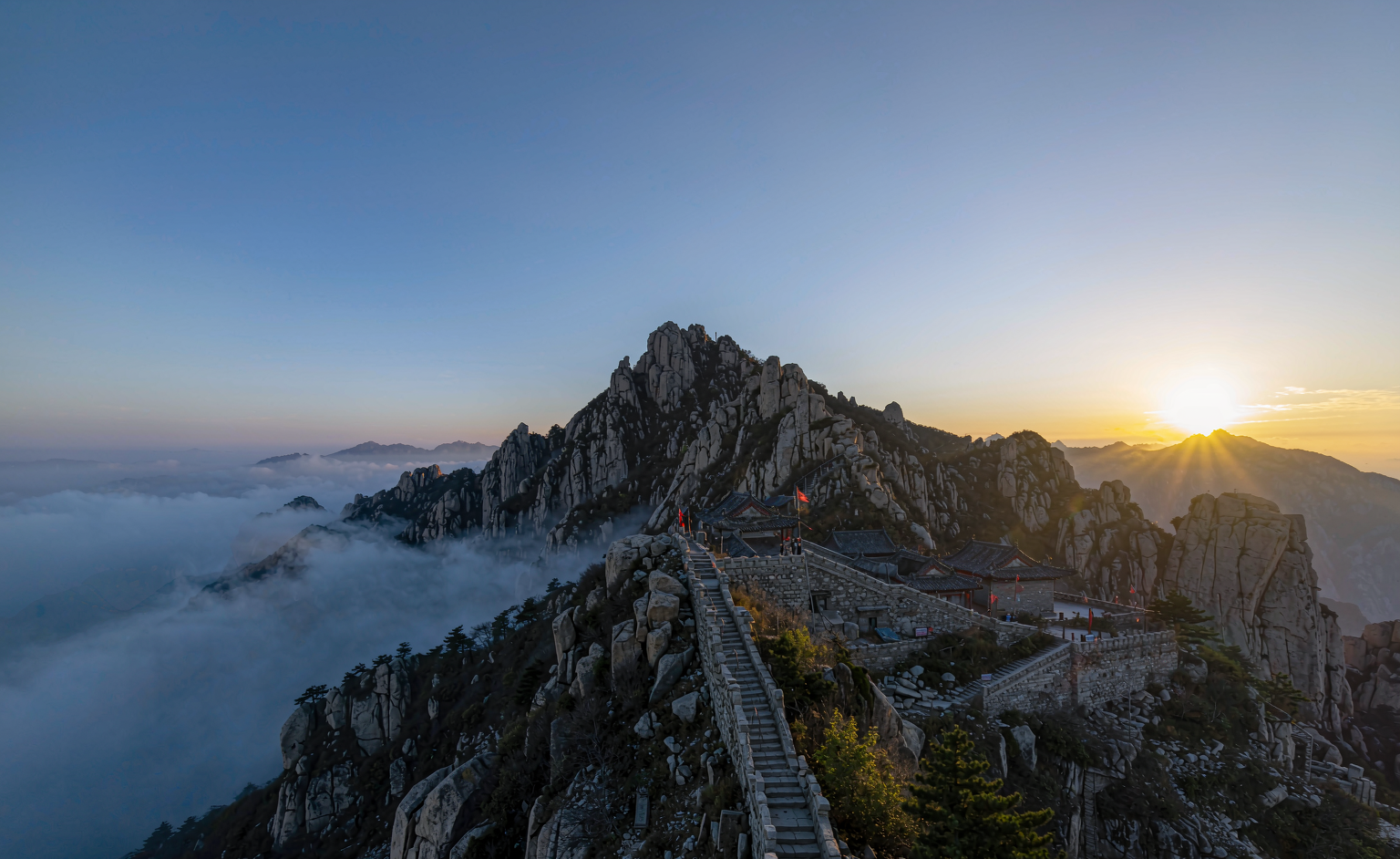
Luoyang Departure: Mount Tai, Daimiao Temple and the Eighteen Bends, 4 Days 3 Nights
Four days from Luoyang. Mount Tai does not have to be rushed in one push: the Han cypresses and temple murals first, then the old stone stairway from Hongmen to Nantianmen, a night on the summit, and sunrise at Riguan Peak. The ticket holds three days.