
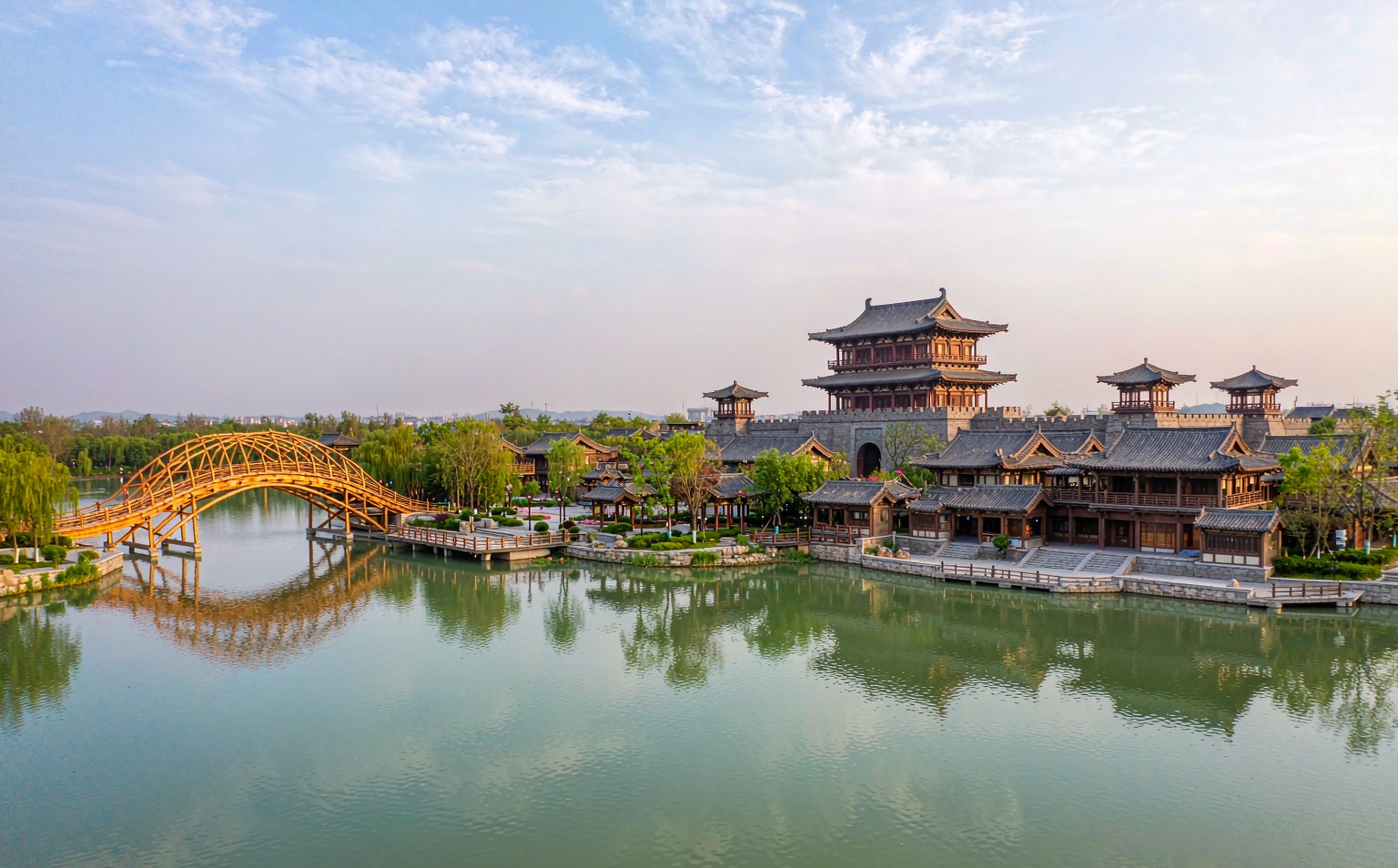
Luoyang Departure Kaifeng Chrysanthemum Show 4 Days
Four days from Luoyang timed to the Kaifeng chrysanthemum festival. The painted river park by day and its lanterns by night, the prefect office with its courtroom plays, and the iron coloured pagoda above a city of grey roofs.
Highlights
Day 1 Luoyang to Kaifeng, the painted river by day and night
Leave Luoyang at eight and take the expressway east, roughly two hours to Kaifeng with one stop at a service area. Drop the bags at the hotel first, because the old city is small enough to walk once the car is parked. Lunch is soup dumplings at a local house: lift one by the pleat, bite a small hole, let the broth out before the whole thing goes in. The afternoon belongs to the Qingming park, rebuilt from the scroll of the same name, with the Rainbow Bridge as its signature; on a busy day you cross it sideways. Dozens of short plays run all day at fixed points, so collect the schedule at the gate instead of wandering. Stay for the evening, when the lamps come on and the buildings along the Bian river stand in the water.
Attraction introduction: The park was laid out from the Northern Song scroll Going up the River at Qingming by Zhang Zeduan and opened in 1998, covering some six hundred mu, with the Bian river, the Rainbow Bridge and the Shangshan gate arranged as in the painting. Kaifeng was the Northern Song capital of Dongjing, and the Bian river was the spine of its grain transport; the water pattern of the old city still follows it.
Tips: The grounds are large and the performances are scattered, so the timetable at the gate saves a lot of walking. Guests generally find the evening better than the day, with lantern light on the river and thinner crowds. In practice the first afternoon and the evening both stay inside the park, and the city sights wait for the next morning, so nobody doubles back.
Day 2 The prefecture office and the Iron Pagoda
Morning at the Kaifeng prefecture office, where the drum outside the ceremonial gate can be struck and the main hall holds the seated figure of Judge Bao, with the six administrative rooms ranged along either side. A courtroom play runs daily, the actors stepping down from the dais while the yard fills with onlookers. Lunch near the drum tower: braised fish in yellow sauce, and pot stickers taken from the batch that has just come off the fire. The afternoon goes to the Iron Pagoda, thirteen storeys high, its brown glazed bricks reading as iron from a distance though the material is earthenware. The stair inside narrows as it climbs; from the top the grey roofs of the old city spread out. During the festival the ground below is packed with shaped and cascading chrysanthemums.
Attraction introduction: The prefecture office stands where the Northern Song capital administration worked; the present buildings were rebuilt following the Song building manual Yingzao Fashi, running from the ceremonial gate through the main hall to the council chamber. The Iron Pagoda is properly the Kaibao temple pagoda, built in the first year of the Huangyou era of the Northern Song, octagonal, thirteen storeys and about fifty five metres tall, named for the brown glazed bricks of its skin. It has stood through floods and wars for more than nine hundred years.
Tips: The prefecture ticket is sixty five yuan; the pagoda charges thirty and admits repeat visits within three days, so buying the two separately keeps the plan flexible. Guests generally find the pagoda stair too narrow near the top and stop at the fifth or sixth floor without regret. In practice the office is done in the quiet morning and the pagoda kept for the afternoon, when western light warms the glazed skin.
Day 3 Dragon Pavilion, the stelae garden and the moat boat
Chrysanthemums take over the third day. The Kaifeng chrysanthemum festival runs to its forty fourth edition this year, from the eighteenth of October to the seventeenth of November, with Dragon Pavilion Park as the main venue and the pagoda, the river park, the prefecture office and the Han garden as branches. Along the imperial way the beds run in long ribbons, and the champion bloom and the trained specimens are shown separately in front of the hall. The pagoda branch takes a quieter line, old tower and flowers together, with verses traded for small gifts. The afternoon goes to the Han garden, where international flower designers have placed installations among the rocks, and the giant artificial blooms float beside the zigzag bridge. In the evening a boat on the palace moat strings the two banks together in lantern light.
Attraction introduction: Chrysanthemum growing in Kaifeng is recorded from the Northern Song, when the capital held a festival every Double Ninth and admiring, wearing and drinking the flower were ordinary customs. Today the event is sponsored by the provincial government, with 3.3 million pots planted across the city and twenty five photo points over a month. Dragon Pavilion Park sits on the site of the Northern Song palace, its imperial way facing the two lakes.
Tips: Tickets rise across the board during the festival; Dragon Pavilion starts at forty five yuan for the day session and often runs sixty to eighty while the beds are up, always by the notice of the day. Guests generally find the peak bloom falls between the twentieth of October and the fifth of November. In practice this route is scheduled inside the festival window, and we confirm the exact dates with you against the bloom once more before booking.
Day 4 Daxiangguo Temple and the merchants hall
No long drive on the last day. The morning can go to Daxiangguo temple, where the thousand hand Guanyin is carved from a single block of ginkgo wood, arms on all four faces, and looking up inside the hall is mildly disorienting. Next door the Shanxi Shaanxi Gansu guild hall repays a slow hour: merchants built it and carved every surface they could reach, wood above and brick below. Lunch is smoked chicken and almond tea, and the car leaves at two, back in Luoyang around four. Bags are packed the night before and left at the desk after checkout.
Attraction introduction: Daxiangguo temple was founded in the sixth year of the Tianbao era of the Northern Qi and served as a royal temple under the Northern Song; its thousand hand Guanyin, carved from one block of ginkgo in the Qing, carries multiple arms on four faces. The guild hall was built in the Qianlong period by merchants from Shanxi, Shaanxi and Gansu, and its screen wall, opera tower, bell and drum towers and main hall carry dense wood and brick carving.
Tips: Everything on the last day sits inside the old city, on foot or a short hop, so the car stays parked. Guests generally find the guild hall small but unusually rich, and half an hour there is not enough. In practice departure is set for two in the afternoon; outside the peak the expressway runs clean and Luoyang is reached by four.
Related Tours
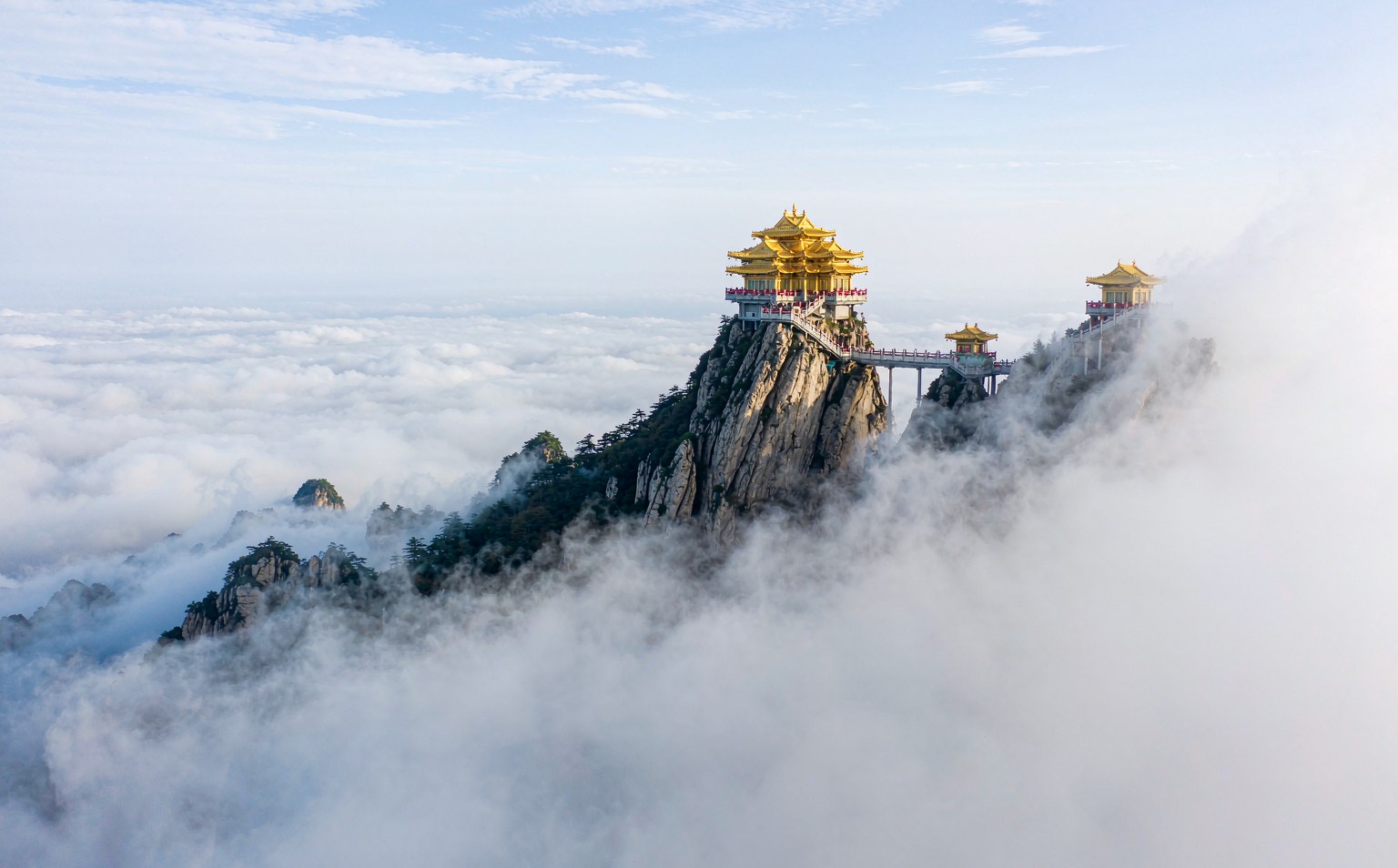
Luoyang Departure Laojun Mountain and Longywan 3 Days
Three days from Luoyang: the first evening waiting below the golden summit for the lamps, the second climbing early for cloud, then a slow afternoon along the nine bends of Longywan. The ticket holds two days, so the mountain is never rushed.
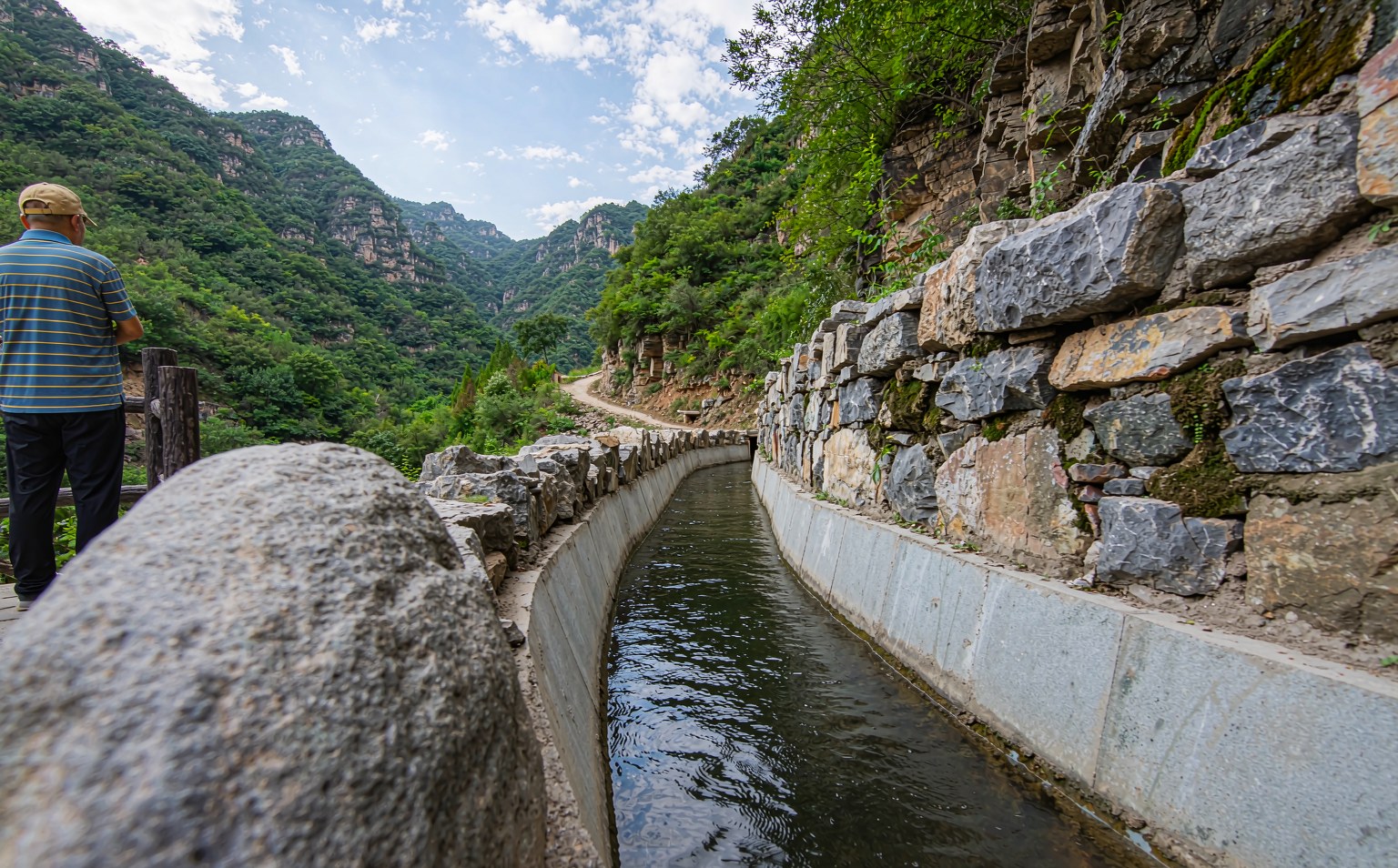
Luoyang Departure Red Flag Canal and Taihang Cliffs 5 Days
Five days along the eastern foot of the Taihang range: the canal bank and the Youth Tunnel, the ridge road and the cliff stair at Shibanyan, and the 1,250 metre tunnel road carved by hand above Guoliang village.
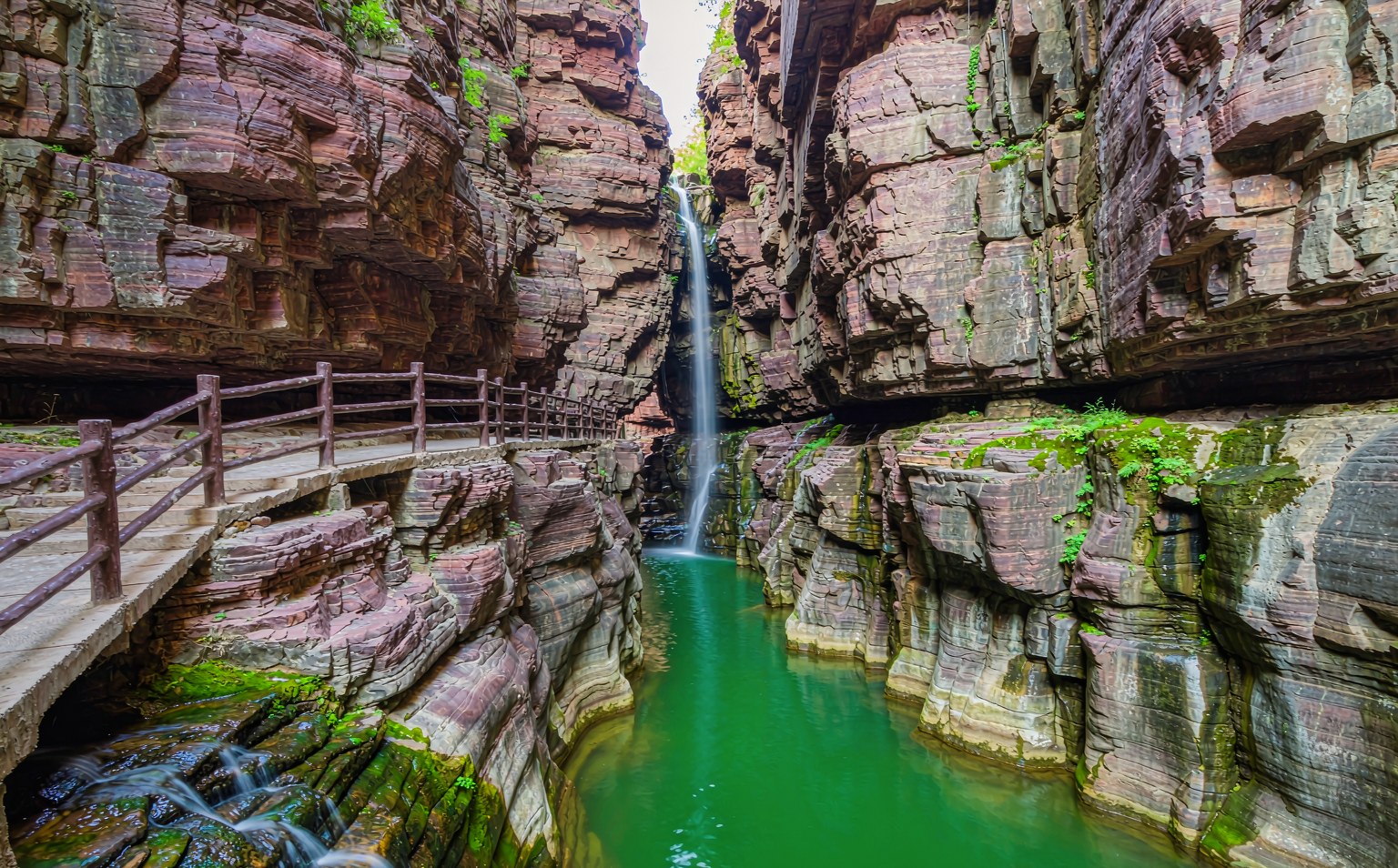
Luoyang Departure Yuntai Mountain, Qingtianhe and Shennong 4 Days
Four days from Luoyang linking three waters of the southern Taihang: the one way walkway of Red Stone Gorge, the lake and boats of Qingtianhe, and the ridge under a metre wide on Shennong Mountain. Nights stay in the village by the shuttle stop.
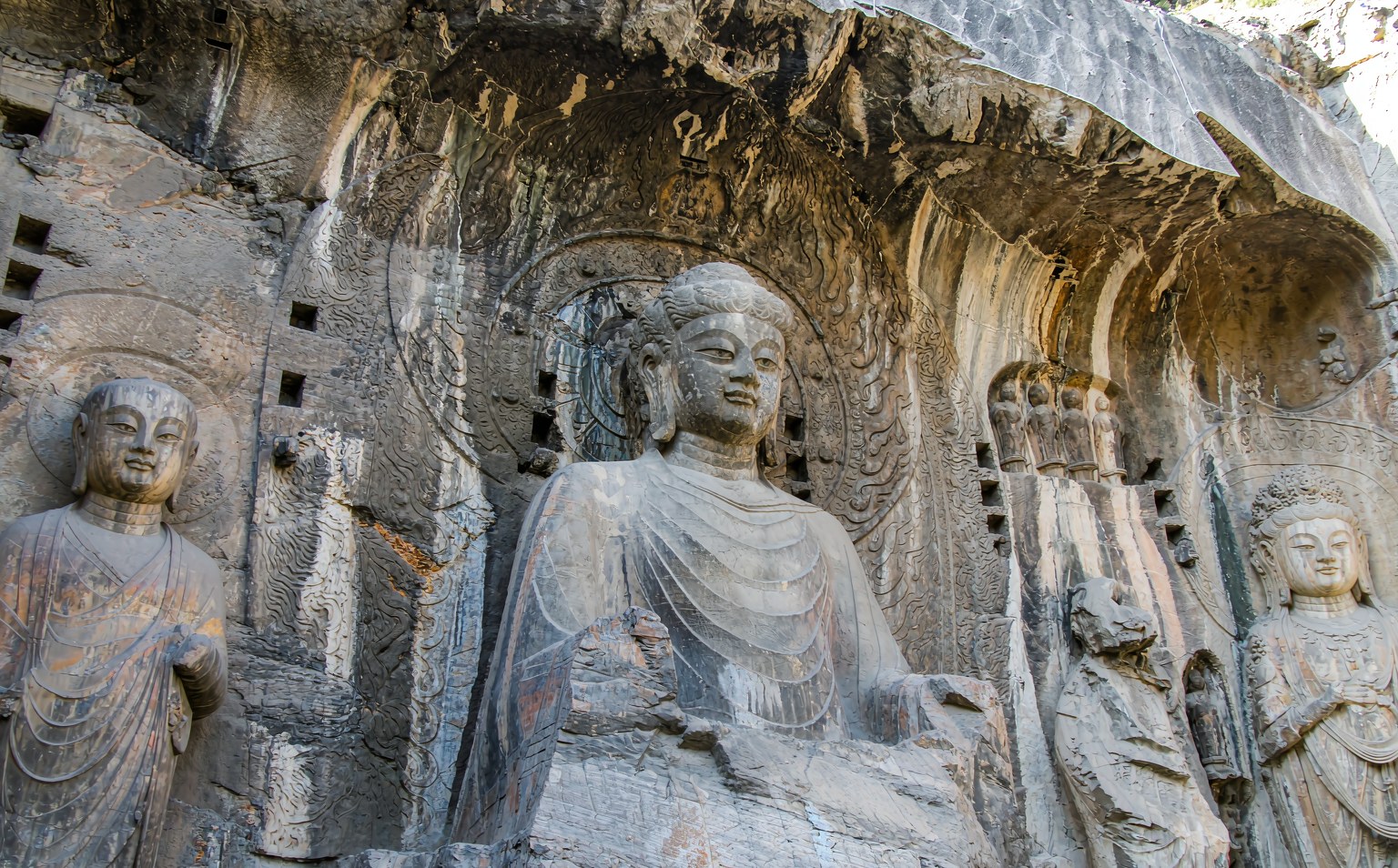
Luoyang Departure Longmen Grottoes and White Horse Temple 3 Days
Three days from Luoyang: the carved cliff of the west bank first, then the oldest official Buddhist temple in China, then the Ming and Qing halls of Guanlin. Both nights stay inside the old city, so the lantern street is a walk away.