
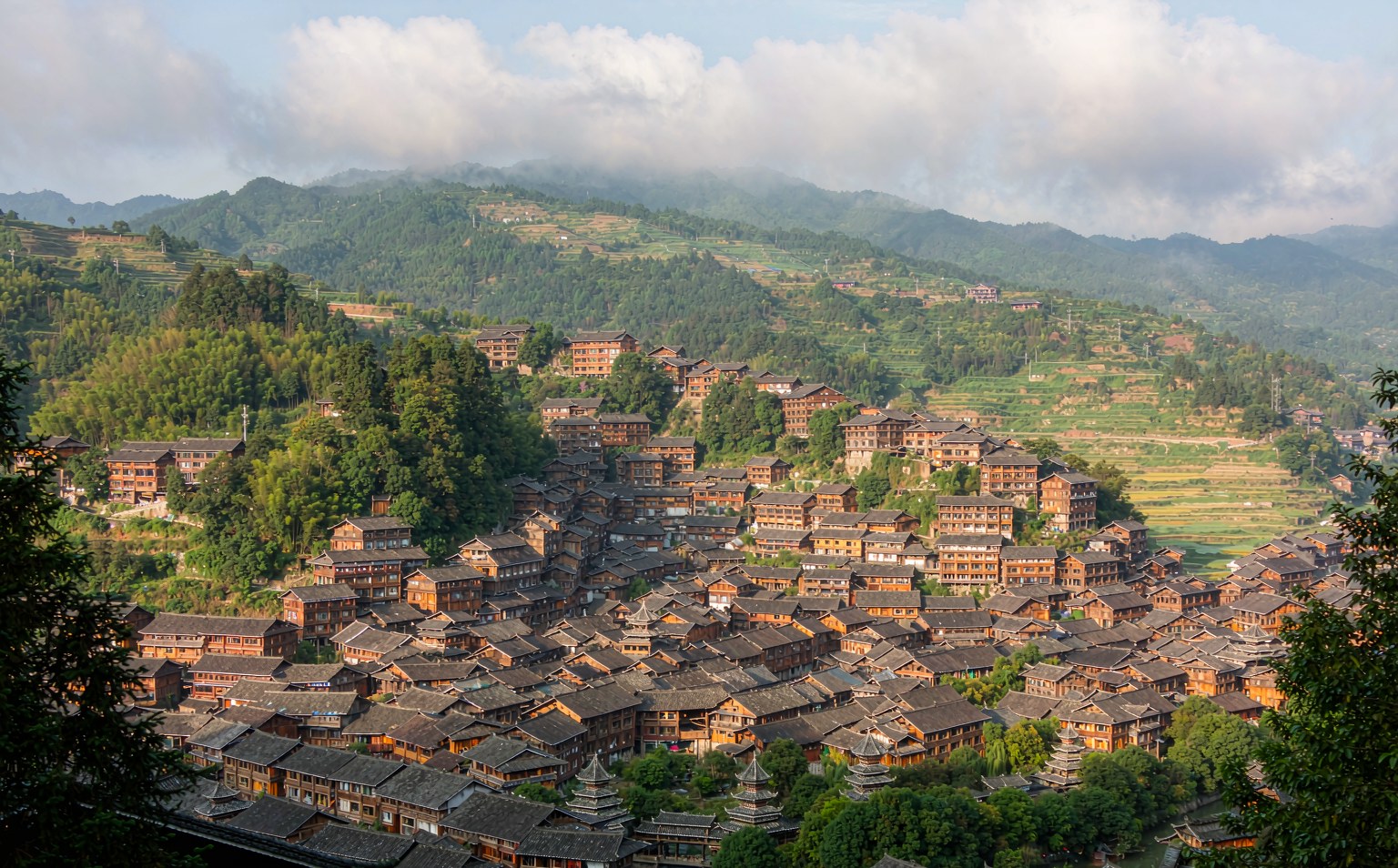
Luoyang Departure: Huangguoshu, Libo Xiaoqikong and Xijiang Miao Village, 5 Days
Five days from Luoyang. November brings less rain and still enough water for the curtain at Huangguoshu, and the green pools at Xiaoqikong hold. One night at each of the three sites, no overnight on the coach, and mist rising in the Miao village at dawn.
Highlights
Day 1: Leave Luoyang, eat late in Guiyang
Board at Luoyang Longmen in the morning, change once at Zhengzhou East or Wuhan, and reach Guiyang North around seven in the evening. Drop the bags and go straight out, because Erqi Road snack street is close: grilled brains eaten hot, and siwawa wrappers you fill yourself with a sour dip that cuts the richness. Stop at eight tenths full, since tomorrow starts early.
Attraction introduction: Guiyang sits in a highland basin at about 1,100 metres, with short summers and mild winters, and small hills growing up between the buildings. Erqi Road is where locals actually eat, with stalls running from dusk until well past midnight and the whole street smelling of intestine noodles and fried tofu.
Tips: At 1,100 metres there is no altitude issue coming from Luoyang, but the humidity is high and the day-night swing is wide. Guests generally find the first evening mistake is overeating chilli and then feeling it on the mountain road next morning. In practice dinner is arranged near the hotel; the snack street is optional, just do not stay past ten.
Day 2: All three sections at Huangguoshu, night in Anshun
Leave at half past seven and reach Huangguoshu in two hours. Start with the main waterfall, walking down the boardwalk as the noise builds until, at the edge of Rhinoceros Pool, your clothes pick up a layer of spray. Lunch inside the park, then on to Doupotang and Tianxingqiao, where the stone forest stands in water and you walk slowly because ferns grow out of every crack. Back to Anshun for the night.
Attraction introduction: Huangguoshu falls on the Baishui River in Zhenning county, 77 metres high and 101 wide, the largest of eighteen waterfalls in this stretch. A water curtain cave runs behind the falling water so you can look out through it. Tianxingqiao is a stone forest standing in a stream, rock and root grown into each other.
Tips: The park is large and the shuttle links three separate sections, so keep the ticket stub, it is checked each time. Guests generally find Tianxingqiao the tiring one, deceptively flat with steps up and down throughout. In practice the order is main fall, Doupotang, then Tianxingqiao so the hardest walking sits in the afternoon. The escalator is 30 yuan one way and worth it if your knees complain.
Day 3: Four hours to Libo, into Xiaoqikong from the west gate
Leave at half past seven for Libo, four hours on the expressway with one service stop. Enter the west gate at one in the afternoon, shuttle up to Wolong Pool first, then work back down through Cuigu waterfall, the water forest and the sixty-eight cascades to the seven-arch bridge. At the water forest you can take your shoes off and walk in the stream, though the stones are slippery and the handrail is there for a reason.
Attraction introduction: Xiaoqikong lies south of Libo where the Xiangshui River cuts through karst forest, dropping its whole height inside three kilometres of valley. The seven-arch bridge was built in the Daoguang years of the Qing as a link on the old Guizhou-Guangxi road. The water forest is tufa with trees growing on it, roots submerged, flow threading between trunks.
Tips: The west-to-east run is forty kilometres and the shuttle covers it in sections, with the ticket valid two days. Guests generally find Wolong Pool is at its best before the crowds arrive and turns into backlight by afternoon. In practice we sleep in Libo town and re-enter the west gate next morning; the 40 yuan shuttle is included and the 30 yuan an hour rowing at Yuanyang Lake is not.
Day 4: Xiaoqikong again in the morning, Xijiang by afternoon
Back through the west gate at eight, straight to Wolong Pool, where the surface is flat as jade and the only movement is the occasional fish rising. Out by half past nine and on the road to Xijiang, three hours, arriving at two. Bags down, then up to the viewpoint where the stilted houses tip down the slope in layers, and after dark the lamps come on one by one and the shape reads better than it does by day.
Attraction introduction: Xijiang in Leishan county is the largest Miao settlement anywhere, more than a thousand households built up the slope on both banks of the Baishui River. The stilted houses usually run to three levels: animals below, people in the middle, grain stored under the roof. The covered bridge and the bronze drum ground are the centre of festival life.
Tips: The internal shuttle is included in the ticket and runs from the visitor centre to the village gate. Guests generally find the night view beats the daytime one but that it is shoulder to shoulder after eight. In practice we are on the viewpoint at half past six, come down to eat after the lamps are lit, and note that the long-table dinner is charged per head and entirely skippable in favour of sour soup fish on the street.
Day 5: Miao village at dawn, then the train from Kaili
Up at half past six and open the window: mist is climbing out of the valley and the roofs float on it in layers. After breakfast walk the river path and watch people carrying vegetables across the covered bridge. Down the hill at half past nine, an hour to Kaili South, board at midday and be home in Luoyang by night.
Attraction introduction: Early morning is the quietest hour at Xijiang, visitors gone and shutters still closed, with only cooking smoke and moving water. The Baishui River runs through the village and the covered bridges over it are timber corridors with benches along both sides, where people stop to talk.
Tips: Stone paving is wet with dew at that hour, so wear shoes with grip. Guests generally find this single hour is worth more than the night view. In practice the whole morning belongs to the village with no shop stops, and the innkeeper can move luggage down to the car park since the station is an hour away.
Related Tours
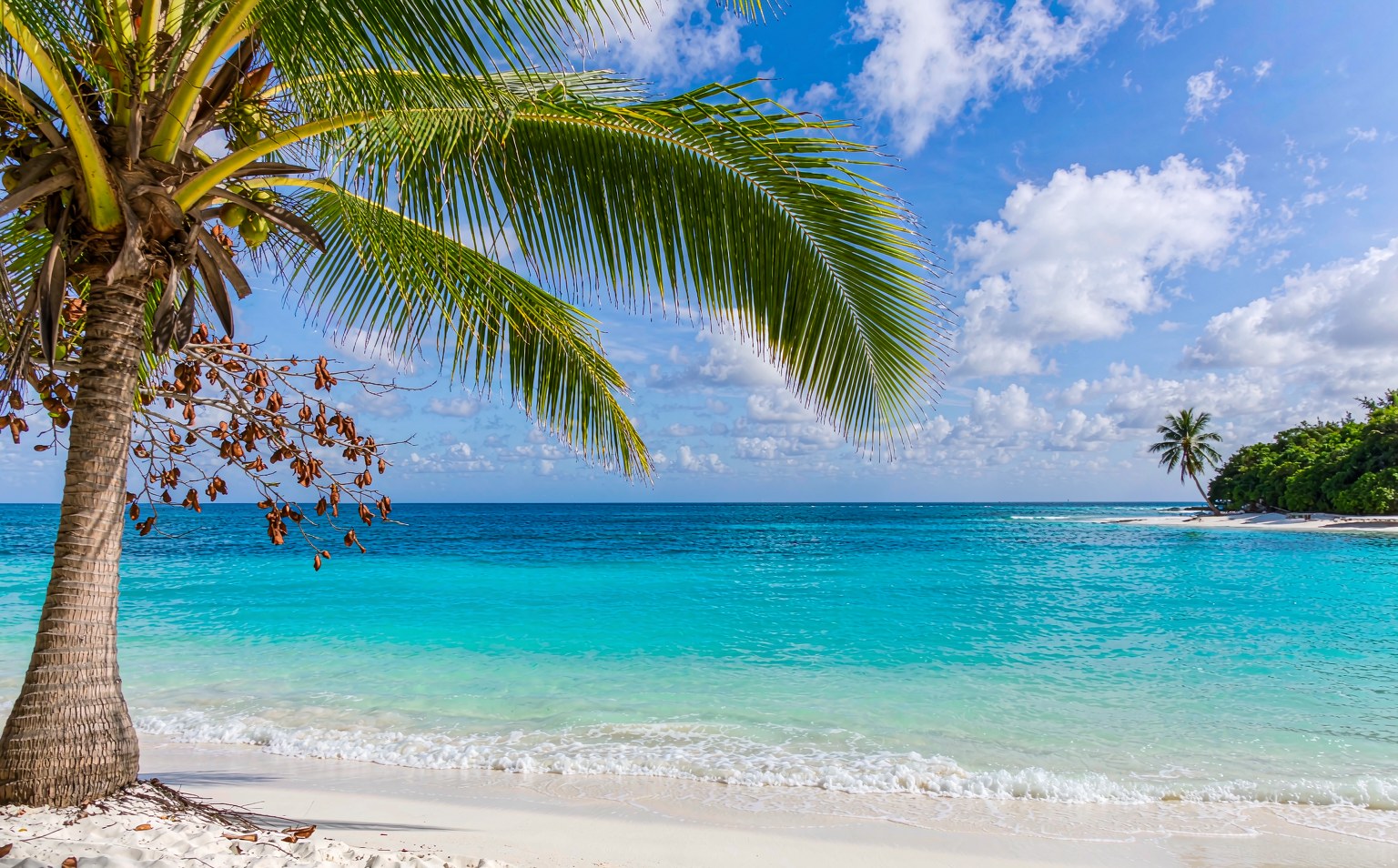
Luoyang Departure: Sanya, Wuzhizhou Island and Nanshan, 7 Days 6 Nights
Seven days from Luoyang. In November the north starts to freeze while Sanya holds at twenty-six degrees and the sea is still swimmable. This version runs at the slowest pace, a full day each for Wuzhizhou and Nanshan, with two days left completely open.
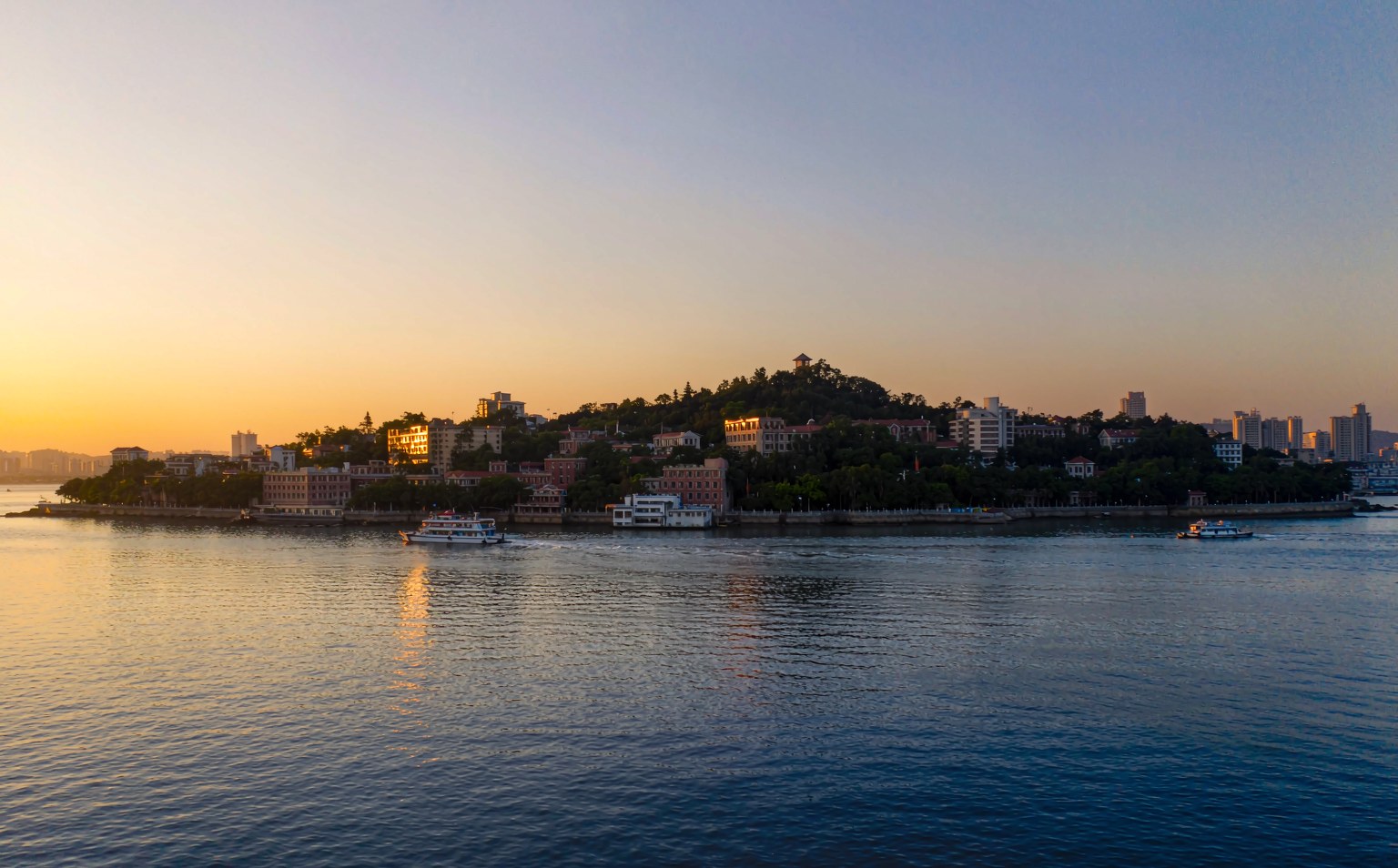
Luoyang Departure: Gulangyu, Xiamen University and Zengcuoan, 4 Days 3 Nights
Four days from Luoyang. November in Xiamen sits around twenty degrees, the sea wind is mild, and a light jacket carries you through a whole day on the island. One night on Gulangyu, after the tour boats leave, with Sunlight Rock saved for early morning.
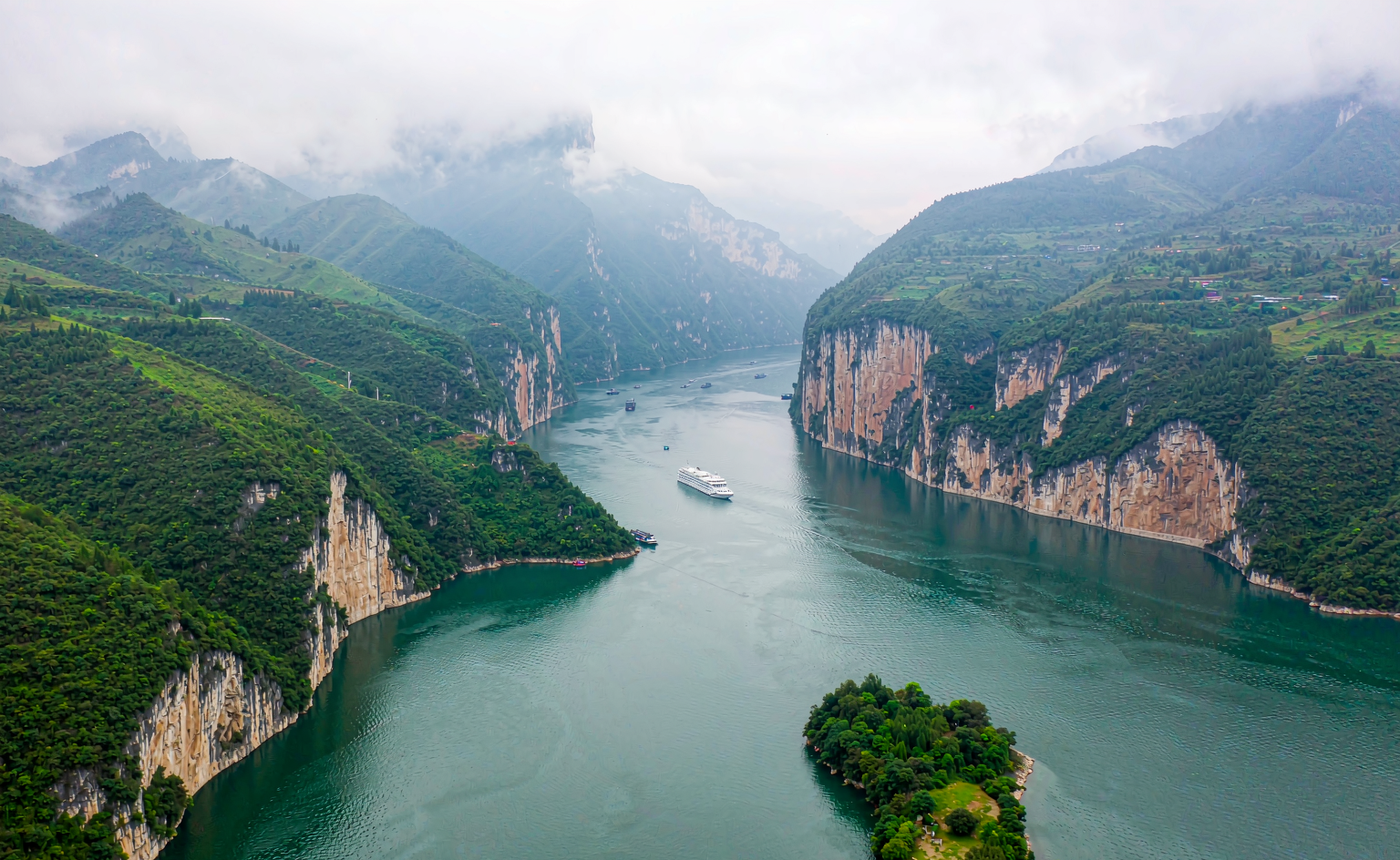
Luoyang Departure: Three Gorges Dam, Wushan Lesser Gorges and Baidicheng, 6 Days
Six days from Luoyang in the red-leaf window, when the banks of Wu Gorge turn from mid-October into mid-November. Seen from the water the cliffs sit closer than from any platform. The dam charges no gate ticket and the Lesser Gorges fare includes the boat.
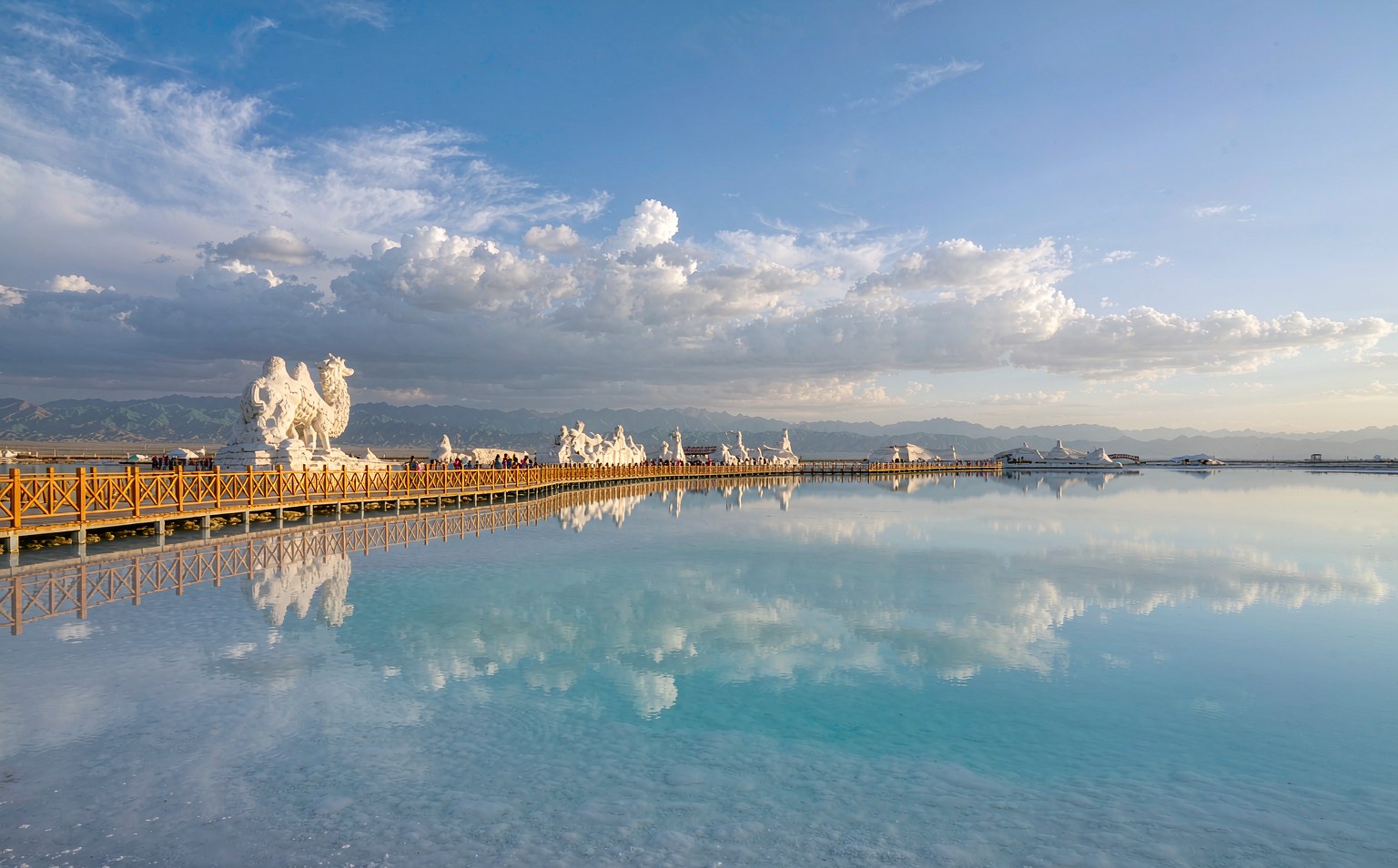
Luoyang Departure: Qinghai Lake, Chaka Salt Lake and Kumbum, 6 Days 5 Nights
Six days from Luoyang, timed for the low season. Erlangjian drops to 50 yuan and Chaka waives its gate ticket entirely from 1 November to the end of February, so you only pay for the little train. Few people, hard wind, clean light.