
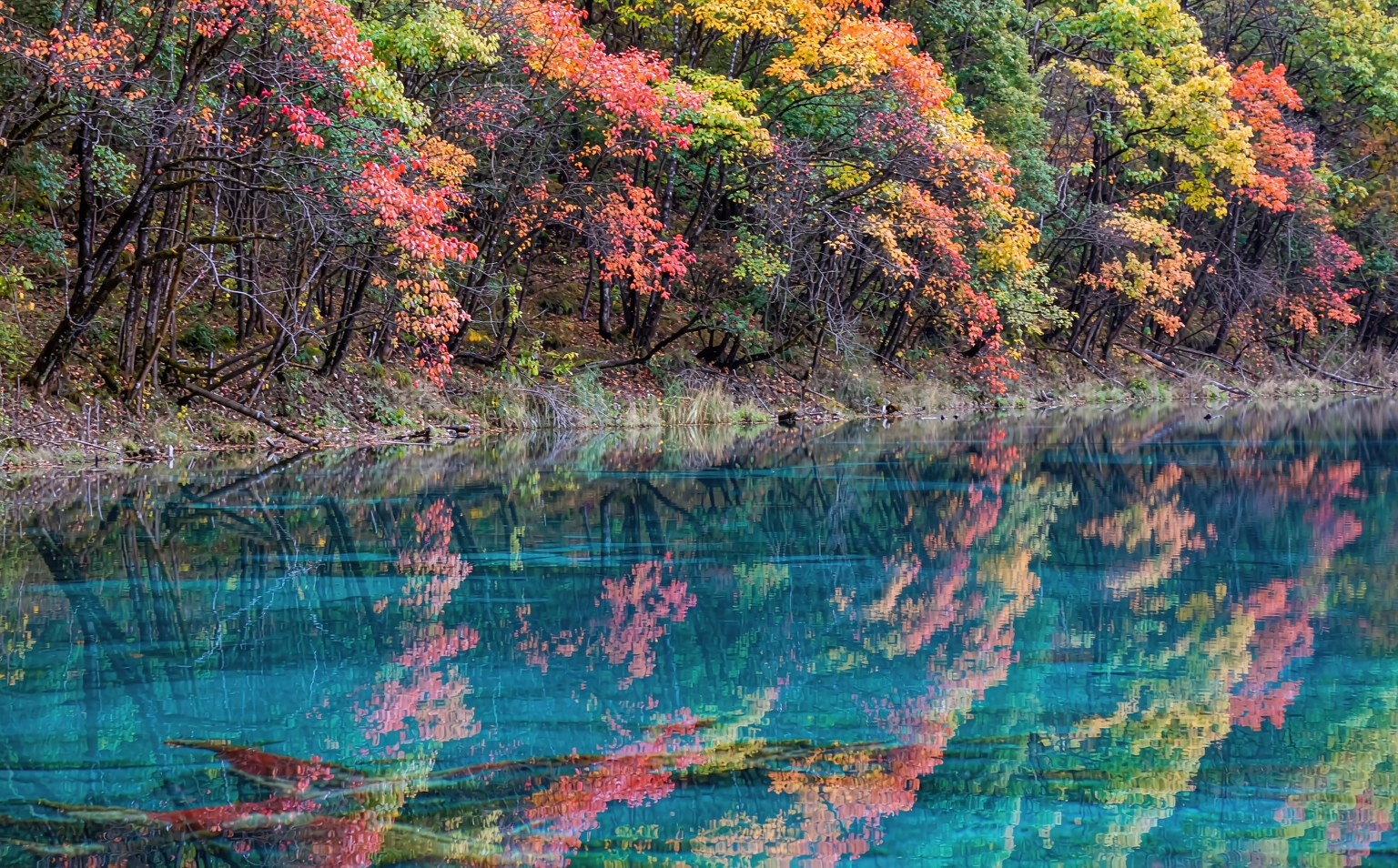
Luoyang 7-Day Jiuzhaigou, Huanglong and Dujiangyan Tour
Seven days from Luoyang, timed for the last fortnight of the autumn colour at Jiuzhaigou. The water at Five Flower Lake runs from pale yellow through to deep blue, the travertine pools at Huanglong step up the valley, and the trip ends at a two-thousand-year-old waterworks still running.
Highlights
Day 1: Luoyang to Chengdu
No sightseeing today — the point is simply to get to Chengdu. High-speed rail from Luoyang Longmen to Chengdu East takes around four and a half hours, so a morning departure puts you in the city by afternoon. The reason for routing it this way is the rhythm of the whole trip: there is no direct train or scheduled flight from Luoyang to Jiuzhaigou, and the most reliable approach is to reach Chengdu first and then take the Sichuan–Qinghai railway to Huanglong Jiuzhai Station. Splitting the journey into two stages is steadier than flying into a plateau airport, and the altitude rises gradually rather than all at once. There is usually time in the evening to look around once you have dropped the bags — Kuanzhai Alley and Jinli are close to each other, and a hotpot dinner is the standard way to let the tension of the journey out. Do not eat too much. There is a long day of travel tomorrow. And go to bed early — you will be up before dawn for the train.
Day 2: Chengdu to Huanglong Jiuzhai Station and Jiuzhaigou
An early train from Chengdu East to Huanglong Jiuzhai Station. The landscape is part of the journey: the Sichuan–Qinghai railway runs west through the plain and then into the gorges, and phone signal comes and goes. The best use of this stretch is simply to watch out of the window. A little over an hour and a half and you are there. Huanglong Jiuzhai Station sits at 2,977 metres. The scenic shuttle runs straight from the station, about two hours to the entrance at Jiuzhaigou, or half an hour to Huanglong itself, which is only 27 kilometres away. Taxis and shared cars also wait outside the station, but the shuttle is the simplest option. This stretch is a genuine climb in altitude — from nearly 3,000 metres down to around 2,000 at the valley — and people do feel it. Do not run the moment you get off the train; walk slowly, breathe steadily and drink some water. A mild headache is common and settles once you have rested for a while. You arrive at Zhangha town in the afternoon, at about 2,000 metres, where the air is thinner and everything slows down. There is no entry into the park today, which is deliberate. Walk around the valley mouth instead. The start of Zechawa Valley is just inside, and beyond that there are Tibetan villages and grassland; the evening light is soft and good for a few photographs. Early to bed — tomorrow is a full day on foot inside the park, and the sleep matters.
Day 3: Jiuzhaigou, full day
A full day inside the park. You take the shuttle to the head of each valley and walk the boardwalks. The park is Y-shaped, with three main valleys: Tree Zheng, Sun and Moon, and Zechawa. Start in the morning with the Sun and Moon Valley, where the highlight is Five Flower Lake. It sits at 2,462 metres and is the most photographed spot in the whole park. The colour of the water moves through layers — pale yellow, dark green, deep navy, light blue — and the calcified deadwood on the lake bed is clearly visible in the sunshine. At midday, when the light comes through most directly, the water is at its most saturated. Walking down the boardwalk you pass Arrow Bamboo Sea and Panda Sea, and then Pearl Shoal Falls, where the water spreads across a series of shelves like spilled beads. Lunch at Nuorilang, the visitor centre in the middle of the park, which is the only large food stop and the point where all three valleys meet — the afternoon transfer between valleys happens here. In the afternoon take Zechawa Valley. First Changhai, at 3,101 metres, the largest and highest lake in the park. It has no outlet, and locally it is called the "gourd that never fills and never drains". The water is deep blue and the snow peaks on the far shore reflect clearly in it. Above it is Five Colour Pool, the signature sight of Huanglong: across a travertine terrace, hundreds of pools step upward, shallow ones green and deep ones blue. The boardwalk here has a gradient, and it is worth slowing down for — the colour changes as you climb. On the way out, walk Tree Zheng Valley: Rhino Lake, the Tree Zheng group of lakes, Reed Lake and the Bonsai Beach, a string of lakes stepping down the valley floor with the boardwalk running along the water. It is now the peak of the foliage season: more than eighty per cent of the leaves have turned, and the official foliage index reaches sixty to ninety-five per cent. Gold, orange and deep red mixed with the blue of the lakes — this is the most saturated fortnight Jiuzhaigou has all year. Back out for dinner. There is no accommodation inside the park; the rule is "tour inside, stay outside".
Day 4: Second entry to Jiuzhaigou, then Huanglong
The plan is to go back into the park in the morning and cover what you missed, then move on to Huanglong in the afternoon. In the morning, walk Tree Zheng Valley. It is the most representative section of the whole park — nineteen linked sheets stepping down the valley with the boardwalk running along the water. From the viewing platform you look down on a string of mirrors set in the valley. Rhino Lake is near the entrance, Reed Lake and Bonsai Beach at the far end, and the further in you go the quieter it gets. Some people instead rest on the second morning. Fatigue accumulates at altitude, and sleeping in and going back over the photographs from yesterday can be a better use of the time than pushing on. Leave at midday and drive to Huanglong, about two hours over the mountain pass, in Songpan County. In the afternoon, walk up Huanglong Valley. The boardwalk follows the stream upward, and the travertine pools change colour the whole way. Take the ropeway up and walk down: this saves the climb on the way up and keeps the detail on the way down. The core of the valley is Five Colour Pool, at the top, and the cable car drops you right at it. Walk back down from there past Jin Sha Pu Di — a stretch of travertine terrace along the valley floor where the water spreads thin and the colour pales, like a golden riverbed. Five Colour Pool is the signature sight: across the terrace, hundreds and ninety-three pools stack upward, green where shallow and blue where deep, and the layers are clearest seen from above. Huanglong Temple is off to the side of the valley, and the Zhagana Falls in Muni Valley is on the same line if you have the time. Walking back down, the altitude is high and breathing hard is normal. Do not run, and if you feel unwell stop and rest — there are free oxygen stations along the route. Stay overnight at Zhujiazhai, around 3,000 metres, which is higher than the valley floor. Sleep can be unsettled at that height; a higher pillow helps.
Day 5: Chengdu
Return from Zhujiazhai to Chengdu. The drive takes about four hours, and after the mountains you come down onto the Chengdu Plain. The altitude drops from three thousand metres to a few hundred, and you can feel the difference in how much easier everything is. Arrive in the afternoon and leave the rest of the day open. Having come down from the plateau, do not go straight into the crowds. Slow down first. The area around Wide and Narrow Alley, Jinli and the People’s Park is good for a gentle walk, and a Chengdu teahouse is the local thing to do — a cup of gaiwan tea and a seat for the afternoon, with nothing else scheduled. That rhythm is what Chengdu is actually like, and it is the point of spending a night here. For dinner, a proper hotpot. The food for the past few days has been simple; tonight you can relax. A split pot works if not everyone can take the heat, and the classic combination is beef tallow broth with tripe, shaved beef and goose intestine, each dipped for a dozen seconds. Get an early night. Tomorrow morning is Dujiangyan, and the train home the day after.
Day 6: Dujiangyan and the journey home
Dujiangyan in the morning, about forty minutes northwest of Chengdu. This is the most rewarding place to take your time on the whole trip — something built over two thousand two hundred years ago that is still supplying the Chengdu Plain with water today. Start at the Fish Mouth, where the channel is divided: a levee splits the Min River into an inner and an outer channel. Follow the inner channel to Feishuiyan, where floodwater is thrown clear and the excess silt is carried away with it. Below that is the Bottle Mouth, where the water is drawn off into the irrigation canals. Three points in sequence, and you can see how a river with a temper was brought to heel two millennia ago. Cross the Anlan Suspension Bridge to Erwang Temple; from the far side you can look back and read the whole alignment of the works. The temple commemorates Li Bing and his son, who built them. There are a good many steps and paths through the site, and your legs will feel it at the end. The escalator saves a stretch of the climb and is worth using, particularly with older people or children. The engineering here is about the distribution of water, and following the commentary is far more rewarding than looking at the stonework on its own. Have lunch outside the scenic area — the Sichuan cooking here is properly spicy, and any local restaurant on the street will do. Return to Chengdu East in the afternoon and take the high-speed train back to Luoyang. Putting the best at the end is deliberate — after several days on the plateau, finishing with a two-thousand-year-old waterwork makes a steady closing note.
Day 7: Return to Luoyang
Check out and set off. Depending on the timetable, the return train is usually around midday or early afternoon, which leaves the morning free. If there is time, have a proper Chengdu breakfast — guokui, soy milk and fried dough, or the sweet cold noodles the locals are fond of. A local place with a queue will beat the hotel breakfast. On board, the run east to Luoyang Longmen takes four and a half hours. The journey brings you down from three thousand metres at Zhujiazhai to a few hundred in Luoyang, and closes out the week at the same rate. Seven days: the first on the plain in Chengdu, the second up into the gorge, the third and fourth in the park and at Huanglong, the fifth back in the city, the sixth at the waterworks, the seventh home. The foliage window is only a little over a month, and missing it means waiting until next year.
Related Tours
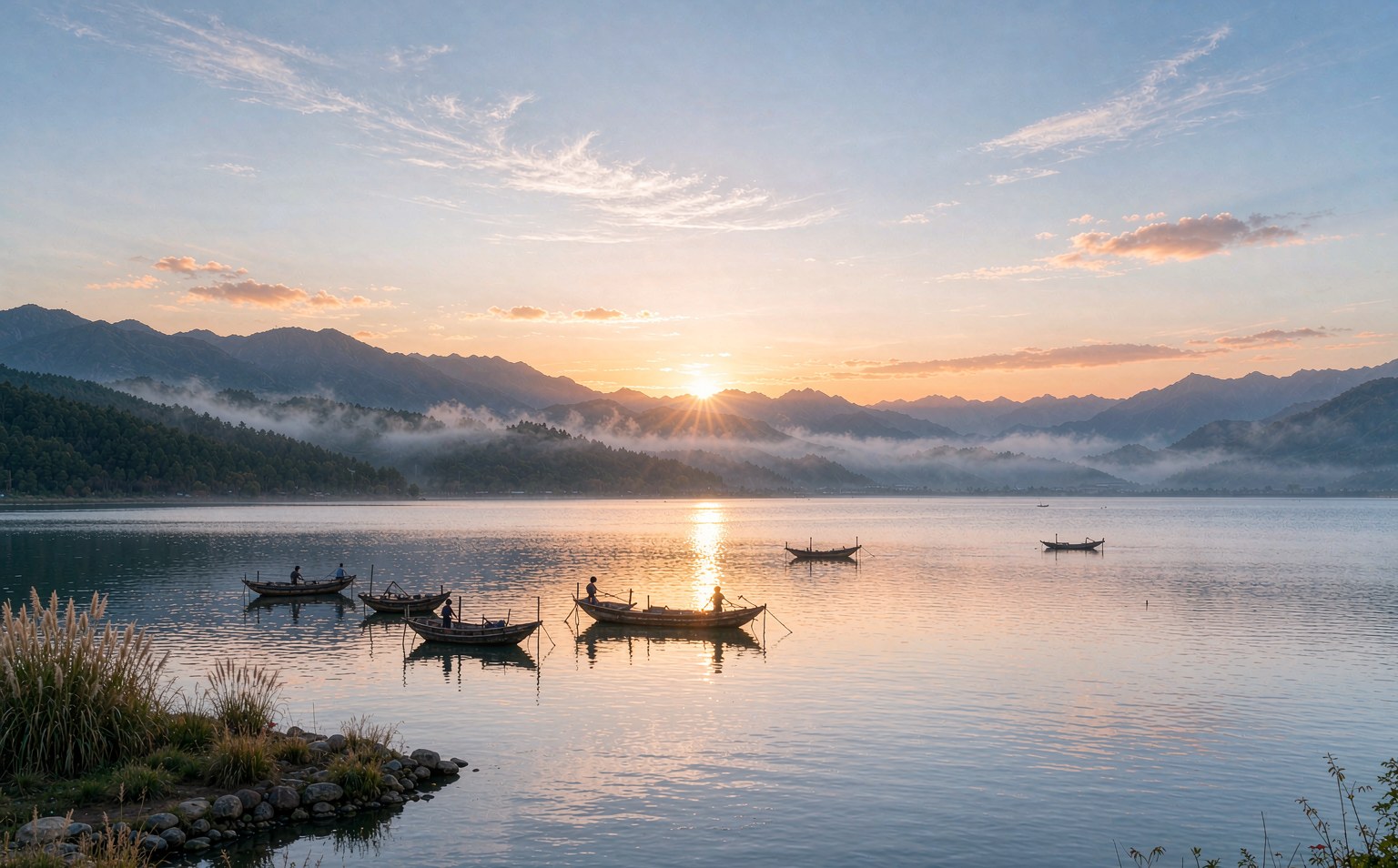
Luoyang 6-Day Dali, Lijiang and Erhai Autumn Tour
Six days in Yunnan in November, the best value window of the year. The autumn water of Erhai reflects the nineteen peaks of Cangshan, the clouds above Jade Dragon Snow Mountain are cleaner than in summer, and flights and hotels have halved in price since the National Day break.
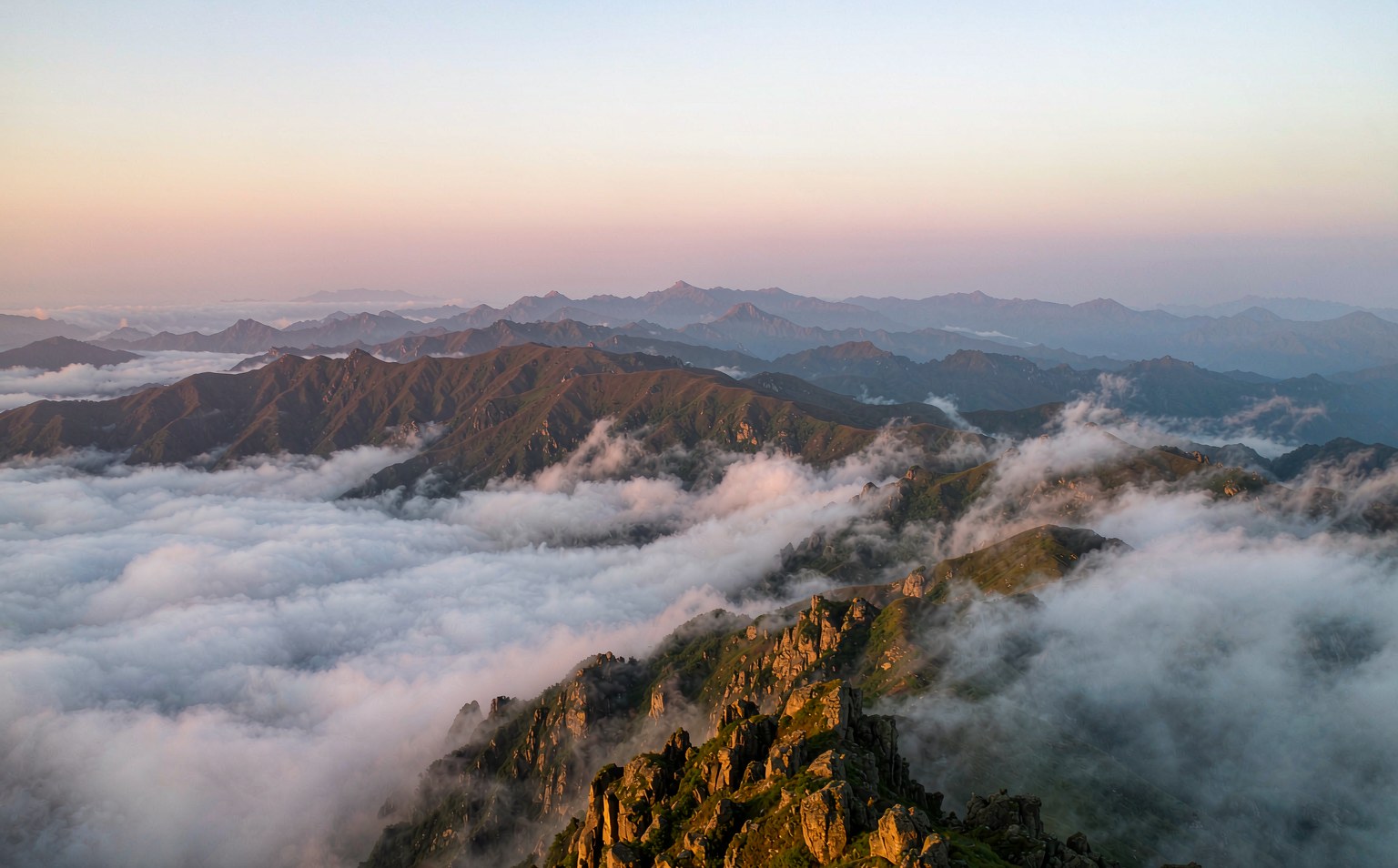
Luoyang 4-Day Yuntai Mountain Red Stone Gorge Autumn Tour
Four days from Luoyang into Yuntai Mountain. The Red Stone Gorge is widely considered the most photogenic stretch, the ropeway reaches Zhuyufeng in six minutes, and the fourth day adds the water of Quanpu Gorge.
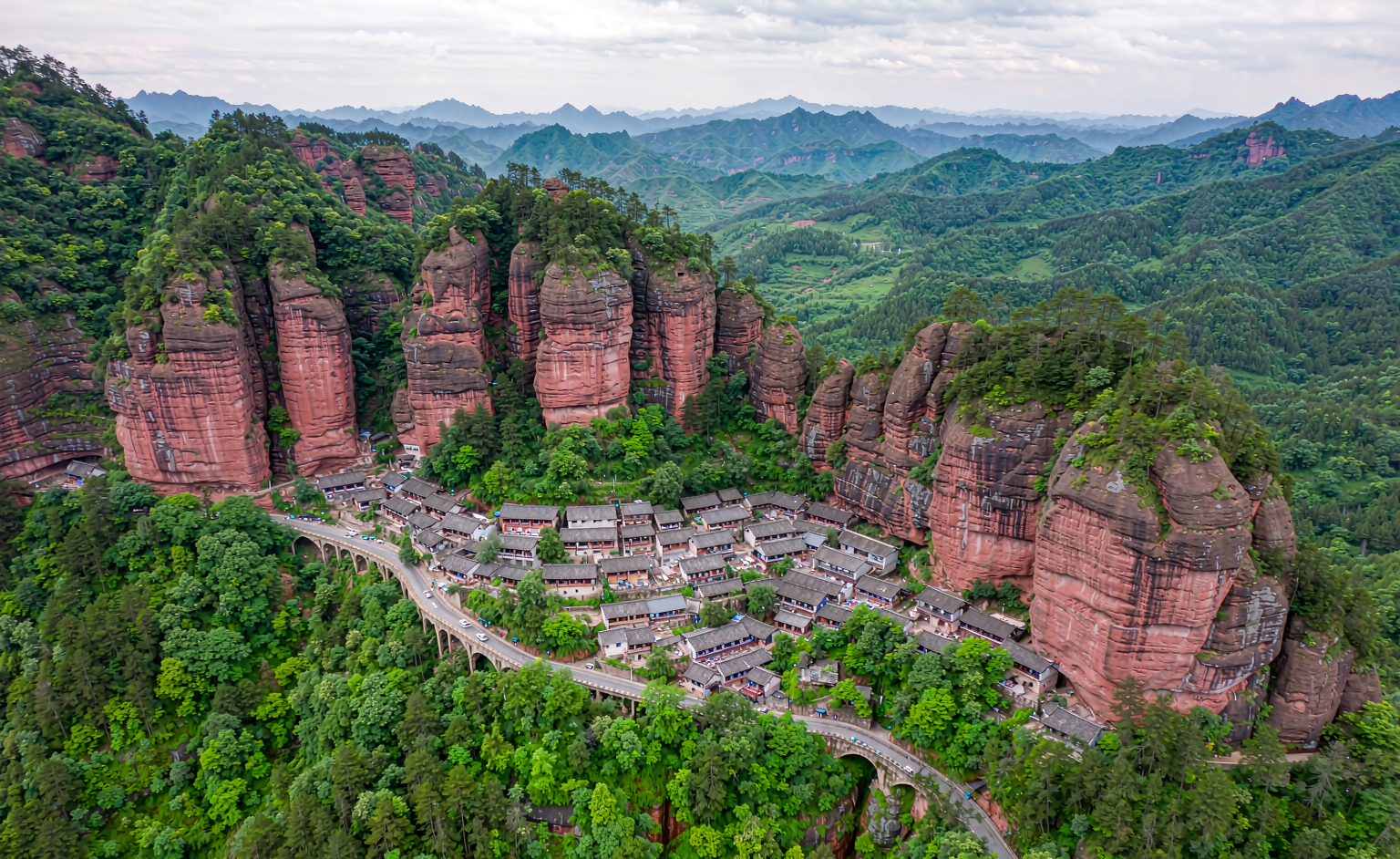
Luoyang 4-Day Wanxianshan, Guoliang Village and Red Flag Canal Tour
Four days north of Luoyang into the Taihang Mountains. Red rock cliffs with autumn yellow above them, a road cut into the cliff face by hand, and a canal that took a decade to carve along the same mountain.
Luoyang 4-Day Dengfeng Shaolin Autumn Foliage Tour
Four days from Luoyang into the Dengfeng hills, timed for the autumn colour. Ta Lin and the main monastery in one stretch, the kung fu show on a schedule you can plan around, and a final day for two old courtyards.