
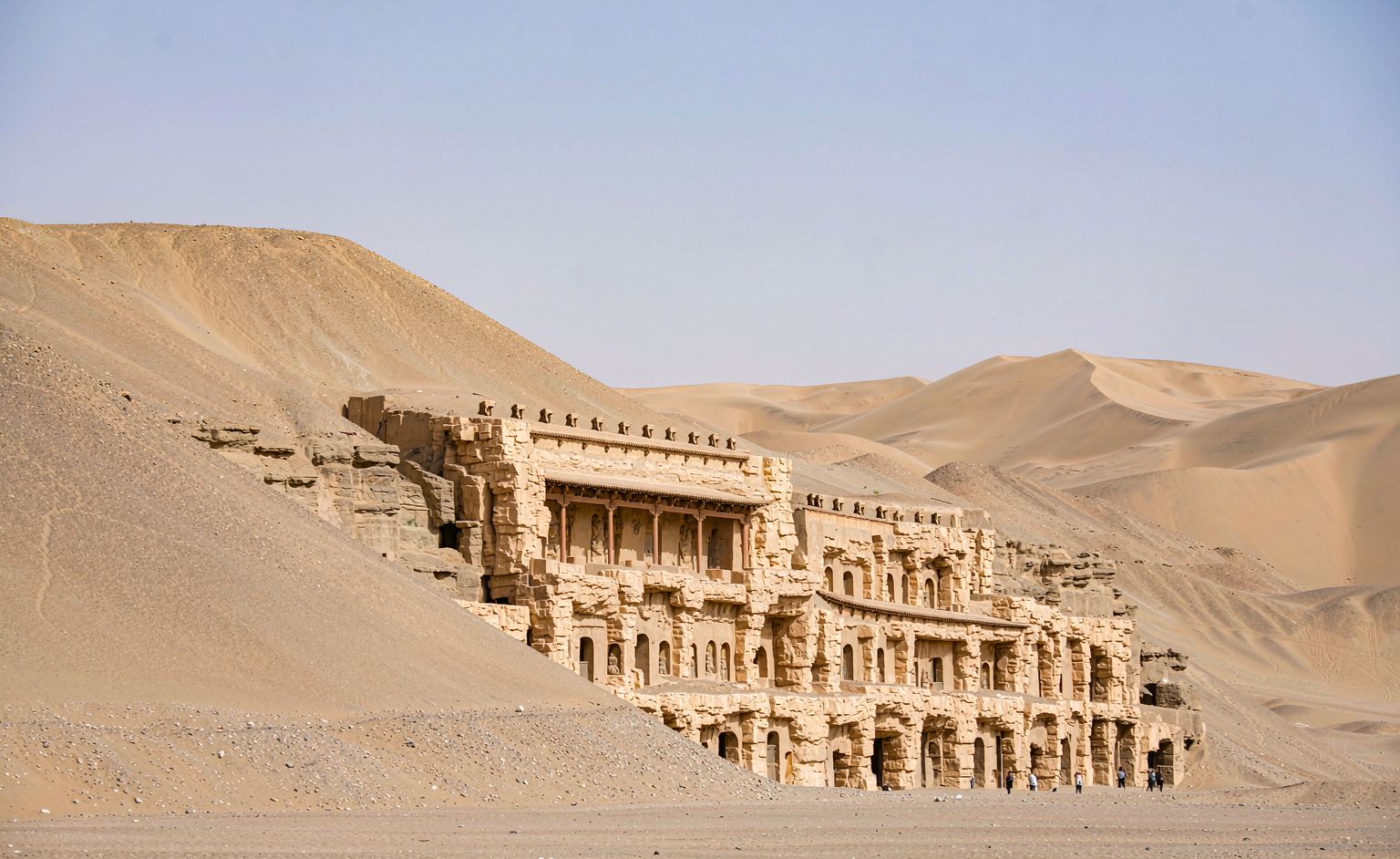
Luoyang Departure: Dunhuang, Mogao Caves, Mingsha Mountain and Jiayuguan, 6 Days 5 Nights
Six days from Luoyang. November is low season in Dunhuang, which means eight caves at Mogao and a guide with time to talk. The sand at Mingsha no longer burns your feet, and you can climb the ridge and sit there until the lamps come on around Crescent Lake.
Highlights
Day 1: Luoyang to Dunhuang
Leave in the morning and land in Dunhuang after a change. The airport is small and the Gobi begins at the edge of the car park. Bags at the hotel, and on the way in the sand ridges of Mingsha show on the skyline. In the evening the Shazhou night market, where donkey meat noodles, apricot juice and roast lamb ribs are sold until well past midnight.
Attraction introduction: Dunhuang sits in the far northwest of Gansu at the western end of the Hexi Corridor, the throat of the old Silk Road. The oasis formed by the Dang River is ringed by desert and gravel plain, and annual rainfall is under 50 millimetres.
Tips: The air is dry enough to crack lips and hands, so bring balm. Guests generally find night market prices run about a third above the restaurants in town. In practice, keep the first evening quiet and let the body adjust.
Day 2: A full day at Mogao
Morning at the digital centre, two films first: one on the history, one on a dome screen that projects the closed caves overhead so the murals fill your whole field of view. Then the shuttle into the cave area. The guide leads the group and in low season eight caves are opened, seven or eight minutes in each. The Maitreya of Cave 96 stands 35.5 metres, and from the floor you see only the chin. Cave 17, the library cave, is small enough that two people at the door fill it.
Attraction introduction: The Mogao Caves, known as the Caves of a Thousand Buddhas, are cut into the east face of Mingsha Mountain over five levels across 1,600 metres. Cave 96 is the landmark, the great Buddha inside the nine-storey tower built in the Tang. The library cave was opened in 1900 and yielded more than fifty thousand documents.
Tips: No photography inside the caves and no touching the painted surfaces, and bags go in the lockers. Guests generally find the caves cold even at midday. In practice, wear a layer and take the early slot, when the groups are smaller.
Day 3: Mingsha Mountain and Crescent Lake, waiting for sunset
Rest in the morning and eat properly at midday. Into Mingsha at four, when the sand has stopped holding heat. There are two ways up: the wooden boardwalk, or straight up the sand, which costs a step back for every step forward and is worth it. Sit on the ridge and let the wind go past; the dune hums when the sand slides. Crescent Lake lies at the foot, a curved sheet of water with sand on every side and yellow reeds at the edge. The sun goes down, and the lamps around the spring come on.
Attraction introduction: Mingsha Mountain runs about forty kilometres east to west, with dunes reaching some 250 metres. Crescent Lake sits in the hollow between them, roughly 100 metres long and 25 wide, named for its shape, and recorded as a Dunhuang beauty spot as early as the Han.
Tips: Sand gets into everything, and the site rents shoe covers for 15 yuan, or bring sandals. Guests generally find the climb takes twenty-five minutes at a steady pace. In practice, allow an hour and a half on the ridge before sunset so there is no rush.
Day 4: Jiayuguan pass
Leave for Jiayuguan in the morning, four hours. In the afternoon climb the pass: three towers on one line, Guanghua, Rouyuan and Jiayuguan itself, the walls rammed earth and rough under the hand. From the top, the Qilian range runs south and the Black Mountains north, and the Hexi Corridor narrows between them to fifteen kilometres. Outside the walls, on the Gobi, stands the First Beacon Tower, a single earthen stump above the Taolai River.
Attraction introduction: Jiayuguan was begun in the fifth year of the Hongwu era of the Ming and marks the western end of the Ming Great Wall, hence the title of greatest pass under heaven. The fortification is a trapezoid of inner wall, outer wall and moat covering about 25,000 square metres, and the First Beacon Tower is the westernmost of the Ming signal towers.
Tips: The top of the wall is windy enough to take a hat. Guests generally find the light on the rammed earth best after four. In practice, walk the circuit anticlockwise so the towers come up against the sun rather than with it.
Day 5: Zhangye Danxia, back to Dunhuang
Morning at the colour hills. The rock runs in bands, red, yellow, grey and white, as though somebody had swept a brush across it. Four viewing platforms; the first is the highest and the fourth the one for sunset. Lunch outside the park, then the six hours back to Dunhuang with a stop at Guazhou, where the melons and the cistanche are what people buy. Dunhuang in the evening, and the night market again if there is appetite.
Attraction introduction: The Zhangye Danxia landform lies in Linze county, coloured hills of red sandstone and conglomerate shaped by long weathering and water erosion, covering about fifty square kilometres and listed as a national geopark in 2011.
Tips: Walking off the boardwalk onto the rock is fined, and the surface marks for decades. Guests generally find the colour flat and grey at midday. In practice, come early or late; the bands only saturate when the sun is low.
Day 6: Return
No alarm. Buy something to take home in town: dried apricots, cistanche, or a luminous cup, depending on taste. Leave for the airport at midday and fly back to Luoyang.
Attraction introduction: The luminous cup is cut from old Qilian jade, thin enough to hold up to the light, and is a long-standing local craft. The dried apricots are sun-dried from local fruit, thick-fleshed and sweet.
Tips: Check the jade rather than the price, because the cheap cups are usually glass. Guests generally find airport security strict on liquids and apricot juice has to be checked. In practice, allow two clear hours before departure.
Related Tours
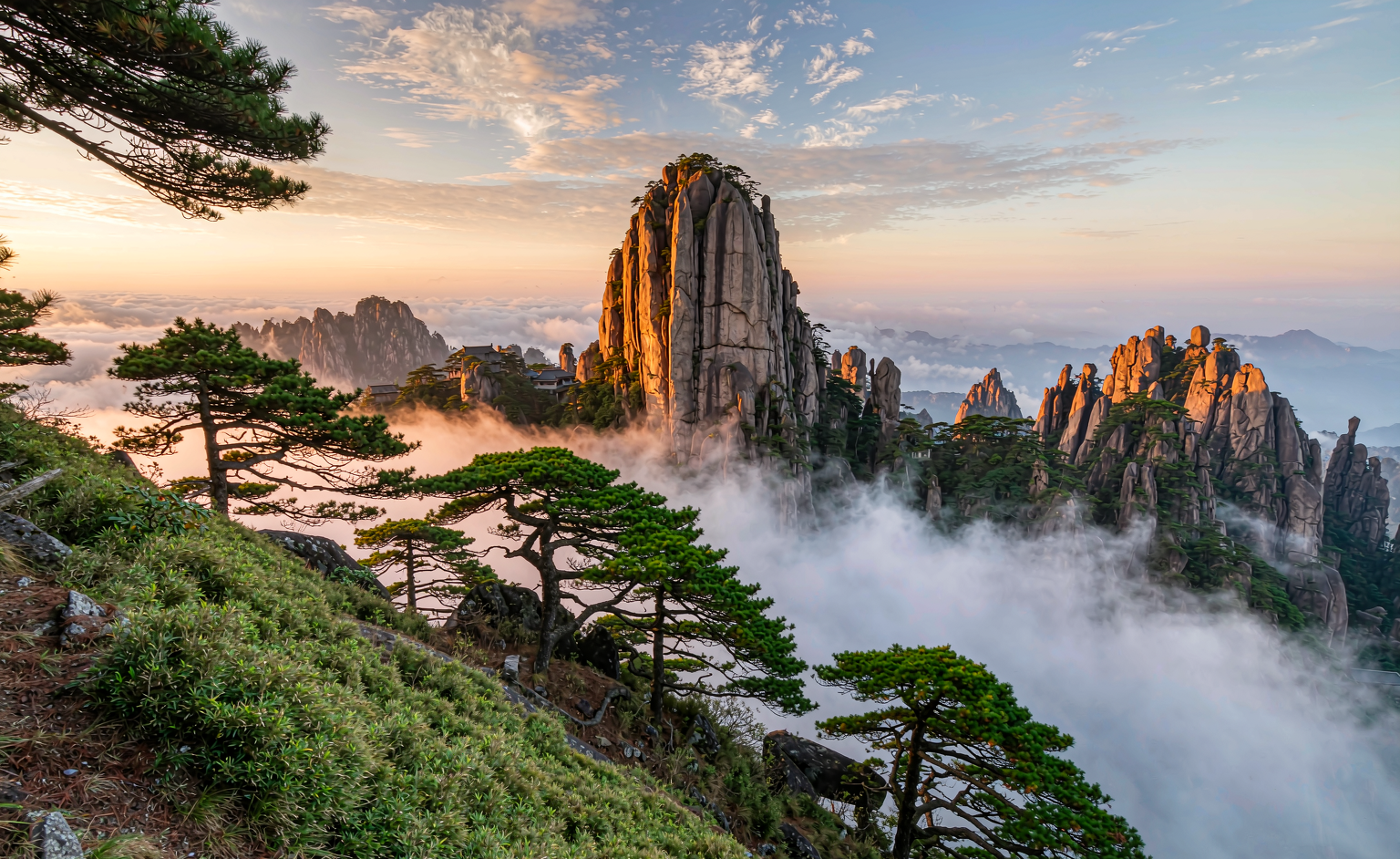
Luoyang Departure: Huangshan, West Sea Canyon, Hongcun and Tachuan, 5 Days 4 Nights
Five days from Luoyang. Two days on Huangshan with a night on the summit for sunrise, then down into Yixian: a night inside Hongcun, and Tachuan, whose tallow trees turn in mid November and hold their colour for barely three weeks.
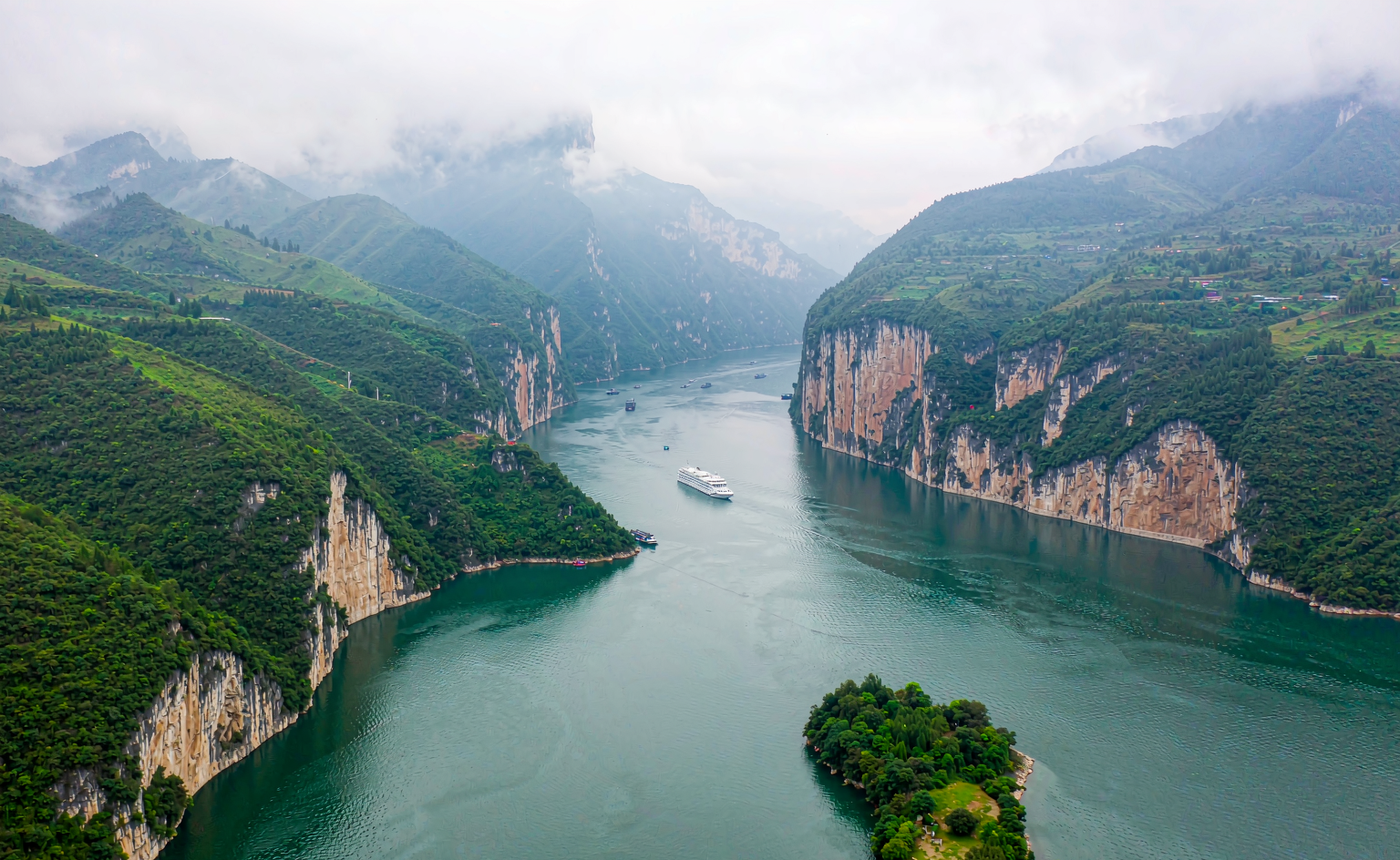
Luoyang Departure: Three Gorges, Wu Gorge and Baidi City, 5 Days 4 Nights
Five days from Luoyang. Board at Yichang and travel upstream, taking Xiling, Wu and Qutang gorges one after another. Three nights on the water, with a morning ashore at Baidi City and the river slapping the hull after dark.
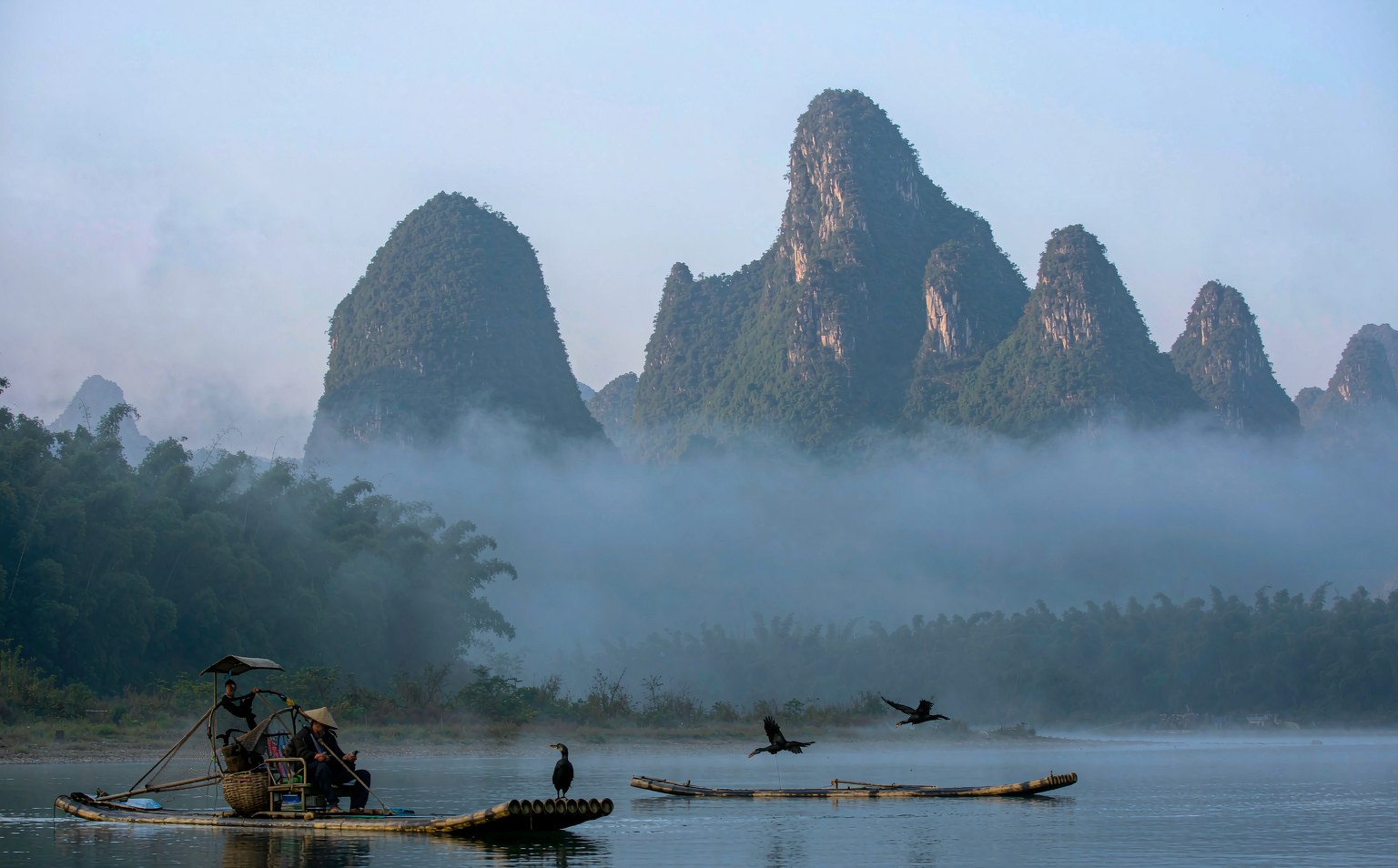
Luoyang Departure: Guilin, Li River and Longji Terraces, 5 Days 4 Nights of the Harvest
Five days from Luoyang. From late September to mid October the Longji rice turns from green to gold and the Li River carries morning mist. The terraces come first, then we run south, without doubling back.
Luoyang Departure: Zhangjiajie, Tianzi Mountain and Baofeng Lake, 5 Days 4 Nights
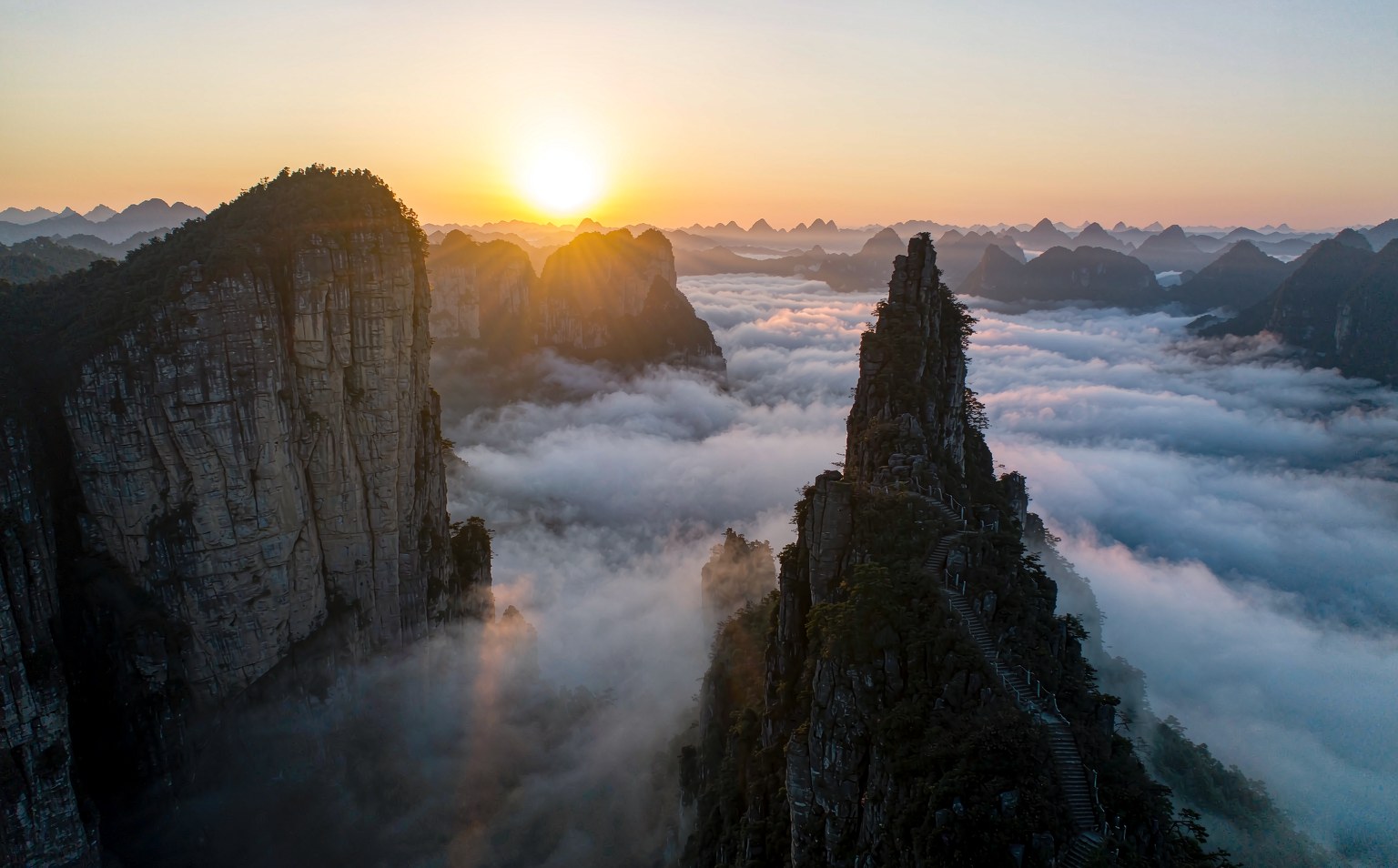
Five days from Luoyang. The sandstone pillars of Wulingyuan grow clouds best after rain clears, so the itinerary leans on a four-day ticket: Yuanjiajie, Tianzi Mountain and Golden Whip Stream each get their own day, and the last half day goes to the lake among the peaks.