
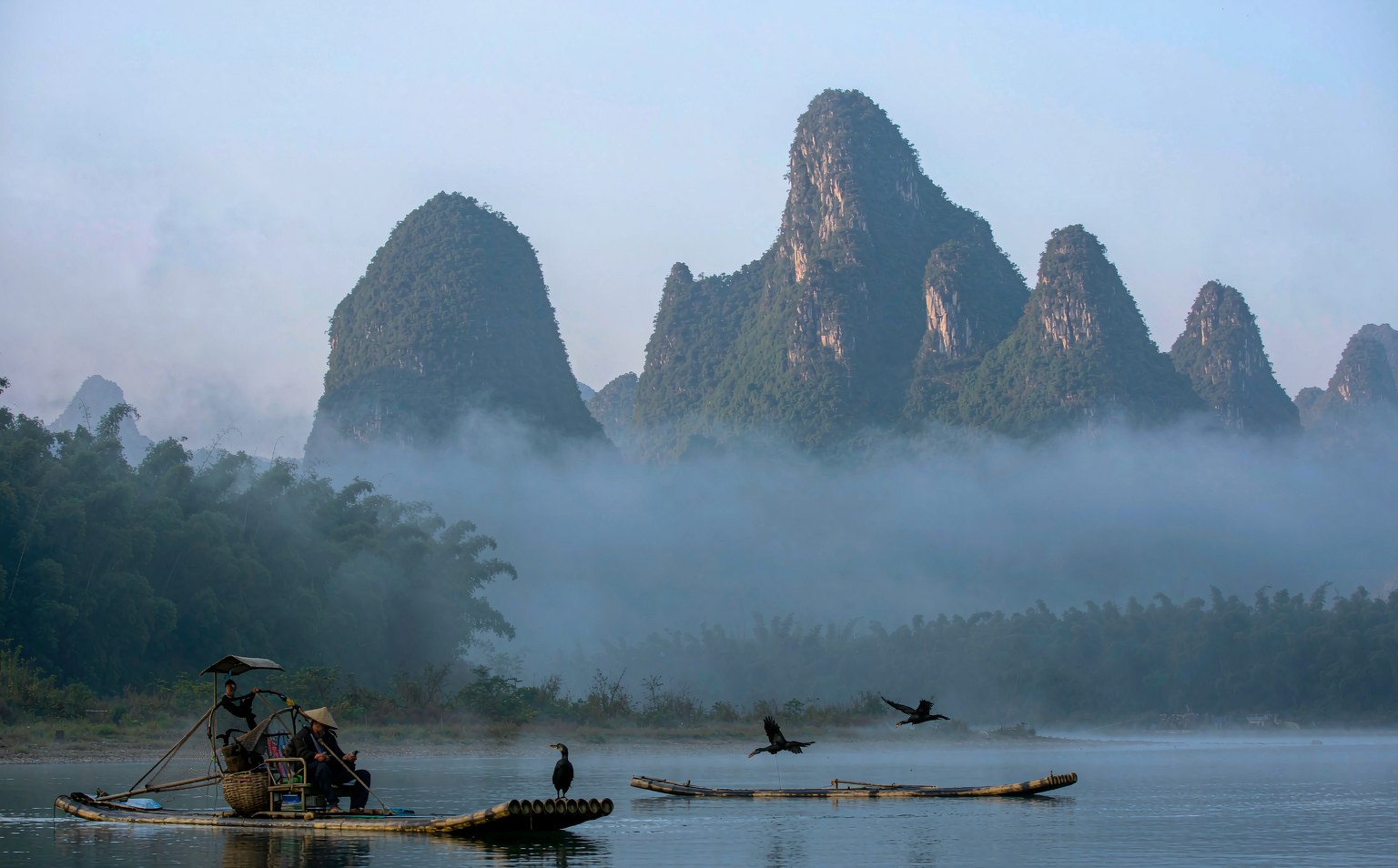
Luoyang Departure: Guilin, Li River and Longji Terraces, 5 Days 4 Nights of the Harvest
Five days from Luoyang. From late September to mid October the Longji rice turns from green to gold and the Li River carries morning mist. The terraces come first, then we run south, without doubling back.
Highlights
Day 1: Luoyang to Guilin, a bowl of rice noodles
We leave Luoyang Longmen in the morning, change at Zhengzhou East, and reach Guilin North by evening. A short walk through Dongxi lane, where old house numbers are still set into the grey brick. Dinner is Guilin rice noodles: two liang with braised meat, tossed dry first, then loosened with a ladle of bone broth.
Attraction introduction: Guilin sits between the Li and the Taohua rivers, and the two-rivers-four-lakes circuit was joined up in recent decades. Dongxi is the street grid of the Ming and Qing town, rebuilt with new shopfronts on old foundations. Every noodle shop guards its own braising liquid, which is why the same bowl tastes different a street away.
Tips: Chilli goes in at the end, so say so if you do not want it. Guests generally find Dongxi looks better after dark. In practice we walk only one stretch tonight; tomorrow starts early.
Day 2: Up to Longji, terraces to the ridge line
We drive up from Guilin, two hours of mountain road to Longsheng, and enter Jinkeng Dazhai. A cable car lifts us to the Thousand Layer Terraces, and we walk down on flagstones past Yao stilt houses with corn and peppers strung under the eaves. In the afternoon we move to Pingan for Seven Stars with the Moon, then sleep in the village on bamboo rice and cured pork.
Attraction introduction: At Jinkeng the fields climb from the valley floor to the summit, each embankment following the contour, hundreds of metres of them stacked one over another. Pingan's Seven Stars are seven small hills around a single flooded field that turns into a mirror. Zhuang and Yao families have farmed here for centuries.
Tips: The road bends constantly, so take the front seat if you are prone to carsickness. Guests generally find the terraces look best in morning mist and turn flat white once the sun clears it. In practice we set a six-thirty wake-up so the walk to the viewpoint lands right.
Day 3: Sunrise on the terraces, afternoon on the Li
Sunrise over the fields, then down the mountain at eight. Lunch back in Guilin, and in the afternoon we board at Mopanshan for a cruise of just over four hours to Yangshuo. The boat passes Nine Horses Painting and Yellow Cloth Reflection, and the Xingping reach opens widest, with the hills lined up in the water. We sleep in Yangshuo and eat on West Street.
Attraction introduction: The Li runs more than eighty kilometres from Guilin to Yangshuo and the cruise covers the finest part. At Yellow Cloth the water is shallow enough for the yellow stone bed to show through and hold the hill shadows like a painting. Below Laozhai hill at Xingping is the exact view printed on the back of the twenty yuan note.
Tips: The deck is windy and cold if you stand too long. Guests generally find the window seats catch the afternoon sun, so swapping sides helps. In practice the coach waits at the pier and you never carry your own bags.
Day 4: Yulong raft, then cycling the Ten Mile Gallery
Morning on the Yulong with a hand-poled bamboo raft from Jinlong bridge to Jiuxian. The river is shallow over cobbles and the raft drops with a bump at each weir, so hems get wet. Beer fish for lunch beside the water. In the afternoon we cycle the Ten Mile Gallery past Moon Hill and the Big Banyan, rice fields and pomelo orchards on either side.
Attraction introduction: The Yulong is a tributary of the Li, clear, with peaks and villages on both banks. The rafts are lashed from whole bamboo poles and the boatman stands at the stern, one push of the pole at a time, with no engine noise anywhere. The Gallery is a country lane running between the peaks and the rice.
Tips: Rafts wet your shoes, so sandals or a spare pair are worth it. Guests generally find the Yulong stops running on Monday mornings for maintenance and itineraries should avoid it. In practice we raft at nine, before any wind picks up on the water.
Day 5: Back to Guilin and home
We return to Guilin in the morning, an hour and a bit on the expressway, then the train from Guilin North to Luoyang with a change at Zhengzhou East, arriving at night. If time allows, eat one more bowl of noodles near the station.
Attraction introduction: The road from Yangshuo to Guilin runs between peaks the whole way, the most typical form of karst country, clusters joined into ridges with flat land between them for rice and kumquat. Villages here live on visitors and fruit trees, and roadside tables sell Shatian pomelos in season.
Tips: Do not linger at sights on the departure day. Guests generally find security at Guilin North slower than expected. In practice we arrive an hour before the train.
Related Tours
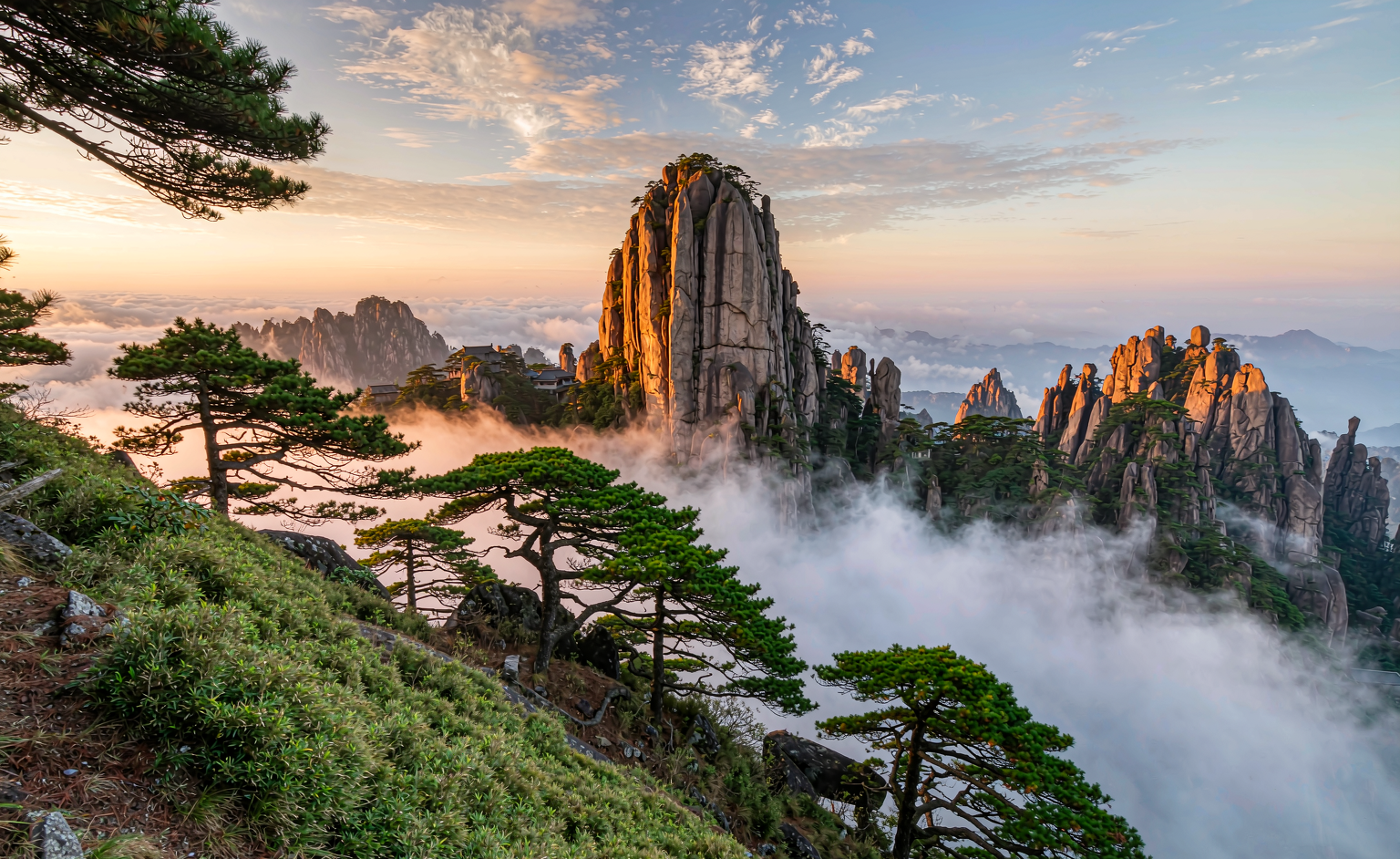
Luoyang Departure: Huangshan, West Sea Canyon, Hongcun and Tachuan, 5 Days 4 Nights
Five days from Luoyang. Two days on Huangshan with a night on the summit for sunrise, then down into Yixian: a night inside Hongcun, and Tachuan, whose tallow trees turn in mid November and hold their colour for barely three weeks.
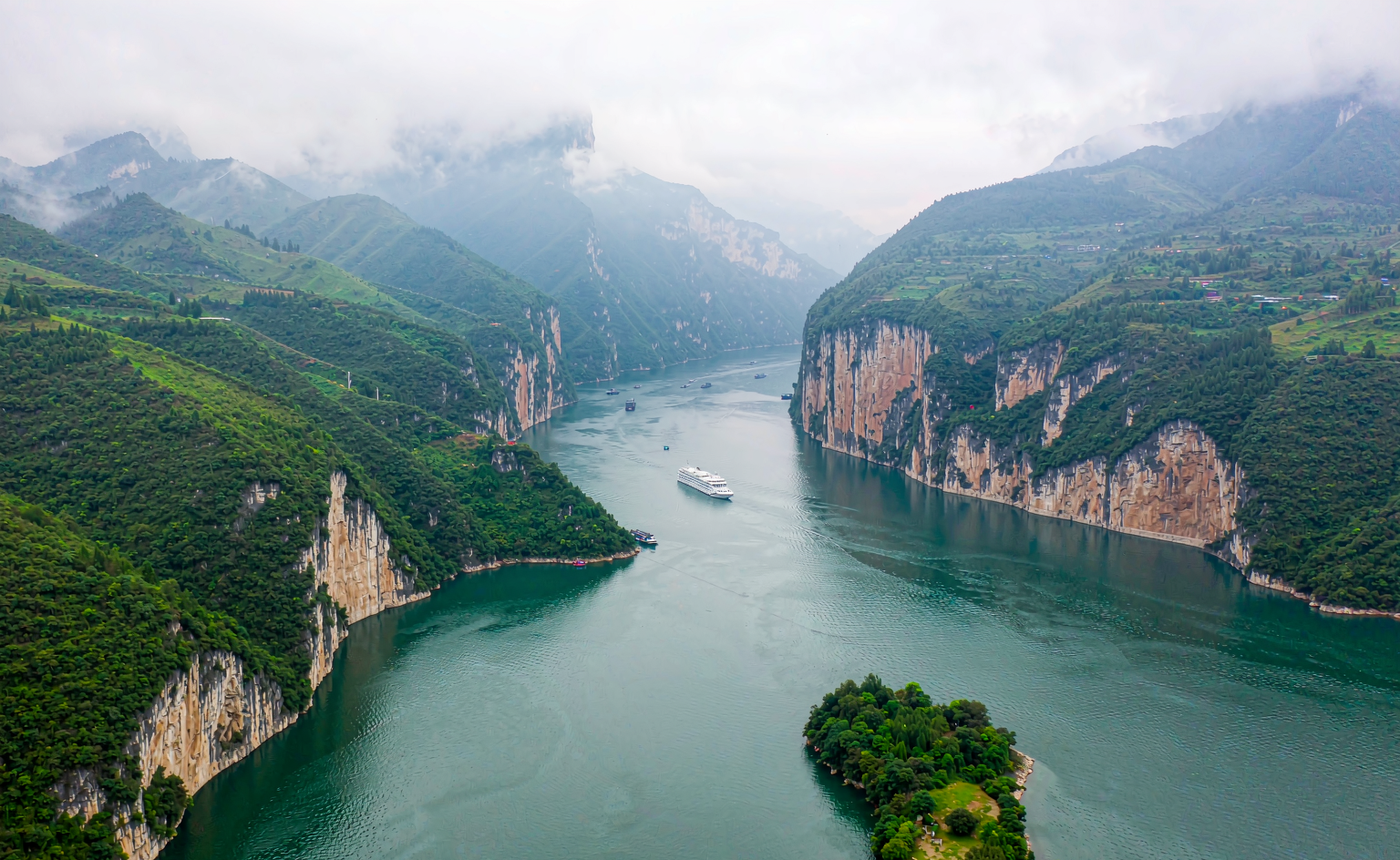
Luoyang Departure: Three Gorges, Wu Gorge and Baidi City, 5 Days 4 Nights
Five days from Luoyang. Board at Yichang and travel upstream, taking Xiling, Wu and Qutang gorges one after another. Three nights on the water, with a morning ashore at Baidi City and the river slapping the hull after dark.
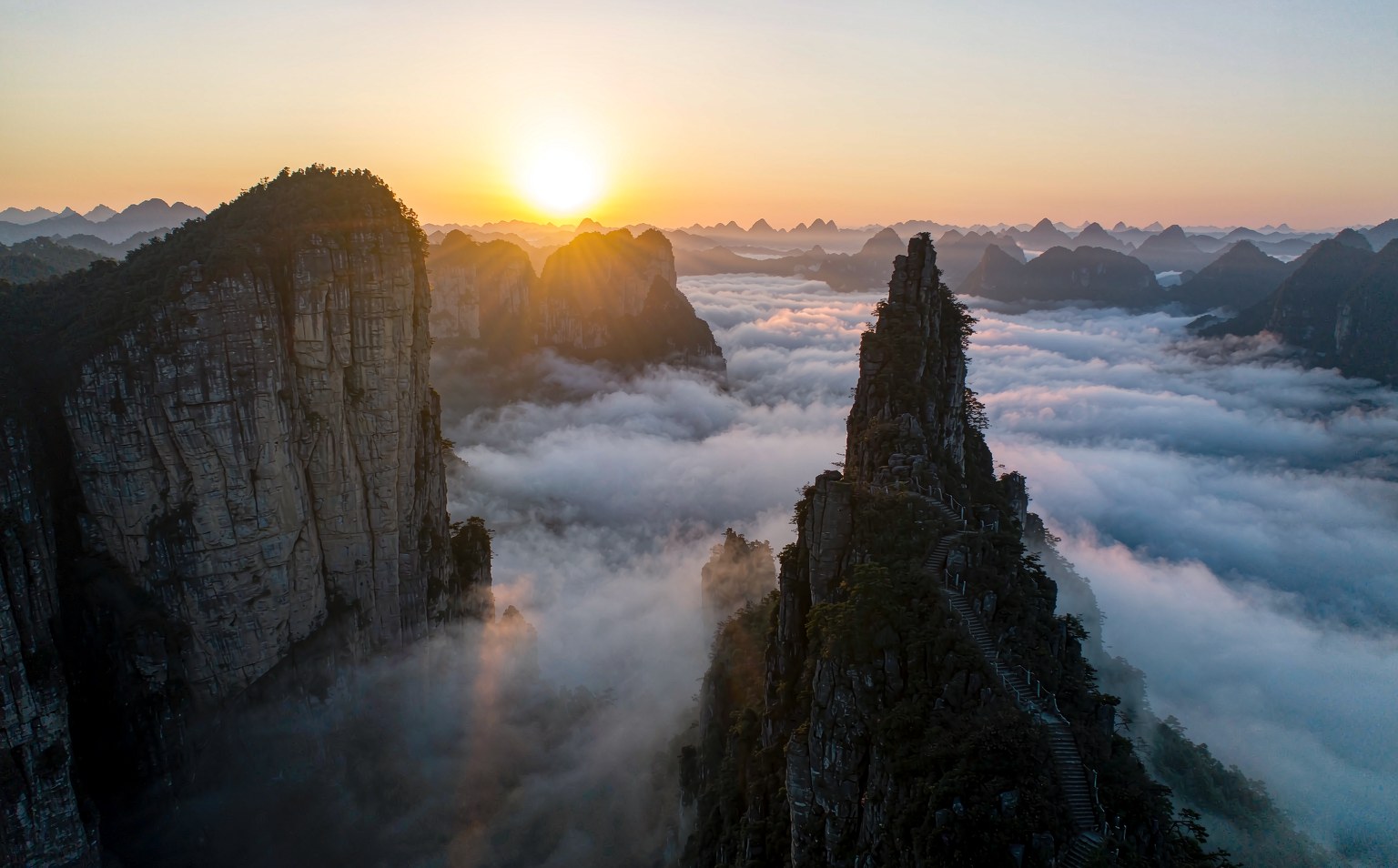
Luoyang Departure: Zhangjiajie, Tianzi Mountain and Baofeng Lake, 5 Days 4 Nights
Five days from Luoyang. The sandstone pillars of Wulingyuan grow clouds best after rain clears, so the itinerary leans on a four-day ticket: Yuanjiajie, Tianzi Mountain and Golden Whip Stream each get their own day, and the last half day goes to the lake among the peaks.
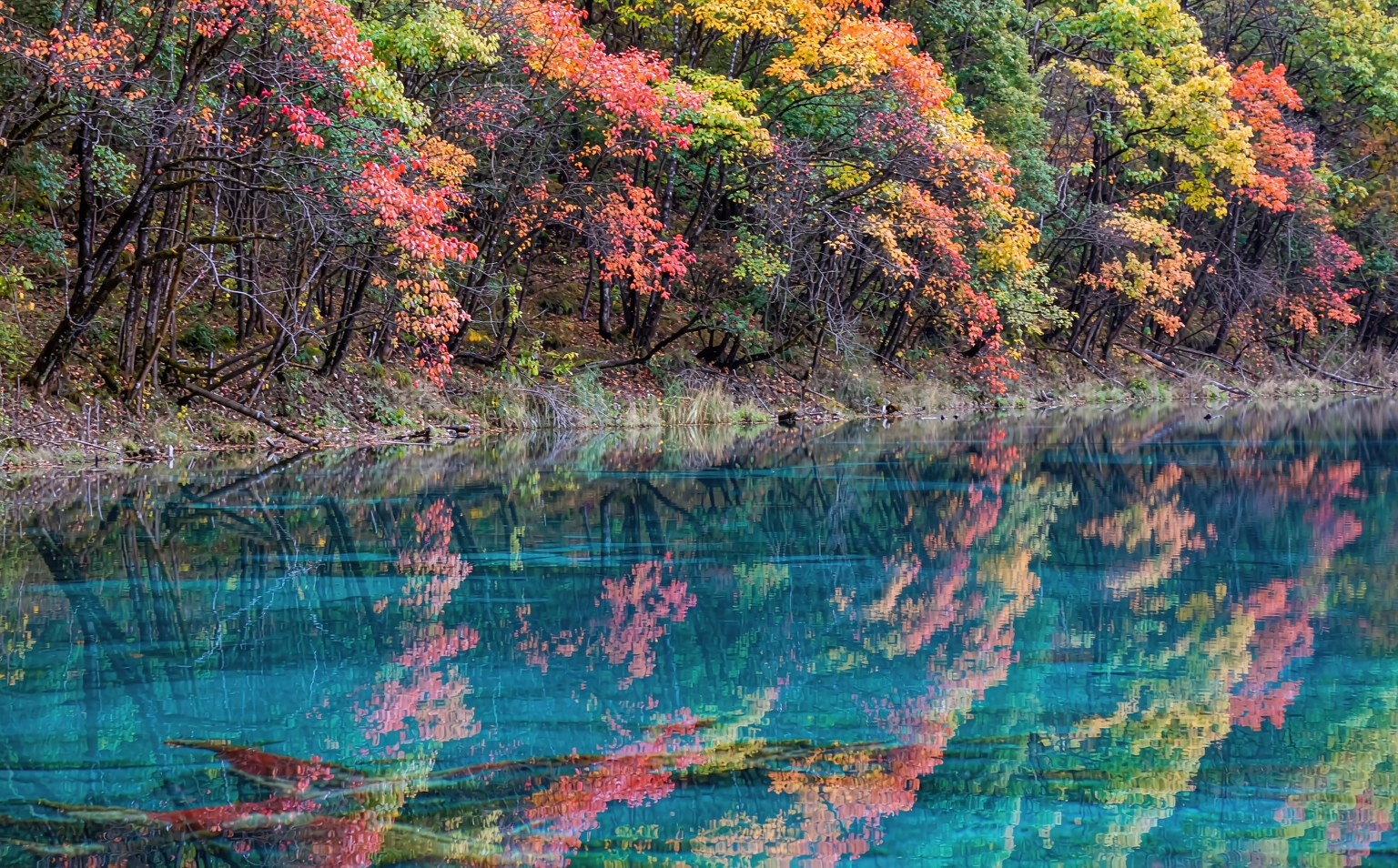
Luoyang Departure: Jiuzhaigou, Huanglong and Songpan, 6 Days 5 Nights of Autumn Colour
Six days from Luoyang. The autumn foliage lasts about three weeks, so the dates are pinned to late October. One full day covers all three valleys of Jiuzhaigou, half a day goes to the Huanglong terraces, and one night is spent inside the old walls of Songpan.