
Luoyang Departure: Longmen Grottoes, White Horse Temple, Luoyang Museum and Erlitou, 3 Days 2 Nights
Three days from Luoyang, all of them about which layer of soil a thing came out of: Buddhas cut into a cliff at Longmen, a pagoda standing in a temple yard, a jade cup behind glass, and at Erlitou the rammed-earth footings of a palace that is four thousand years old.
Highlights
Day 1: Longmen, from the west bank to the east
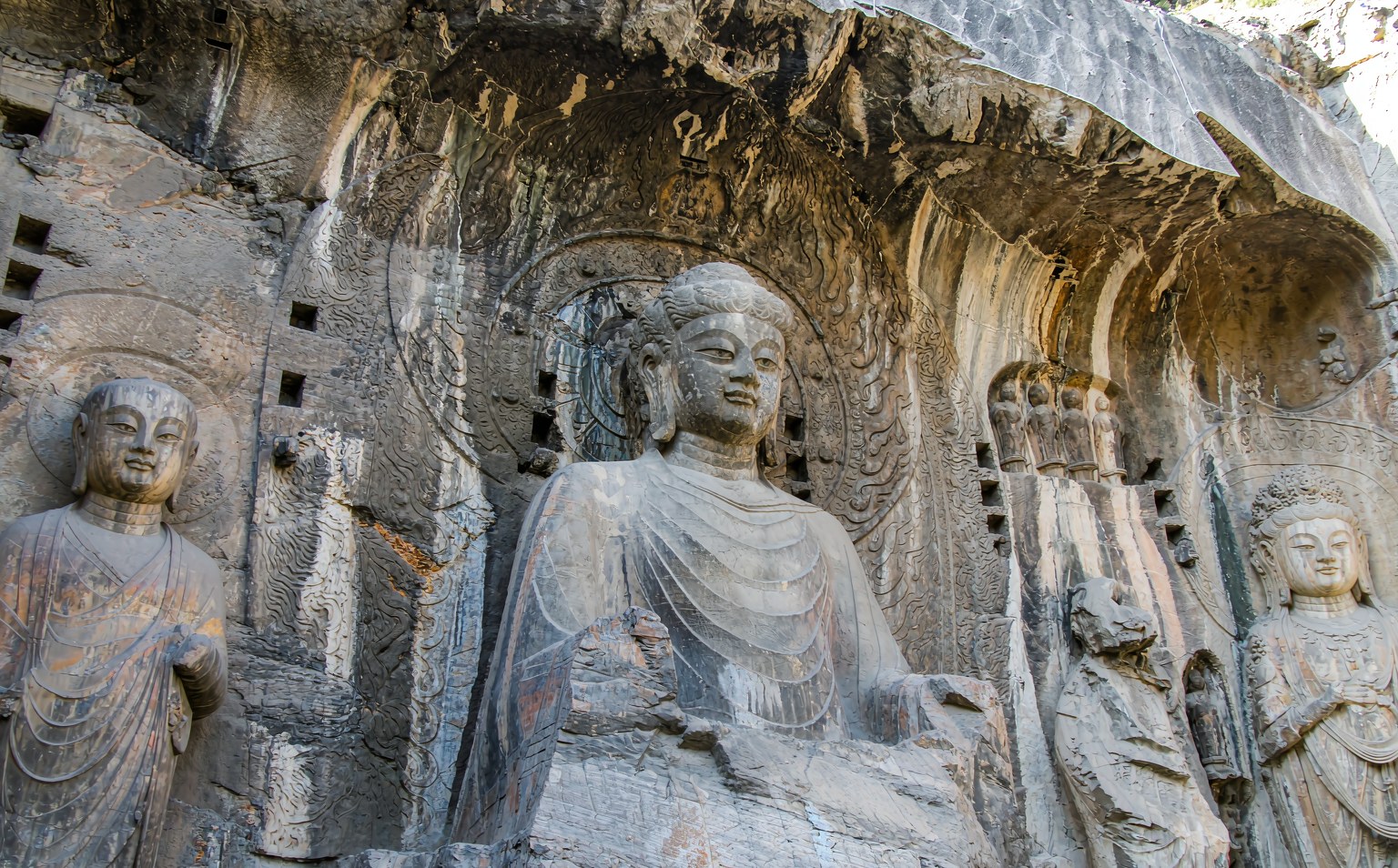
Into Longmen at eight thirty. Start on the west bank, where niches crowd the cliff, some no bigger than a palm, others tall enough to stand inside. The Fengxian terrace is the widest opening, the Vairocana Buddha seated at the centre with disciples, bodhisattvas and guardian kings flanking him, the folds of stone drapery still legible. Lunch by the Yi river. Cross the bridge in the afternoon and look back: the west cliff reads like a honeycomb. At dusk, the old town quarter, lamps on, the Wenfeng pagoda throwing its shadow into the water.
Attraction introduction: The Longmen Grottoes occupy both banks of the Yi river south of Luoyang, begun around the Northern Wei move of the capital and continued through the Tang, leaving 2,345 niches and more than a hundred thousand figures. The Vairocana Buddha of Fengxian terrace stands 17.14 metres tall and is the benchmark of Tang cave sculpture.
Tips: The west bank is a long stair walk of about two hours, so wear shoes that stay on your feet. Guests generally find the west side better lit in the morning and the east bank best for looking back in late afternoon. In practice, both banks are done in one day so nobody crosses the river twice.
Day 2: The pagoda at White Horse Temple, the cup in the museum
Morning at White Horse Temple. The gate is modest, and beyond it a straight path runs past hall after hall under very old cypresses. To the east stands the Qiyun pagoda, square in plan, eaves stepping in with a clean line. Back into the city for lunch. The afternoon goes to Luoyang Museum: the ground floor tells the Heluo civilisation in sequence, the upper floor holds the Tang three-colour figures, where a black-glazed horse stands under the light with its glaze still deep, and in the next case a Wei white jade cup thin enough to pass light.
Attraction introduction: White Horse Temple lies east of the city and was founded in 68 AD, the first monastery built by the Chinese state after Buddhism arrived, hence the name First Ancient Temple. Its Qiyun pagoda is a square multi-eaved brick tower rebuilt in the Jin. Luoyang Museum is a national first-class museum, strongest in Shang and Zhou bronzes, Han and Tang figurines and sancai glaze.
Tips: Both are free but need a booking, and the gate reads a physical ID card, not a digital copy. Guests generally find the museum quieter after three and the sancai gallery on the upper floor worth the time. In practice, the museum is placed in the afternoon so dinner follows without a rush.
Day 3: Erlitou, the earliest capital
East in the morning to Yanshi and the Erlitou museum, a long low building set against the excavated site, its galleries kept deliberately dim. A turquoise dragon lies in a case of its own, more than two thousand small plaques inlaid along its body, head turned outward, eyes round. Beside it a bronze jue with three slender legs, one of the earliest wine vessels cast in bronze. Lunch near the museum, then back into Luoyang to drop the group.
Attraction introduction: The Erlitou site near Yanshi dates to roughly 3,800 to 3,500 years ago and is accepted by most researchers as the late Xia capital. Excavation has revealed a palace enclosure, a road grid and bronze casting workshops, and produced the turquoise dragon inlaid from over two thousand pieces. The permanent galleries run from the First Dynasty through the Xia capital.
Tips: Case glass throws reflections, so look at detail from an angle rather than straight on. Guests generally find the route through the two floors easy to lose, and following a guide keeps the sequence. In practice, day three holds one museum only, which leaves time for the train.
Related Tours
Luoyang Departure: Jiayuguan, Mogao Caves and Crescent Spring, 7 Days 6 Nights
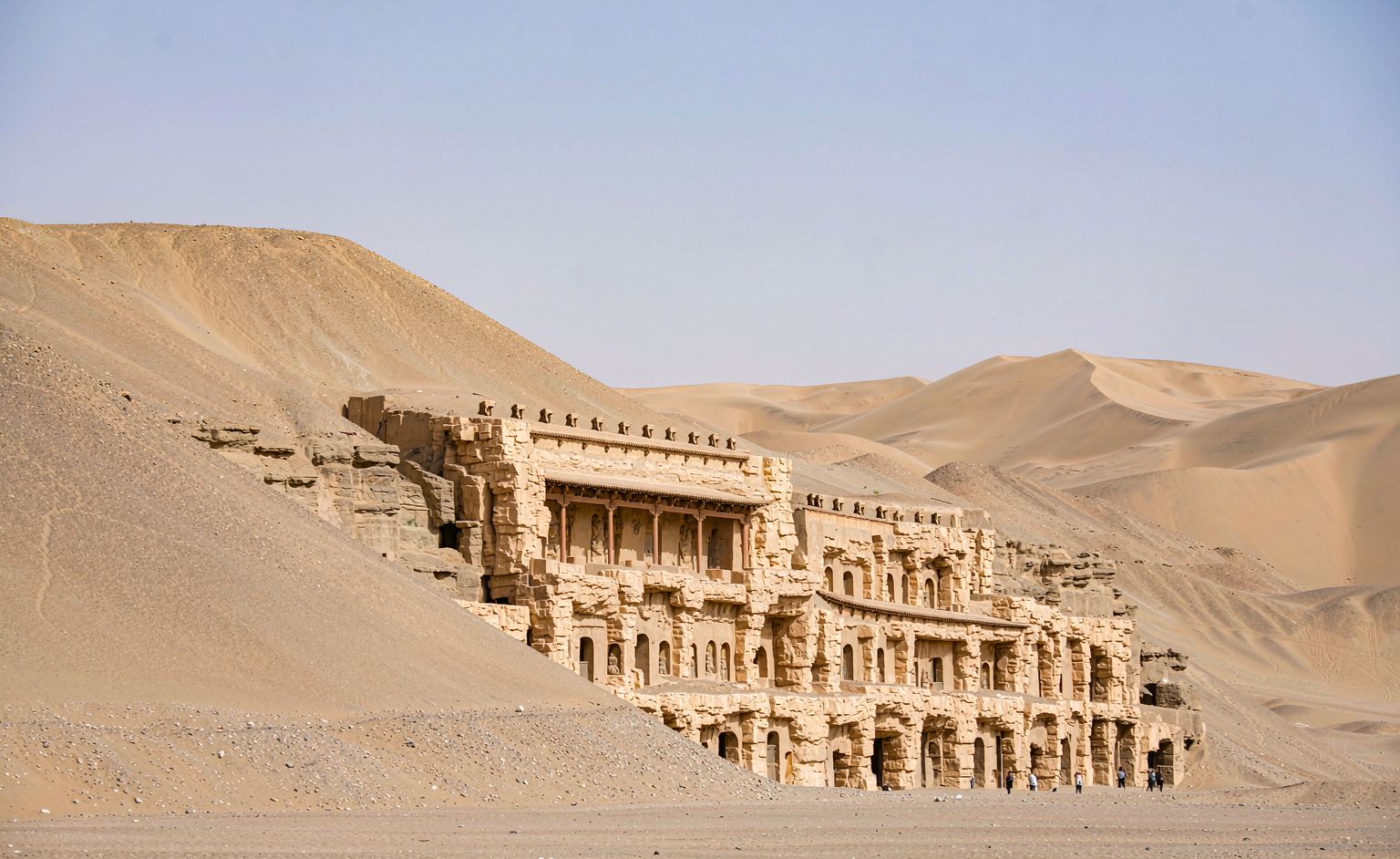
Seven days from Luoyang. On the Hexi Corridor the riding matters more than the rushing: a while under the gate tower at Jiayuguan, the flying figures inside the Mogao caves, and one sunset waited out on the Singing Sand Dunes. November is low season, so the caves are quiet.
Luoyang Departure: Hukou Waterfall, Yanan and the Yellow Emperor Tomb, 6 Days 5 Nights
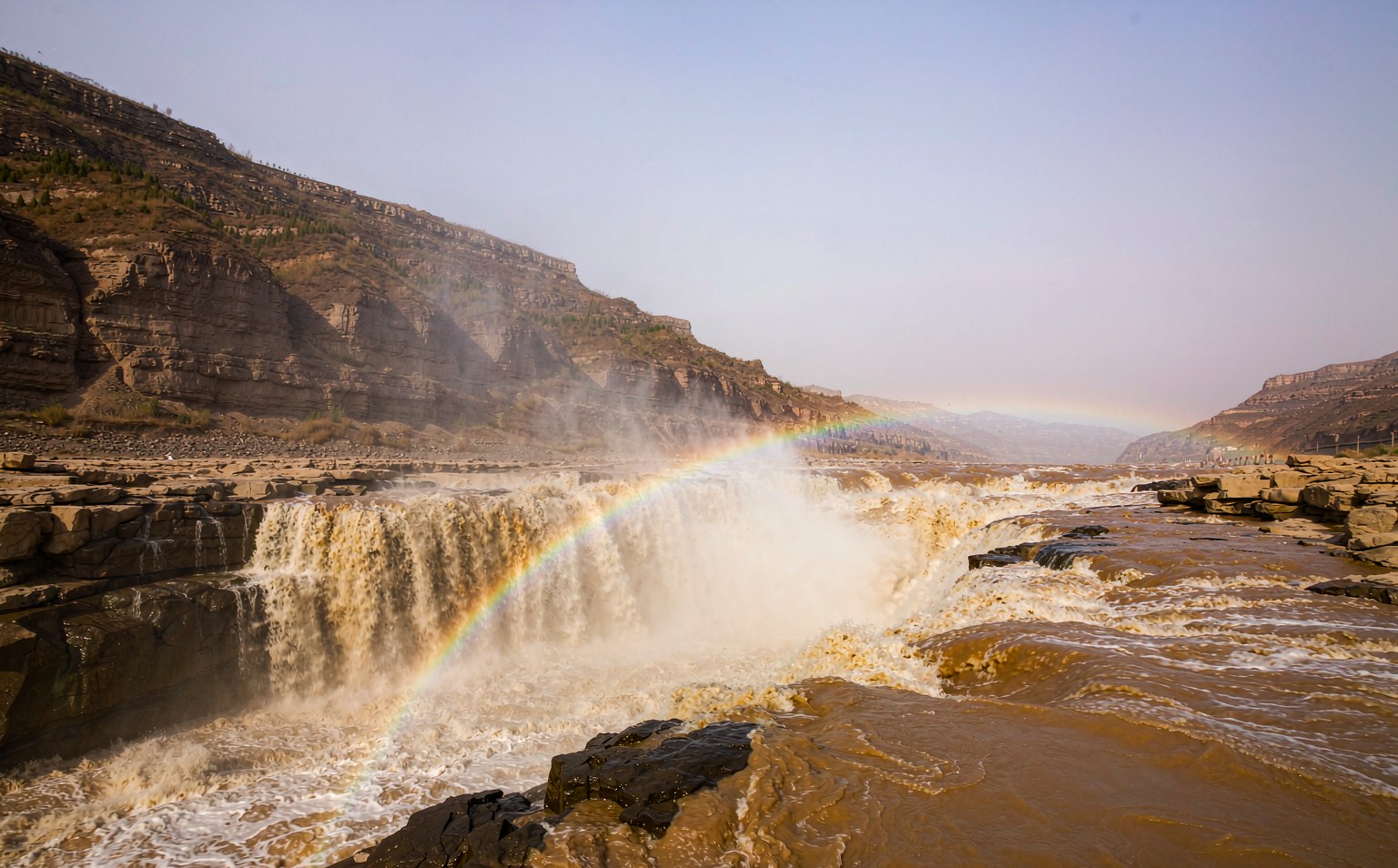
Six days from Luoyang. West first, where the Yellow River squeezes into a narrow gap at Hukou and the roar carries for miles, then north to Yanan with its cave dwellings and the pagoda hill, and south at the end to Huangling for a cypress said to be planted by the Yellow Emperor himself.
Luoyang Departure: Emei Summit, Leshan Buddha and Qingyin Pavilion, 5 Days 4 Nights
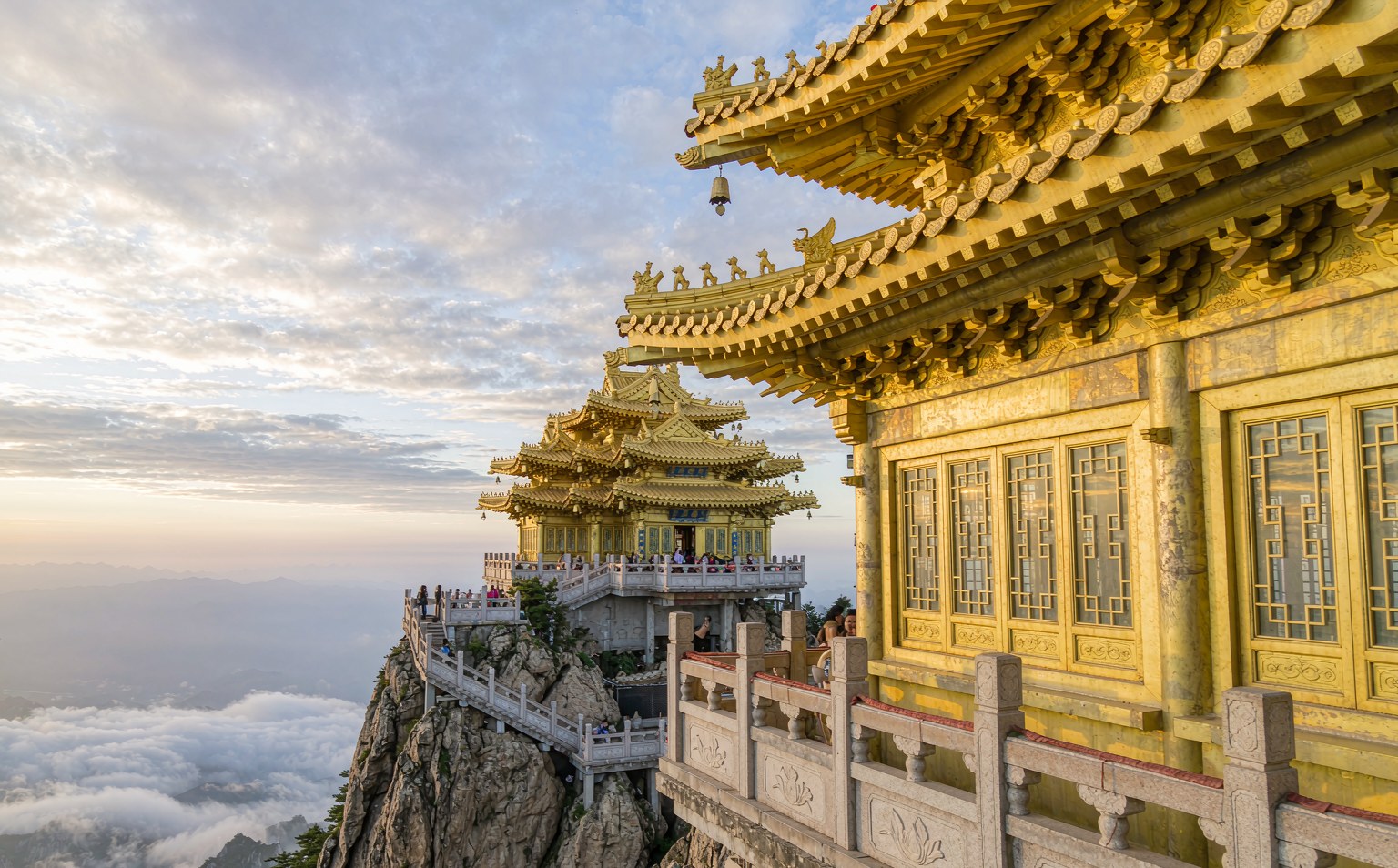
Five days from Luoyang. A night in Chengdu first, then the Leshan Buddha, then Emei Mountain. The summit sits above the cloud and the cable car takes minutes. The lower slopes are a different matter: the brick vault of Wannian Temple and the twin bridges at Qingyin.
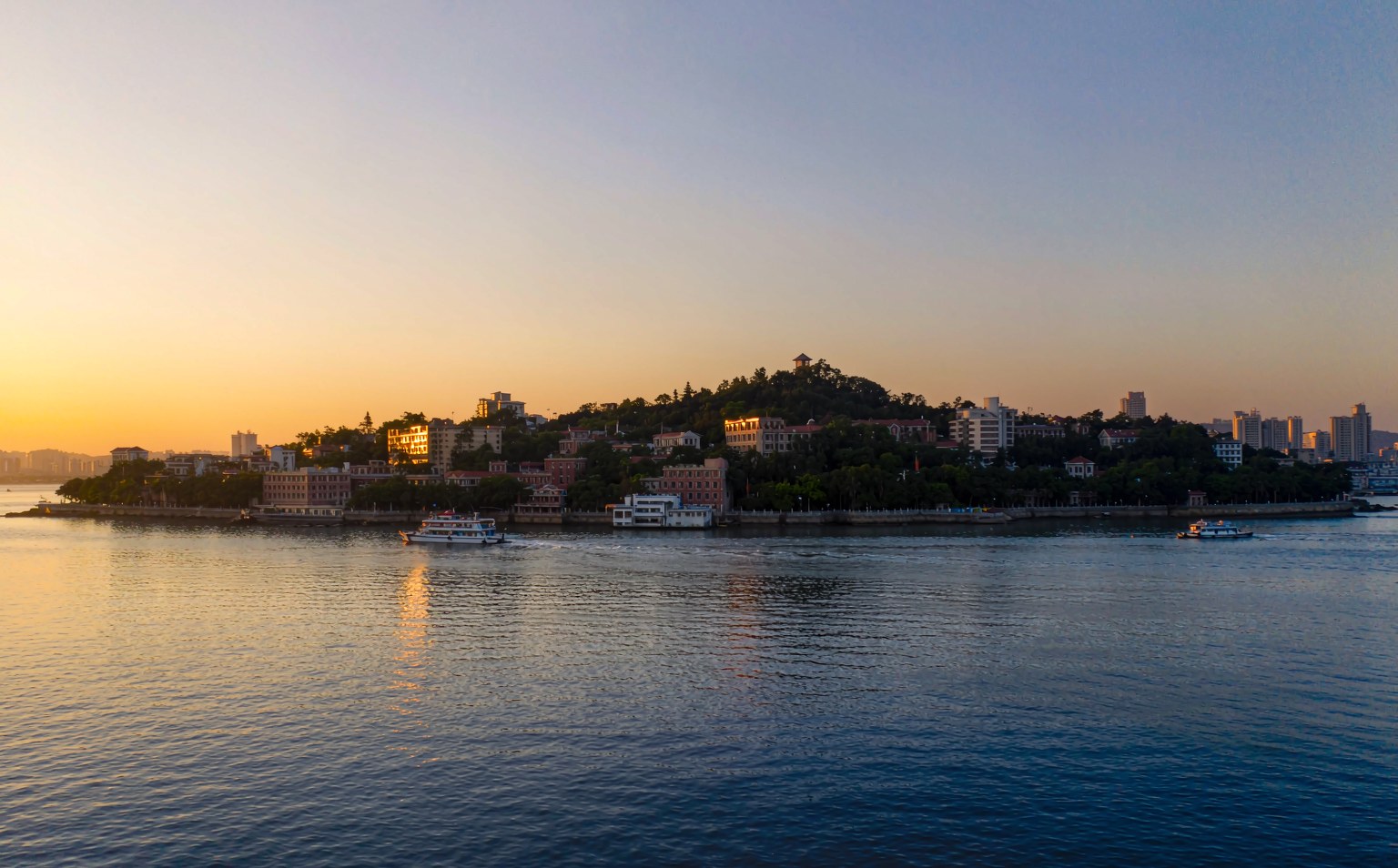
Luoyang Departure: Gulangyu, Sunlight Rock and Shuzhuang Garden, 5 Days 4 Nights
Five days from Luoyang. November is the good window: the sea wind is dry and the bougainvillea still out. The ferry is 35 yuan return and stays valid for 20 days, so nothing is rushed. One full day on the island, one for the temples and the coast, and a slow last morning in Jimei.