
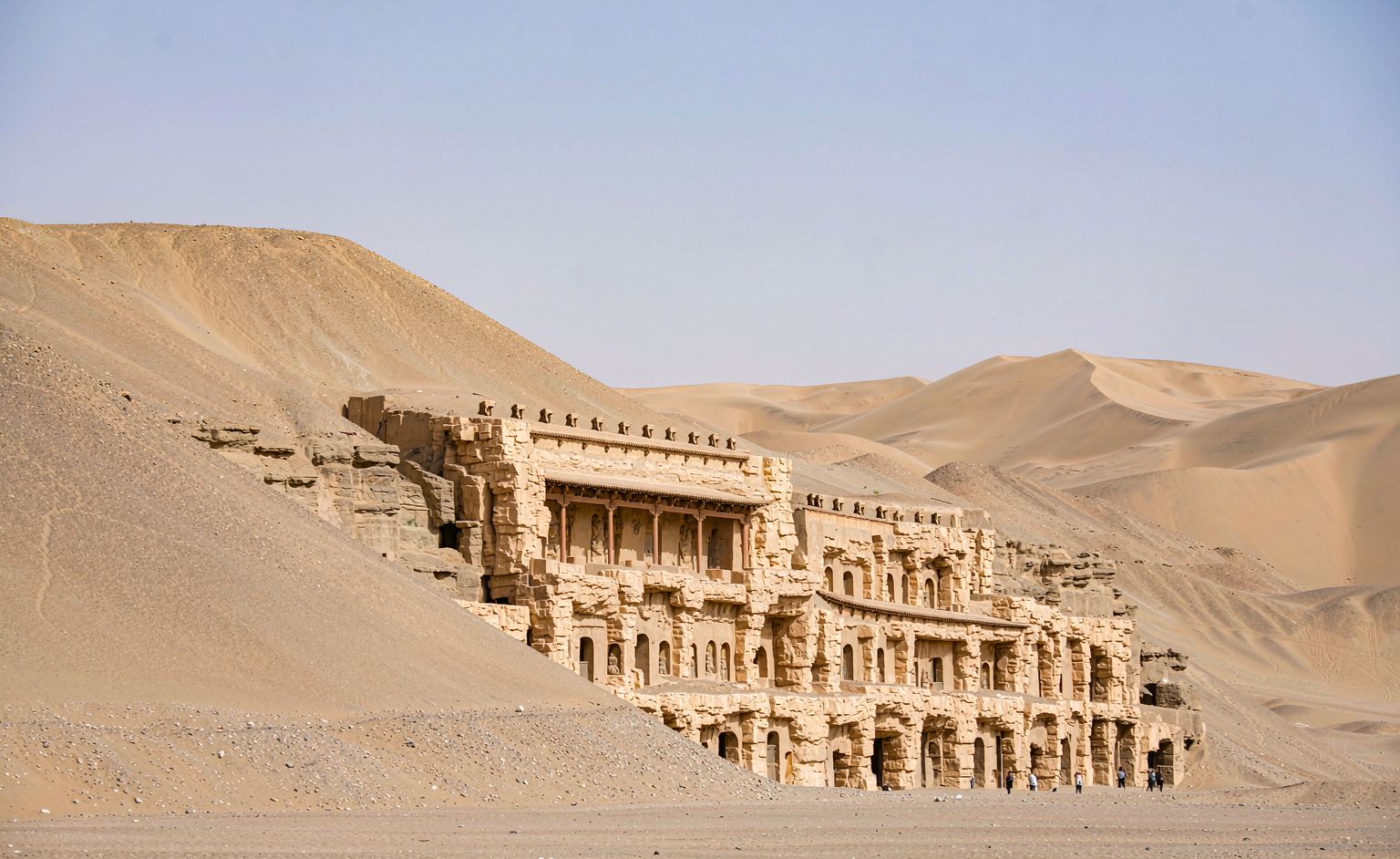
Dunhuang, Jiayuguan and Zhangye from Luoyang, 7 days
Seven days from Luoyang. The Hexi Corridor drops into low season in November: Mingsha Mountain is half price and the Mogao caves are quiet. We head east from Dunhuang past the pass at Jiayuguan to the coloured hills of Zhangye.
Highlights
Day 1: Luoyang to Xian, then a flight to Dunhuang
We take the morning train from Luoyang Longmen, reach Xian North in ninety minutes, and switch to the airport line. The midday flight lands two hours later over a floor of sand and long wind cut ridges. The air is dry enough to tighten the skin at once. In the evening we walk the Shazhou night market.
Attraction introduction: Dunhuang sits at the western end of the Hexi Corridor, an oasis pushed out by the Dang River and closed in by desert on three sides. The night market spreads hundreds of stalls along Yanguan Avenue, with lamb skewers and apricot juice in the same lane.
Tips: The first day is transport only. Guests generally find the dryness harder than the cold, so lip balm and moisturiser travel in the pocket. In practice we eat at the market, turn in early, and keep the morning free for the caves.
Day 2: Eight caves at Mogao, then the dunes at dusk
At half past eight we reach the digital centre, watch two dome screen films, and take the shuttle to the cliff. A guide hands out headsets and leads twenty people with a torch. The eaves of the nine storey pavilion tilt against the rock, and the pigments in the ceilings have barely faded in a thousand years. At four we climb the dunes.
Attraction introduction: The Mogao caves were cut into the eastern cliffs of Mingsha Mountain from the fourth century onward, leaving more than seven hundred caves and forty five thousand square metres of mural. Crescent Lake lies in a hollow between dunes and has never dried out.
Tips: Tickets must be booked in advance and none are sold on the day. Guests generally find photography is forbidden inside and the guide speaks quickly, so two documentaries beforehand help. In practice we put the dunes at dusk, when the light rakes the sand.
Day 3: West to Yumen Pass and the Yardang at sunset
We drive west in the morning to the small square city of Yumen Pass, where only the outline of the rammed earth walls remains and wind runs through the gate. After lunch we enter the Yardang, where wind has shaved the clay into long ridges that look like a fleet at anchor. The last shuttle is timed for sunset.
Attraction introduction: Yumen Pass lies ninety kilometres northwest of Dunhuang and was the northern gate of the Silk Road under the Han. The Yardang park sits at the edge of Lop Nur, its clay platforms carved into rows by prevailing wind, known locally as the city of ghosts.
Tips: This route covers more than three hundred kilometres, so the bus takes longer than the stops. Guests generally find the wind strong enough to rip a hat away and fine sand gets into camera bodies. In practice we take the sunset shuttle and come back late, which is when the platforms turn red.
Day 4: Train to Jiayuguan and the western pass
A two hour train carries us east from Dunhuang, desert giving way to desert with a few oases and wind farms in between. In the afternoon we enter the pass. The Guanghua and Rouyuan towers stand one behind the other, and the rammed earth still shows its layers. From the parapet the Qilian snow line glows far off.
Attraction introduction: Jiayuguan was built from 1372 and is the western terminus of the Ming Great Wall, made up of an inner city, an outer wall and a moat with three tiers of gate towers. North of it the wall climbs the ridge at Heishan Gorge.
Tips: Admission is 88 yuan, and a slightly higher ticket covers the pass, the hanging wall and the first beacon for three days. Guests generally find the wind on the tower far stronger than at ground level. In practice we allow two and a half hours, enough for the inner city and the towers without hurrying.
Day 5: Zhangye, and the fourth terrace at sunset
We reach Zhangye by train in the morning. At three we enter the coloured hills, where the shuttle stops terrace by terrace. The first shows the banding of the clay, the fourth is the highest and faces west. As the sun drops, the reds, oranges and yellows light up in turn and the folds throw long shadows.
Attraction introduction: The Zhangye Danxia landscape lies in Linze county, where danxia landform and coloured clay hills overlap. Mineral differences in the beds weather into reds, yellows and grey greens, and the shuttle links several viewing terraces.
Tips: Admission is 108 yuan and includes the shuttle and site insurance, and the shuttle is not optional. Guests generally find the fourth terrace full forty minutes before sunset. In practice we enter at three, work through the lower terraces, and come back up to wait for the light.
Day 6: Zhangye to Lanzhou, a night by the Yellow River
We spend the morning in Zhangye, where the eaves of the wooden pagoda catch the early light. A three hour train takes us to Lanzhou, the hills outside shrinking and the green increasing. By evening we are on the river, the steel truss of Zhongshan Bridge spanning the water and sheepskin rafts stacked on the bank.
Attraction introduction: Zhangye, called Ganzhou in older records, keeps a wooden pagoda first raised in the Sui and rebuilt many times since. Lanzhou is the city the Yellow River runs through, and Zhongshan Bridge, finished in the late Qing, was the first iron bridge across it.
Tips: This is a travel day and Lanzhou gets one evening only. Guests generally find the riverside cold after dark and want an extra layer for the bridge. In practice the hotel sits near Zhongshan Bridge, so the river is a few steps away and no taxi is needed.
Day 7: Lanzhou back to Luoyang
Breakfast is a bowl of Lanzhou beef noodles, clear broth, white radish, red chilli oil. We walk the river bank once more and watch the old waterwheels turn at the park. The midday train runs east through the loess gullies of Gansu and the terraces of Shaanxi, reaching Luoyang after dark.
Attraction introduction: Lanzhou beef noodles are judged on clear soup, white radish, red chilli, green herbs and yellow noodles, and they are what the city eats for breakfast. The waterwheel park on the south bank shows the timber wheels once used to lift river water onto fields.
Tips: The return train runs over five hours and crosses a meal time, so buy food beforehand. Guests generally find security at Lanzhou West slow and an hour of margin sensible. In practice we keep the morning loose rather than squeezing in one more stop.
Related Tours
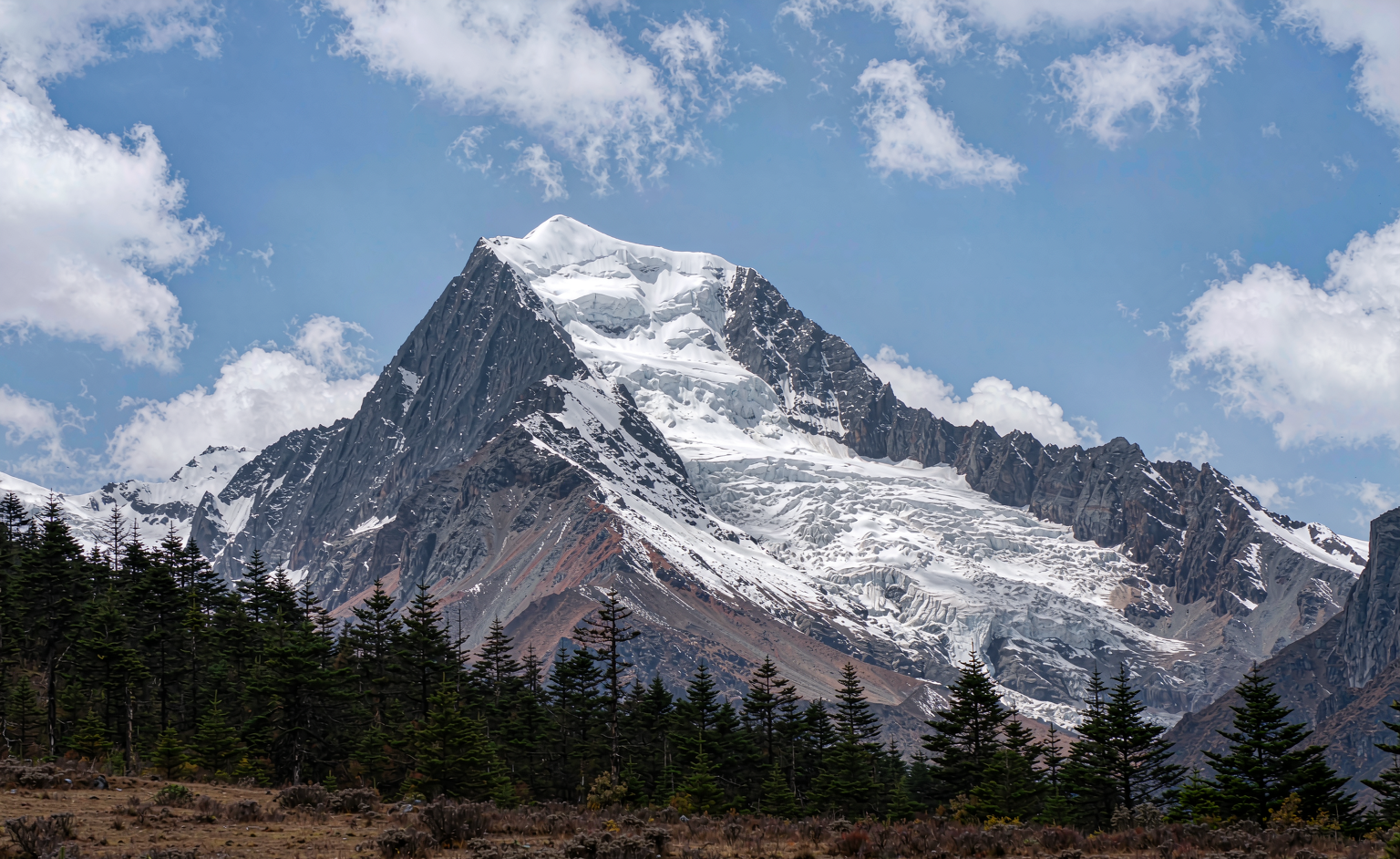
Lijiang, Jade Dragon Snow Mountain and Shuhe, 5 days
Five days from Luoyang. Early November is the dry season in Lijiang, when the summit catches gold before sunrise. Park admission plus the shuttle is 120 yuan, the big cable car needs booking, and the old towns charge nothing.
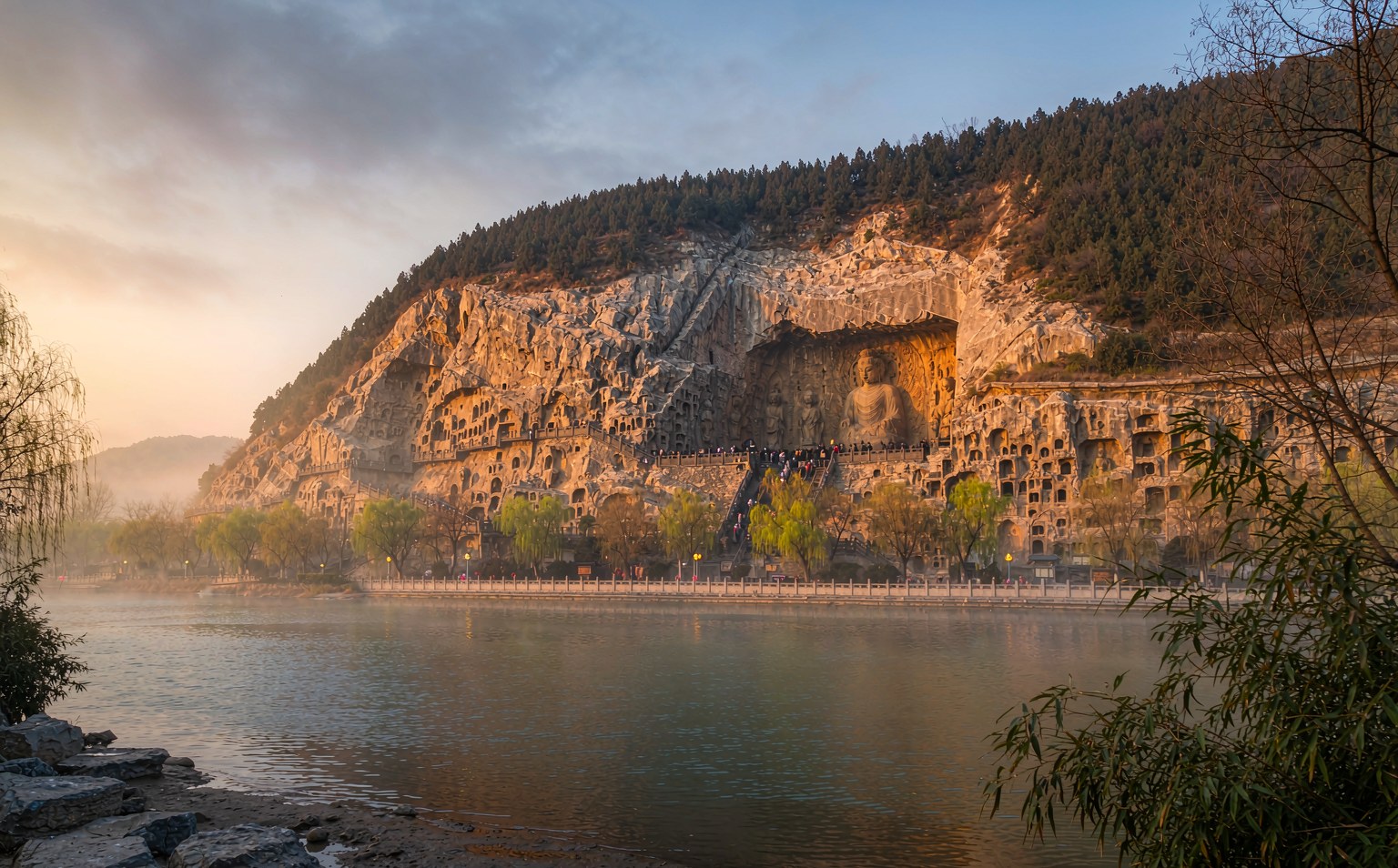
Yungang Caves, Xuankong Temple and Yingxian Pagoda, 4 days
Four days from Luoyang. From 1 November the Yungang caves move to low season prices and the crowds thin out. The Hanging Temple needs a climbing ticket booked ahead, and the timber pagoda at Yingxian opens its ground floor only.
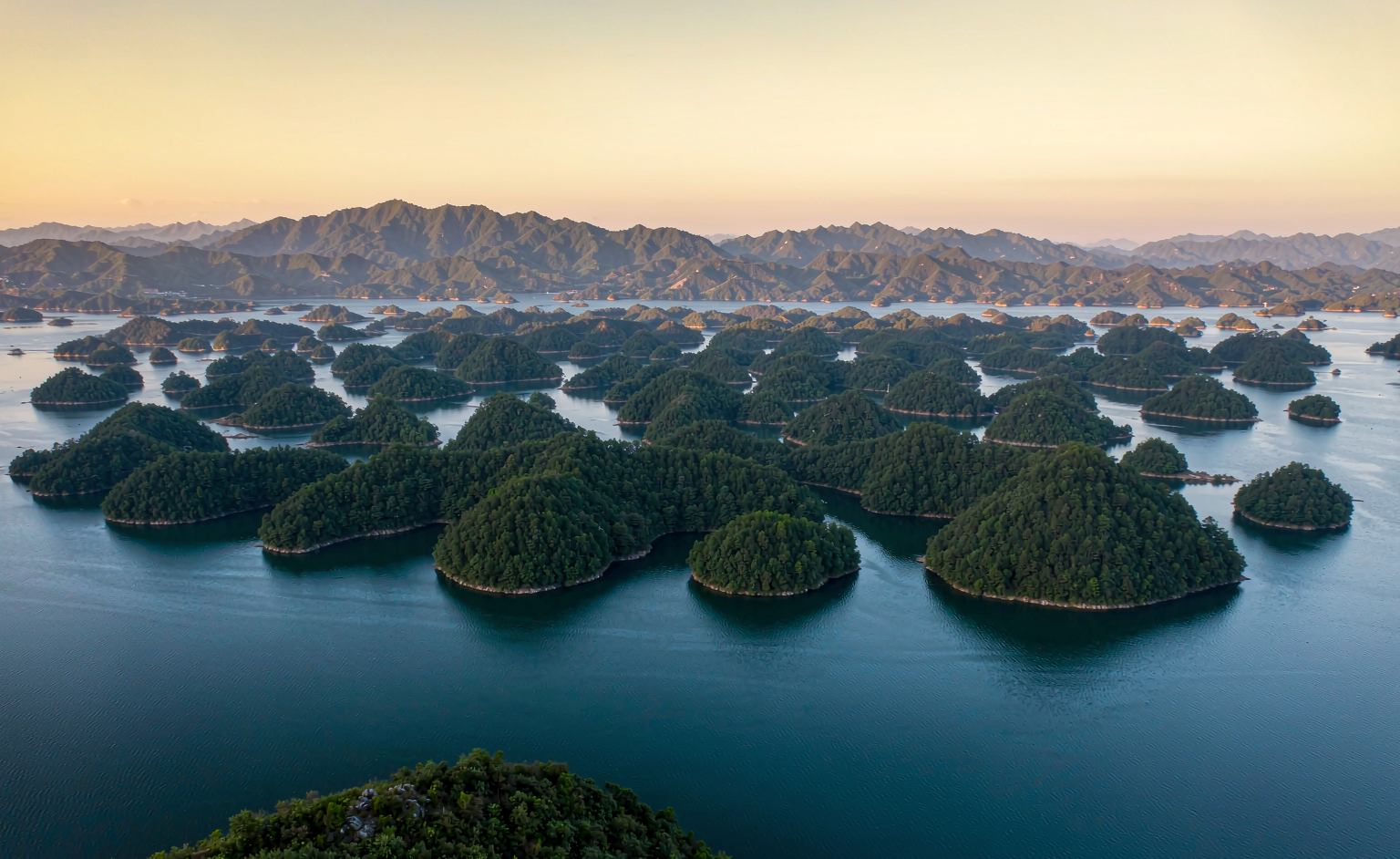
Qiandao Lake, Hangzhou and Wuzhen from Luoyang, 5 days
Five days from Luoyang. An afternoon on the water at Qiandao Lake, a stretch of West Lake in Hangzhou, and a night inside the West Scenic Zone of Wuzhen, where the lamps come on over the canal.
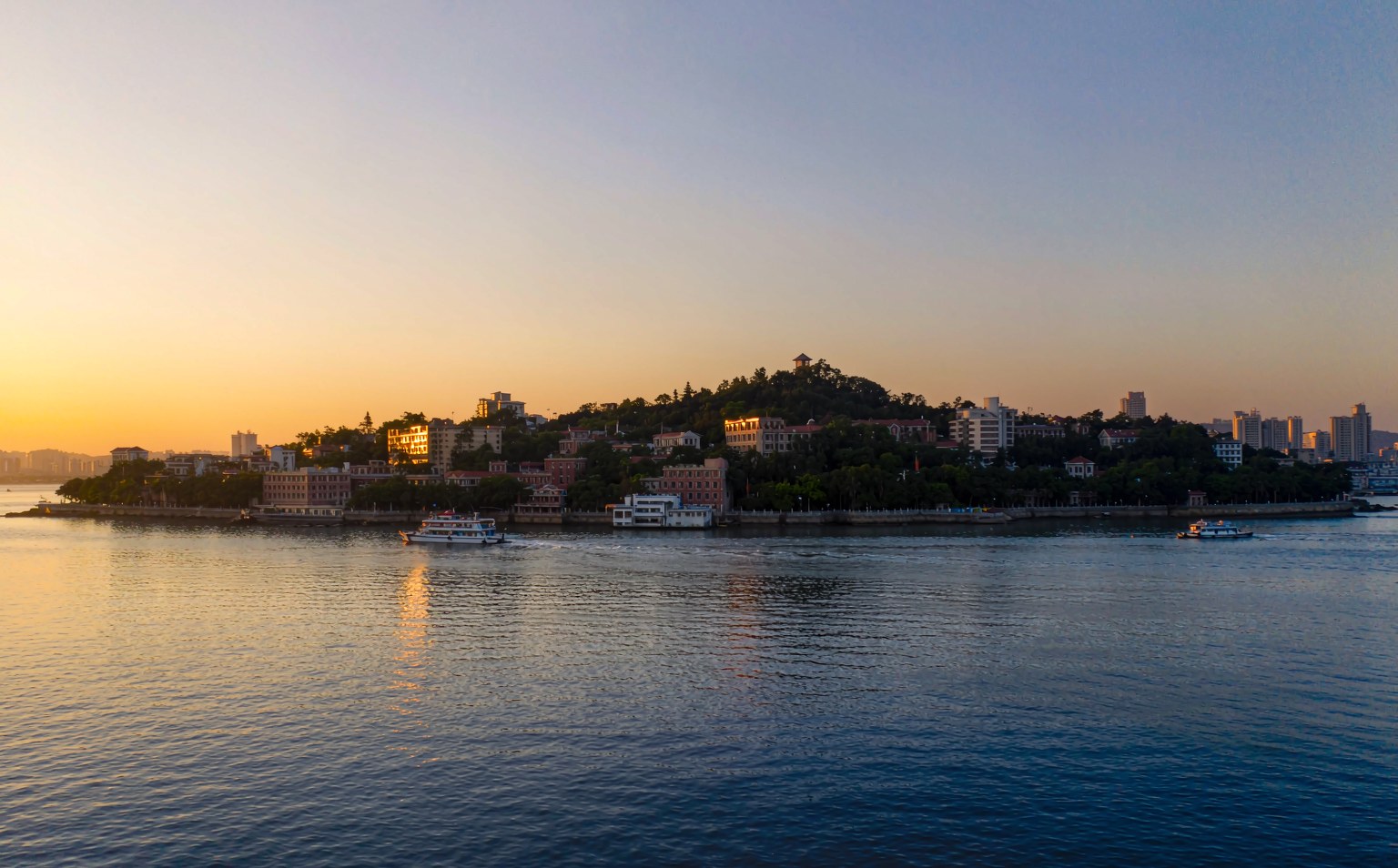
Xiamen, Gulangyu and Quanzhou from Luoyang, 6 days
Six days from Luoyang. November in southern Fujian is mild, around twenty degrees by day. We sleep one night on Gulangyu and keep Quanzhou for the last two days, so the old town and the twin stone pagodas get a slower look.