
Luoyang Departure: Wanxian Mountain, Guoliang Village and Baligou, 5 Days 4 Nights
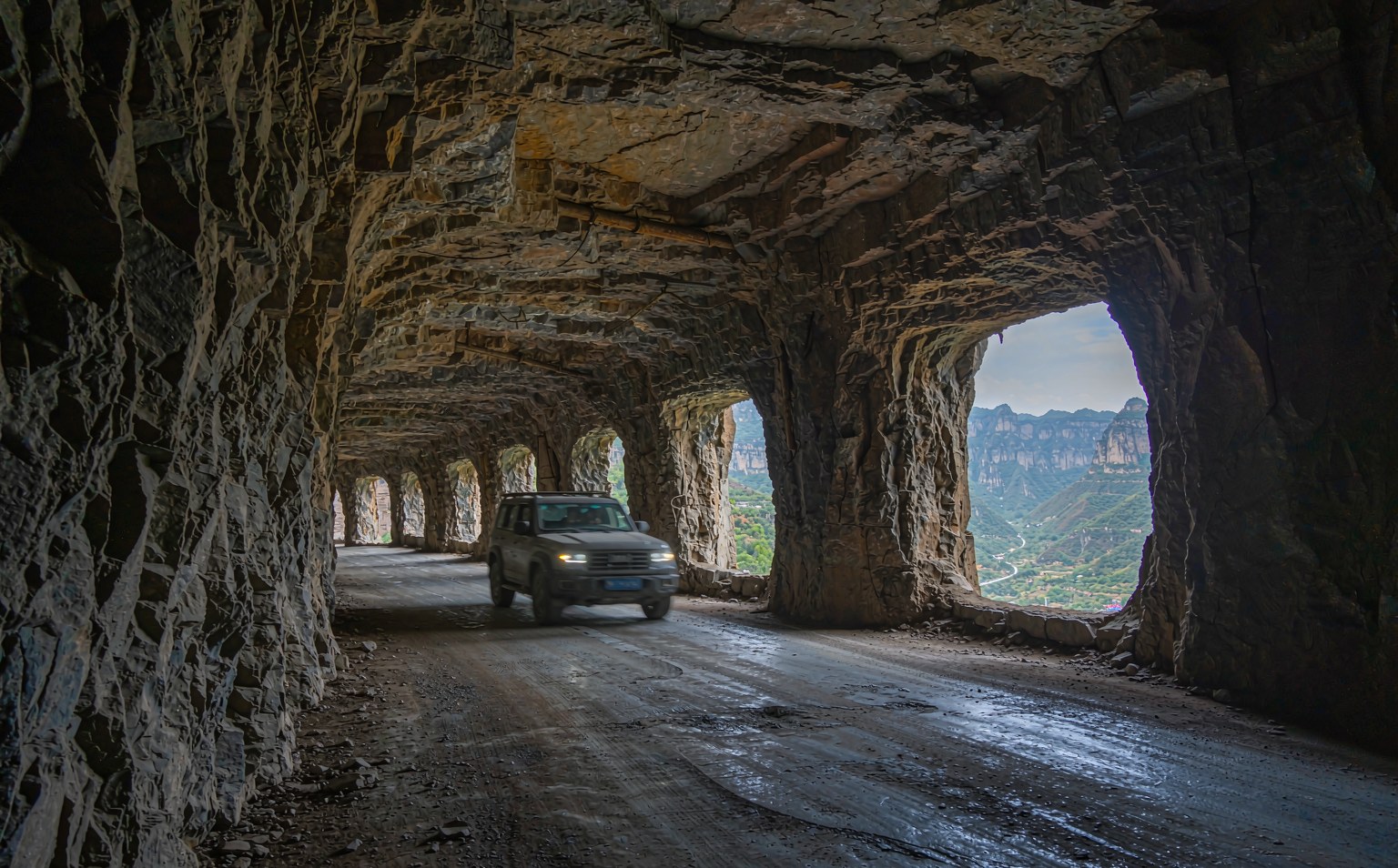
Five days in the southern Taihang range, walking all three valleys of Wanxian Mountain and then the water at Baligou. The Guoliang tunnel runs 1,250 metres along the cliff with thirty five windows cut through its outer wall, so the valley flashes past the whole way in.
Highlights
Day 1: Into the mountains and through the Guoliang tunnel
Leave Luoyang in the morning, change expressways twice, and reach the foot of Wanxian Mountain a little after three hours. Lunch outside the gate, then a park shuttle climbs until the road itself begins to hug the cliff, and the tunnel mouth appears. The passage is 1,250 metres, headlights on, and the windows cut through its outer wall slice the valley into pieces as the car moves. What waits at the far end is Guoliang village, stone houses strung along the rim.
Attraction introduction: Guoliang hangs on the Taihang cliff at close to a thousand metres, its walls built from red sandstone quarried on the mountain and its roofs weighted with stone slabs. Before 1972 the only way down was a stairway cut into the rock face. Thirteen villagers led the tunnel work with steel chisels, hammers and homemade explosives, and traffic passed through in 1977. The windows served to haul out spoil and later to let daylight in.
Tips: The tunnel is one way and slow, and the valley shows only from the right side of the vehicle. Guests generally find everyone crowds to the left on the first pass, when the view is on the other side. In practice the driver stops once at the lookout above the mouth, so the whole road can be seen on foot before the car goes through.
Day 2: Half a day on the cliff, half in the valley
No alarm today. Walk out to the eastern rim at half past six and wait for the sun to clear the ridge opposite. On a slow morning the whole gorge is white and the rooftops float on top of it. The morning belongs to the village lanes, old courtyards, stone mills and trays of dried hawthorn set out on the roofs. After lunch the shuttle drops down to Nanping, where the valley is gentler, and the stream keeps up a sound the whole way along the path.
Attraction introduction: The three parts of Wanxian Mountain differ in shape. Guoliang sits on the rim, Nanping lies on the valley floor, and Luojiezhai sits furthest back with the fewest visitors. Nanping is a chain of pools and runs, its bedrock rounded by water, both banks thick with smoke trees and persimmon. In November the fruit stays on the branches after the leaves have gone, so the whole slope reads orange.
Tips: Sunrise on the rim depends on weather, and November brings fog often enough that a missed sunrise costs nothing. Guests generally find the walking at Nanping easier than at Guoliang, which suits a loose afternoon. In practice there is no set departure this morning: early risers go up for the light, everyone else sleeps until eight, and the group moves after lunch.
Day 3: Luojiezhai in the morning, cross to Baligou after lunch
The morning goes deeper to Luojiezhai, the innermost part of the mountain, where the road narrows and traffic thins and the village looks a decade or two behind the rest. Back to Guoliang for lunch and check out, then south over the ridge to Baligou, fifty kilometres of bends taking a little over an hour. If arrival is early, walk a stretch at the mouth of the gorge and see where the water seeps out between rock layers.
Attraction introduction: Luojiezhai keeps the oldest fabric in Wanxian Mountain, stone houses, stone rollers and stone steps built into one continuous mass, with few people living there year round. Baligou lies in northern Hui county along a fault of the southern Taihang, its gorge cut deep with running water at the bottom, unusual in this range for flowing in every season and freezing into hanging ice without drying up.
Tips: The surface at Luojiezhai is dirt and stone and slippery after rain, so tread matters more than pace. Guests generally find this the least developed corner of the trip and the easiest to skip. In practice only the main lane is walked, with no push into the side valleys, saving the legs for the two days at Baligou.
Day 4: A full day at Baligou, water falling off the cliff
Into the gorge at eight, following the valley floor with rock walls standing straight up on both sides and a stream between them. At the far end the Tianhe waterfall drops off the rim into a pool so green it looks black, and wind carries a fine spray onto your face. Lunch inside the gorge, then a shuttle to the Tianjie Mountain section in the afternoon, where the switchback road opposite stacks itself in visible layers up the slope.
Attraction introduction: The main gorge at Baligou runs about four kilometres, its floor low and its walls close to vertical, a classic piece of Taihang red rock country. The Tianhe waterfall at the head falls from the rim roughly a hundred metres, with volume that changes through the year. Tianjie Mountain belongs to the same ticket but sits at a different height, known for rim viewpoints and the climbing road.
Tips: The gorge holds moisture and the stone steps stay damp all year. Guests generally find the return walk to the waterfall takes over three hours, which leaves the afternoon tight for a second section. In practice the shuttle to Tianjie Mountain leaves at two, stops at two viewpoints only, and skips the full traverse.
Day 5: Morning at the gorge mouth, then back to Luoyang
Nothing scheduled on the last day. Breakfast at seven is corn porridge, pickles and eggs from hens kept down the valley. At eight, walk a short way along the gorge mouth where the mist has not quite lifted off the water, take two photographs and turn back. The coach leaves at half past nine, retraces the expressways with one service area stop, and reaches Luoyang in the middle of the afternoon.
Attraction introduction: The mouth of Baligou is a line of natural villages turned service area, houses along the road, nearly every one of them cooking for visitors. The soil here is sandy and suits hawthorn and persimmon, and fruit dried on the rooftops is what local households eat through winter and what visitors most often carry home.
Tips: The return mixes a long expressway stretch with mountain bends. Guests generally find motion sickness tablets work best taken half an hour early rather than once the climbing has started. In practice departure is set for half past nine to stay ahead of the afternoon coach traffic, which still lands the group in Luoyang in time for dinner.
Related Tours
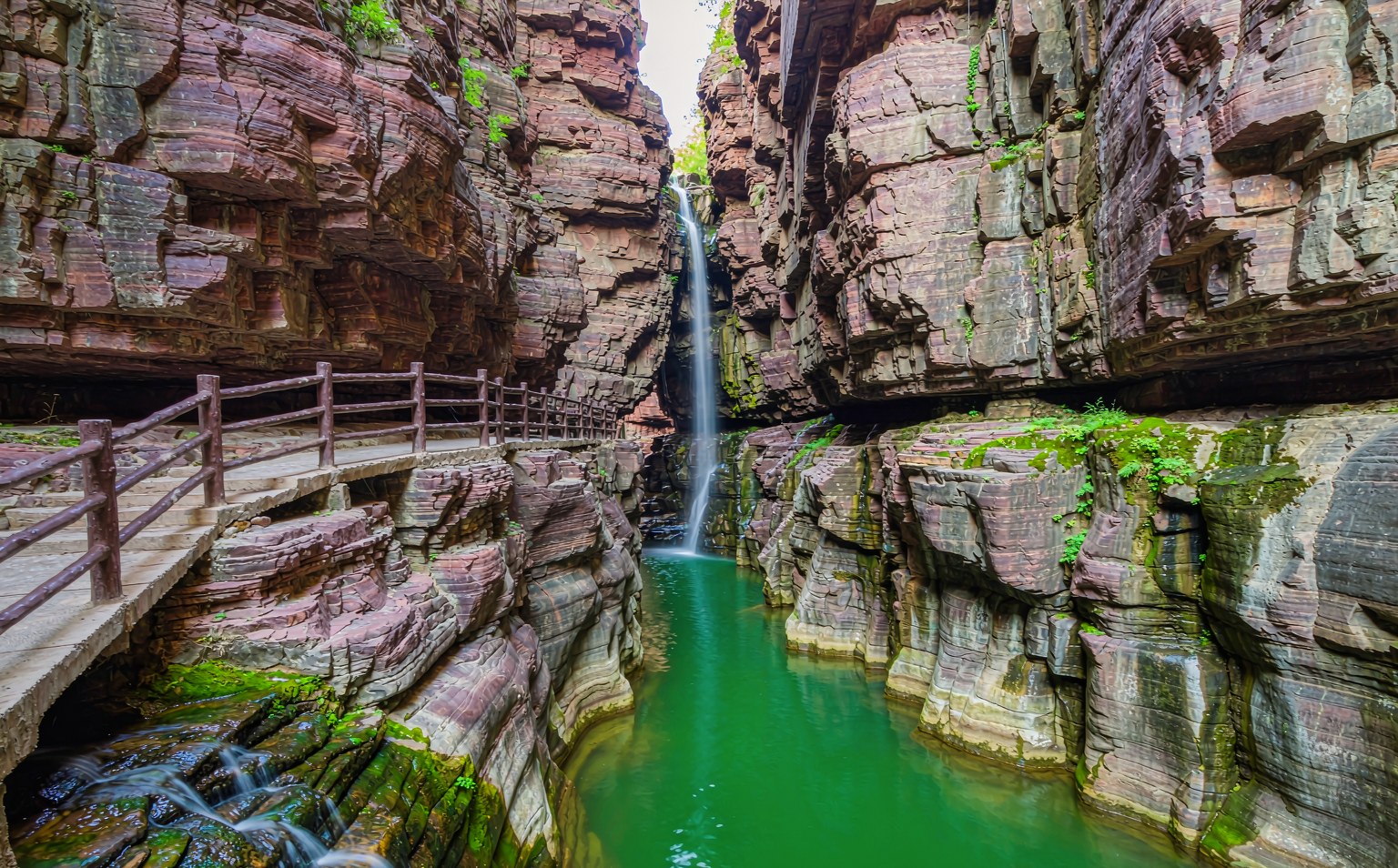
Luoyang Departure: Yuntai Mountain, Red Stone Gorge and Macaque Valley, 5 Days 4 Nights
The Yuntai Mountain ticket and the shuttle pass run for three days together, and this route uses all three, one gorge per day. November still pays the high season rate, which only drops on the first of December, so the crowds have thinned while the price has not moved yet.
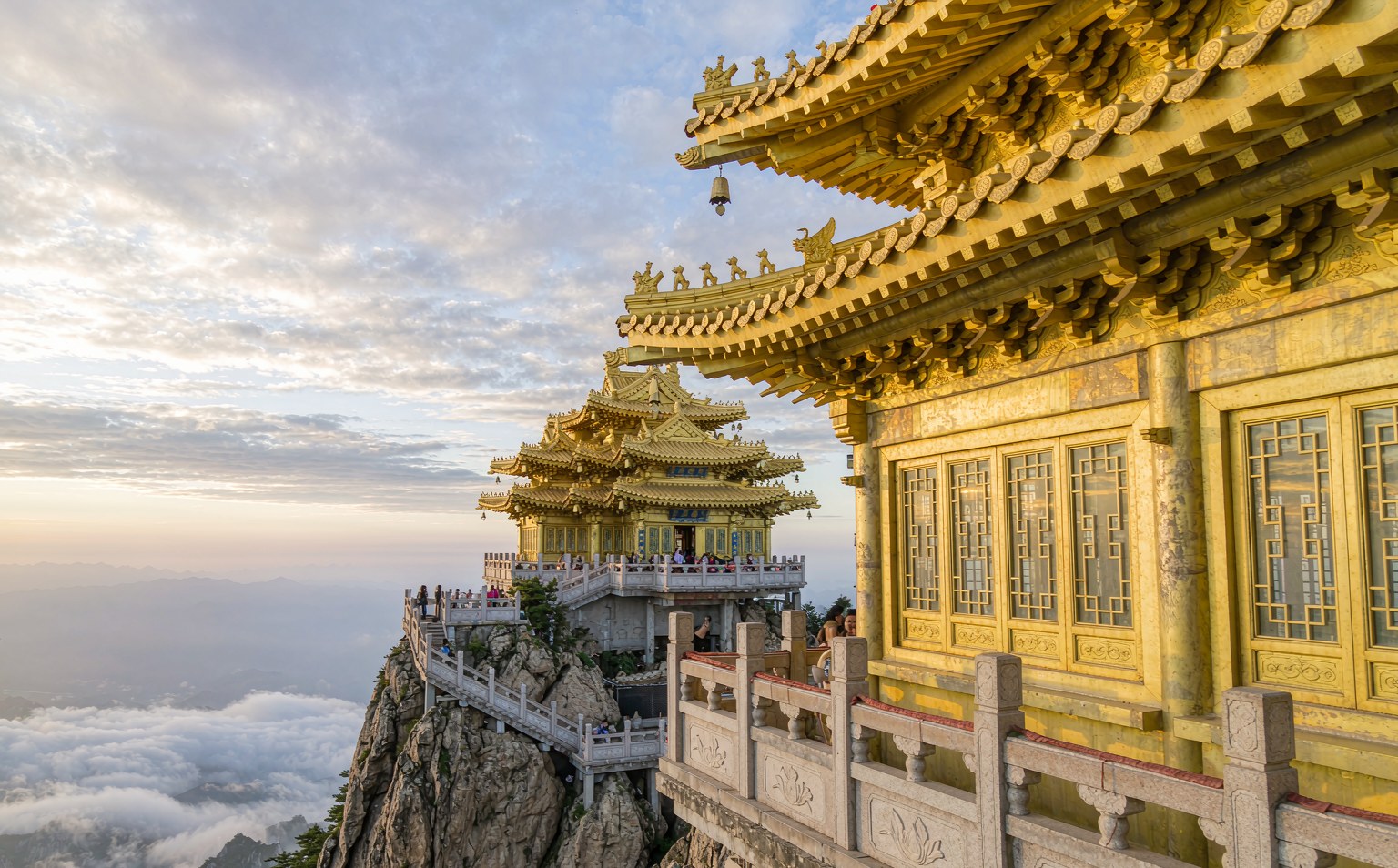
Luoyang Departure: Laojun Mountain, Chongdugou and Jiguan Cave, 4 Days 3 Nights
The Laojun Mountain ticket holds for two days, so this route splits the climb in half: the cliff walkway on the first afternoon, the summit and its cloud early the next morning. Between them, a bamboo valley and a limestone cave that sits at eighteen degrees when the mountain air turns cold.
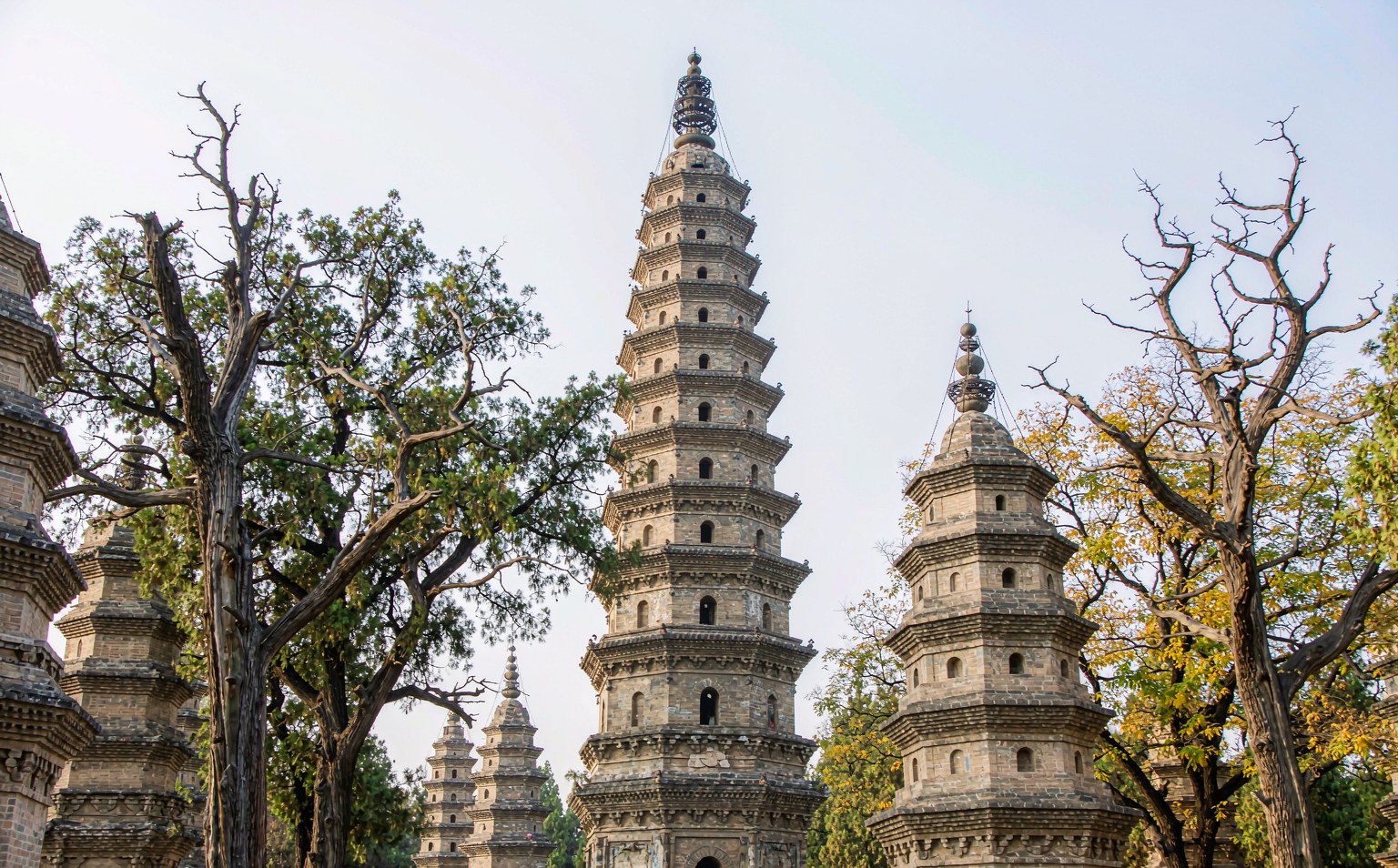
Luoyang Departure: Shaolin Temple, Songyang Academy, Zhongyue Temple and Gaocheng Observatory, 3 Days 2 Nights
Three days across the three teachings of Mount Song. Shaolin for Chan Buddhism, Songyang Academy for the Confucian tradition, Zhongyue Temple for Daoism, and on the last morning a ride out to Gaocheng for a Yuan dynasty observatory that most visitors to Dengfeng never reach.
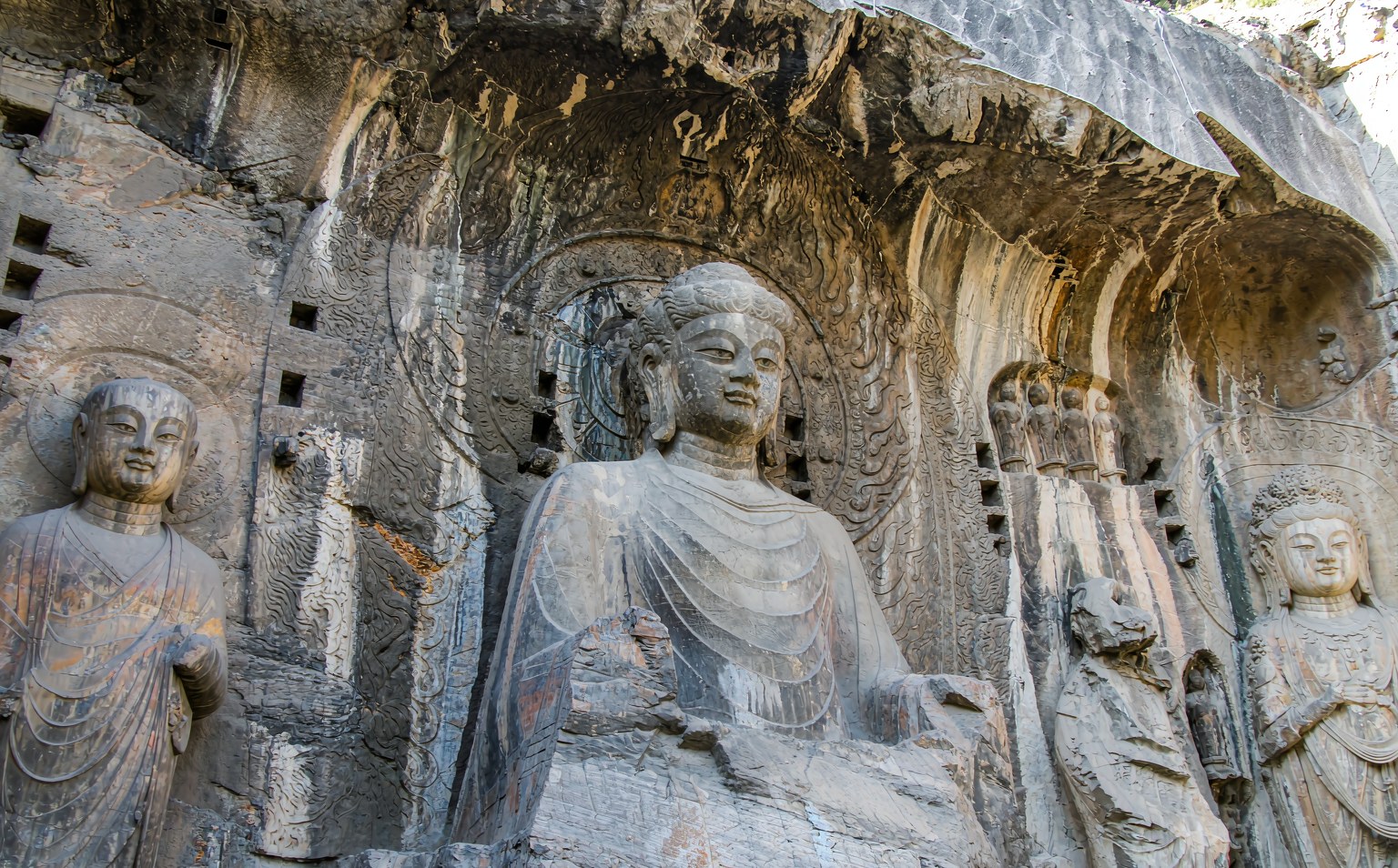
Luoyang Departure: Longmen Grottoes, Erlitou and Luoyi Old Town, 4 Days 3 Nights
Four days spent inside Luoyang itself. Longmen in the afternoon, when the low sun reaches the face of the Vairocana Buddha; Erlitou the next morning, a Bronze Age capital older than the Shang; and Luoyi Old Town after dark, where the hanfu shops by the west gate stay open past nine.