
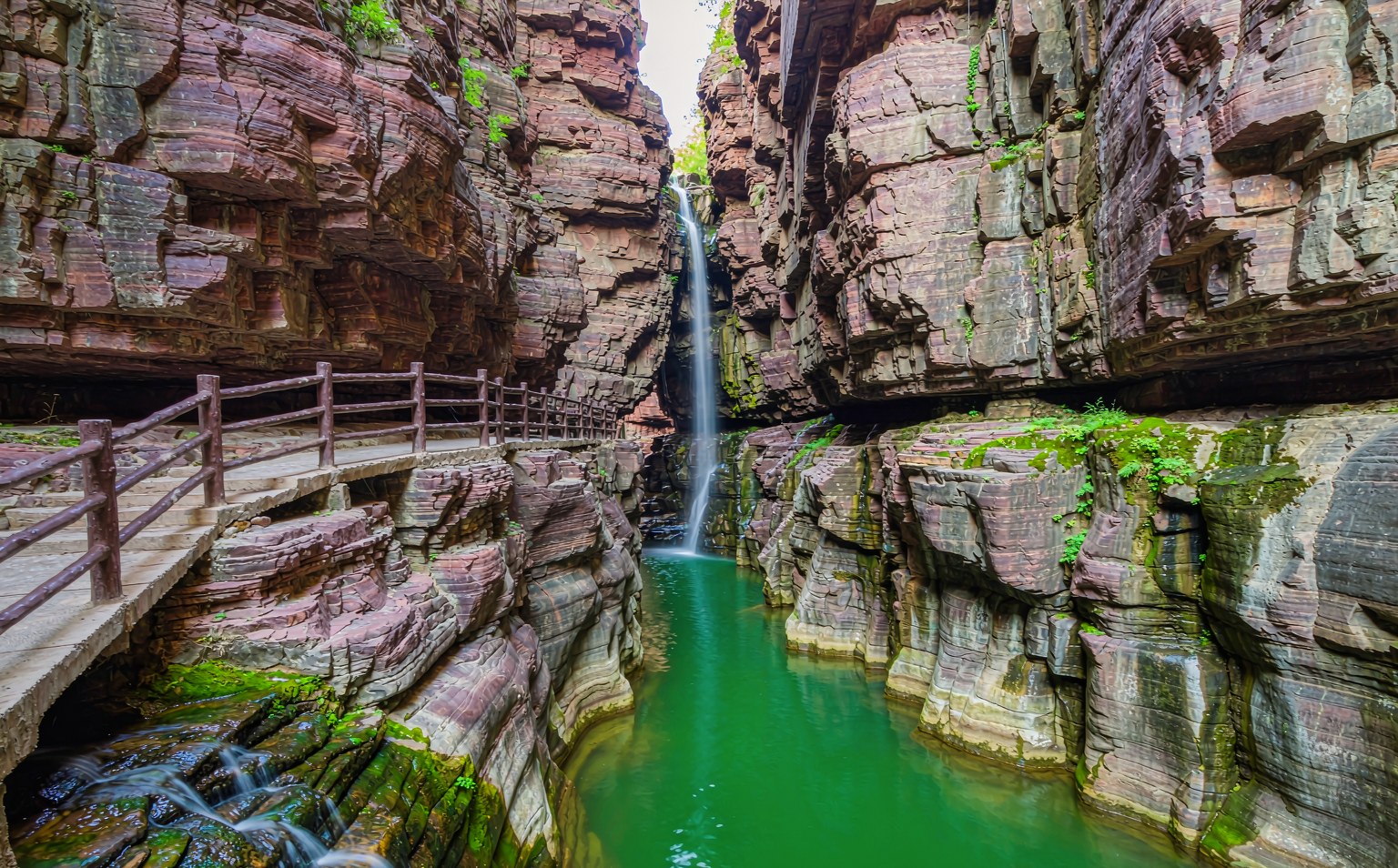
Luoyang Departure: Yuntai Mountain, Red Stone Gorge and Macaque Valley, 5 Days 4 Nights
The Yuntai Mountain ticket and the shuttle pass run for three days together, and this route uses all three, one gorge per day. November still pays the high season rate, which only drops on the first of December, so the crowds have thinned while the price has not moved yet.
Highlights
Day 1: Luoyang to Anshang, get the feet down first
Leave Luoyang in the morning, change expressways twice, and reach the mountain gate in three hours. The car stays outside; a shuttle carries the group into the Anshang service area, where the lodging sits beside the main stop. No ticket is used this afternoon. Walk the village instead, past trays of hawthorn and dried persimmon set out at every doorway, and later up to the edge of Zifang Lake to watch the water go flat.
Attraction introduction: Anshang is the largest of the service areas at Yuntai Mountain, its single street holding the restaurants, shops and guesthouses, with the shuttle terminus at the top of it. Zifang Lake lies near the exit of Red Stone Gorge, wide and open, red rock standing straight on both banks and the surface calm enough on a still evening to hold the shape of the hills.
Tips: Skipping the gate on day one is deliberate, since the ticket and shuttle pass start counting from the chosen visit date and an early entry burns a day. Guests generally find the mountain runs six or seven degrees colder than the city after dark, so a thick layer belongs in the bag from October on. In practice entry is set for the next morning.
Day 2: Red Stone Gorge one way, out at the lake
Into the park at eight, shuttle straight to Red Stone Gorge. The route is one way: a steep flight of steps drops to the floor and the light goes with it, walls dark red on both sides, water running in the cracks with a green that looks almost black. Halfway along, the walls close until only a strip of sky remains overhead. The exit opens beside Zifang Lake, where a boat or a shoreline walk waits. The afternoon moves to Quanpu Gorge, with a small electric cart for the inner stretch.
Attraction introduction: Red Stone Gorge is the narrowest cut at Yuntai Mountain, about 1.5 kilometres long, its floor of red quartz sandstone sawn into a deep channel by running water. Passage is one way only, with no turning back. Quanpu Gorge sits above Zifang Lake, longer and gentler, ending at the Yuntai sky waterfall, whose volume in November is well short of its summer peak.
Tips: The gorge stays wet year round and the steps carry a film of water, so tread matters more than footwear style. Guests generally find photography queues form at the narrow section, which is the slowest part of the walk. In practice Red Stone Gorge comes first at eight, before the coaches arrive, and lunch follows the exit.
Day 3: Tanpu Gorge and Macaque Valley, one gate between them
Tanpu Gorge, Quanpu Gorge and Macaque Valley share a single ticket gate, already checked once yesterday, so today takes the other two. Tanpu in the morning, short and dense, pools arriving one after another until the sound of water covers conversation. Lunch back at the service area, then Macaque Valley in the afternoon, where the monkeys have no fear of people and bags belong on the front of the body. Back to the lodging by dusk, with a stop for mountain produce on the way.
Attraction introduction: Tanpu Gorge is built on pools and small falls, its valley short but its drop concentrated, taking about two hours end to end. Macaque Valley takes its name from the Taihang macaques released there, with a boardwalk and viewing platforms along the stream; the animals are under second class national protection and feeding them is prohibited. The three sites share a gate, but a checked site cannot be entered twice.
Tips: The macaques go for anything carried loose, and a plastic bag or an open tote is an invitation. Guests generally find that walking in with food in hand draws a circle of them within a minute. In practice everything edible goes into a zipped pack beforehand, children stay on the inner side of the path, and no free time is scheduled in this section.
Day 4: Up Zhuyu Peak, thirteen hundred metres
Away at half past eight, shuttle to the Zhuyu Peak car park and the cable car covers the climb in six minutes. From the top the whole gorge and the ridges beyond lie below, with wind strong enough to make standing awkward. The afternoon crosses to Phoenix Ridge, where the glass walkway is fixed to the cliff with nothing but transparency underfoot, and the crossing takes a moment of nerve. Down by dusk and back for dinner.
Attraction introduction: Zhuyu Peak stands at 1,308 metres and is the highest point in the park, named for the dogwood in Wang Wei poem about brothers far away on the ninth day of the ninth month; a small shrine to the dogwood once stood here. The glass walkway at Phoenix Ridge is anchored to a cliff above a thousand metres, next to the Cloud Ridge walk, both of them fully transparent and without handrails.
Tips: Wind at the summit runs five or six degrees colder than the service area and hats do not survive it. Guests generally find the hardest part of the glass walkway is not the height but the people ahead who stop to photograph. In practice the cable car goes up in the morning when the light is oblique and the queue short, and only the walkway is attempted in the afternoon.
Day 5: Out of the mountains, one meal in Xiuwu
No sites on the last day. Breakfast at eight, bags out and check out by nine, shuttle to the gate where the coach waits. The descent takes the expressway, with a stop in Xiuwu county town for lunch: donkey meat in a cloudy broth with a sesame flatbread, the meat sliced thin. Back on the road afterwards reaches Luoyang by four in the afternoon.
Attraction introduction: Xiuwu sits at the foot of Yuntai Mountain and takes its name from the Zhou king who rested and drilled troops here before marching against the Shang. The county is small, and its old street has kept a few donkey meat restaurants for decades. The area belonged to the old Huaiqing prefecture, whose yam, rehmannia, achyranthes and chrysanthemum were shipped out from here and are still called the four medicines of Huaiqing.
Tips: Leaving the mountains on a Sunday afternoon means traffic bunched at the expressway entrance. Guests generally find a proper meal in the county town cheaper and better than anything at a service area. In practice lunch is set in Xiuwu so that the coach rejoins the road after the worst of the wave has passed.
Related Tours
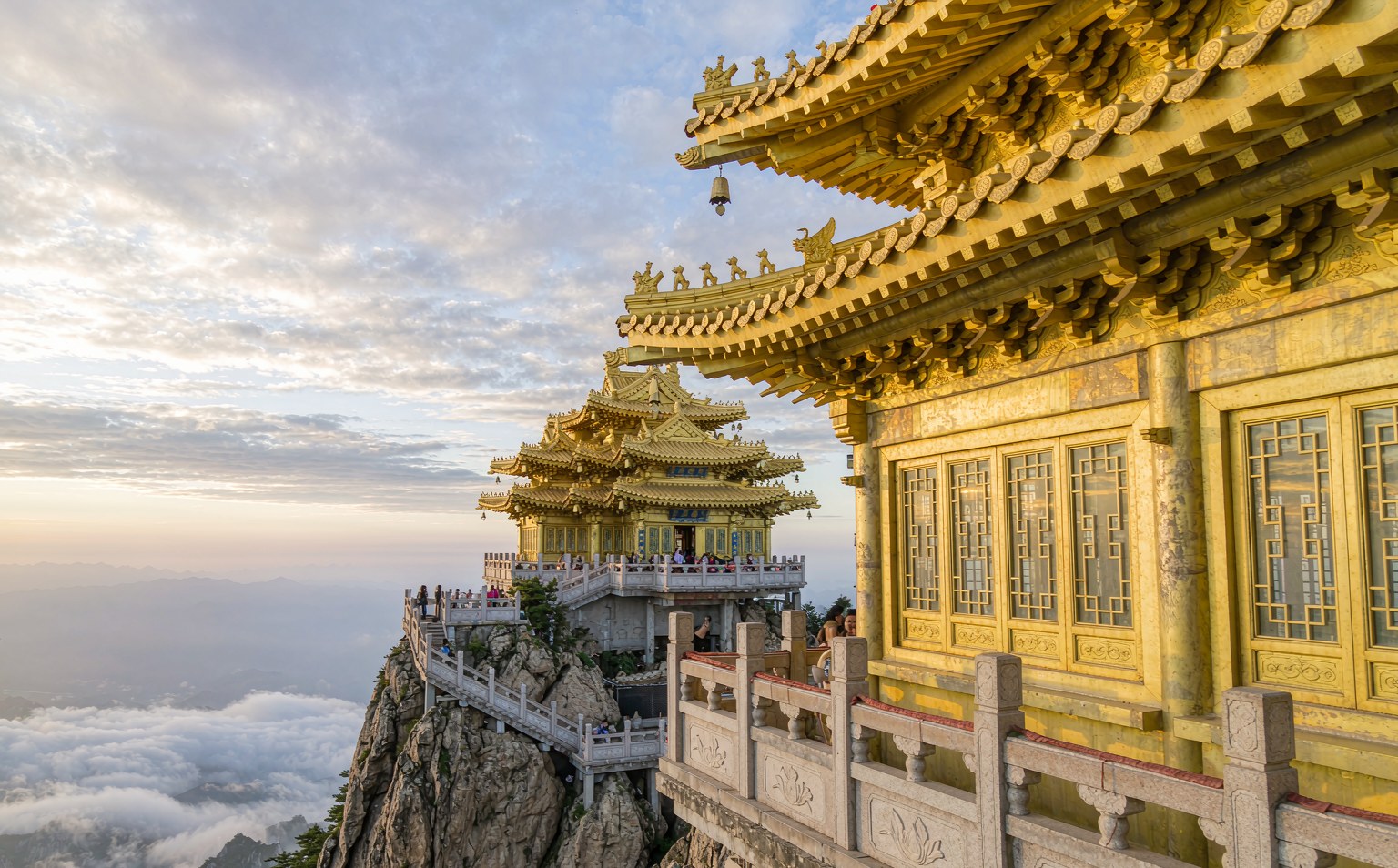
Luoyang Departure: Laojun Mountain, Chongdugou and Jiguan Cave, 4 Days 3 Nights
The Laojun Mountain ticket holds for two days, so this route splits the climb in half: the cliff walkway on the first afternoon, the summit and its cloud early the next morning. Between them, a bamboo valley and a limestone cave that sits at eighteen degrees when the mountain air turns cold.
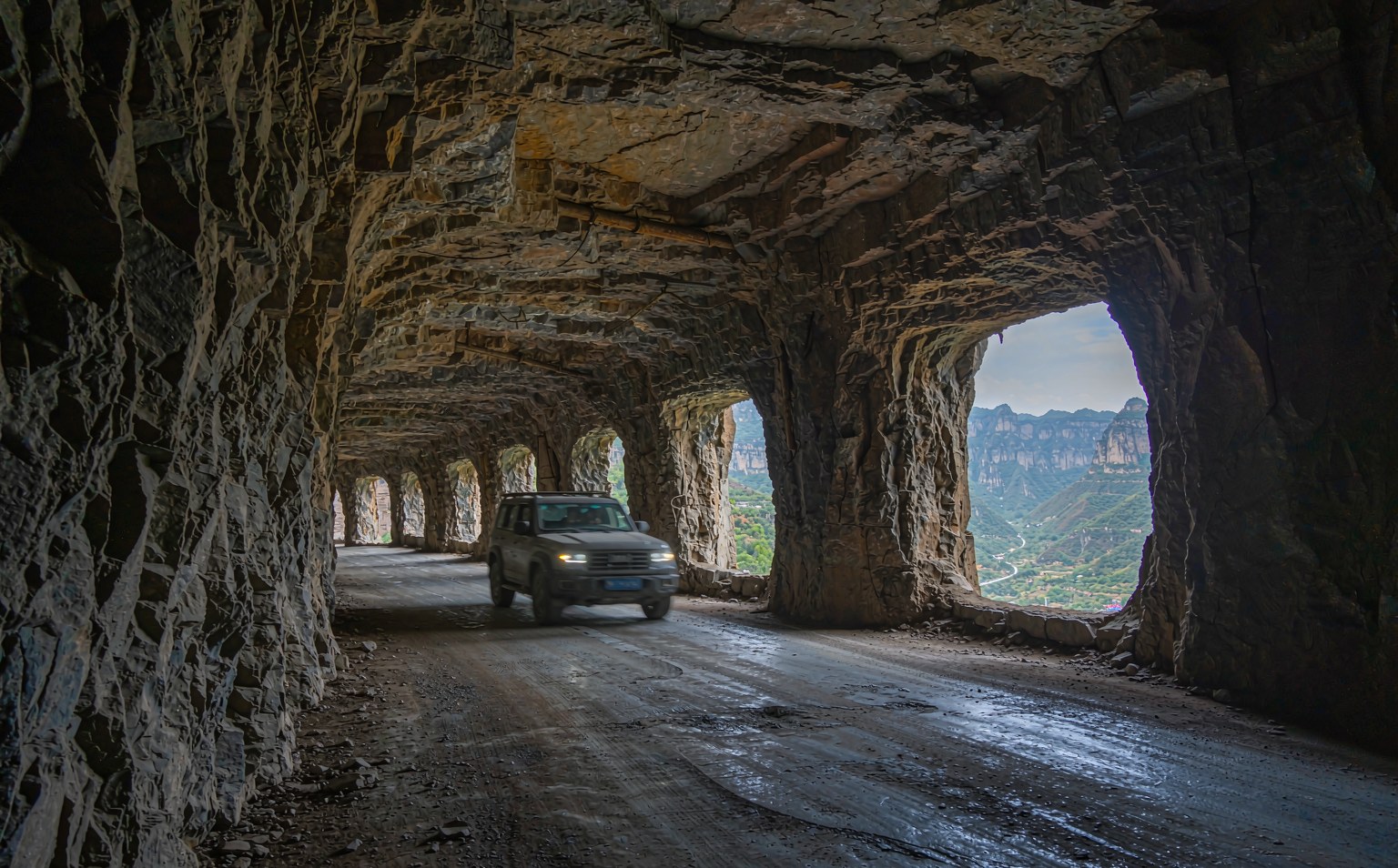
Luoyang Departure: Wanxian Mountain, Guoliang Village and Baligou, 5 Days 4 Nights
Five days in the southern Taihang range, walking all three valleys of Wanxian Mountain and then the water at Baligou. The Guoliang tunnel runs 1,250 metres along the cliff with thirty five windows cut through its outer wall, so the valley flashes past the whole way in.
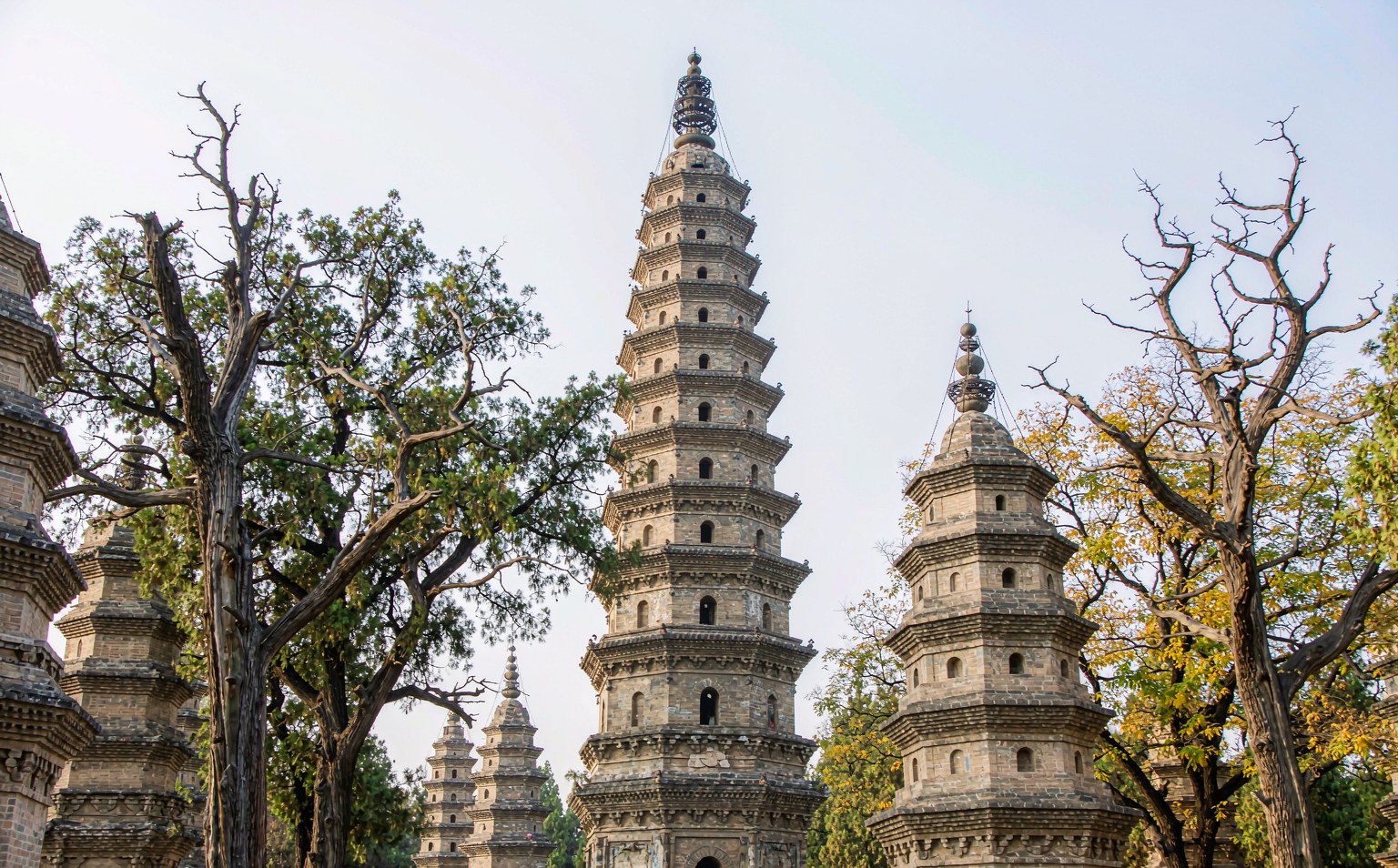
Luoyang Departure: Shaolin Temple, Songyang Academy, Zhongyue Temple and Gaocheng Observatory, 3 Days 2 Nights
Three days across the three teachings of Mount Song. Shaolin for Chan Buddhism, Songyang Academy for the Confucian tradition, Zhongyue Temple for Daoism, and on the last morning a ride out to Gaocheng for a Yuan dynasty observatory that most visitors to Dengfeng never reach.
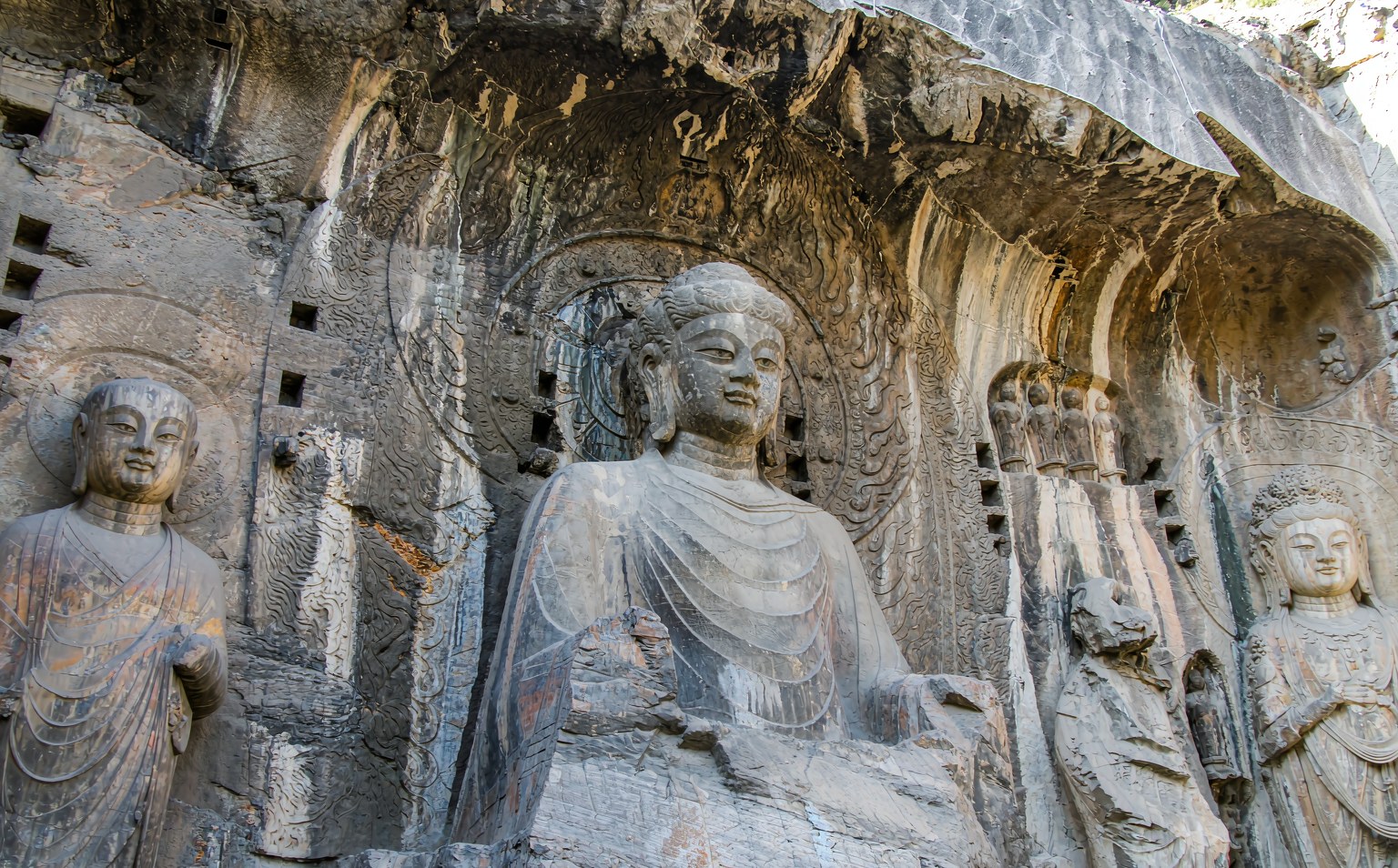
Luoyang Departure: Longmen Grottoes, Erlitou and Luoyi Old Town, 4 Days 3 Nights
Four days spent inside Luoyang itself. Longmen in the afternoon, when the low sun reaches the face of the Vairocana Buddha; Erlitou the next morning, a Bronze Age capital older than the Shang; and Luoyi Old Town after dark, where the hanfu shops by the west gate stay open past nine.