
Luoyang Departure: Yuntai Mountain, 5 Days 4 Nights
Five days across a gorge, a canyon and a reservoir lake. The three-day Yuntai ticket works as a pass, Hongshixia runs one way, Qinglongxia needs a nine-kilometre shuttle climb, and the Yuntai ticket waives the Fenglinxia gate within seven days.
Highlights
Day 1: Reach Xiuwu and walk Hongshixia
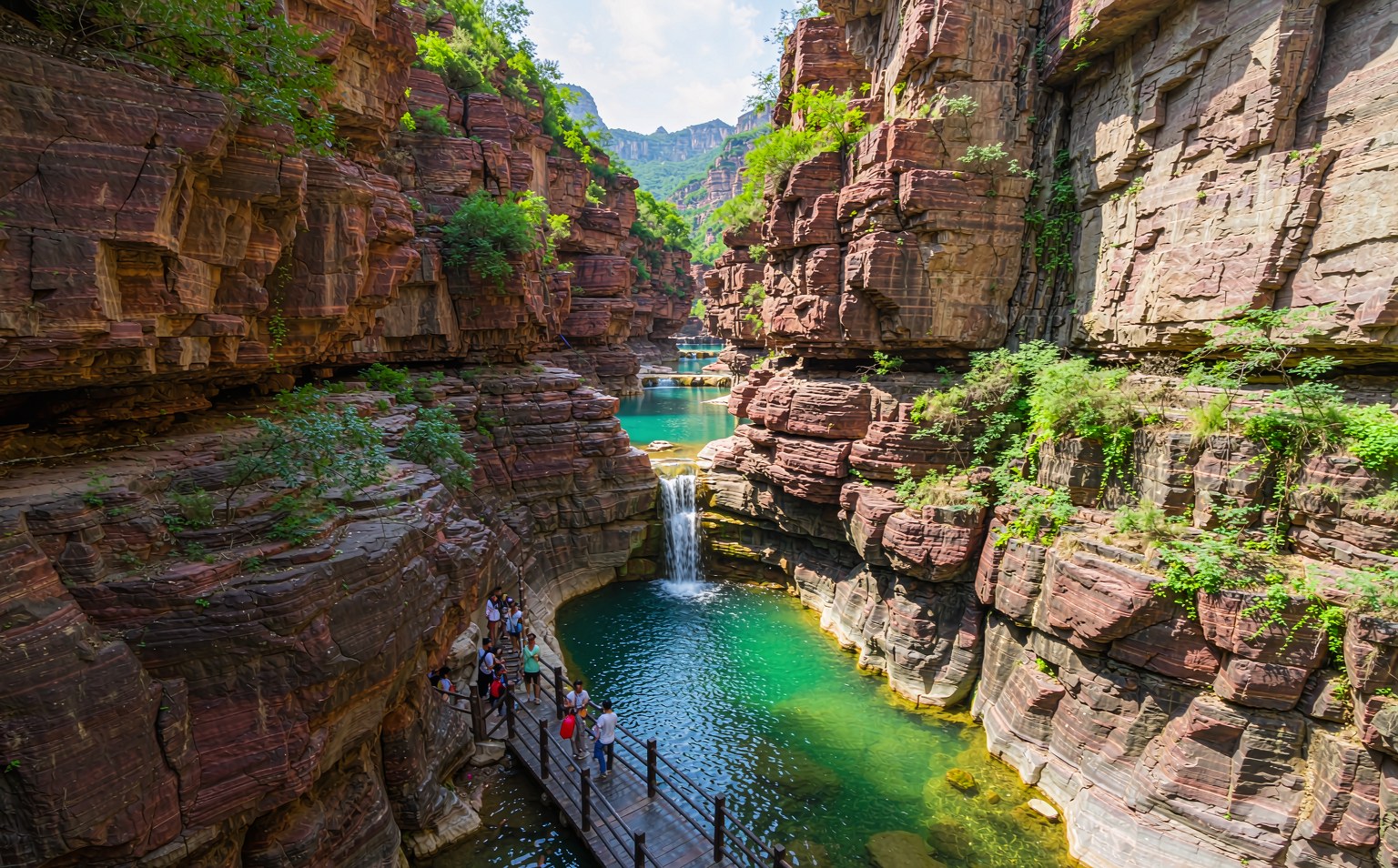
Luoyang to Xiuwu county takes about two and a half hours. Lunch at Anshang village by the gate, then into the park at two for Hongshixia. The gorge is a one-way route, so once inside the only direction is forward, and the 1.5 kilometres take a little over an hour. Walls run dark red above water that reads almost green, and the walkway turns with the cliff so the next bend stays hidden until it arrives. Out of the mouth of the gorge with the sun already low, then dinner and an early night.
Attraction introduction: Hongshixia is the narrowest section of Yuntai Mountain, with iron-rich rock staining both walls dark red and stream water pooling into deep green basins between boulders. The walkway is bolted to the cliff and runs one way for roughly 1.5 kilometres. Sunlight reaches the floor only briefly, so even midday feels shaded.
Tips: A one-way route means no turning back when the knees complain, which is worth deciding at the entrance rather than halfway. Guests generally find the steps narrow and wet, and a large backpack catches on handrails when someone passes. In practice day one carries Hongshixia alone, with no second site squeezed in after the drive.
Day 2: Up Zhuyu Peak past the medicine cave
Day two belongs to Zhuyu Peak. The shuttle drops at the foot and the rest is stone steps, one flight after another. Halfway up sits Yaowang Cave, cold air spilling from the mouth of it, and two minutes inside resets the legs. Above that the summit at 1308 metres with the Xuandi Hall on top. On a clear day the folds of the Taihang range stack away one behind another. Down the same way, back at the hotel by evening.
Attraction introduction: Zhuyu Peak is the high point of Yuntai Mountain at 1308 metres, crowned by the Xuandi Hall. Yaowang Cave on the flank is linked by tradition to Sun Simiao, the Tang physician who gathered herbs here, and holds a seated figure of the medicine king. The rock is quartz sandstone, and the steps tend to follow the bedding planes.
Tips: The climb is continuous and steep with few places to rest, so water goes up on your back. Guests generally find the descent harder on the knees than the ascent, and a brace helps. In practice nothing else paid goes on this day, and the evening is for soaking the legs rather than sightseeing.
Day 3: Qinglongxia, shuttle up and walk down
Qinglongxia shares its visitor centre with Fenglinxia. Park, buy the shuttle ticket at thirty yuan, and ride nine kilometres of switchbacks to the top, because there is no walking route up at all. From the stone village at the summit the trail drops along the canyon with the stream never far away, one pool after another. Leaves peak here from mid October into early November, and an early November visit still catches the tail of it. Back down by shuttle before the last departure.
Attraction introduction: Qinglongxia is a sub-area of the Yuntai Mountain UNESCO geopark, a canyon roughly ten kilometres long cut into Zhangshi rock, with a chain of waterfalls and plunge pools including Wanglong Falls and Heilong Pool. A stone village survives on the ridge, houses and walls stacked with the slope. Fenglinxia lies about fifteen minutes away and shares the same visitor centre.
Tips: The thirty-yuan shuttle is not optional, because nine kilometres of mountain road have no footpath and walking it burns the day. Guests generally find the canyon cooler than the open air, warm while moving and cold the moment they stop. In practice the time of the last shuttle down gets confirmed at the entrance, not at the bottom of the gorge.
Day 4: Fenglinxia on a Yuntai ticket
Day four goes to Fenglinxia with the Yuntai ticket still in hand, which waives the gate price inside seven days and leaves only the shuttle to pay. The bus climbs beside Emerald Lake, green in a way that looks artificial until you remember the minerals. Higher up stands the Qunying dam, laid in masonry, begun in 1968 and finished in 1971 at a height of 100.5 metres. Wind comes off the reservoir at the top of it.
Attraction introduction: Fenglinxia, once called Qunying Lake, combines canyon walls, a reservoir lake and a stone dam. Emerald Lake is the central water surface and takes its colour from dissolved minerals. The Qunying dam is a masonry arch dam built between 1968 and 1971 with a height of 100.5 metres. The park opens at seven and stops admitting visitors at four in the afternoon.
Tips: Four in the afternoon is earlier than most people expect for a last entry, so a late start wastes the day. Guests generally find the lakeside windy and bright, which makes a hat and sun cream worth carrying. In practice the gate waiver runs to 31 December 2026 and excludes public holidays, so check the calendar before counting on it.
Day 5: Anshang market, back in Luoyang by noon
The last morning starts early. Anshang village sits at the gate and holds a market of yam, Huai chrysanthemum and preserved eggs, the four Huai medicines being local specialities worth carrying home. Breakfast from a stall, peppery soup with fried dough, then on the road by half past eight. The expressway back to Luoyang delivers you before lunch.
Attraction introduction: Anshang is the service village at the Yuntai gate, thick with guesthouses and small restaurants, and its morning market sells what the surrounding farms grow. Xiuwu belonged to the old Huaiqing prefecture, and dihuang, yam, achyranthes and chrysanthemum are known together as the four Huai medicines. Wuliyuan preserved eggs are listed as local intangible heritage.
Tips: Dried herbs travel better than fresh, and yam slices should show a white break when snapped. Guests generally find village market prices well below the shops at the gate, though cash still works better than a phone. In practice nothing is scheduled on the departure day, which leaves room for the road to misbehave.
Related Tours
Zhangjiajie from Luoyang: Wulingyuan, Tianmen Mountain and Fenghuang, 7 Days
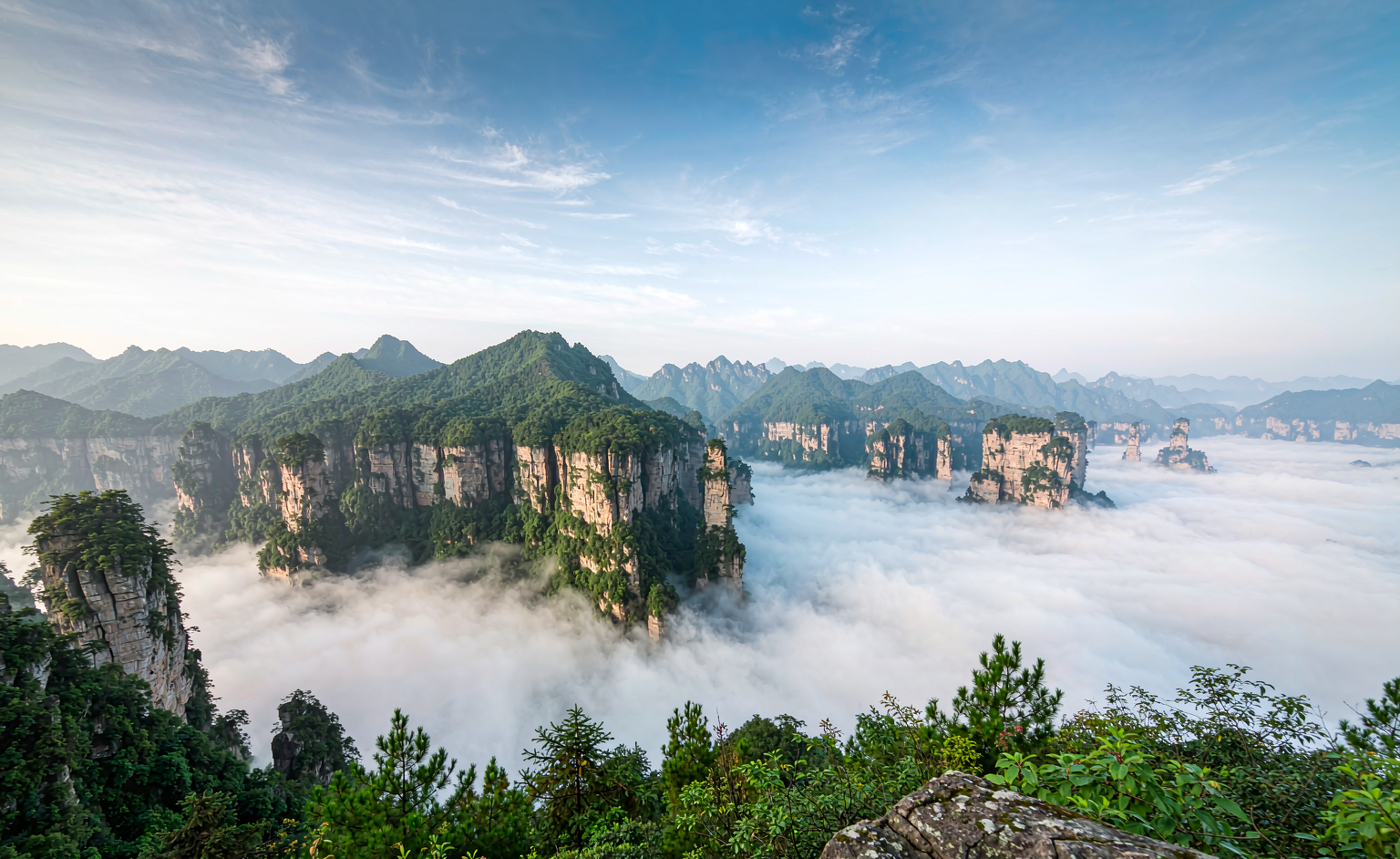
Seven days give Zhangjiajie four, and Fenghuang a day and a half. November mist lifts slowly, so the stone pillars at Tianzi and Yuanjiajie sit half buried in cloud until the wind moves, and that is better than a clear blue sky.
Xian from Luoyang: Terracotta Warriors, Famen Temple, Qianling and the City Wall, 6 Days
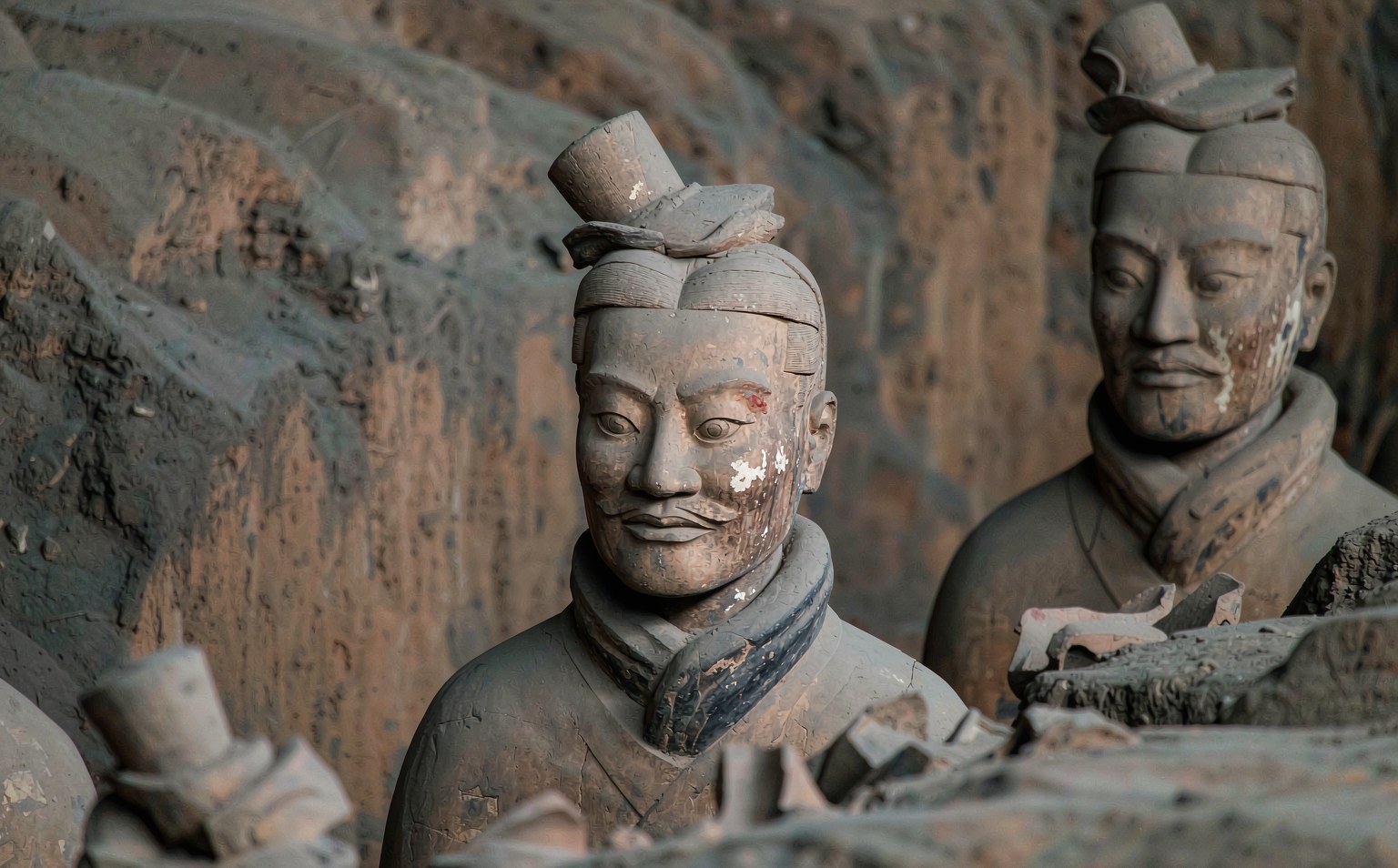
Six days split Xian into three parts: the east for Qin and Tang, the west for imperial tombs and a Buddha relic, and the old city for museums, the wall and steles. Ninety minutes by rail from Luoyang, no airport involved.
Qinghai from Luoyang: Qinghai Lake, Chaka, Guide and Kumbum, 6 Days
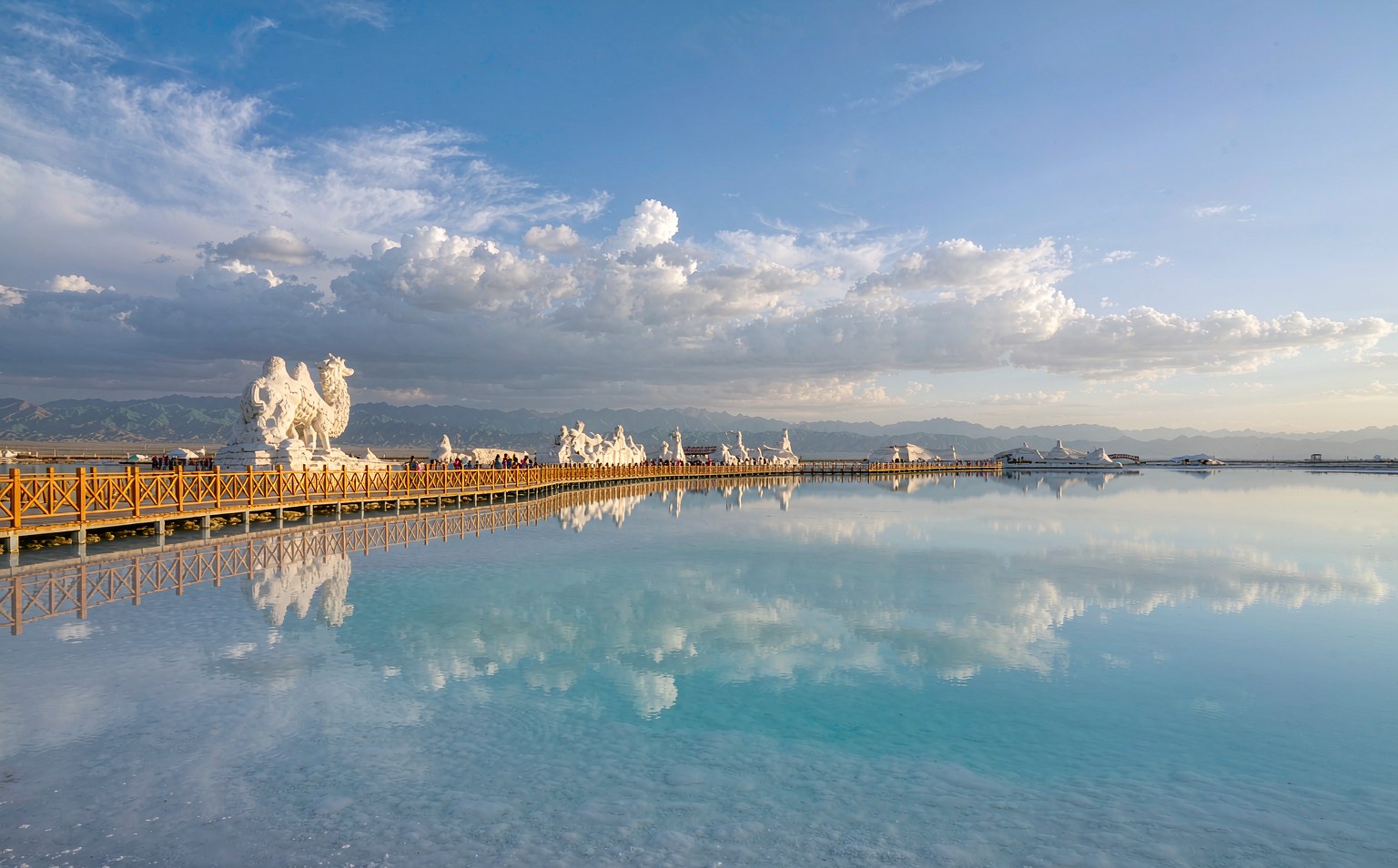
November is the quietest month in Qinghai. The butter sculptures still glow at Kumbum Monastery, the Yellow River runs clear at Guide, the lake shore is empty, and the little train at Chaka carries only a handful of people.
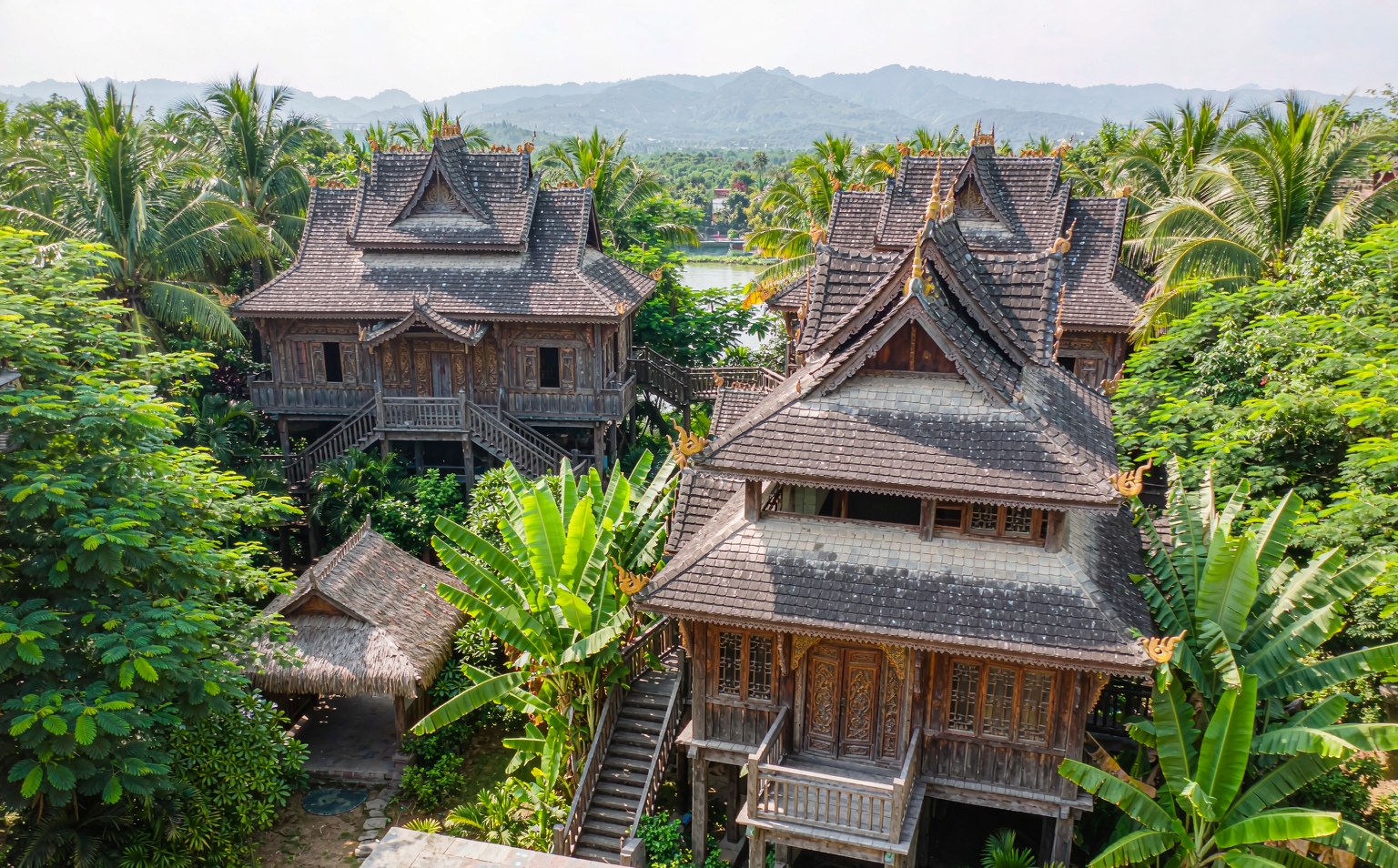
Xishuangbanna from Luoyang: Botanical Garden, Dai Villages and Gaozhuang, 5 Days
While the north is already in padded coats, Xishuangbanna still sits above twenty degrees by day. Five days give two to rainforest and botanical garden, one to the canopy walkway at Wild Elephant Valley, and the rest to Dai villages and the night market at Gaozhuang.