
Luoyang Departure: Huangguoshu, Xijiang Miao Village and Fanjing Mountain, 5 Days 4 Nights
Five days from central Guizhou to its east. In November the falls still roar and mist climbs out of the gorge with a rainbow halfway up; Xijiang lights house by house after dark; and on Fanjing the cloud runs under your feet while the Red Cloud Peak shows half of itself.
Highlights
Day 1: Land in Guiyang, drive west to the falls
The plane puts down at Longdongbao and the highway runs west for two hours to Anshui. Flat basins open up along the road, rice stubble left in the fields, thin mist on the hills behind. Tonight you sleep in Huangguoshu town, the guesthouse by the river, and the sound through the window is really the shallows downstream of the Baishui River. A walk along the bank: green water, stones rounded by current. Dinner is sour soup fish, the broth fermented from tomato and rice water, slices lifted out the moment they turn white and dipped in chilli paste. After dark the town goes quiet apart from a stall selling roast potatoes.
Attraction introduction: Huangguoshu Falls lies in Zhenning County, Anshun, where the Baishui River breaks over a fault in its bed. The main fall drops about 78 metres and spans roughly 101 metres, the largest in China and a rare broad curtain in karst country, protected as a national scenic area since 1982.
Tips: November in Guizhou is damp and clothes dry slowly, so quick-dry fabric beats cotton. Guests generally find little nightlife in the town and an early night makes the next morning easier. In practice the town sits around 900 metres, cool at both ends of the day, and heating may be weak, so ask for an extra quilt.
Day 2: Three sections of the falls, and through the water curtain
Into the park at eight, starting at Doupotang, where the water spreads wide and shallow over a cobbled bed. A shuttle carries you to Tianxingqiao, a stone forest with streams threading between pillars, and you step from stone to stone past dates carved into the rock. Lunch near the main fall, then the real thing: the roar arrives before the view, and once you round the slope the river drops in one sheet, spray lifting ten metres, clothes damp within minutes. The Water Curtain Cave runs behind the fall, low and dripping, and looking out from inside the water hangs like a curtain in front of you. November flow is thinner, which means the rock behind reads clearly.
Attraction introduction: The scenic area combines the main fall, Tianxingqiao and Doupotang. Behind the main fall a cave about 134 metres long runs through the rock, named Water Curtain for the view from its openings. Tianxingqiao is a limestone stone forest with water running between the pillars, and Doupotang is the widest of the three at about 105 metres.
Tips: Everything drips inside the cave, so bag the phone and wear grippy shoes. Guests generally find the main fall backlit in the morning and front lit after lunch, which suits photography later in the day. In practice the sections are linked by shuttle with waiting time, and a full circuit is tiring, so take the stairs slowly if your knees complain.
Day 3: Over the hills to Leigong Mountain, lights coming on at Xijiang
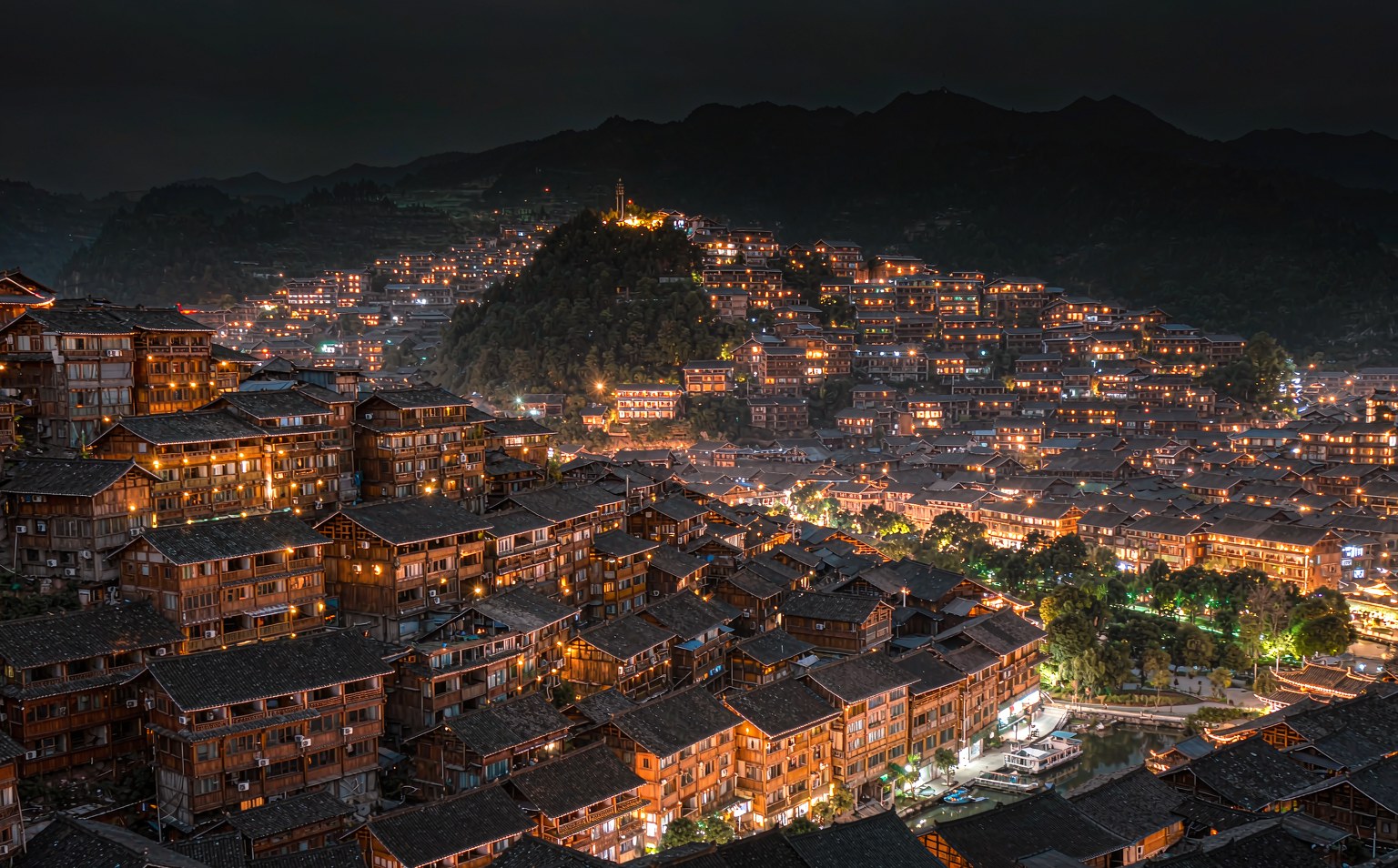
East from Anshun, round Guiyang, then toward Kaili, hills stacking up under fir and bamboo. You enter Xijiang at three in the afternoon, a lusheng player at the gate, a bowl of sweet rice wine pressed into your hand. The guesthouse is halfway up the slope, three timber floors, narrow stairs, bags carried up by hand. You walk down along the Baishui River, the wind-and-rain bridge posts polished by feet, old women embroidering on the rail. Near dusk a shuttle takes you to the viewpoint and you wait for dark. Lights come on house by house from the bottom to the ridge, like gold dust scattered on a slope. Later the village goes quiet but for a few dogs.
Attraction introduction: Xijiang sits in northeast Leishan County, a cluster of more than ten hamlets where over a thousand Miao households live along the northern slope of Leigong Mountain, one of the largest Miao settlements in China. Houses are usually three storeys: fuel and livestock below, living space in the middle, grain on top, eaves stacked up the hillside.
Tips: The village is all steps and slopes, so a backpack works better than a wheeled case. Guests generally find the lights fullest between half past seven and eight, and moving a dozen metres off the platform finds space. In practice timber floors carry sound, earplugs help, and November nights are cold enough to want a second quilt.
Day 4: East gate of Fanjing Mountain, cable car then stone steps
One last look at the village, mist still down, roofs wet. The road runs northeast past Kaili and Yuping, lunch in Jiangkou, then the east gate in the afternoon. A shuttle climbs along the Heiwan River to the lower cable station, and the car rises diagonally; the moment it enters cloud everything goes white, and above the cloud the summit appears, rock stacked like pages of a book. From the upper station the Mushroom Rock still needs a stretch of stone steps at 2,300 metres, a few paces then a pause. The rock is wide above and narrow below, balanced on a thin pillar, cloud sliding underneath. Beside it the Red Cloud Peak shows half of itself above the cloud.
Attraction introduction: Fanjing Mountain lies where Jiangkou, Yinjiang and Songtao meet in Tongren, the main peak of the Wuling range, its highest point at 2,572 metres. Metamorphic rock weathered into Mushroom Rock and the Book Stacks, with Chengen Temple and the Sakyamuni and Maitreya halls on top. The area holds important primary forest and joined the World Heritage list in 2018.
Tips: The summit runs six to eight degrees colder with strong wind, so pack a light down or shell. Guests generally find the steps from the cable station slippery after rain and worth taking slowly. In practice weather turns fast, check the forecast, expect cable suspension in thunderstorms, and note the Red Cloud Peak needs a separate on-site booking.
Day 5: Back to Guiyang with the sour soup still on your tongue
No rush this morning, just a bowl of mung bean noodles in town, rice batter steamed and cut, dressed with sour broth and crackling. The road west passes tea hills terracing upward, leaves still green. A service area stop for chilli powder and fermented chilli paste. By afternoon you are in Guiyang, and if the flight is late there is time to stand by Jiaxiu Pavilion, the Nanming River running beneath a Ming dynasty bridge. Five days on, the roar at Huangguoshu still sits in your ears and your palm remembers the sweetness of that bowl of rice wine at Xijiang.
Attraction introduction: Jiaxiu Pavilion stands over the Nanming River in Guiyang, built in 1598, a three-storey tower joined to both banks by a stone bridge and the city symbol. Guizhou sour soup is fermented from rice water or tomato, split into red and white styles, and is everyday cooking across the southeast of the province.
Tips: Chilli paste travels fine by air if the pack is sealed, otherwise everything in the bag smells of it. Guests generally find the pavilion better after the lights come on, and stepping back gives a fuller frame than the crowded bridge. In practice the airport is half an hour out and the evening rush adds time, so allow two hours before departure.
Related Tours
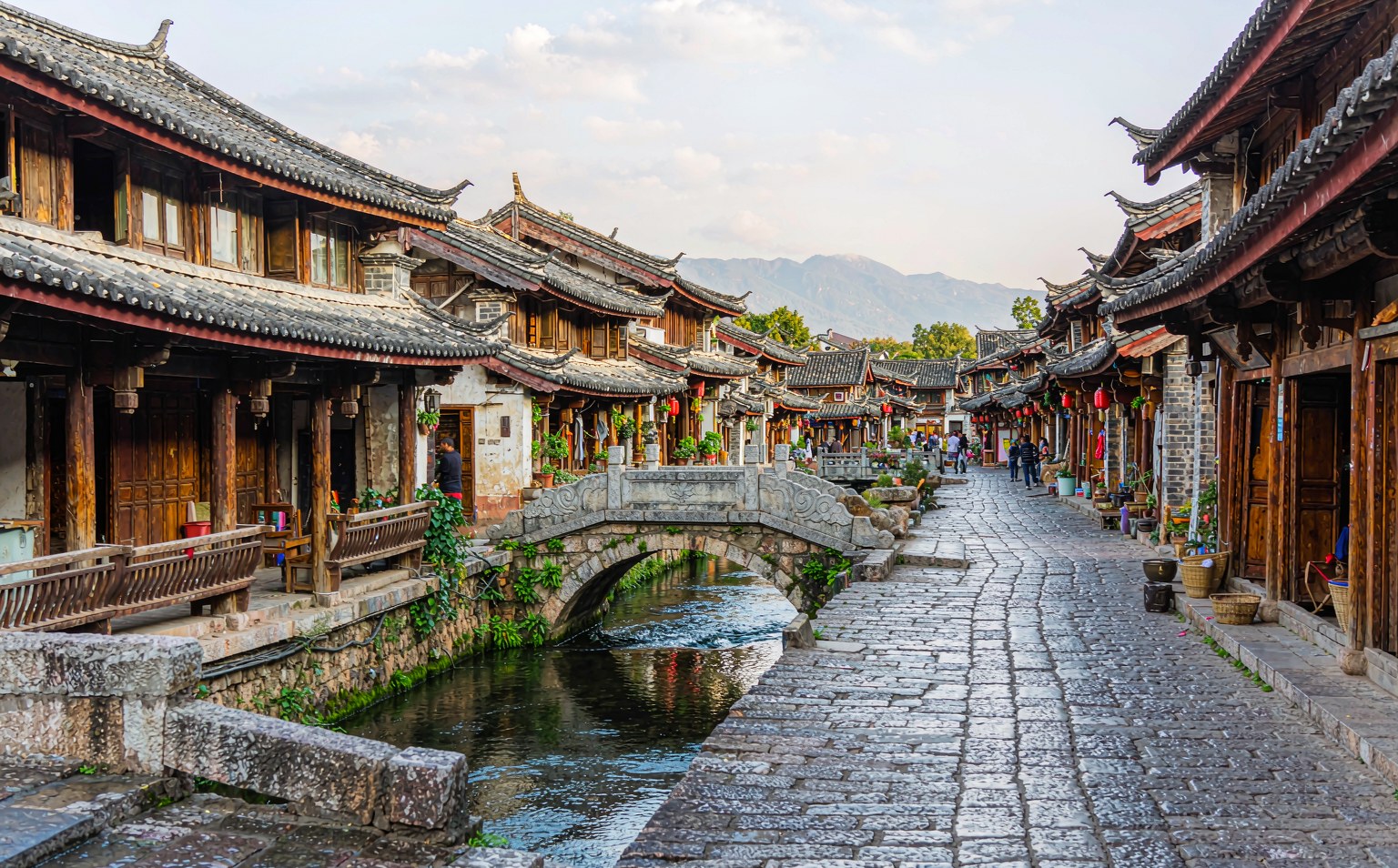
Luoyang Departure: Lijiang, Lugu Lake and Shangri-La, 6 Days 5 Nights
Six days from the old town of Lijiang to the shore of Lugu Lake and up into Shangri-La. In November the snow line drops on Jade Dragon, Blue Moon Valley turns a deep blue, and a pig trough boat crosses water so still the oars sound louder than talk.
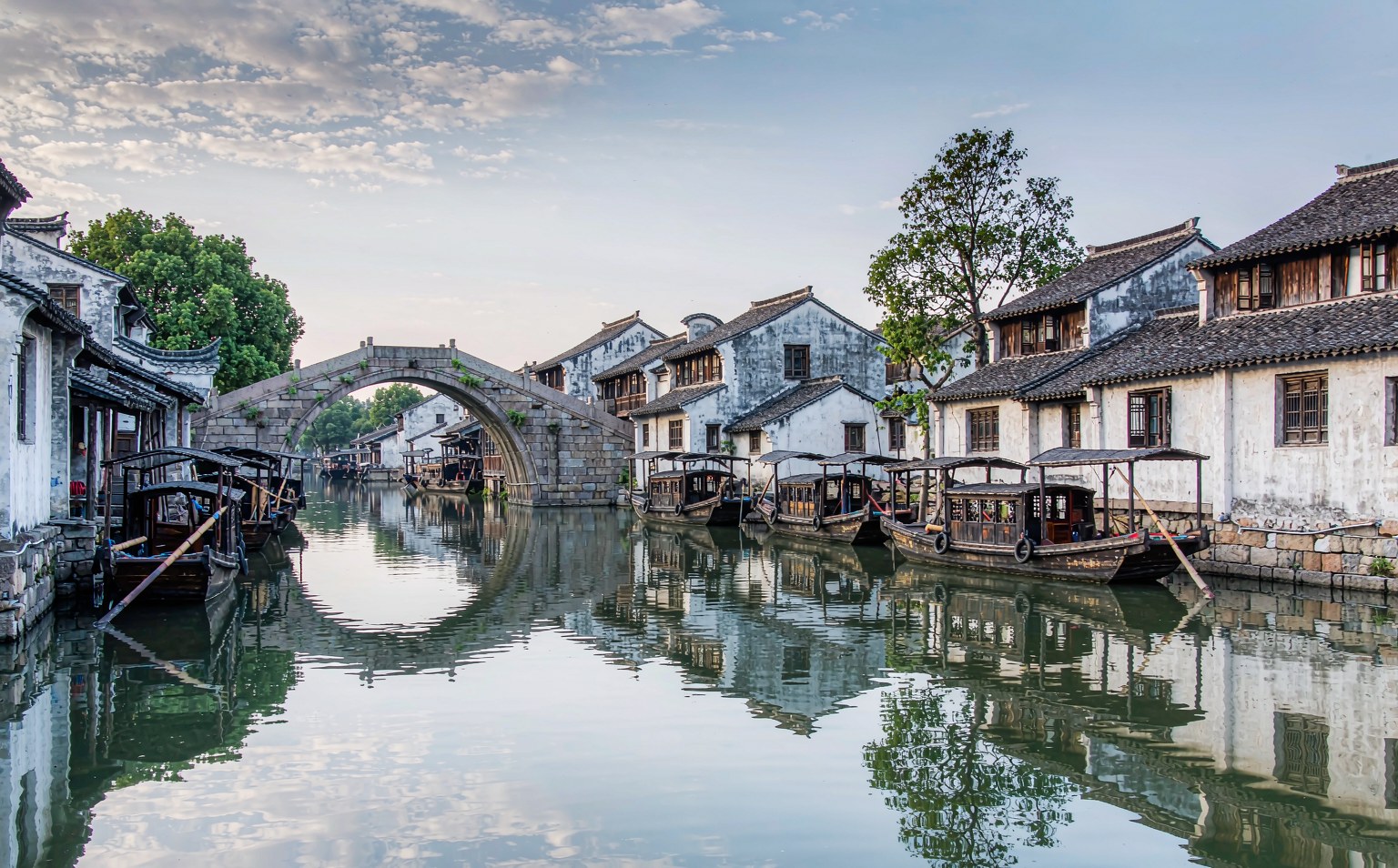
Luoyang Departure: West Lake, Wuzhen and Xitang, 5 Days 4 Nights
Five slow days beside southern water. West Lake charges no admission and plane trees drop along Beishan Street; lamps at Wuzhen stand in the river so each arch frames two streets; and the corridor at Xitang runs on until rain stops meaning anything.
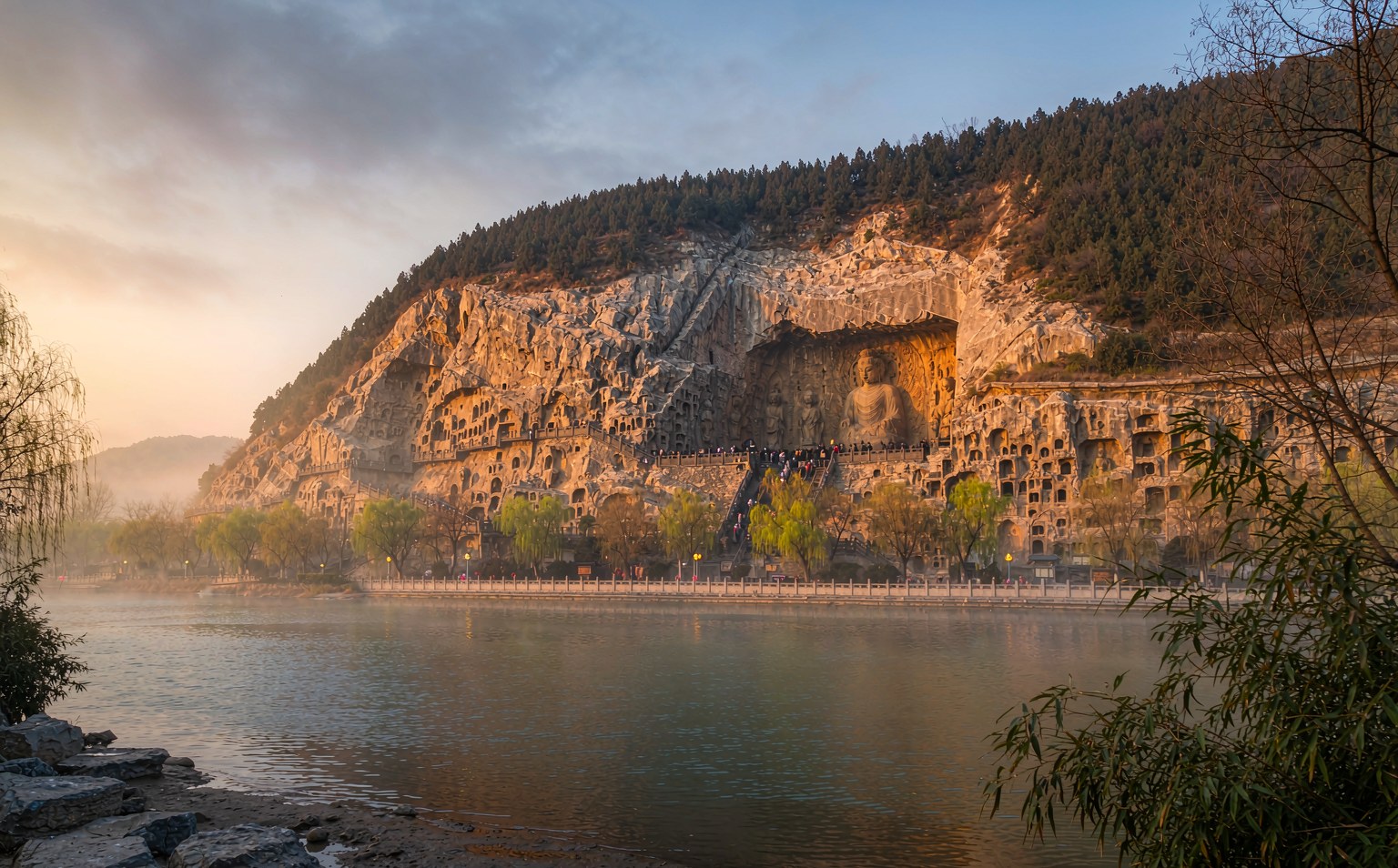
Luoyang Departure: Yungang Grottoes, Hanging Temple and Pingyao, 5 Days 4 Nights
Five days north from Luoyang by rail. The Buddhas at Yungang have sat in the cliff for fifteen centuries and admission falls to 100 yuan in November; planks creak underfoot at the Hanging Temple; and Pingyao closes its shop boards as if locking the Qing dynasty indoors.
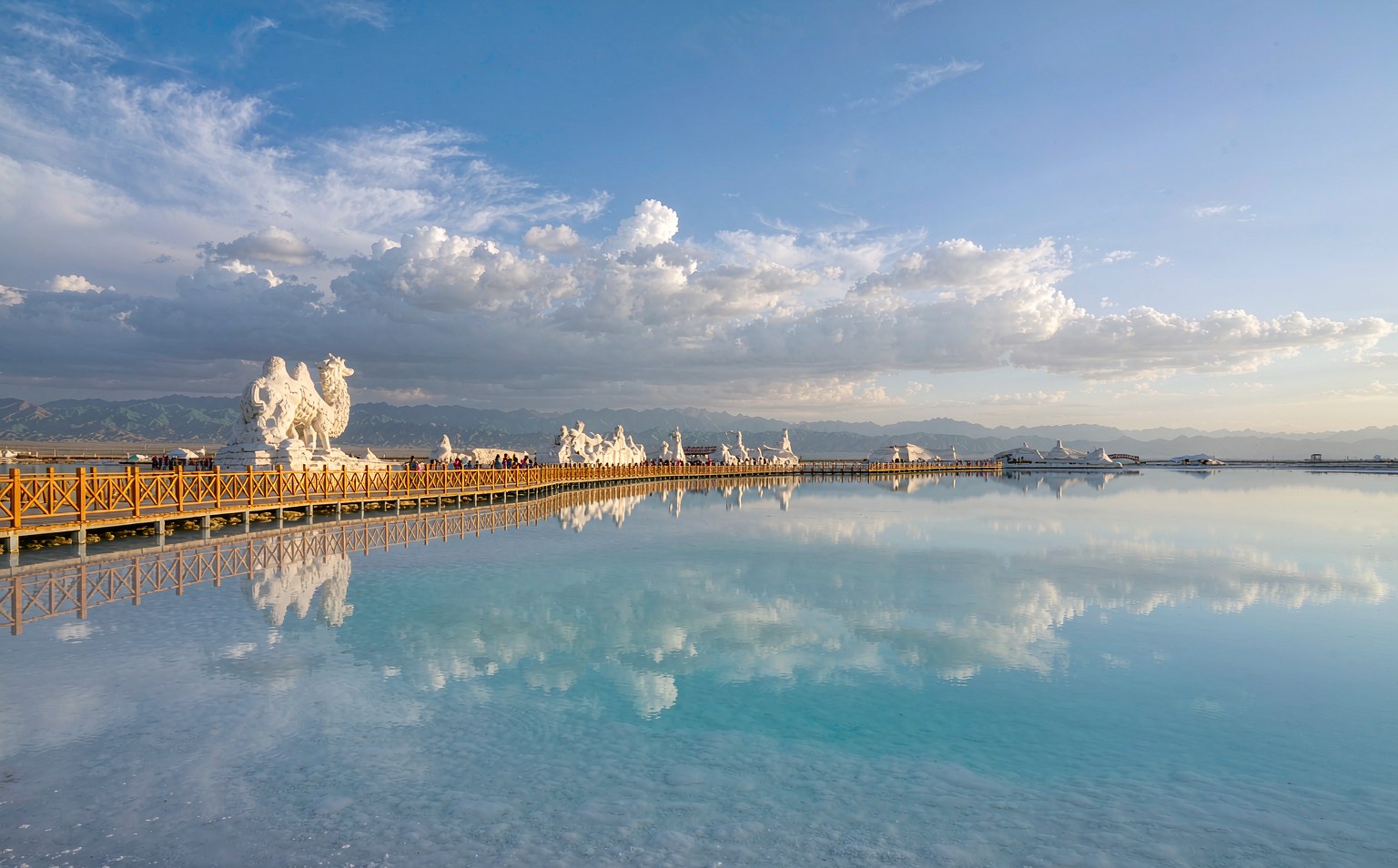
Luoyang Departure: Xining, Taer Temple, Qinghai Lake and Chaka, 5 Days 4 Nights
Five days from Luoyang. November empties the lake shore and the water turns a heavy blue while prayer flags snap in the wind; butter sculptures hold their colour behind glass at Taer; and at Chaka the water is ankle deep, so you walk to the middle and the reflection stands quieter than you do.