
Laijunshan, Tianhe Canyon and Chongdugou in Five Slow Days from Luoyang
Five days circling the northern slope of the Funiu Mountains: the golden summit of Laojunshan at lighting time, the gorge walk at Tianhe, and two nights in Chongdugou where the water runs under the window.
Highlights
Day 1: Luoyang to Luanchuan, up to the golden summit
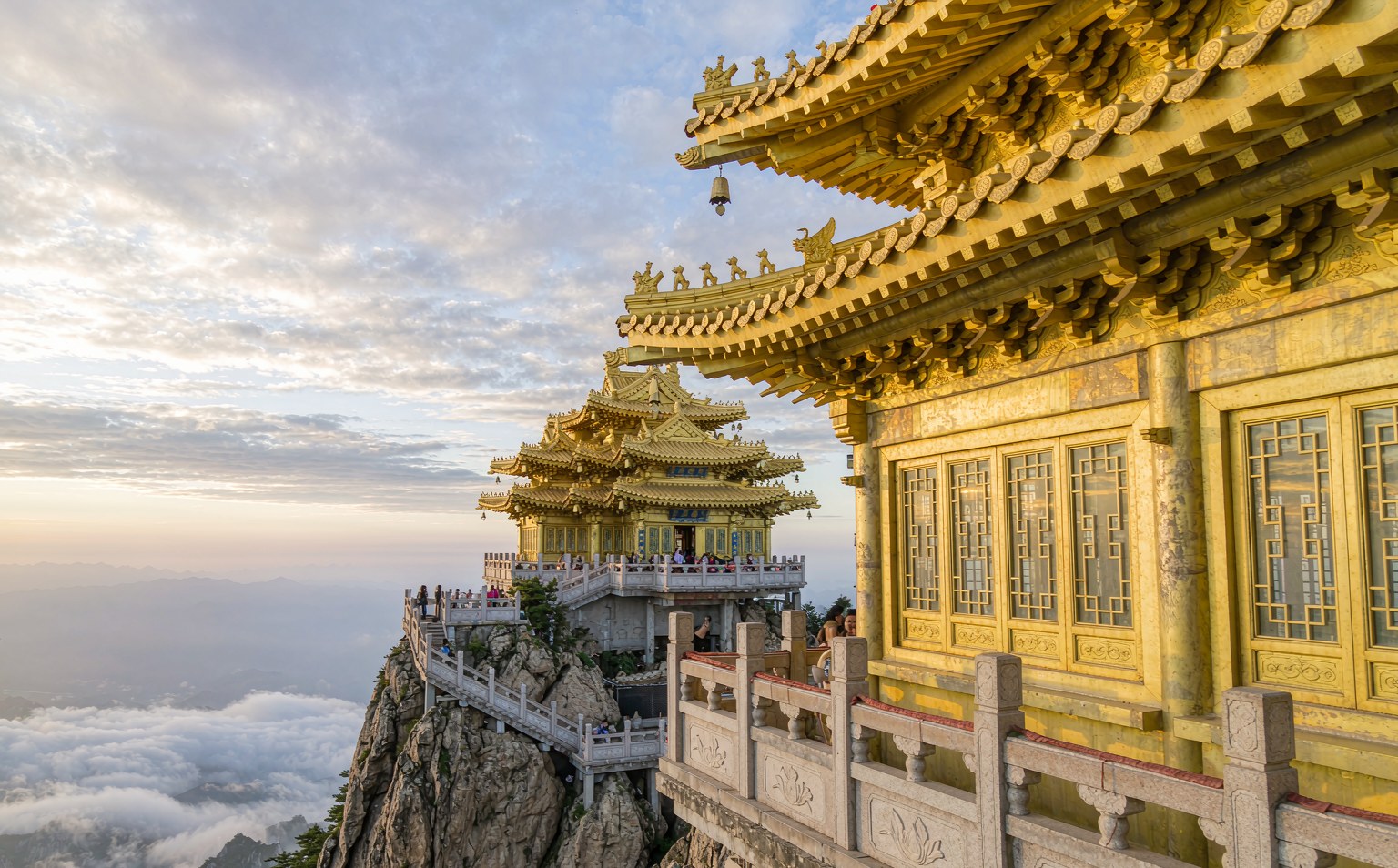
We leave Luoyang at half past eight, take the expressway and reach Luanchuan county in two hours, stopping for a bowl of tofu soup before the mountain. The Laojunshan ticket costs one hundred yuan and holds two days, and the first cable car up is one hundred and thirty return. The upward run stops at half past three, so the lower station has to be reached before one in the afternoon, otherwise the only option is the staircase, which is no small climb. The car ends at Zhongtianmen, where a second cable car or the cliff walk takes over. The summit halls stand along the ridge, three copper roofed pavilions in a row, and when the wind rises the eaves ring. Around six the lights come on, and the whole ridge looks lit from inside. We come down in full dark and sleep at the foot of the mountain.
Attraction introduction: Laojunshan rises southeast of Luanchuan county as the main peak of the Funiu Mountains at 2,217 metres, named for the tradition that Laozi retired here. The summit temples were first built under the Northern Wei and today include the Laojun Temple, Yuhuang Summit and Liangbao Terrace, with three copper tiled halls forming the highest Taoist group in central China. The ticket holds two days, the first cable car runs to Zhongtianmen, the second serves the summit side, and Shili Huaping is a walkway cut along the cliff.
Tips: The half past three cutoff for the upward cable car is the one trap on this route, and every autumn some groups arrive at four and are turned back. Guests generally find the lights come on around six, and the ten minutes before full darkness give the best photographs. In practice, November on the summit runs five or six degrees colder than the valley and the wind makes it feel worse, so bring a shell and gloves, because there is no shelter up there.
Day 2: Shili Huaping and a wait for cloud
No early start. We go up at nine and walk Shili Huaping, a path pinned to the cliff with rock on one side and air on the other, a new view at every bend. A few glass platforms sit along the way, and the faint hearted can keep to the inner rail. Halfway along, the second cable car takes over for eighty yuan return, saving the legs for the top. At noon we eat a bowl of hot noodles on the mountain, then sit on the steps below Yuhuang Summit and wait. November does not promise a sea of cloud, but the mist lifts quickly, and on a good day the ridge comes out of it piece by piece. We take the car down at half past four, sleep in the county town, walk a stretch of the old street and buy a bag of Luanchuan walnuts.
Attraction introduction: Shili Huaping is a five kilometre walkway along the western cliff of Laojunshan, showing stone forests, rock falls and fault scarps, and it is the main walking route of the scenic area. The summit temples follow the ridge, with Yuhuang Summit at the highest point and Liangbao Terrace and Laojun Temple on either side. The second cable car links the middle of the walkway with the summit side in about ten minutes.
Tips: Most of the walkway has no cover, and wet stone steps demand treaded soles. Guests generally find the mist is thickest before ten and clears after eleven, so there is no reason to climb in the dark. In practice, supplies at the top are expensive and limited, and a bottle of water and a few bars carried up will cost far less than buying there.
Day 3: Tianhe Canyon, walking downhill
We drive west for forty kilometres to Tianhe Canyon at Jiaohe town. The place is called the little Tibet of the Central Plains, its mouth already above a thousand metres, and the wind bites harder than in the valley. The ticket is sixty five yuan and the shuttle thirty, running from the visitor centre to the gorge mouth. The walk goes downhill, following the stream, and the drop is long enough that a walking stick helps anyone with weak knees. Where the water is loudest the stones are rounded and the moss thick, so watch the footing. Several platforms look across at the folds on the far wall, layer pressed on layer, the clearest geological section in the area. At three we head for Chongdugou, fifty kilometres of mountain road, a little over an hour to Tantou town.
Attraction introduction: Tianhe Canyon lies in Jiaohe town in western Luanchuan, deep in the Funiu Mountains, known for gorge streams, cloud capped peaks and secondary forest. The walkway follows the water down through the steepest drop in the area, and a cable car at eighty yuan return climbs to a high viewpoint over the gorge mouth. The surrounding villages sit high enough to show a wide day and night temperature range.
Tips: Phone signal in the gorge comes and goes, so agree on a meeting point before splitting up. Guests generally find the descent far easier than the climb back, and anyone with limited stamina should take the shuttle one way to the mouth. In practice, the gorge stays cold in November and thin ice forms in places, so keep off the stones beyond the rail.
Day 4: Chongdugou, Jinji River and Dicui River
The fourth day belongs to Chongdugou. The ticket is one hundred and twenty yuan and holds forty eight hours, and the shuttle runs thirty yuan for unlimited hops. The morning goes to Jinji River, the densest stretch of waterfalls, one every few hundred metres, and at Shuilian Palace the water sheets off the cliff top; in winter the flow thins and the grain of the rock shows through. We eat lunch at the guesthouse, where tofu and free range chicken are the standard order. The afternoon moves to Dicui River, flat underfoot, bamboo on both sides, the whole grove rustling when wind passes, ending at a small green pool. Back in the village by dusk, tea in the courtyard, water audible until late.
Attraction introduction: Chongdugou sits southwest of Tantou town in Luanchuan, named for the Eastern Han emperor Guangwu crossing the Yi River here twice, and rated AAAA. It gathers three districts, Jinji River, Dicui River and the farming village, across about thirty square kilometres with vegetation cover above ninety percent. Jinji River is known for its waterfall chain, including Feihong and Xiefenya, Dicui River for bamboo and level paths, and the farming village for the West Henan house form and crafts.
Tips: Damp air means clothes will not dry overnight, so pack a spare layer. Guests generally find Jinji River is the one with stairs while Dicui is almost flat, so the harder river belongs in the morning. In practice, guesthouse standards vary widely, and it is worth asking about a private bathroom and heating when booking, because November nights are cold and air conditioning may not be enough.
Day 5: The farming village, then back to Luoyang
No rush on the last morning. We walk the village, where the farming district keeps earthen walls and grey tiles, corn and chillies drying in the yards, and a stone mill still turning. Several households teach basketry, tofu making and spinning, and half an hour at the bench is enough to try. We check out at half past ten and drive towards Tantou town, where walnuts and dried persimmons are sold by the roadside; Luanchuan walnuts have thin shells that crack in the hand. Lunch is a bowl of fermented noodles, sour and fragrant, unlike the version in Luoyang. We leave at two, reach the city by four and drop guests at Longmen Station or the old town.
Attraction introduction: The farming village is one of the three districts of Chongdugou, preserving the earthen walled houses and farm tools of the West Henan mountains, with a mill, a tofu workshop and weaving rooms where some activities can be tried on the spot. The Tantou area produces walnuts, persimmons and medicinal herbs, and drying racks line the road in autumn.
Tips: Mountain goods are sold loose and prices move, but check for damp before buying. Guests generally find this last half day is well placed, neither rushed nor empty, and after two river valleys a bench and a craft table beat another climb. In practice, a four o clock return to the city leaves ample time for an evening train, while a flight deserves two hours of buffer.
Related Tours
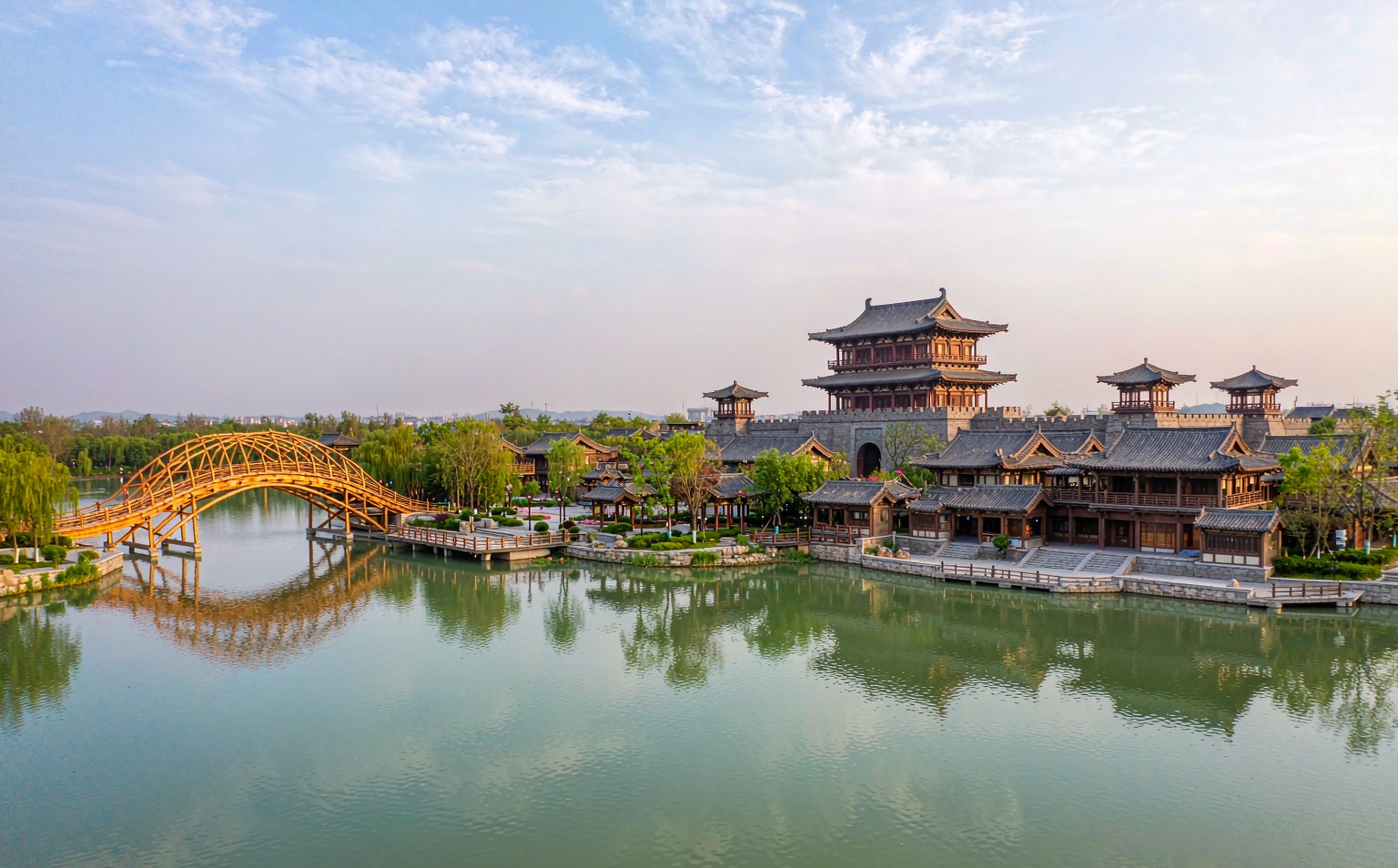
Qingming Riverside Garden, Iron Pagoda, Dragon Pavilion and Tianbo Yang Mansion, 4 Days
Four days inside the old capital of Kaifeng during the last week of the chrysanthemum festival. Dragon Pavilion holds the main display, the Qingming garden keeps its painted river, and the Iron Pagoda turns brown at sunset.
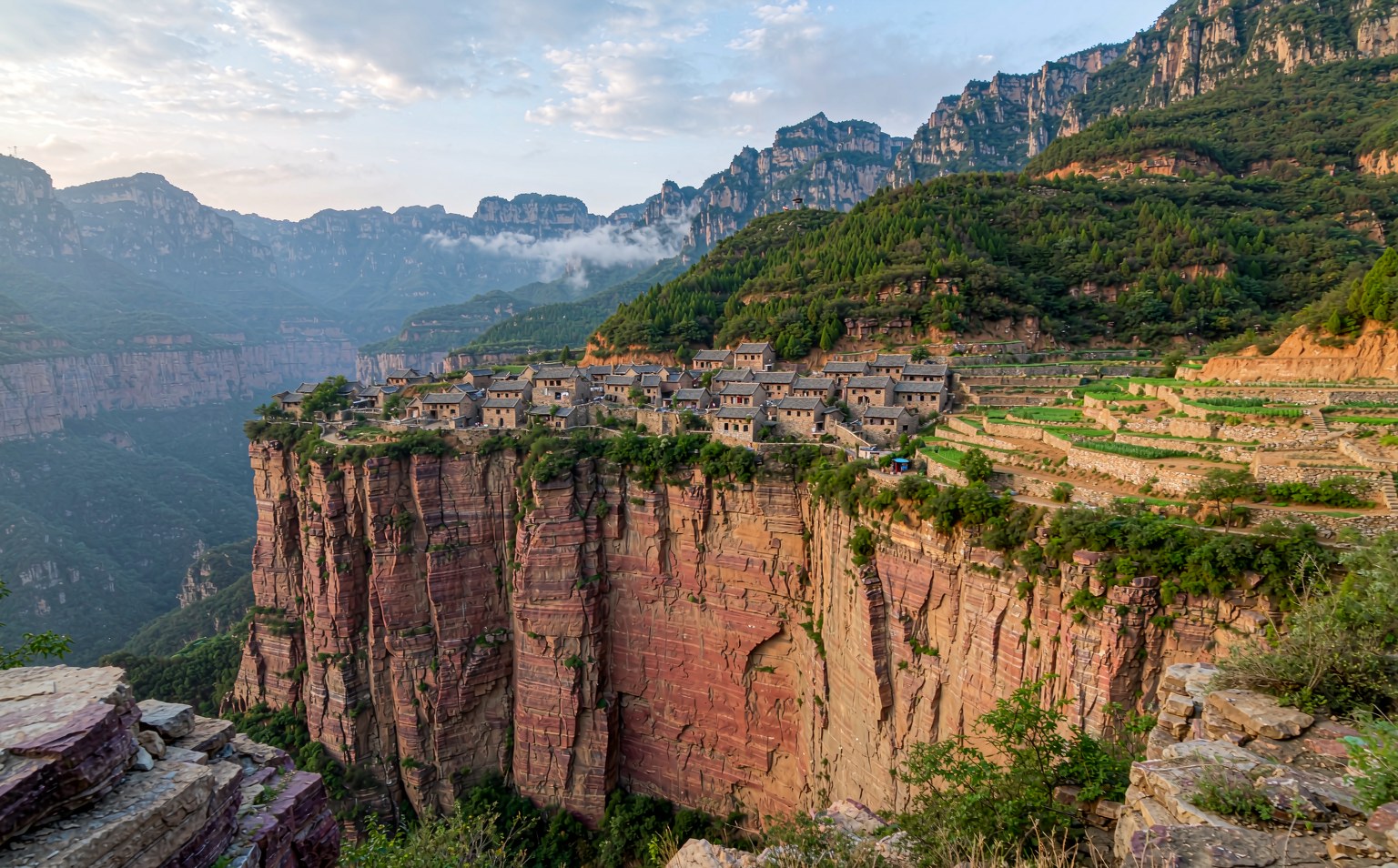
Wanxianshan, Guoliang Village and Qiugou, Five Days Above the Cliff
Five days living on the cliff edge. Guoliang houses sit right on the precipice, and the tunnel road with its thirty five windows was cut by thirteen men with hammers. Qiugou is the quiet finish.
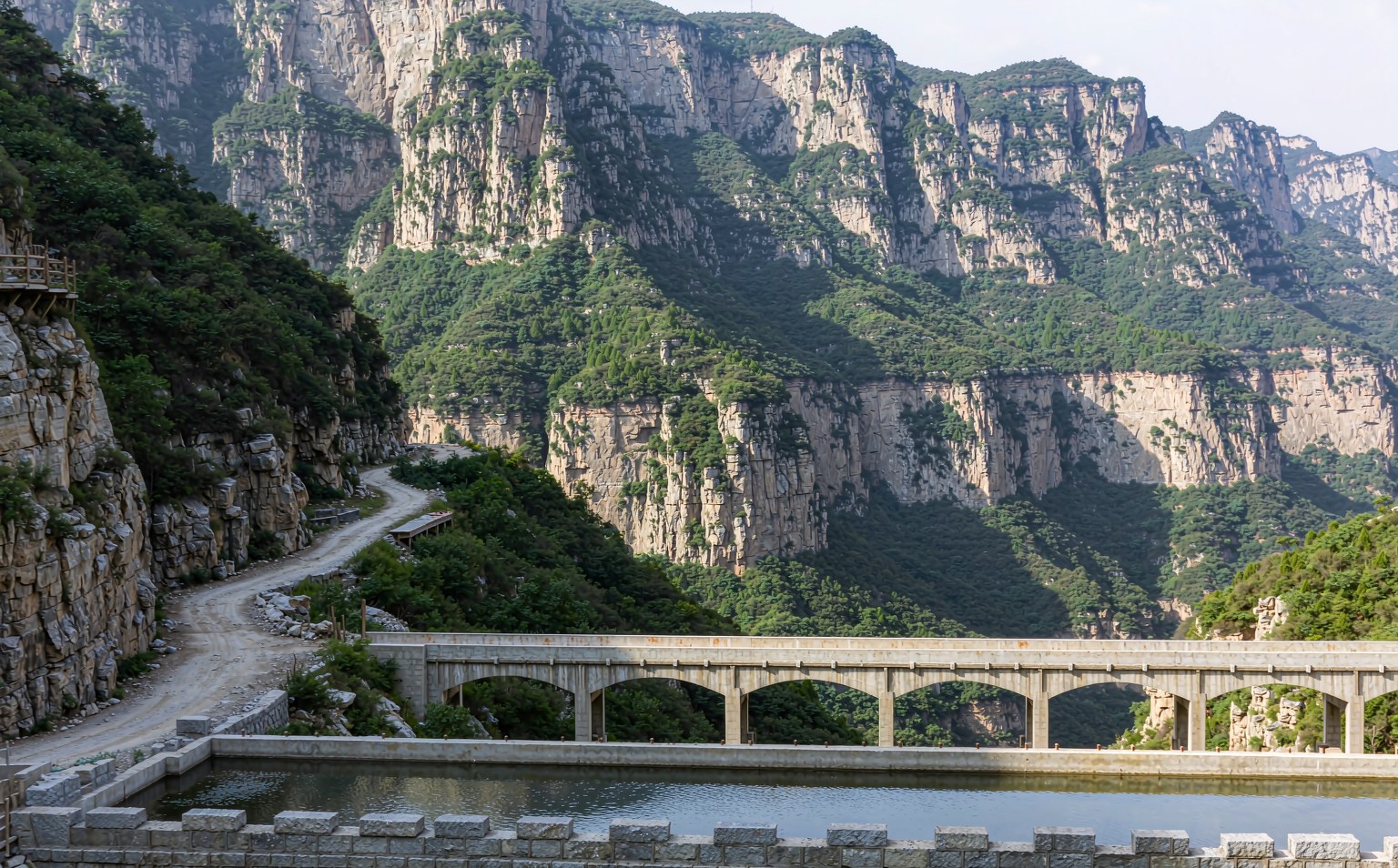
Red Flag Canal and Taihang Grand Canyon, Six Days Based in Shibanyan
Six days at the eastern foot of the Taihang range. The first three look at a channel cut by hand, the last three at gorges the mountain made itself. Every night returns to Shibanyan, a town of easels.
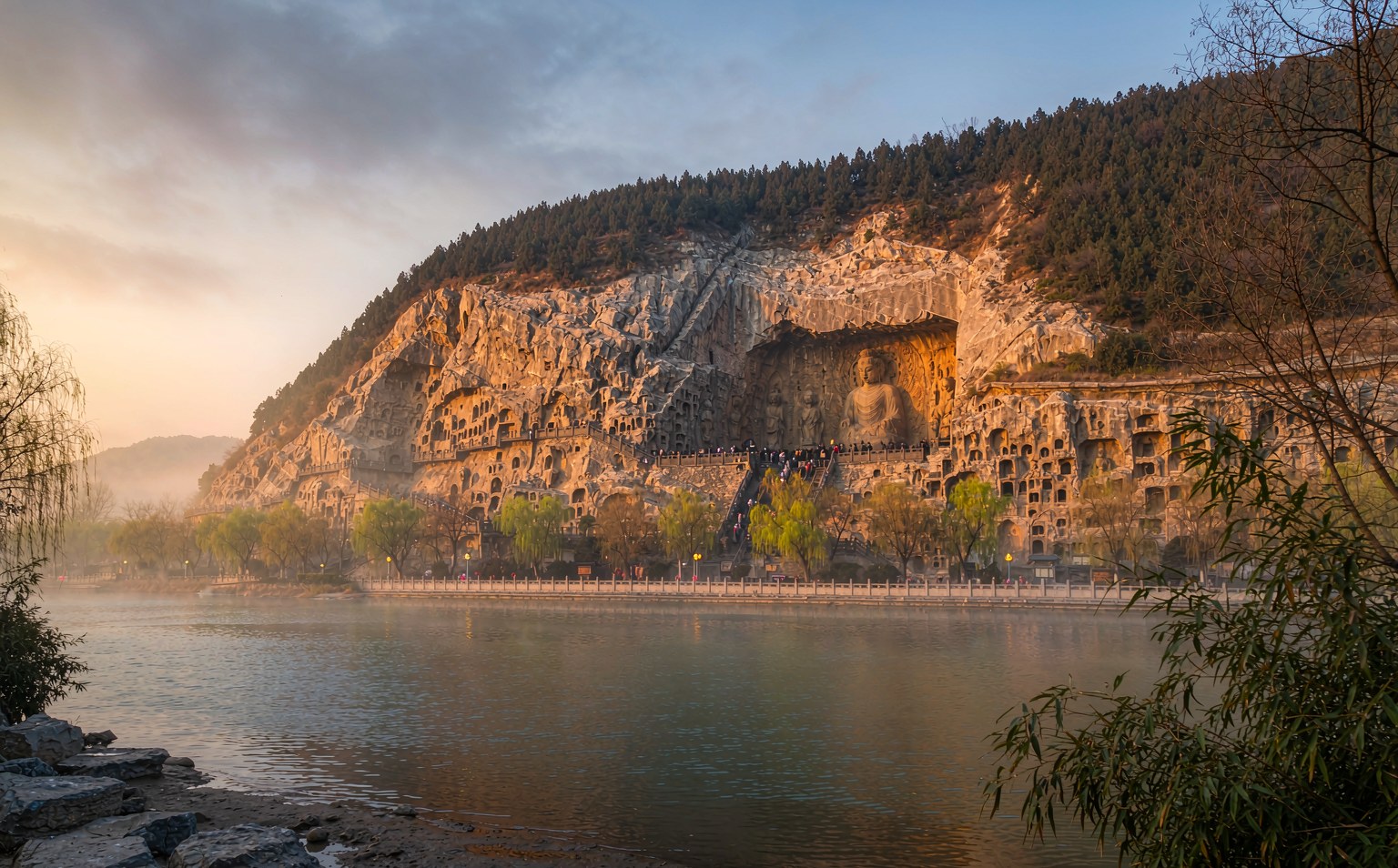
Luoyang to Longmen Grottoes, White Horse Temple and Shaolin, 3 Days 2 Nights
Three days, three ways of looking. Longmen is cut into a cliff, White Horse is built around courtyards, Shaolin hides in a valley. Longmen runs winter hours from November, so the first morning cannot start late.