
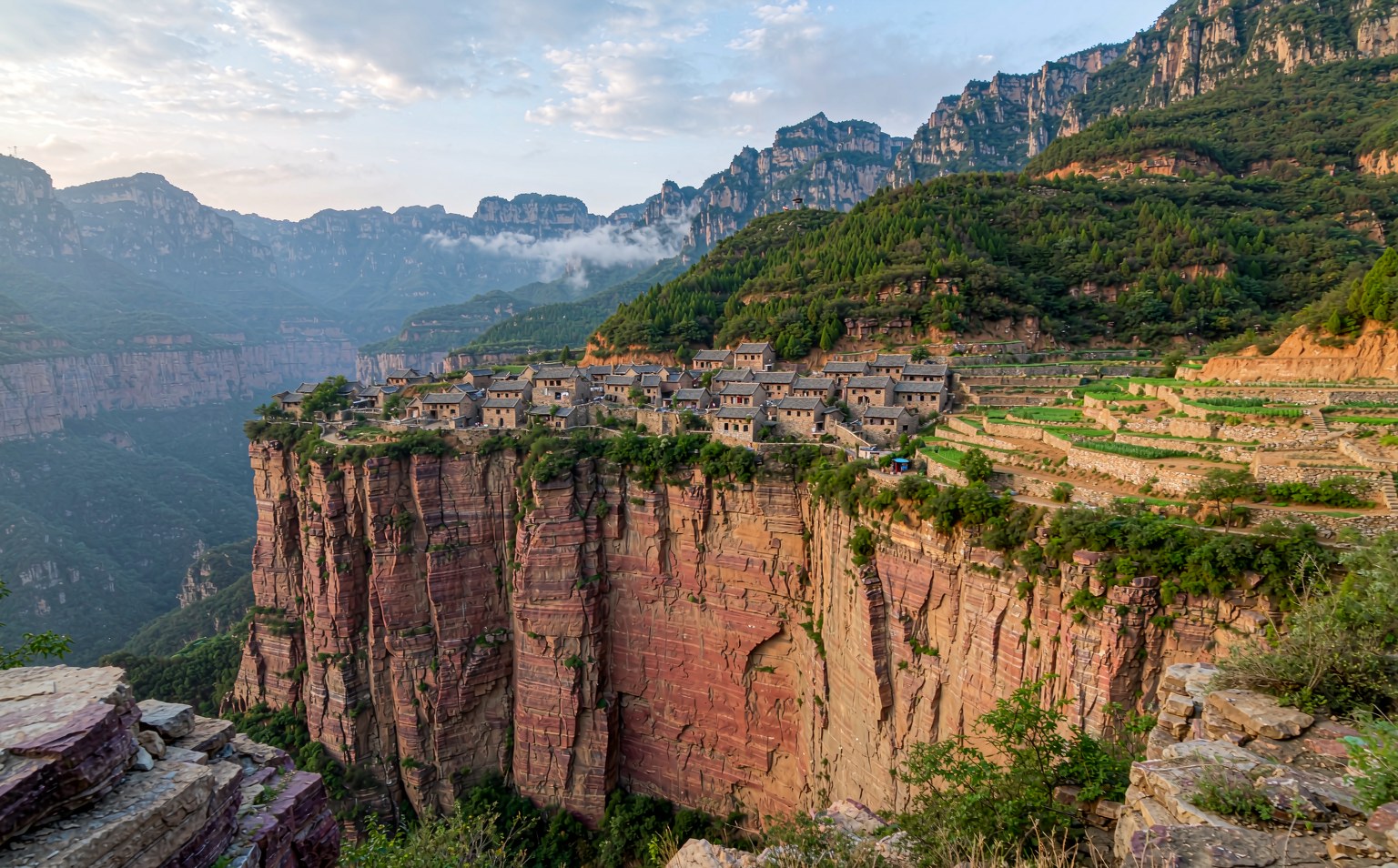
Wanxianshan, Guoliang Village and Qiugou, Five Days Above the Cliff
Five days living on the cliff edge. Guoliang houses sit right on the precipice, and the tunnel road with its thirty five windows was cut by thirteen men with hammers. Qiugou is the quiet finish.
Highlights
Day 1: Luoyang to Qiugou, finding a quiet stream
We leave at eight, take the expressway to Huixian and turn towards Nanzhai town, reaching the mountains in two and a half hours. Lunch in town is a bowl of thick noodle soup, and the afternoon belongs to Qiugou, a valley with little fame, few visitors and a low ticket. The stream comes down the gorge through shallow pools and small falls, the stones worn smooth and slippery underfoot. Hawthorn and persimmon trees fill the slopes, and in November the leaves are mostly down while a few red fruit still hang. At the head of the valley the ground opens and a seat by the water hears nothing but the stream. We sleep in the village, where the host cooks chicken over a wood fire in the courtyard.
Attraction introduction: Qiugou lies in Nanzhai town of Huixian in the southern Taihang, a gorge of streams, pools and small falls with mountain villages, hawthorn, persimmon and walnut trees along the slopes. The path follows the water for several kilometres at a gentle grade and is one of the quieter valleys around Wanxianshan.
Tips: The gorge is shaded and the light fades by three in the afternoon in November. Guests generally find Qiugou quiet enough to have a stretch of stream alone, but services are equally thin, so carry water and snacks. In practice, village rooms are simple and hot water runs on a schedule, so shower before the nine o clock rush.
Day 2: Nanping and the Black Dragon Pool
The morning moves to Nanping, reached by the park shuttle on a road narrow enough that passing requires a stop. This district is valley and terrace, beginning at the Black Dragon Pool, where the water reads dark and the fall drops straight from the rim, mist on the face and stone permanently wet. A wooden walkway runs beside the pool with a cold handrail. Above it lies Danfen Valley, short but full of odd stacked stones, layer on layer as if someone had piled them. We eat in the village at noon, visit White Dragon Cave in the afternoon with a torch, then drive towards Guoliang and settle into a cliff house before dark, the opposite mountain filling the window.
Attraction introduction: Nanping occupies the middle of Wanxianshan, with the Black Dragon Pool, Danfen Valley and White Dragon Cave as its main sights. The gorge walls are red quartz sandstone, and the fall drops from the rim into a deep pool whose colour comes from depth and minerals. Danfen Valley is known for stacked rock and narrow passages, while White Dragon Cave is a small karst chamber entered with a light.
Tips: The stones by the pool are wet and the ground beyond the rail is not for standing. Guests generally find the fall is heaviest in the rainy season, though the November flow is smaller and the pool darker, which photographs better. In practice, the mountain road from Nanping to Guoliang should not be driven after dark, so the transfer belongs before dusk.
Day 3: Guoliang Village and the tunnel road
The third day walks the tunnel road, 1,250 metres cut along the cliff, mountain on one side and void on the other, with thirty five windows cutting the daylight into strips. Inside, the floor is hand cut, chisel marks remain overhead, and through each window the valley lies a long way down. Work began in 1972, thirteen men with hammers and chisels kept at it for more than five years, and traffic opened in 1977, ending the climb up the old stairway. Beyond the tunnel the village begins, walls of stone, roofs of slate, several courtyards pressed right against the edge with corn drying. The afternoon belongs to the lanes, the old houses and the mill, with tea at the cliff side.
Attraction introduction: Guoliang village stands on red rock cliffs at about 1,700 metres in Shayao town of Huixian, named for the uprising led by Guo Liang at the end of the Eastern Han. The tunnel road, begun in 1972 and opened in 1977, runs 1,250 metres, cut entirely by villagers through the precipice, with thirty five windows for light and spoil. Houses use stone walls and slate roofs.
Tips: The tunnel has no lighting and depends on the windows, so watch the ground. Guests generally find the light strikes through the windows around ten in the morning and the beams are strongest then, flattening by noon. In practice, passing space inside is limited, so check for oncoming vehicles before entering and keep to the mountain side on foot.
Day 4: The old stairway and Luojie village
We begin with the old stairway. Before the tunnel, this was the only way down, more than seven hundred steps cut into the cliff, narrow enough in places for one person turned sideways, now closed. From the top the steps fold away against the rock and the bottom is out of sight. Then we go deeper to Luojie, the innermost district, the road narrower, the people fewer, a handful of households scattered in a hollow with hawthorn slices drying in front of stone houses. Lunch is farm food, shredded potato, eggs and corn porridge. The afternoon drifts back, stopping at a platform to look at the whole red wall opposite, layer stacked on layer.
Attraction introduction: The old stairway was Guoliang only route to the outside world, more than seven hundred steps cut into the cliff and closed for protection once the tunnel opened. Luojie village lies in the north of Wanxianshan at higher elevation with fewer residents, preserving stone houses, terraces and the seasonal drying of hawthorn.
Tips: Above the stairway there is no protection beyond the warning line, so photographs stay inside it. Guests generally find the quiet at Luojie the rarest thing on this route, with few groups and a full table at noon. In practice, meals in the village need notice, since the host cooks to order and half an hour is normal.
Day 5: Down the mountain, back to Luoyang
The last morning has no alarm. Fog sits in the valley and the red wall shows through it by halves. At the village entrance dried hawthorn and persimmons are sold from the household that dried them, uneven in colour and all the more convincing. We pack at half past nine and drive down slowly, stopping in Nanzhai town for Huixian hawthorn products. Lunch in the county town is a bowl of braised mixed stew with vermicelli, meatballs and fried pork, generous in quantity. We join the expressway at two and reach Luoyang at half past four, good for a nap on the way.
Attraction introduction: The mountains northwest of Huixian belong to the southern Taihang, red cliffs alternating with terraced villages, where hawthorn, persimmon and millet are the main crops and Nanzhai town serves as the local supply centre. The three districts of Wanxianshan are linked by park roads, with the provincial road below connecting to the expressway towards Xinxiang and Luoyang.
Tips: Fog in the morning can cut visibility on the descent, so use the fog lights and slow down. Guests generally find nothing more is needed on the last half day, since mountain driving tires people and a buffer is safer. In practice, hawthorn products are mostly sold loose, so taste one first because acidity varies widely.
Related Tours
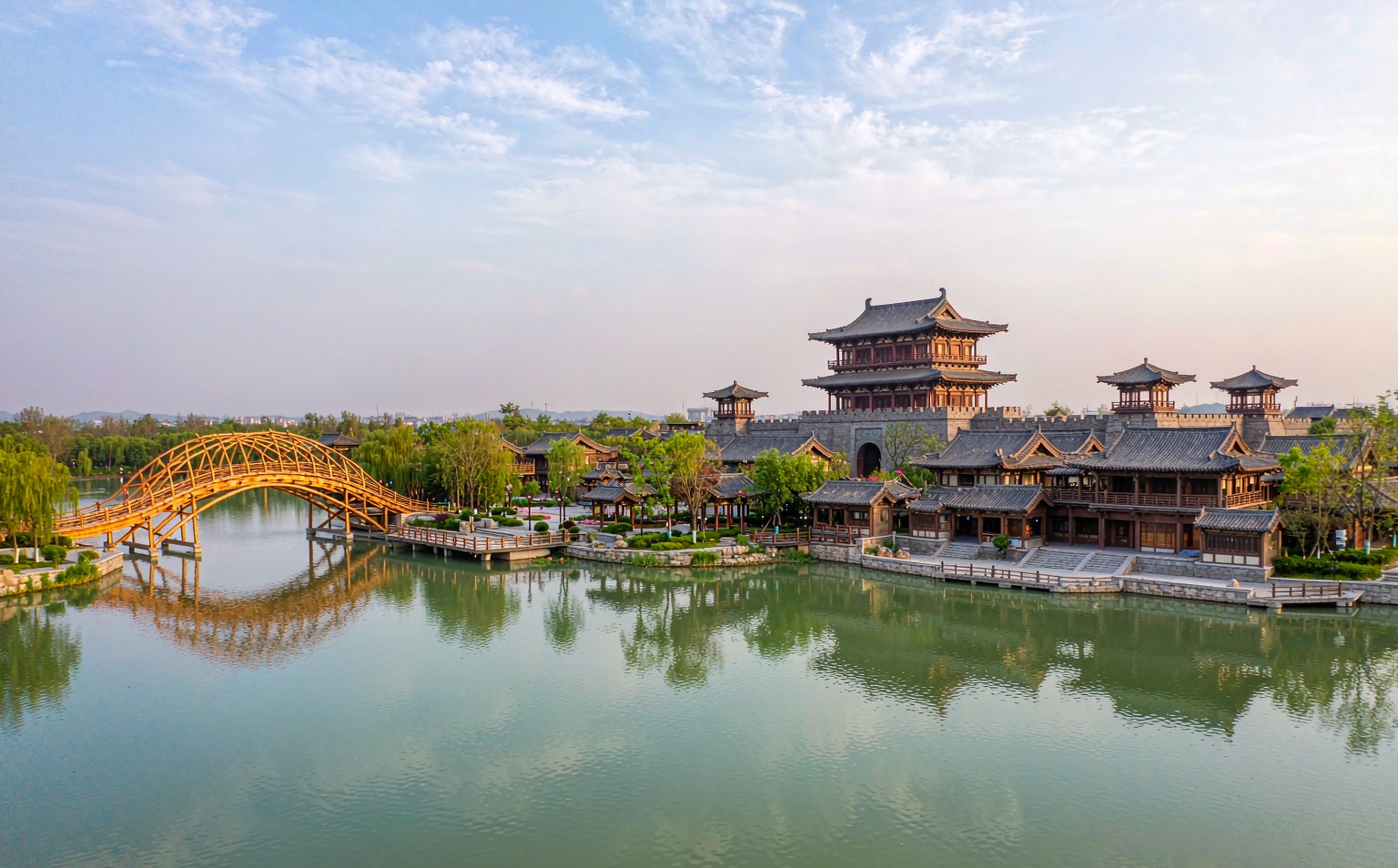
Qingming Riverside Garden, Iron Pagoda, Dragon Pavilion and Tianbo Yang Mansion, 4 Days
Four days inside the old capital of Kaifeng during the last week of the chrysanthemum festival. Dragon Pavilion holds the main display, the Qingming garden keeps its painted river, and the Iron Pagoda turns brown at sunset.
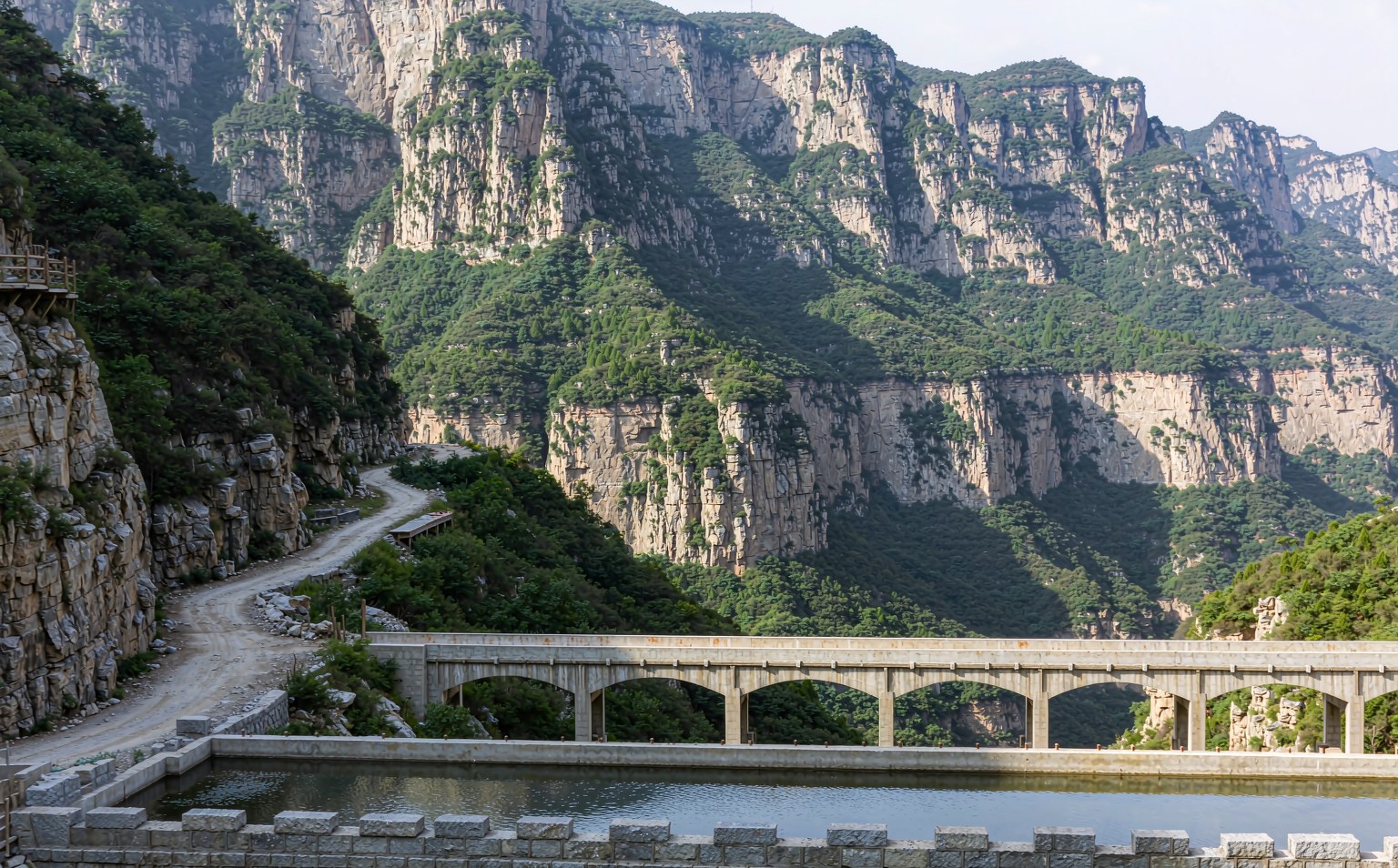
Red Flag Canal and Taihang Grand Canyon, Six Days Based in Shibanyan
Six days at the eastern foot of the Taihang range. The first three look at a channel cut by hand, the last three at gorges the mountain made itself. Every night returns to Shibanyan, a town of easels.
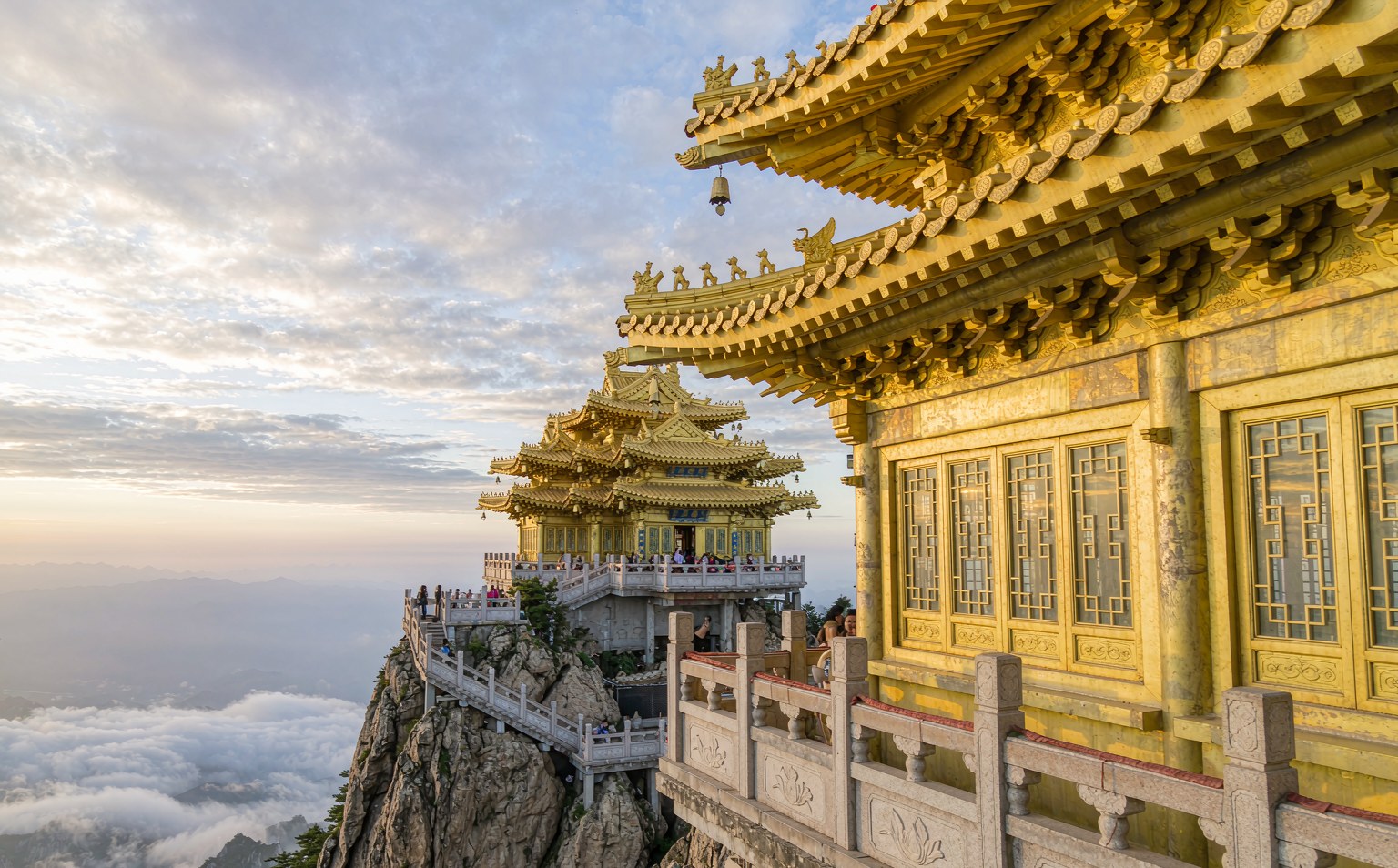
Laijunshan, Tianhe Canyon and Chongdugou in Five Slow Days from Luoyang
Five days circling the northern slope of the Funiu Mountains: the golden summit of Laojunshan at lighting time, the gorge walk at Tianhe, and two nights in Chongdugou where the water runs under the window.
Luoyang to Longmen Grottoes, White Horse Temple and Shaolin, 3 Days 2 Nights
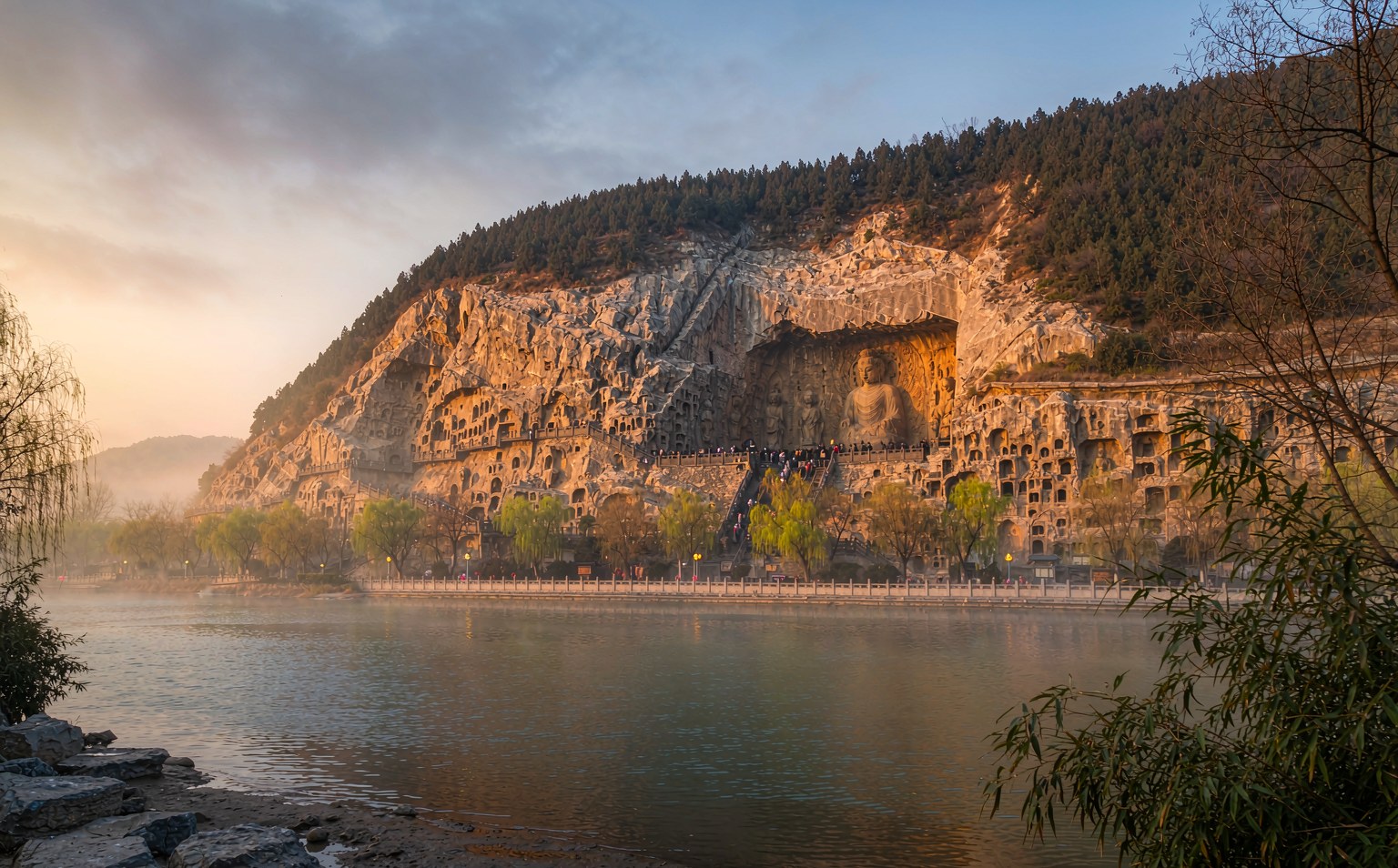
Three days, three ways of looking. Longmen is cut into a cliff, White Horse is built around courtyards, Shaolin hides in a valley. Longmen runs winter hours from November, so the first morning cannot start late.