
Huangguoshu, Libo and Xijiang in Six Days from Luoyang
In November the water in Guizhou is still full and the crowds have thinned. Six days along three axes: the waterfalls at Anshun, the green water at Libo, and the thousand-household Miao village at Kaili, without doubling back.
Highlights
Day 1: Luoyang to Guiyang, sour soup on arrival
A morning train from Luoyang Longmen, changing at Xi an North or Zhengzhou East, south-west all day; inside Guizhou the tunnels come one after another and the hills press against the window. Into Guiyang North by evening, transfer to the hotel, then out for a sour soup fish, its broth fermented from rice water and yellow at the edge.
Attraction introduction: Guiyang North is a major hub of the south-west, where the Guiyang-Guangzhou, Shanghai-Kunming and Chengdu-Guiyang lines meet, so most routes from the Central Plains change at Xi an or Zhengzhou. The city sits on a basin among hills at about 1,100 metres, cool in summer and damp in winter, and the local sour soup is as much about damp as about flavour, red fermented from tomato and white from rice water.
Tips: Guests generally find a heavy, chilli-laden first dinner makes the next day in the park miserable. In practice we order the soup mild, put a bowl of rice noodles underneath, and skip the liquor, because the bus leaves at half past six.
Day 2: Doupotang, the great fall and Tianxingqiao in one day
Away at seven for Anshun, an hour or so to the gate, then the shuttle. Doupotang first, where the river spreads wide and drops little, the water sliding over the whole lip. Then the main fall, down the side path, the noise arriving before the sight, with the curtain cave entered on the left bank. Lunch inside the park, and the whole afternoon for Tianxingqiao, walking down from Gaolaozhuang to the exit.
Attraction introduction: The great fall at Huangguoshu is 101 metres wide and over 77 high, where the Baishui river is stopped by a fault and drops in a single step; behind it a curtain cave runs more than 130 metres, wet underfoot and dripping overhead, and can be walked through from the inside. Doupotang lies downstream, the broadest and flattest fall on the river. Tianxingqiao is a stretch of karst stone and water interleaved: the first half is a rock garden, the second is the flooded stone forest with planks between the outcrops.
Tips: Guests generally find the first half of Tianxingqiao crowded and flat enough to turn back from, when the good part is further in. In practice we compress the morning, eat inside the park, and enter Tianxingqiao at half past one for the full two hours; the cave steps are wet, so grippy shoes and a dry bag for the camera.
Day 3: South to Libo, half the gorge in the afternoon
South from Anshun in the morning, three hours of motorway to Libo, cone-shaped hills either side with cloud caught on the tops. Lunch in the county town, then in through the west gate to take Wolong pool and Yuanyang lake first, the water a blue-green that shifts with the light, tree roots going straight into it.
Attraction introduction: Libo sits in the gorge of the upper Zhang river and takes its name from a seven-arch stone bridge built in the Daoguang reign; the ravine runs about twelve kilometres with the drop concentrated in a chain of cascades and pools. Wolong pool is a deep pool behind a dam, bluer on a clear day; Yuanyang lake is entered by boat, its surface divided into channels by the water forest, and rowers duck under branches. The whole site runs downhill from west gate to east gate, and reversing it means climbing more than two hundred metres.
Tips: Guests generally find the slowest part of Libo is waiting for the shuttle, half an hour in peak season. In practice we split the site over two half days: this afternoon covers only the three points near the west gate, and the rest waits for tomorrow morning when the queues are short.
Day 4: The eastern half of the gorge, then Xijiang by evening
In again at half past seven, from Wolong pool downstream past Cugu falls, the water forest and Laya falls to the seven-arch bridge itself. The water forest is shallow water crossed on stones, the stream running past your feet, the rock polished bright. Out at the east gate for lunch, then north towards Kaili, into Xijiang by evening, a room inside the village, and the viewing platform after dark.
Attraction introduction: The eastern half is the densest stretch of the gorge: Cugu falls drops in tiers, the water forest grows on a travertine flat with roots submerged and still living, and Laya falls comes down the cliff beside the path. The seven-arch bridge is 25 metres long over blue-green water, its stonework covered in creeper. Xijiang is more than ten hamlets joined together, stilted wooden houses climbing the slope, lamps lighting from the valley floor to the ridge after dark.
Tips: Guests generally find the water forest the best part and also the slipperiest, since almost everyone in sandals falls at least once. In practice we allow forty minutes there, grippy shoes and phones on a cord; at Xijiang there is no evening show on the schedule, and after the lamps are seen from the platform everyone goes to bed, with an early start for the mist.
Day 5: A village morning, back to Guiyang after lunch
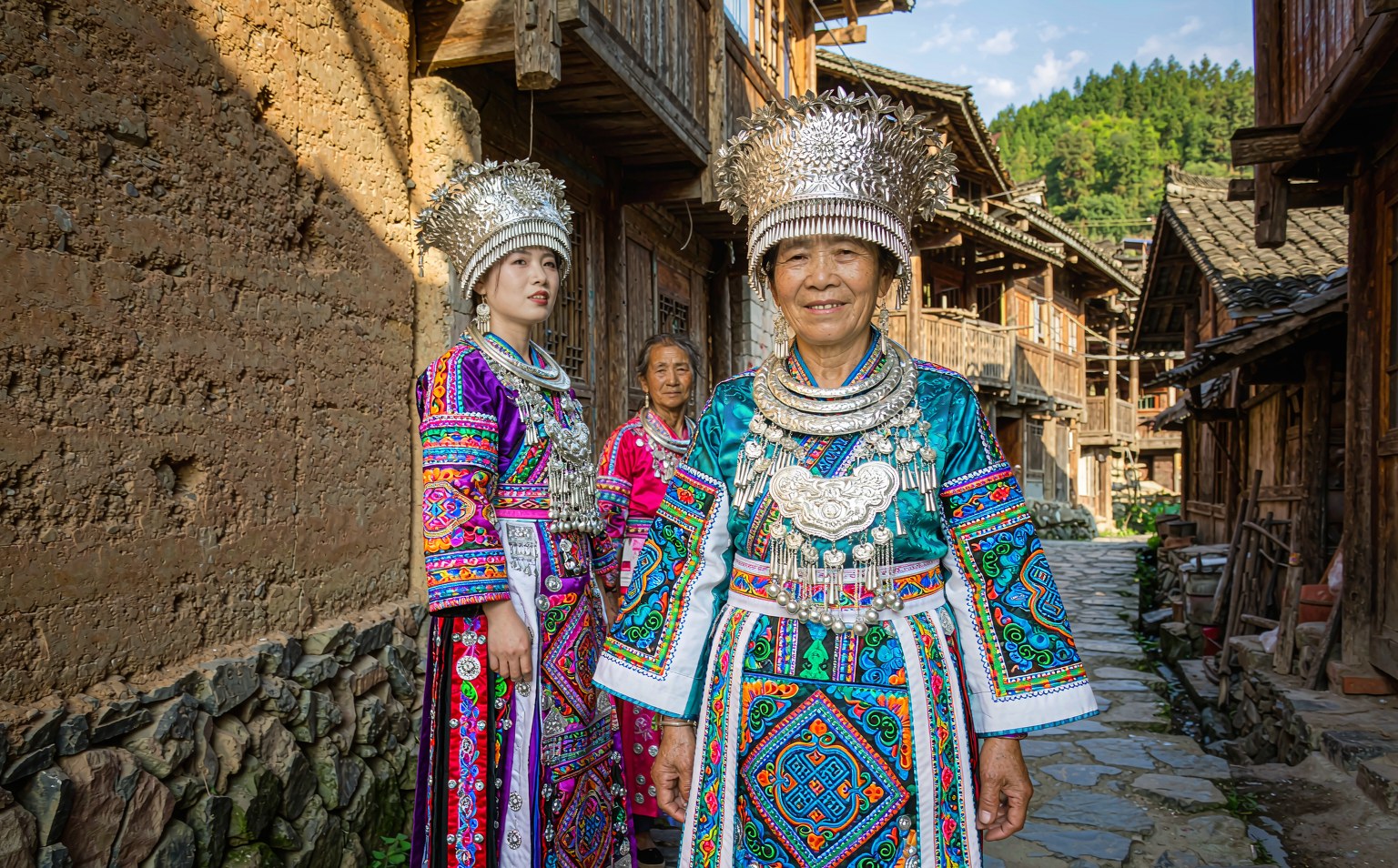
Up at half past six when there is still no visitor in the lanes, smoke coming out between the tiles, and the stone steps up to the Yedong platform with the whole village and the far ridge below. Down at nine for the Miao museum, its silver and embroidery. A long table feast at noon, sour soup, pickled fish and glutinous rice laid out end to end. Then the bus back to Guiyang.
Attraction introduction: The houses here are mortised timber frames in the local idiom, animals on the ground floor, people in the middle, grain above, eaves stepping outward so the village reads as stacked boxes from a distance. The museum holds the dress of several branches, silver horns and crowns priced by weight, a full costume running to more than six kilos. The long table feast is how the Miao receive guests: tables pushed into one line and a welcoming cup at the gate.
Tips: Guests generally find Xijiang commercial on the main street, though two hundred metres uphill it goes quiet. In practice the morning belongs to the Yedong lanes and the main street is only crossed at noon; the welcoming wine is mild but generous, and raising the cup without drinking is perfectly acceptable.
Day 6: A market morning, then rail home
The neighbourhood market first: fish mint sold in bunches, fermented chilli scooped from buckets. Check out at half past nine, at Guiyang North by ten, and north by rail through Chongqing or Changsha, reaching Luoyang in the evening.
Attraction introduction: A Guiyang market explains the city faster than any museum. Fish mint, fern, fermented soy and chilli paste are daily necessities, and sour and hot here are methods of preservation as much as tastes. Guiyang North is one of the terminals of the Guiyang-Guangzhou line, and trains north through Chongqing West or Changsha South connect to the Beijing-Guangzhou and Xi an-Chengdu corridors.
Tips: Guests generally find they overbuy on the last day, and fermented chilli and soup base are liquids that cannot go in hand luggage over a hundred millilitres. In practice those go by courier or in checked bags and only dry goods travel with us; and we allow forty minutes at Guiyang North, where the queues are long.
Related Tours
Fenghuang, Furong and Aizhai in Six Days from Luoyang
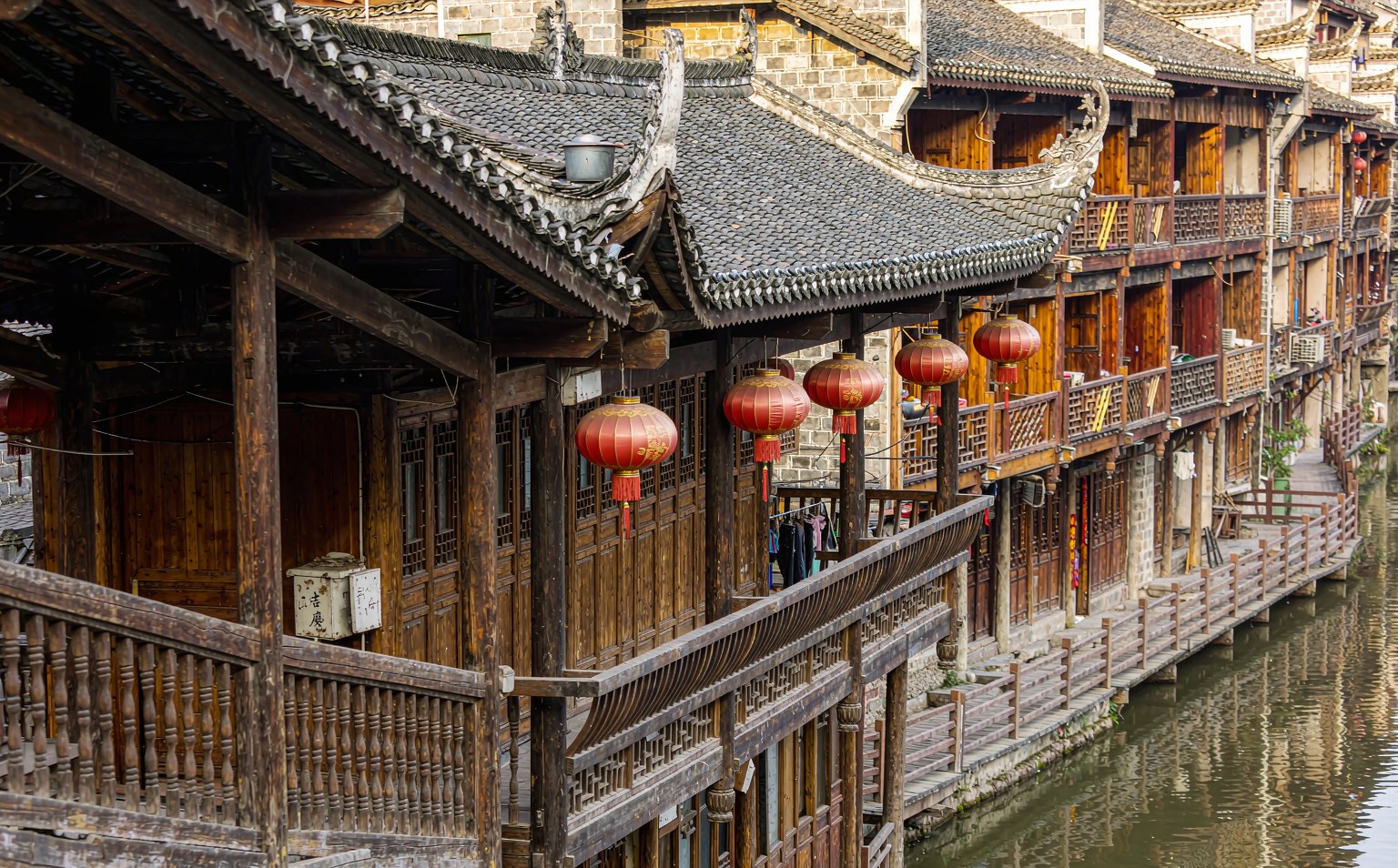
Fenghuang is only itself after the lamps come on, the waterfall at Furong runs through the middle of the town, and the bridge at Aizhai hangs over a gorge. Six days along one line in western Hunan, without Zhangjiajie, at an easy pace.
Mount Tai Sunrise, Qufu and Jinan in Six Days from Luoyang
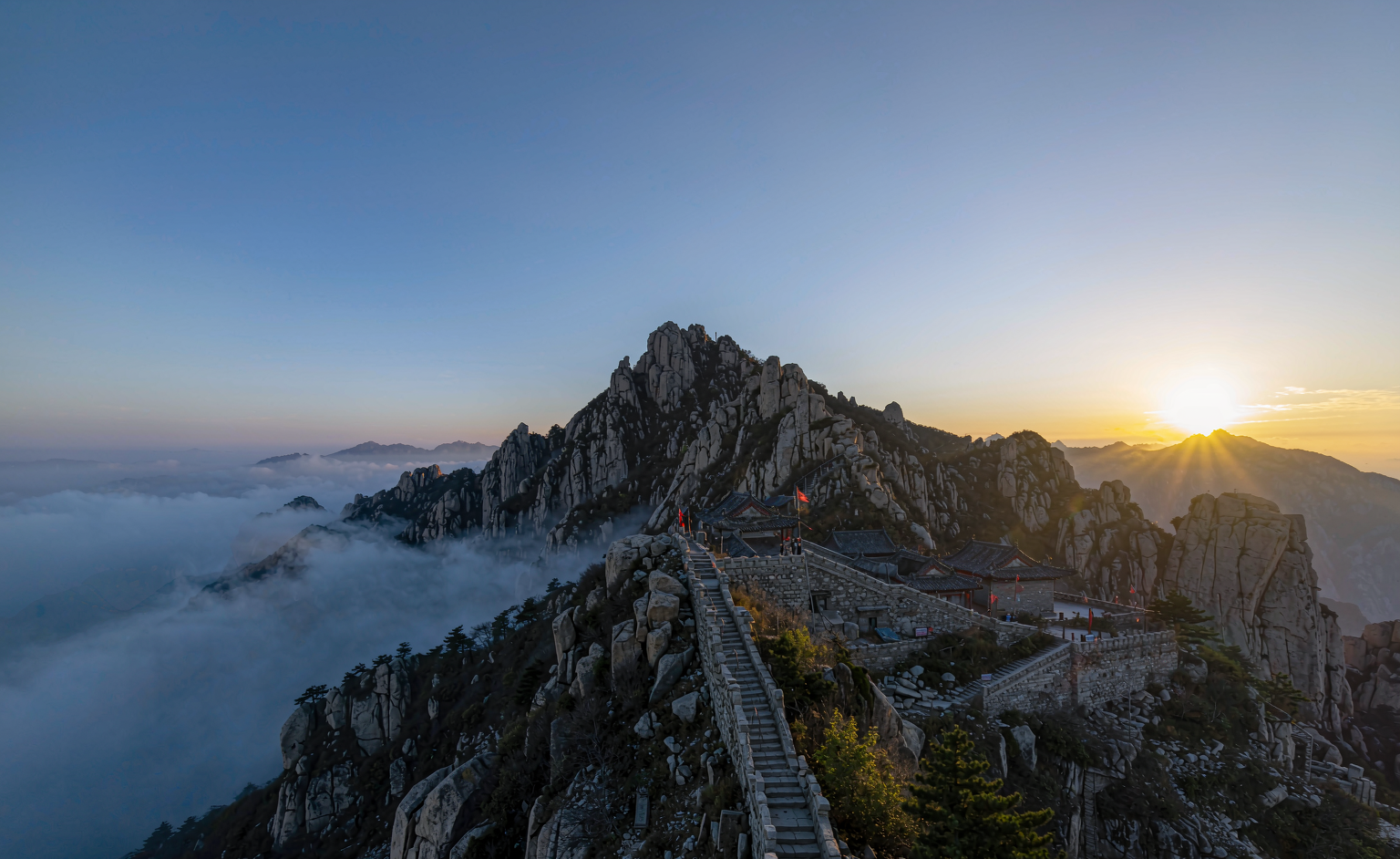
Tai still sells peak-season tickets until the end of November, and the summit is cold without yet being frozen. Six days linking Tai, Qufu and Jinan, with a night on the mountain so the sunrise is not a midnight climb.
Wuzhen, Xitang, Nanxun and Hangzhou in Six Days from Luoyang
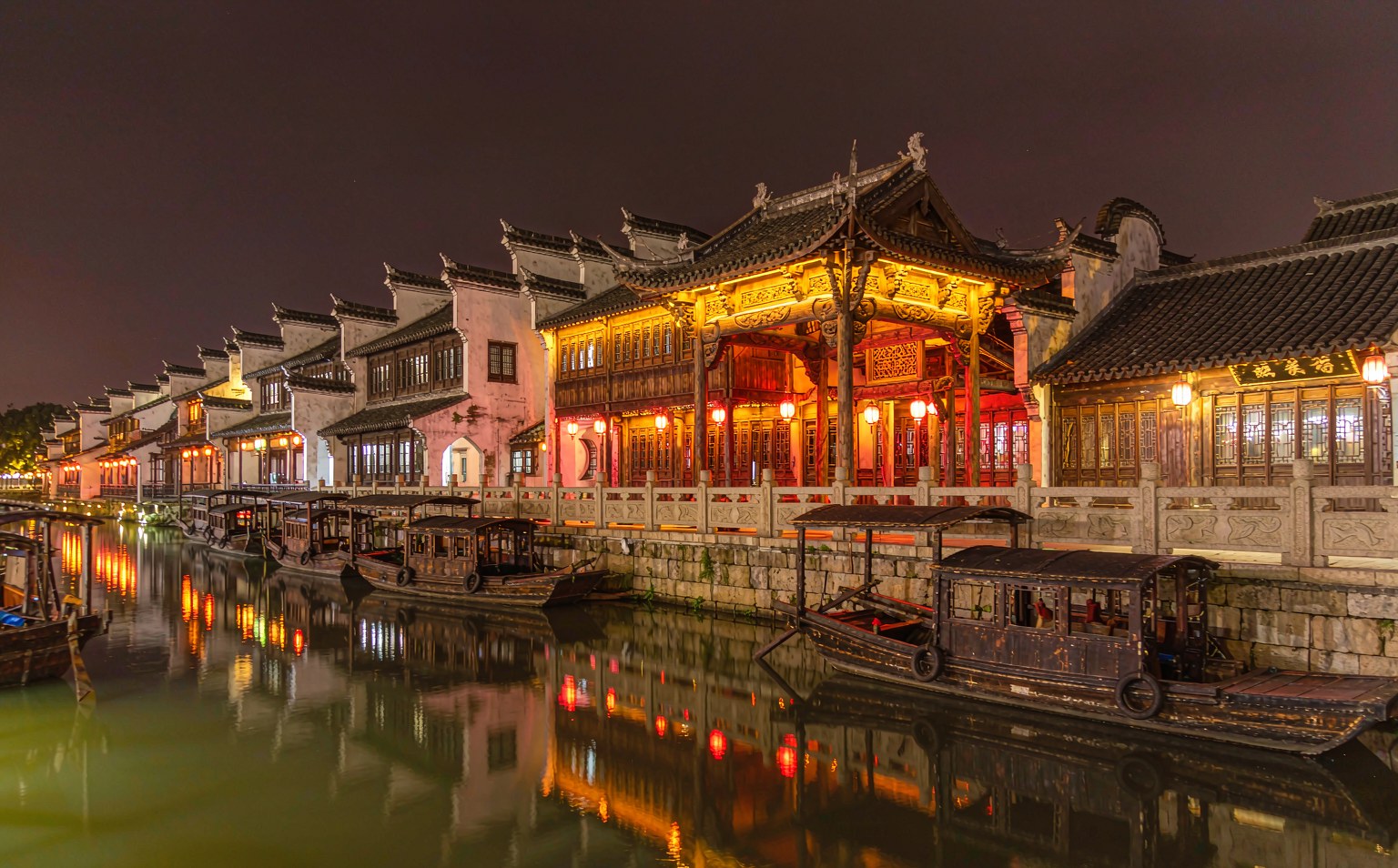
November in the lower Yangtze is damp, the canals fog over before breakfast and everything changes once the lanterns are lit. Three water towns, a night in each, and a final full morning on West Lake.
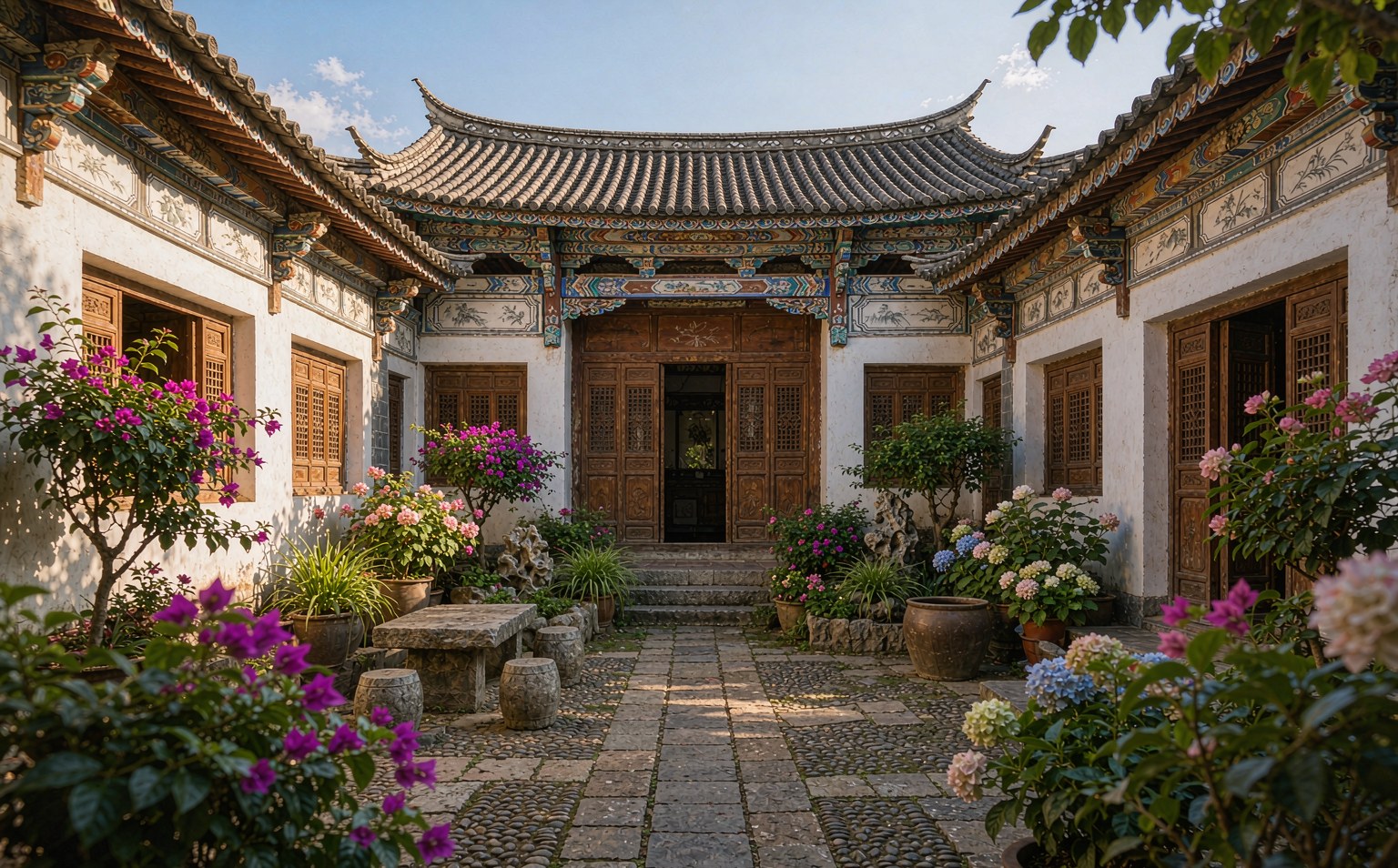
Dali, Erhai and Shaxi in Six Days from Luoyang, When the Snow Line Drops
In November the snow line on the Cangshan comes down low, Erhai fogs over in the morning and the first black-headed gulls settle near the small island. Six unhurried days: two nights inside the old town, one in Shaxi, and a Bai courtyard at dawn.