
Chongqing, Baidicheng and the Red Leaves of Wushan in Seven Days
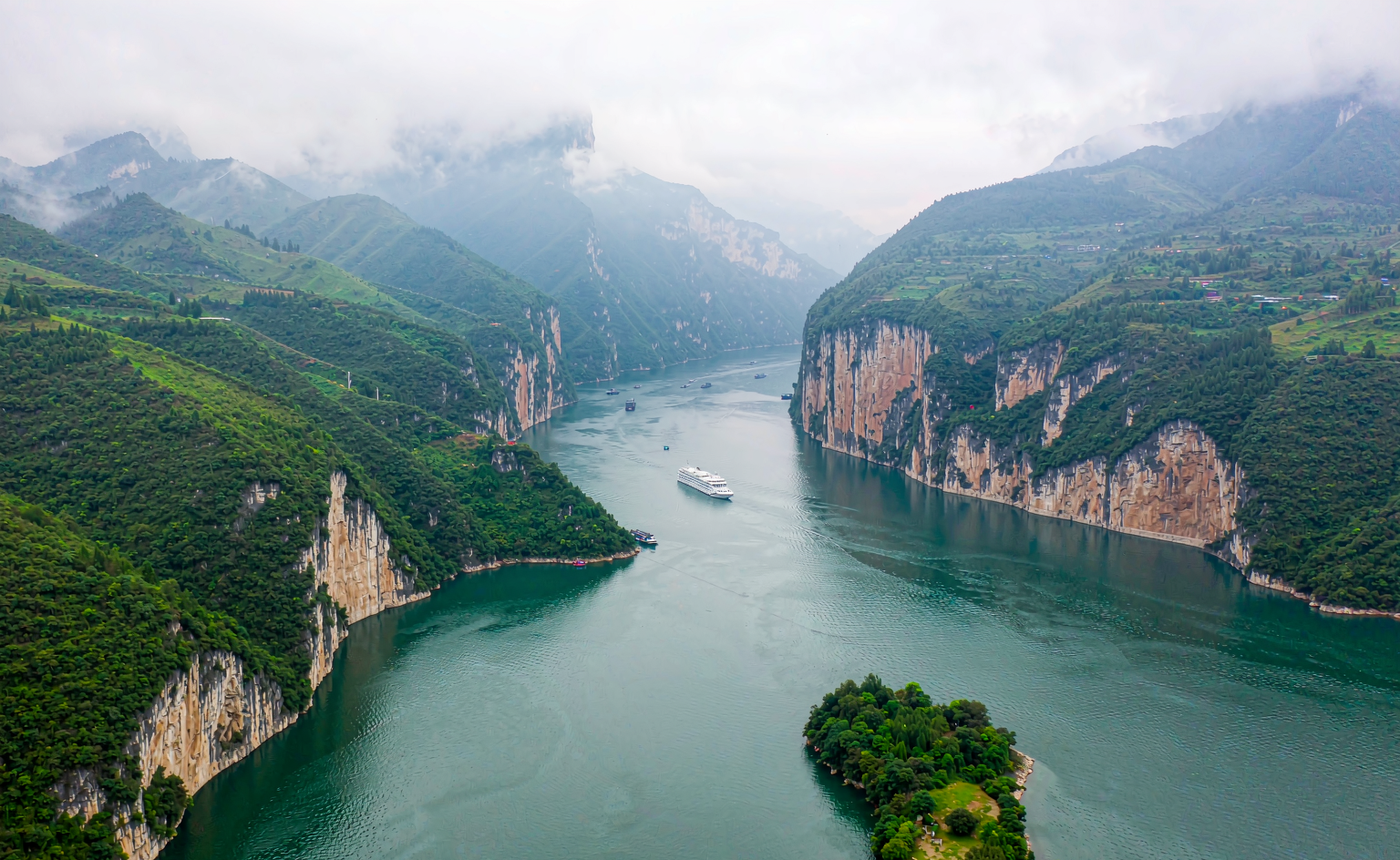
Late November turns the smoke trees of Wushan red from the waterline to the ridge, and the boat runs inside the gorge with leaves overhead on the cliff face. Seven days downriver from Chongqing, taking Qutang, Wu and the Lesser Three Gorges in turn, ending at the dam in Yichang.
Highlights
Day 1: West from Luoyang, into Chongqing by dusk
A seven o clock departure from Luoyang Longmen, running southwest past Sanmenxia and Xian, a boxed lunch south of the Qinling, and arrival at Chongqing North around four in the afternoon. No sights first: bags into a hotel near Jiefangbei, and only as the light goes do we walk down toward the river.
Attraction introduction: Hongyadong stands on the bank of the Jialing, a row of stilted houses built against the cliff, eleven levels in all, with lifts running from the top straight down to the riverside road. The lights come on around six, and from the Qiansimen bridge the whole block appears pinned to the rock. The lane itself charges no admission; only the internal lifts cost five yuan a ride.
Tips: Guests generally find the first evening at Hongyadong is spent being carried along by the crowd, and that going down eleven levels and back up takes an hour. In practice we view it from the Qiansimen bridge instead, walk in as far as the fourth level and turn round, saving our legs for the river days ahead.
Day 2: Ciqikou in the morning, a train to Wushan after lunch
Ciqikou first, while the lanes are still quiet before nine, twists of dough just out of the oil and tea stalls occupied by older locals. Back into the city by half past ten, a glance at the monorail running through the apartment block at Liziba, then the afternoon train from Chongqing North that puts us in Wushan a little after two. A bus into town, bags down, and a walk along the river at Ningjiang ferry as the light fades.
Attraction introduction: Ciqikou began as a river port in the Song, and its three streets, Zhengjie, Hengjie and Jinbijie, still follow the old plan, with Baolun temple at the far end of the lane. Liziba is a station on line two where the train passes through the sixth to eighth floors of a residential building, with a viewing platform built beneath it. Wushan town sits against the mouth of Wu gorge, and the Ningjiang stretch is where the river fogs over.
Tips: Guests generally find that changing trains around Chongqing eats the day, and that Ciqikou back to the centre and on to Chongqing North needs a clear two hours. In practice the monorail is seen on the way to the station rather than as a detour, and Wushan is small enough to walk in the evening.
Day 3: Up the Lesser Three Gorges, four hours at water level
At half past eight we are at the Ningjiang Road pier for the eight fifty sailing. The boat pushes upstream on the Daning, through Longmen gorge first, then Bawu, and at Dicui we change to a canopied boat for the Smaller Three Gorges. Four hours on the water without landing, back at the pier after noon. The afternoon is free in town, and anyone restless can walk the Goddess Avenue on their own.
Attraction introduction: The Lesser Three Gorges are three stretches of the lower Daning. Longmen narrows to a dozen metres, Bawu has stalactites on both walls, and Dicui holds the greenest water. In leaf season the smoke trees and tallow run from the waterline to mid slope, and from the middle of the river the angle is upward, quite different from the ridge. The ticket is 120 yuan including the boat and shuttle; over sixty-five it drops to about 62.
Tips: Guests generally find that seats on the boat are first come, and that the left side by the window has less backlight and photographs the leaves best. In practice we queue twenty minutes early; four hours seated is long, so bring a cushion if your back complains, and nothing climbs a hill afterwards.
Day 4: The Goddess Heaven Road, then north to Fengjie
Out at eight for the Liuping visitor centre and the shuttle up onto the Goddess Heaven Road. The bus follows the ridge, stopping at Tiandeng, Xianlu terrace, Hongye slope, Yaotai and Feiyun terrace, turning back at the Heart of the Gorges. Lunch in town, on the road at half past one for Fengjie, ninety minutes of expressway, and a room in Fengjie by evening.
Attraction introduction: The road is cut along the northern ridge of Wu gorge, about ten kilometres in all, with a shuttle return at fifty yuan or a hundred with the Huangyan cable car. Six terraces face six different stretches of the gorge; Feiyun looks down on the great bend of the Yangtze, and the stretch at Hongye slope carries the densest stand of smoke trees. The Goddess Peak stands across the water and from this height reads as a single upright pillar of rock.
Tips: Guests generally find the ridge runs five to eight degrees colder than the town and that the wind is constant, so a light down jacket belongs in the pack in November. In practice we ride rather than walk, using the shuttle between terraces; and with a drive to Fengjie the same day, nothing else is added after the descent.
Day 5: Baidicheng and the Kuimen gate, then Yichang
At eight we enter the Baidicheng scenic area, cross the covered bridge and climb to the temple on the shoulder of the hill, past the Tuogu hall, Mingliang hall and the star-watching pavilion, to the point that overlooks Kuimen. Down by eleven and across by ferry to the foot of Chijia mountain for a look back at the mouth of Qutang gorge. Lunch in town, on the bus at three for the station, and Yichang in a little over an hour.
Attraction introduction: Baidicheng occupies a peninsula east of Fengjie, water on three sides, fortified at the end of the Western Han by Gongsun Shu, and later the setting for Liu Bei entrusting his son to Zhuge Liang. The temple group of Mingliang hall, Wuhou shrine and Tuogu hall survives, with a stele forest running from Sui to Qing. Kuimen is the western gate of Qutang, walls facing across the water, and it is the view printed on the back of the ten yuan note. From November to February the ticket is 60 yuan instead of 100.
Tips: Guests generally find more than three hundred steps up to the temple, which is enough to make older visitors stop halfway. In practice we allow forty minutes each way, and the ferry runs to a timetable, so missing one costs half an hour; the Yichang tickets are bought a day ahead rather than at the counter.
Day 6: The locks from Tanziling, the dam from the 185 platform
Out of Yichang on the dam road, forty minutes to Tanziling. This is the highest point over the five-step lock, and from the terrace a ship can be watched dropping from chamber to chamber like a lift. The shuttle then runs to the 185 platform, level with the crest. The afternoon goes to the cofferdam memorial park and the concrete tetrahedrons left from the closure of the river.
Attraction introduction: The dam stands at Sandouping, its crest at 185 metres and its length above 2,300, the longest concrete gravity dam anywhere. Tanziling sits at 262 metres and is the classic viewpoint over the locks, while the 185 platform is level with the crest and shows the gate machinery of the spillway. The memorial park stacks the tetrahedrons used to close the river, each one measured in tonnes. The dam area charges no admission, with shuttle buses paid separately.
Tips: Guests generally find the shuttle is the awkward part, since the three stops require changing buses and the circuit takes three or four hours. In practice we run Tanziling, the 185 platform and the memorial park in that order without doubling back; the river wind is cold in November, so keep the jacket on.
Day 7: The river park, then north to Luoyang
A slow start, then a stretch of the riverside park looking across at Gezhouba. Check out at half past nine, at Yichang East by half past ten, and north by rail through Jingzhou and Xiangyang to Luoyang in the afternoon.
Attraction introduction: The riverside park runs along the north bank from Zhenjiang pavilion to Baisha road, where locals do their morning exercises and walk their birds, and where the wind off the water is stronger than in town. Gezhouba was the first large hydro station on the Yangtze, completed in 1981, and its locks are still working. Yichang East is a major stop on the Shanghai Wuhan Chengdu corridor, with northbound connections through Xiangyang and Pingdingshan toward Luoyang.
Tips: Guests generally find the last day is where the timing goes wrong, since the station looks close but the morning rush takes forty minutes. In practice the train is booked for after half past ten, straight from checkout, with no shopping stop added in town.
Related Tours
Luoyang Departure: Longmen Grottoes, White Horse Temple and the Han-Wei City, 4 Days
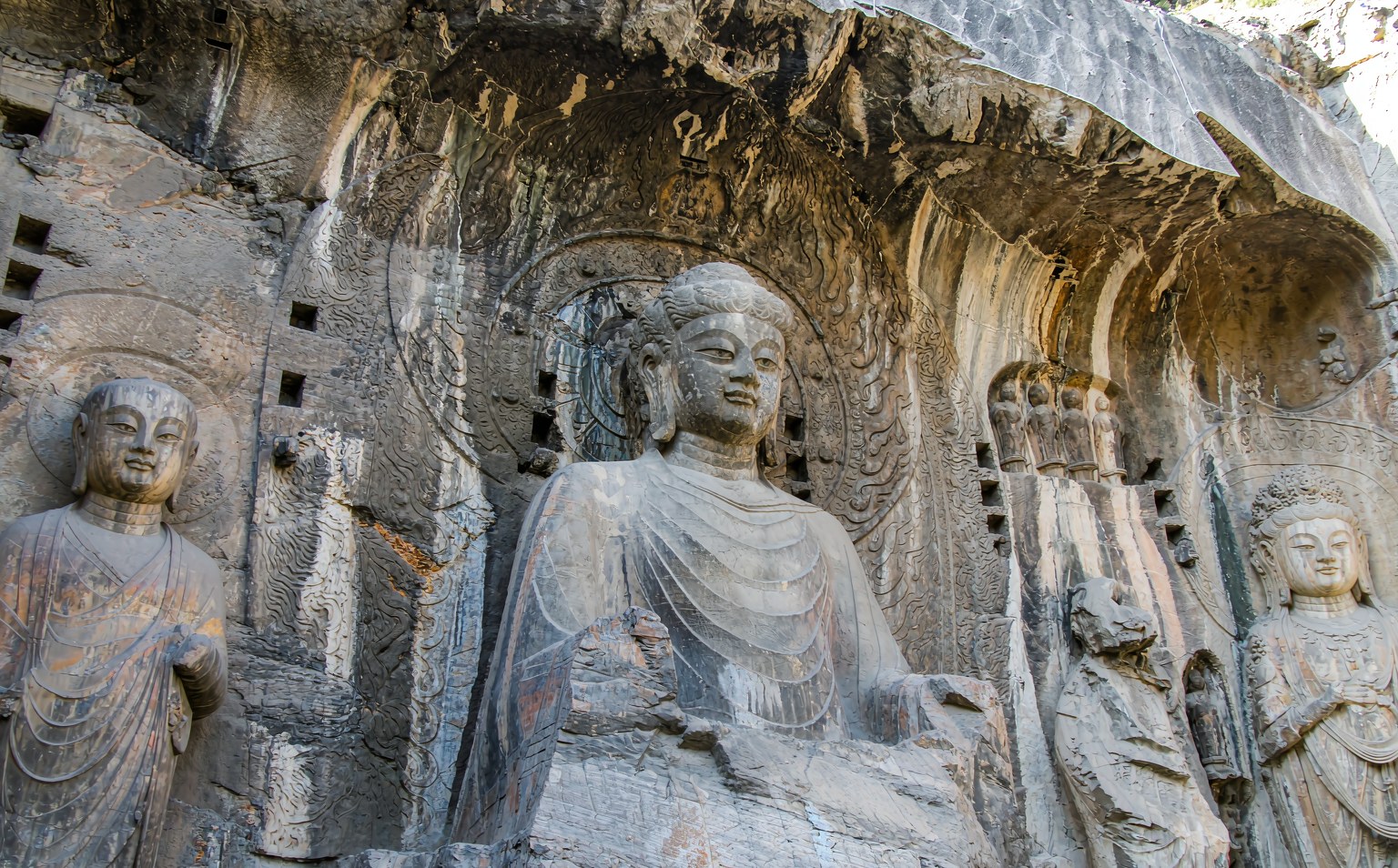
Four days without leaving the city: carved stone at Longmen, the first Buddhist temple at Baima, and six hundred years of capital pressed into the earth at the Han-Wei site. From November Longmen closes its gate at five.
Luoyang Departure: Wanxian Mountain, Guoliang Village, Nanping and Luojiezhai, 3 Days
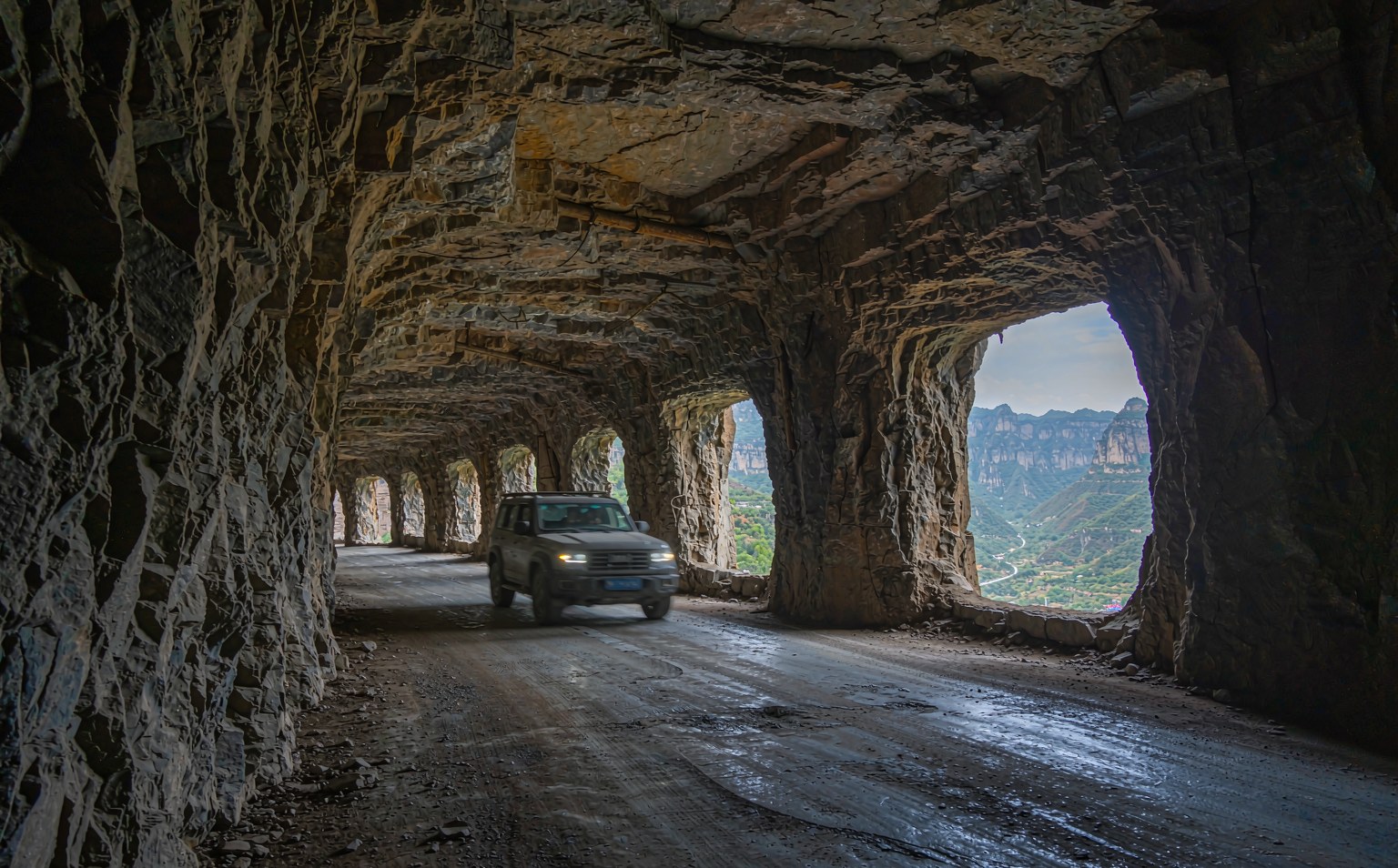
Three days living on the Taihang cliffs: the 1,250-metre tunnel road at Guoliang first, then the streams of Nanping, and finally the stone houses of Luojiezhai. By November the leaves are down and the rock face shows itself.
Luoyang Departure: Laojun Mountain, Jiguan Cave and Tianhe Grand Canyon, 5 Days
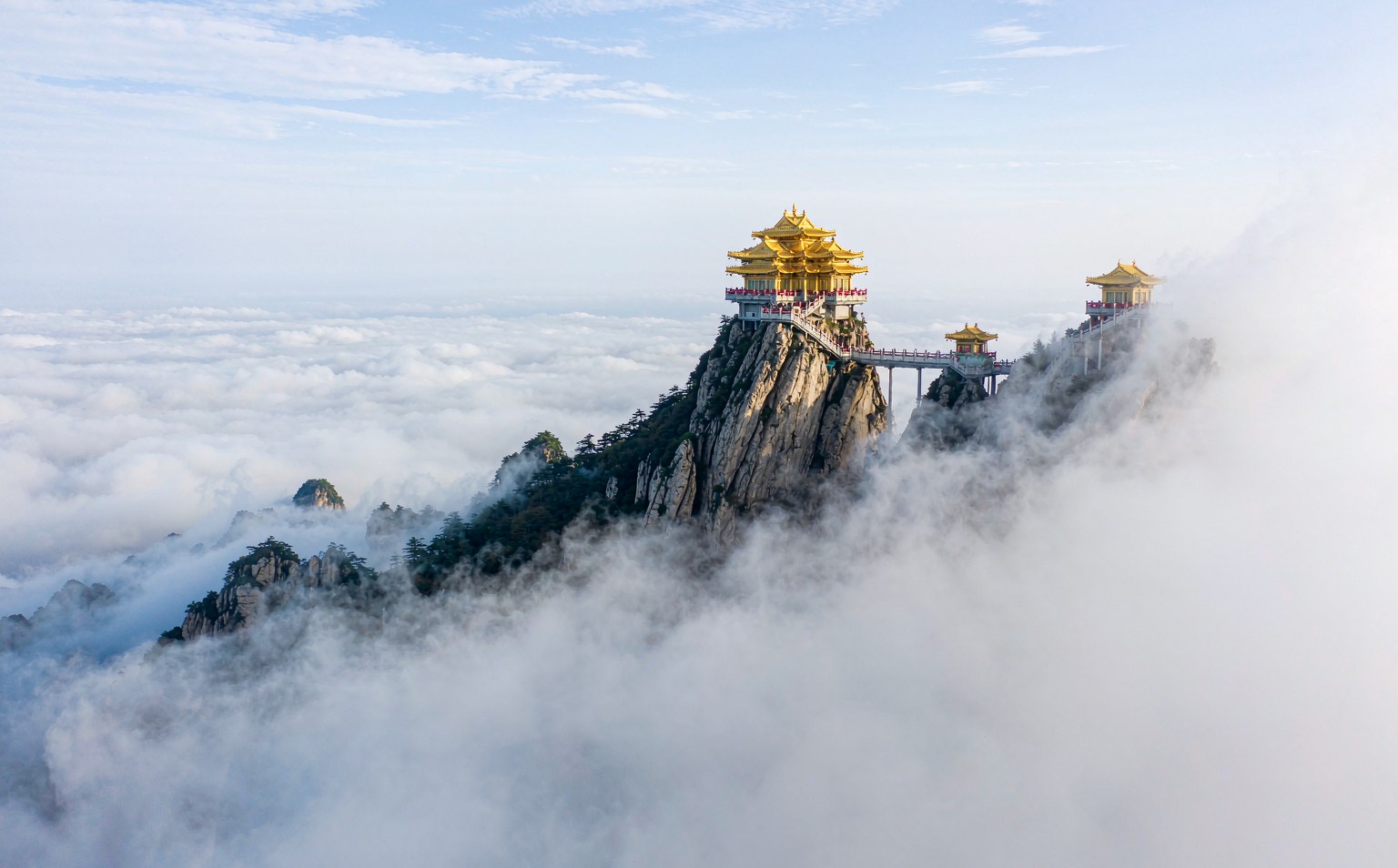
Down into a cave first, then up a mountain, then along a gorge: 1,800 metres inside Jiguan, a night on the summit waiting for the lamps and the sunrise, and a canyon so empty in low season that only water makes noise.
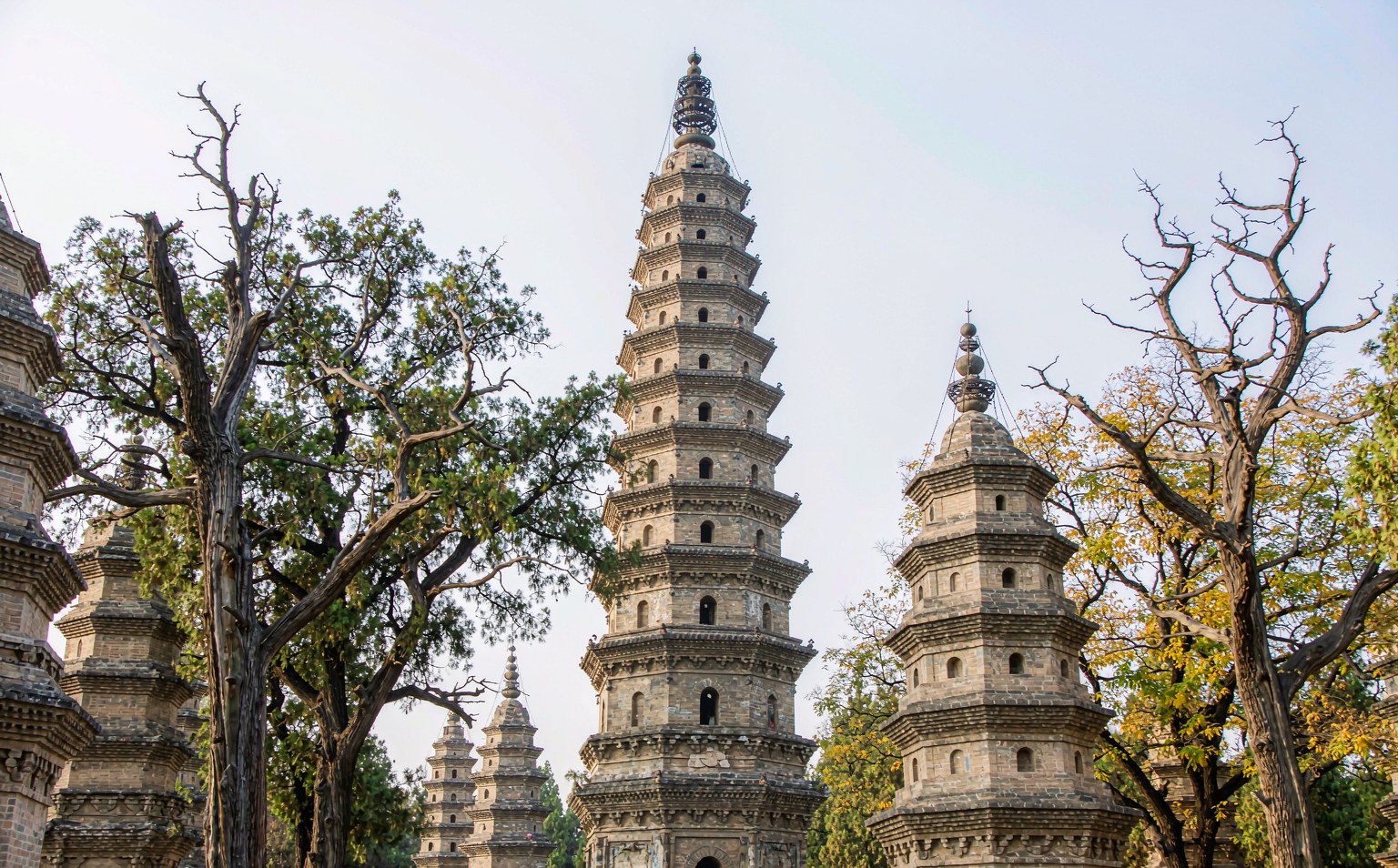
Luoyang Departure: Shaolin Temple, Sanhuangzhai, Songyang Academy and the Observatory, 4 Days
Four days moving between the two flanks of Mount Song: two-thousand-year-old cypresses at the academy, the pagoda forest at Shaolin, a cliff boardwalk at Sanhuangzhai, and a Yuan dynasty observatory at the end. Lodging stays in the county town, half an hour from everything.