
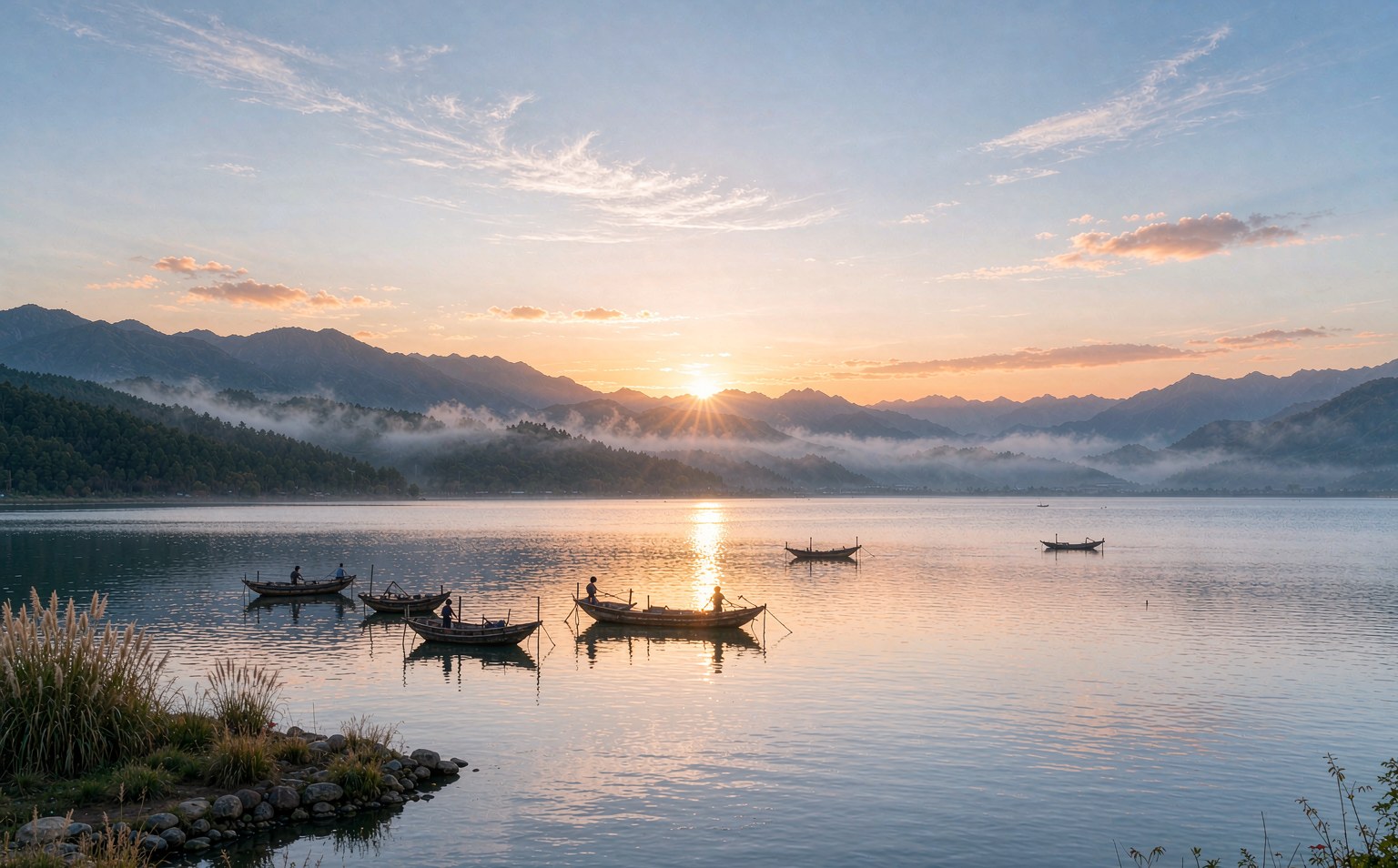
Lugu Lake and Lijiang in Seven Days from Luoyang, Winter Mist on the Water
November is the dry season at Lugu Lake, and a skin of mist lies on the water before dawn, gone half an hour after sunrise. Seven days with two nights on the shore and the rest left to Lijiang.
Highlights
Day 1: Fly to Lijiang, a night inside the old town
A morning flight from Zhengzhou Xinzheng, three hours to Sanyi airport, then half an hour south into the city. Bags down by mid afternoon. The old town charges no gate ticket, and the stone lanes are uneven enough that suitcase wheels complain the whole way. Down to Siyang square in the evening, then up onto Lion Hill where the roofs stack one behind another and the tip of the snow mountain shows above the cloud.
Attraction introduction: Lijiang old town, or Dayan, took shape at the end of the Song, home to the Naxi and a stop on the tea horse road. Water comes down from Black Dragon Pool and splits into three channels that run through the lanes, crossed by more than three hundred stone bridges. Lion Hill on the west side carries the pavilion that shows the whole field of roofs.
Tips: Guests generally find the old town is easy to get lost in, since every lane looks like the last. In practice follow the water, downstream to leave and upstream to come back, which beats any map. The town sits at two thousand four hundred metres, so skip the alcohol on the first night and keep the shower warm rather than hot.
Day 2: Over the pass to Lugu Lake, a room at Lige
Out at eight, north east through the city and over the Jinsha river bridge into the switchbacks, one bend after another with the gorge below the window. Lunch at Ninglang, and the park gate at three, then twenty more minutes to Lige. The room faces the water, and nobody wants to move once the bag is down.
Attraction introduction: Lugu Lake lies between Ninglang in Yunnan and Yanyuan in Sichuan at two thousand six hundred and ninety metres, a rift lake forty metres deep on average. The Lige peninsula pushes out from the western shore and holds a dozen Mosuo households, joined to the bank by a narrow sand neck. On a clear day the water is transparent to ten metres.
Tips: Guests generally find the drive is where stomachs turn, with the eighteen bends doing the damage. In practice eat light before setting off and take the tablets half an hour early, and sit near the front. Lake view rooms at Lige are the reason to stay there, so book ahead, and the first night at altitude wants a thick quilt.
Day 3: Mist before dawn, a dugout on the water
Up at half past six, when a white skin of mist is sliding across the lake. The sun comes over the eastern ridge, lights it up, and within twenty minutes it has turned to vapour and gone. Breakfast at eight, at the jetty by nine for a pig trough boat, a hull cut from one log with the boatman standing at the stern, twenty minutes out to Liwubi island.
Attraction introduction: The pig trough boat is the traditional Mosuo craft, hollowed from a single trunk, narrow and pointed at both ends. Liwubi island sits south of centre, with a small temple and prayer wheels ranked up the steps. Lugu has no outflow; it is fed by springs and rain off the surrounding ridges and balanced by evaporation and seepage, which is why the water stays so clear.
Tips: Guests generally find the boat is colder than expected once the wind crosses the water. In practice the down jacket goes on before boarding, and the life jacket gets fastened properly. Fares run from fifty to one hundred and thirty five depending on the route, so agree the destination and the price before stepping in.
Day 4: Round the lake, across the Caohai bridge
Away at half past eight, clockwise along the shore past Lover beach and Xiaoluoshui, the road keeping to the water. Lunch at Lugu town, then into the reed beds in the afternoon, where the stems stand taller than a person and the wedding bridge runs three hundred metres across them, planks polished by feet. The far side is Sichuan, and someone is singing on the bridge. Sunset back at the shore.
Attraction introduction: Caohai occupies the north east corner of the lake, a wetland left as the water withdrew, reeds in unbroken stands over less than a metre of water. The bridge was originally the route walked by Mosuo partners at night and is now a timber walkway across the narrowest part. Gemu mountain on the north shore rises above three thousand seven hundred metres and is treated as a goddess by the Mosuo.
Tips: Guests generally find the time goes on photographs, twenty minutes at every platform, and the circuit never finishes. In practice we stop at four points only and keep moving elsewhere. Frost forms on the bridge planks in the early morning, so use the rail.
Day 5: Back to Lijiang, an afternoon at Baisha
Away from the lake in the morning on the same mountain road, with the river now visible on the valley floor. Lunch at Ninglang, back in Lijiang by three, and north ten kilometres to Baisha instead of the old town. Almost nobody on the street, indigo cloth hanging under the eaves, old men sitting in the sun at their doors.
Attraction introduction: Baisha sits at the foot of the snow mountain and was the earliest Naxi settlement, its Ming murals still on the walls of the great treasure hall and the glazed hall, painted with Tibetan Buddhism and Taoism side by side. One main street, timber houses with low eaves. Shuhe lies between Baisha and Lijiang, another tea horse road village.
Tips: Guests generally find Baisha is far quieter than Lijiang and closes early, with nothing moving after seven. In practice dinner is in the village, and no nightlife should be expected. The murals need a separate ticket and photography is not allowed inside, so put the camera away before entering.
Day 6: Jade Dragon, from Blue Moon Valley to the glacier
Out at seven, half an hour north to the gate, then the park bus to Blue Moon Valley first. The water comes off the mountain carrying copper, milk blue in sun and green under cloud. Lunch inside the park, then the big cable car in the afternoon, eight minutes to four thousand five hundred metres, and the boardwalk above takes ten steps at a time with a stop in between.
Attraction introduction: Jade Dragon is the southernmost area of modern maritime glacier in the northern hemisphere, its main summit above five thousand five hundred metres and still unclimbed. Blue Moon Valley at its foot is a stretch of the White Water river running over limestone, the colour shifting with the light. The upper station of the glacier cable car is among the highest in the country.
Tips: Guests generally find four thousand five hundred metres brings a headache and short breath on any slope. In practice we book the early slot when the queue is shorter, walk in threes and stop often, and buy oxygen at the base rather than paying double at the top. Only one cable car can be done in a day, so choose the glacier or the spruce meadow, not both.
Day 7: One last morning at Shuhe, then the flight
A walk round Shuhe in the morning, the stone of the Qinglong bridge worn smooth, water running under it where someone is washing vegetables. Back at nine to pack, away at eleven for the airport, forty minutes on the road. The midday flight to Zhengzhou, then the connection home to Luoyang.
Attraction introduction: Shuhe lies four kilometres north of Lijiang and was a post on the tea horse road, called Shaowu in the Naxi language, the village under the high peak. The Qinglong bridge dates from the Ming and is the largest stone arch on the Lijiang plain. Spring water comes out of the Nine Tripod pool and runs along channels at every doorstep.
Tips: Guests generally find the last day is where transfer prices at the guesthouse get silly, since they move with demand. In practice we arrange the airport run ourselves and leave two hours before departure. Shops in Shuhe open after nine, so an early start only gets you shutters.
Related Tours
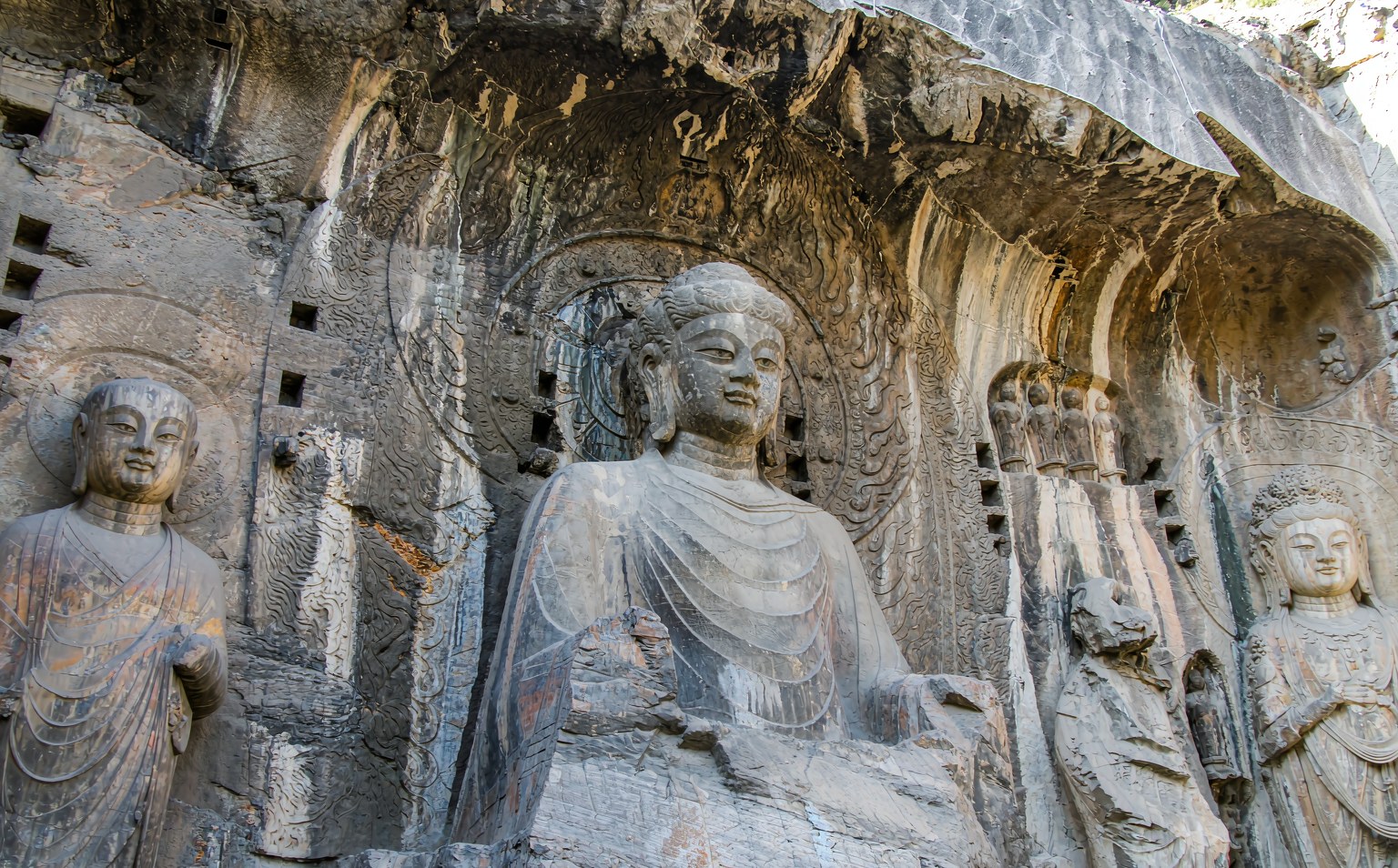
Luoyang Departure: Longmen Grottoes, White Horse Temple and the Han-Wei City, 4 Days
Four days without leaving the city: carved stone at Longmen, the first Buddhist temple at Baima, and six hundred years of capital pressed into the earth at the Han-Wei site. From November Longmen closes its gate at five.
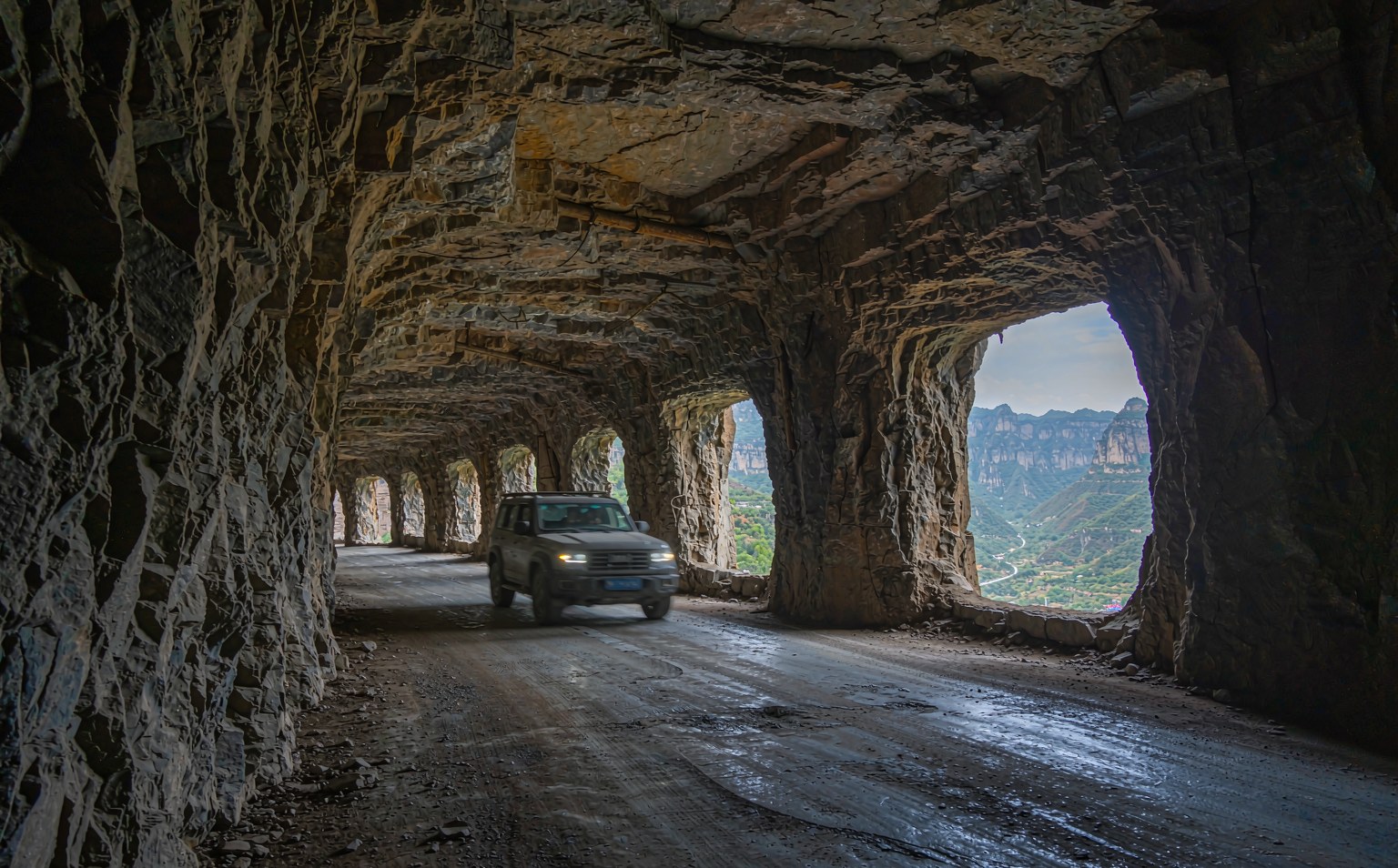
Luoyang Departure: Wanxian Mountain, Guoliang Village, Nanping and Luojiezhai, 3 Days
Three days living on the Taihang cliffs: the 1,250-metre tunnel road at Guoliang first, then the streams of Nanping, and finally the stone houses of Luojiezhai. By November the leaves are down and the rock face shows itself.
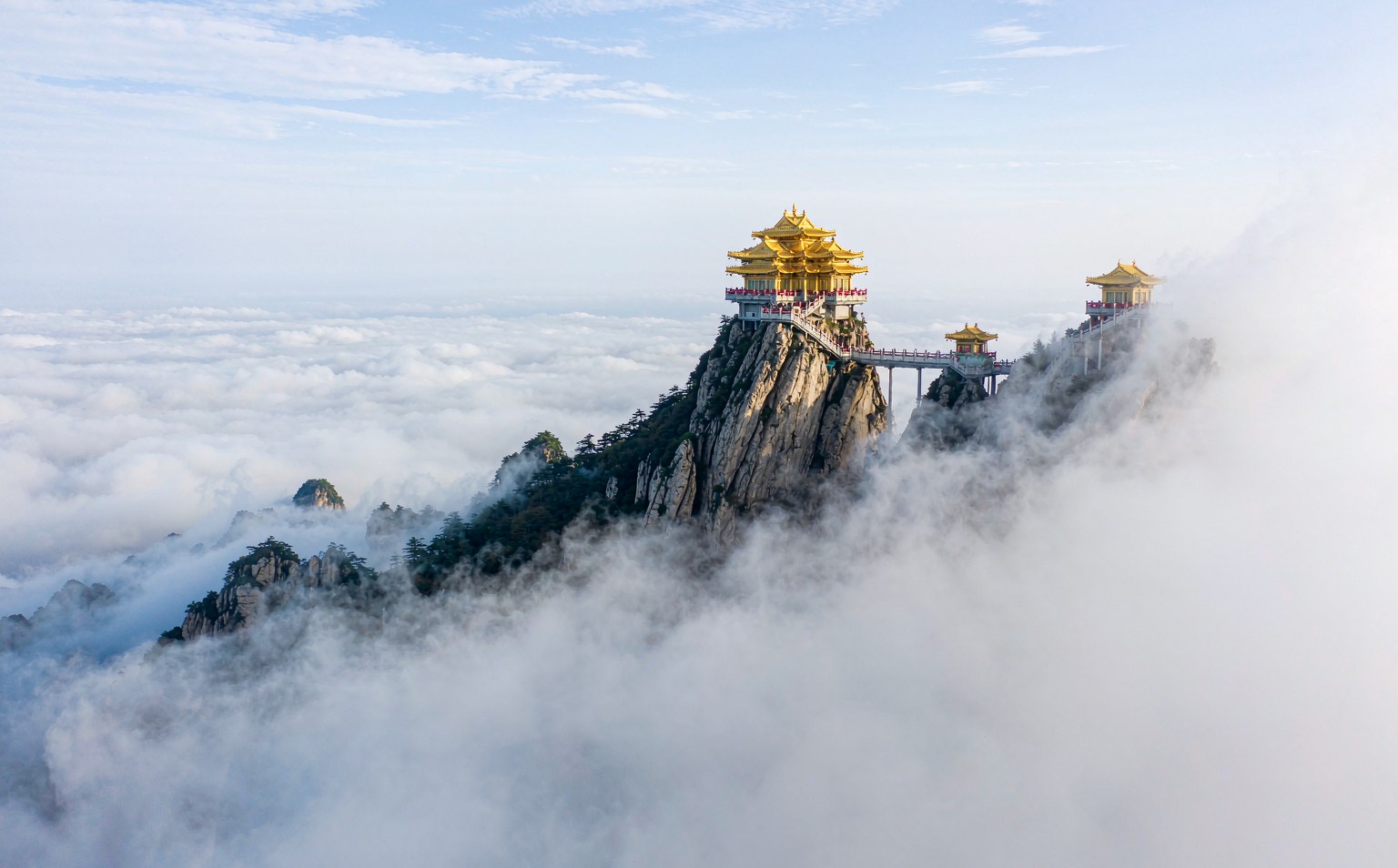
Luoyang Departure: Laojun Mountain, Jiguan Cave and Tianhe Grand Canyon, 5 Days
Down into a cave first, then up a mountain, then along a gorge: 1,800 metres inside Jiguan, a night on the summit waiting for the lamps and the sunrise, and a canyon so empty in low season that only water makes noise.
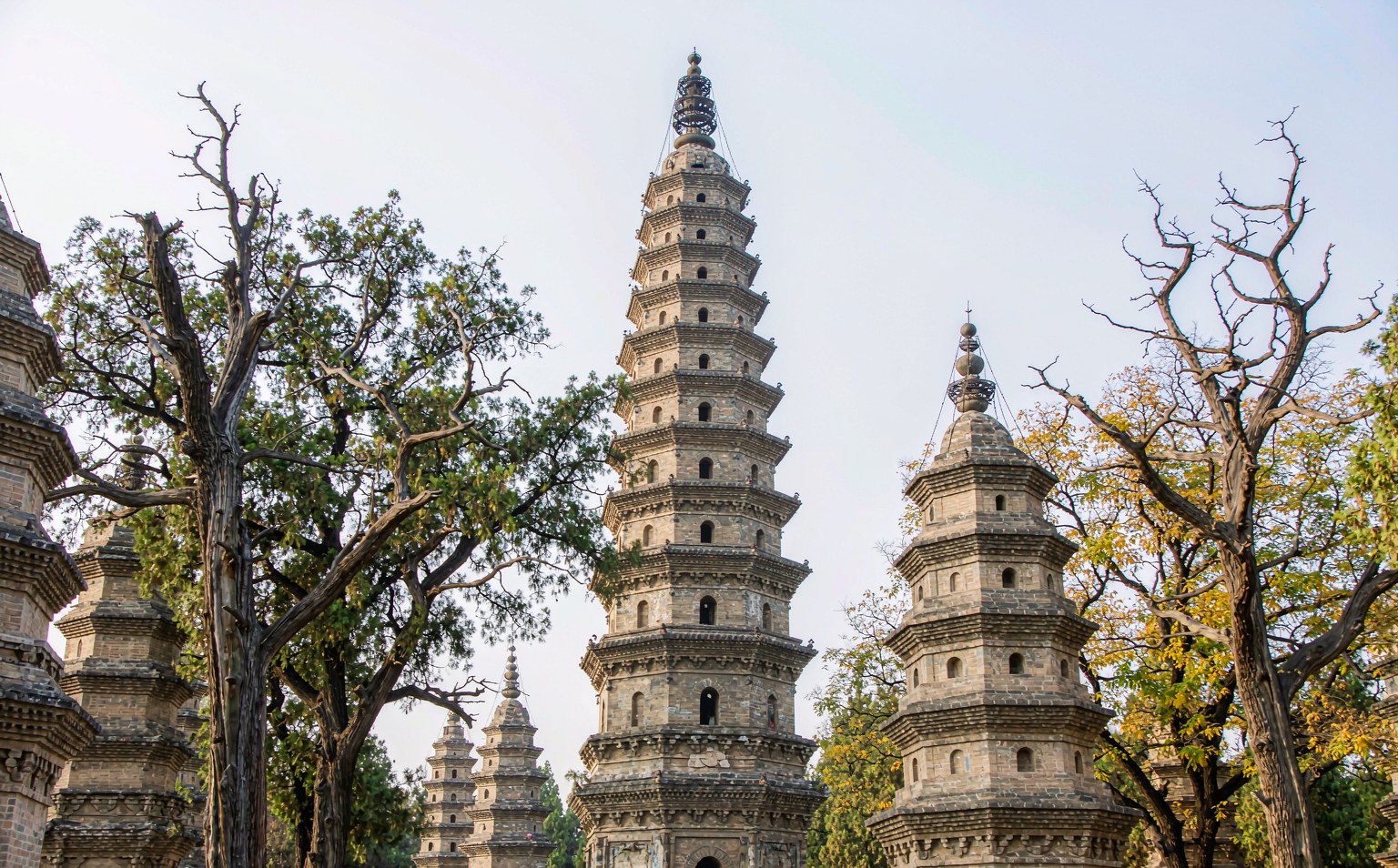
Luoyang Departure: Shaolin Temple, Sanhuangzhai, Songyang Academy and the Observatory, 4 Days
Four days moving between the two flanks of Mount Song: two-thousand-year-old cypresses at the academy, the pagoda forest at Shaolin, a cliff boardwalk at Sanhuangzhai, and a Yuan dynasty observatory at the end. Lodging stays in the county town, half an hour from everything.