
Luoyang Departure: Yuntai Mountain, Fenglin Gorge, Qinglong Gorge and Chenjiagou, 5 Days
Five days across the canyons north of Jiaozuo: red rock at Yuntai Mountain, a boat through the drowned gorge at Fenglin, a descent to the river bed at Qinglong, and two opening moves of taiji at Chenjiagou. Late November is the last fortnight of peak season.
Highlights
Day 1: Luoyang to Xiuwu, down into Red Stone Gorge
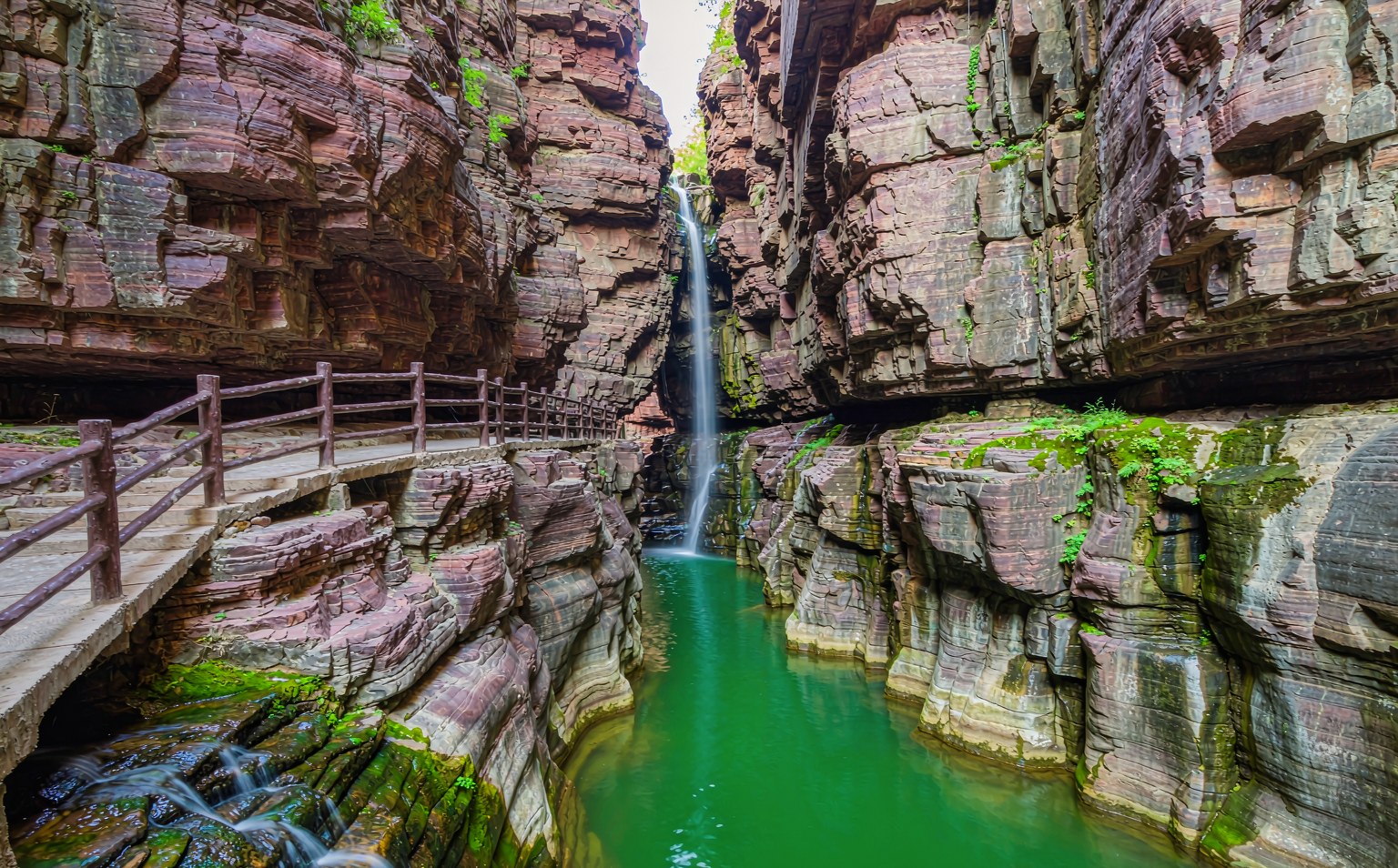
We leave Luoyang at nine, take the expressway east and then the mountain road north, reaching Anshang village in about two hours. After lunch we enter the Yuntai gate at two and ride the shuttle straight to Red Stone Gorge. The gorge runs one way: you walk in, you keep going, and there is no turning back. In November the afternoon light comes in low and hits the far wall, and that band of red rock lights up while the water below stays green.
Attraction introduction: Red Stone Gorge is the signature walk of Yuntai Mountain, roughly 1,500 metres long and in places only a dozen metres wide. Both walls are purple-red quartz sandstone cut into a deep channel by water. A boardwalk and a few small bridges run along the floor, with several low arches you have to duck through. Nine pools lie inside, the deepest almost black-green, and none of them freeze.
Tips: The gorge is one-directional, so anyone with weak knees should take it slowly; the boardwalk rises and falls. Guests generally find the light fades fast after three in the afternoon and photographs turn flat, so arriving half an hour early beats arriving at four. In practice we schedule only this one canyon on the first day, because by the time you exit your legs are heavy and another climb would be wasted.
Day 2: Zhuyu Peak, 1,308 metres
We take the shuttle at half past seven and first pass Diecai Cave, a mountain road where a dozen tunnels follow one another through the ridge; each exit opens onto a different face of the mountain. The climb to Zhuyu Peak starts with stone steps and finishes on a ledge cut into the cliff, where the steepest stretch needs both hands on the rail. At the top the wind is strong enough to take a hat, and the whole of Yuntai spreads out below in layers.
Attraction introduction: Zhuyu Peak is the highest point of the Yuntai range. The Tang poet Wang Wei wrote about his brothers climbing on the Double Ninth festival and finding one branch of zhuyu missing, a custom rooted in this area. A small temple to the True Warrior deity stands on the summit, and a yew tree in front of it is said to be a thousand years old. The path down the other side leads to Phoenix Ridge, where the glass walkway and cable car are.
Tips: The round trip from the car park takes about three hours and is mostly steps, so wear soft-soled shoes. Guests generally find the summit five or six degrees colder than the valley and a fleece is worth carrying in November. In practice we climb in the morning, eat at noon, and spend the afternoon riding through Diecai Cave without walking, which leaves legs for the next canyon.
Day 3: Fenglin Gorge by boat
We check out and drive fifteen minutes west to the Fenglin Gorge visitor centre, shared with Qinglong Gorge. Tickets and a shuttle take us six kilometres up to the dam wall, and that ride cannot be walked, so the thirty yuan is not optional. From the dam the boat slides into Emerald Lake, and the cliffs rise straight out of the water on both sides. The wake opens the surface and closes it again behind us, and the boat stays quiet.
Attraction introduction: Fenglin Gorge was once called Qunying Lake. Work on the dam began in 1968 and finished in 1971; at 100.5 metres it was then the tallest masonry arch dam in Asia. The drowned gorge runs about two kilometres, walled by the red cliffs typical of the Taihang range, and the depth gives the water its emerald tone. At the far end a glass bridge spans two bluffs.
Tips: The gate closes to new arrivals at four, and the shuttle takes twenty minutes each way, so allow forty minutes for the round trip. Guests generally find this gorge quieter than Red Stone Gorge because the boat spreads people out. In practice a Yuntai ticket waives the Fenglin gate fee for seven days, so staggering the two visits saves a family of three a useful amount.
Day 4: Qinglong Gorge, down to the river
From Jiaozuo we drive forty minutes back to the shared visitor centre and take the other road into Qinglong Gorge. A shuttle climbs to the rim, then a cable car drops us at a steep angle; looking down, the stream at the bottom looks like a thread. On the floor the boardwalk follows the water with little climbing, easier than stairs. Near Peijiashuang village a few families still live in stone houses and dry persimmons on the doorstep.
Attraction introduction: Qinglong Gorge lies west of Yuntai Mountain and is the westernmost of its eleven canyons, about seven and a half kilometres long and only a few metres wide at the narrowest. Water runs all year, less in winter but the pools remain. Most of the boardwalk is pegged to the cliff, and one stretch is cut beneath an overhang that forces you to bend double.
Tips: The thirty yuan shuttle is compulsory, since the visitor centre sits nine kilometres from the gorge mouth with no footpath. Guests generally find this walk harder than Red Stone Gorge, three to four hours in total with an uphill return. In practice visitors over sixty get the gate fee waived and pay only transport, which makes this the best value canyon for older family members.
Day 5: Chenjiagou, two opening moves, then home
We reach Chenjiagou in the morning and pass a boulder at the village entrance carved with the words birthplace of taijiquan. The ancestral hall is small, its corridor hung with the lineages of the various families. The taijiquan museum then traces the art from Chen Wangting to Yang Luchan, who is said to have learned it by watching through a wall. By half past seven the square in the middle of the village is busy, mostly older people, and one long routine takes twenty minutes. Copying the first two movements looks easy until your arms start shaking halfway up.
Attraction introduction: Chenjiagou sits on the Qingfeng ridge in Wenxian county, where Chen Wangting codified taijiquan at the end of the Ming dynasty. The ancestral hall, the museum and the site where Yang Luchan studied share one combined ticket. The old street, the square and Donggou gully are free; Donggou is the earth gully where Yang practised, lit on Friday and Saturday evenings.
Tips: Short lessons are charged by the hour and the village studios price them similarly, so agree the fee before starting. Guests generally find the square most interesting before nine, when locals train rather than perform. In practice a Yuntai ticket also halves the combined ticket here within seven days, so keep the stub instead of throwing it away at the gate.
Related Tours
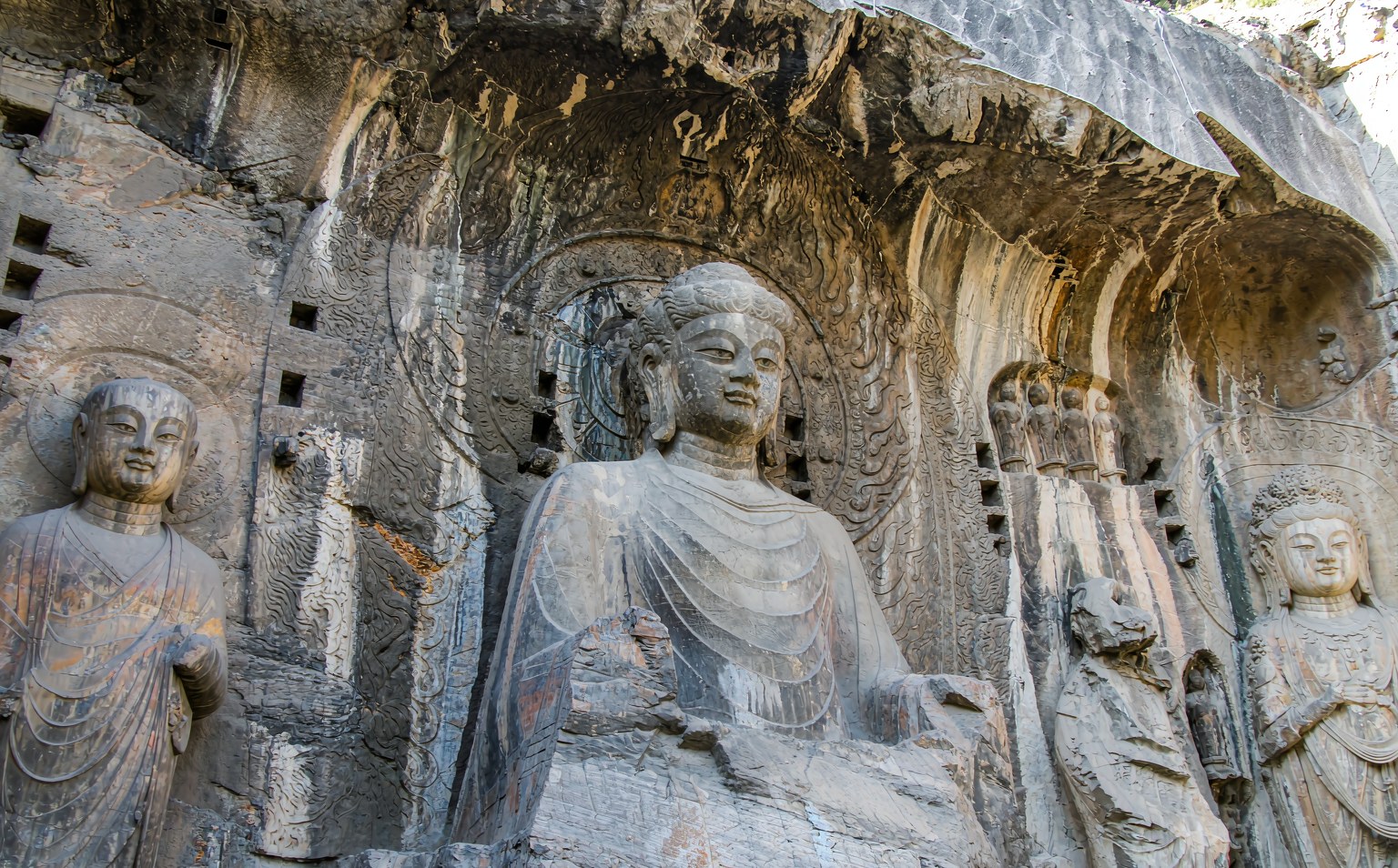
Luoyang Departure: Longmen Grottoes, White Horse Temple and the Han-Wei City, 4 Days
Four days without leaving the city: carved stone at Longmen, the first Buddhist temple at Baima, and six hundred years of capital pressed into the earth at the Han-Wei site. From November Longmen closes its gate at five.
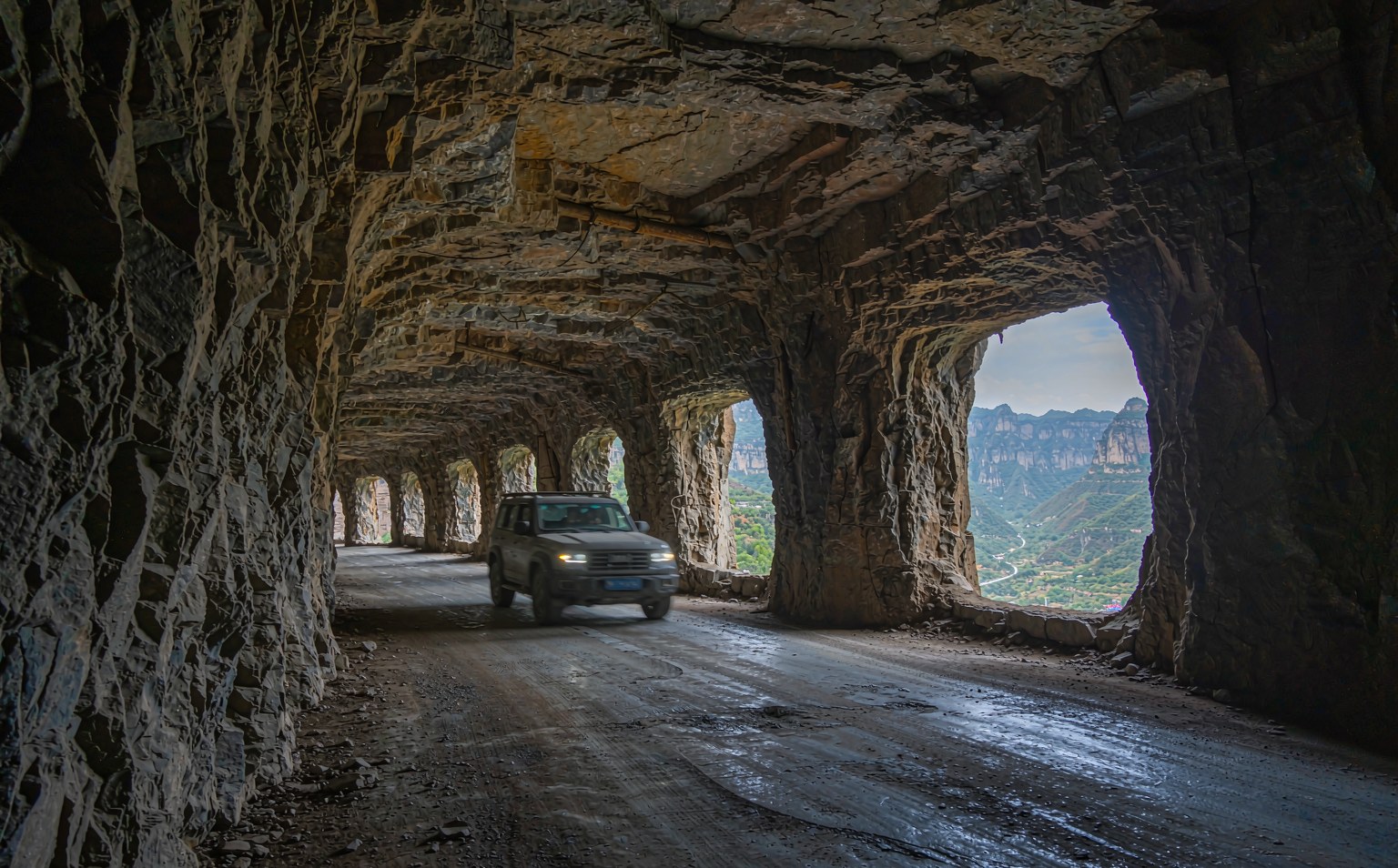
Luoyang Departure: Wanxian Mountain, Guoliang Village, Nanping and Luojiezhai, 3 Days
Three days living on the Taihang cliffs: the 1,250-metre tunnel road at Guoliang first, then the streams of Nanping, and finally the stone houses of Luojiezhai. By November the leaves are down and the rock face shows itself.
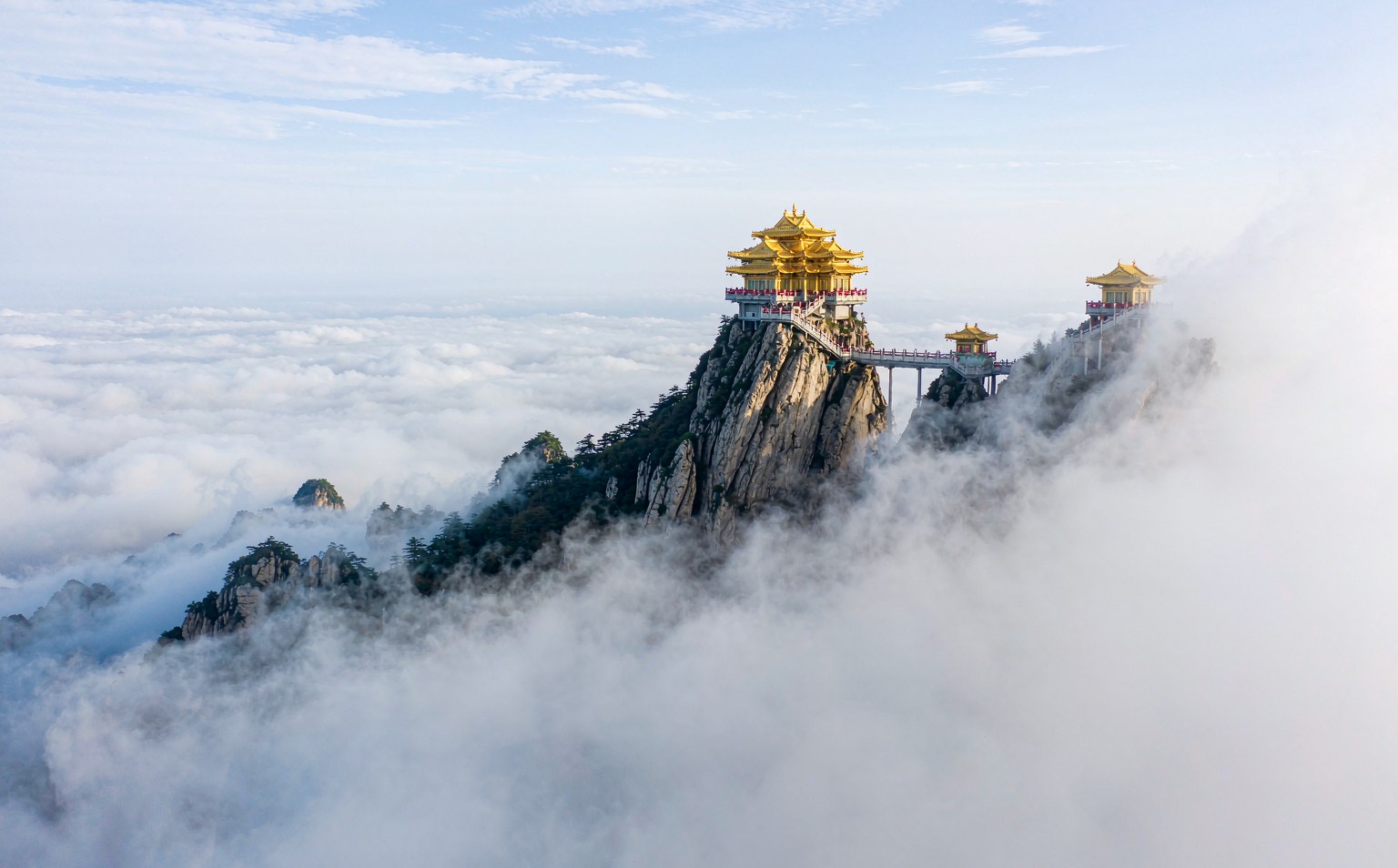
Luoyang Departure: Laojun Mountain, Jiguan Cave and Tianhe Grand Canyon, 5 Days
Down into a cave first, then up a mountain, then along a gorge: 1,800 metres inside Jiguan, a night on the summit waiting for the lamps and the sunrise, and a canyon so empty in low season that only water makes noise.
Luoyang Departure: Shaolin Temple, Sanhuangzhai, Songyang Academy and the Observatory, 4 Days
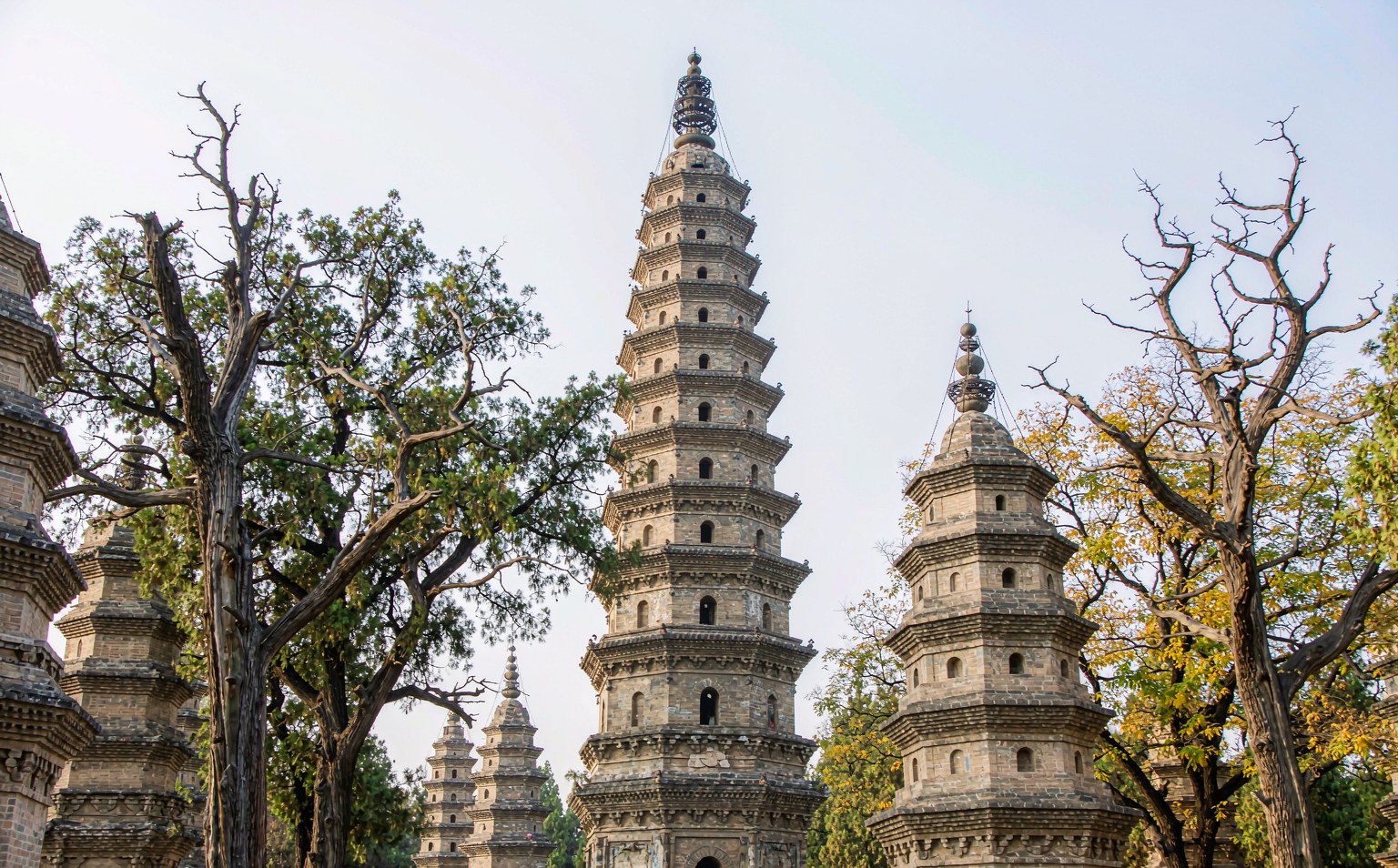
Four days moving between the two flanks of Mount Song: two-thousand-year-old cypresses at the academy, the pagoda forest at Shaolin, a cliff boardwalk at Sanhuangzhai, and a Yuan dynasty observatory at the end. Lodging stays in the county town, half an hour from everything.